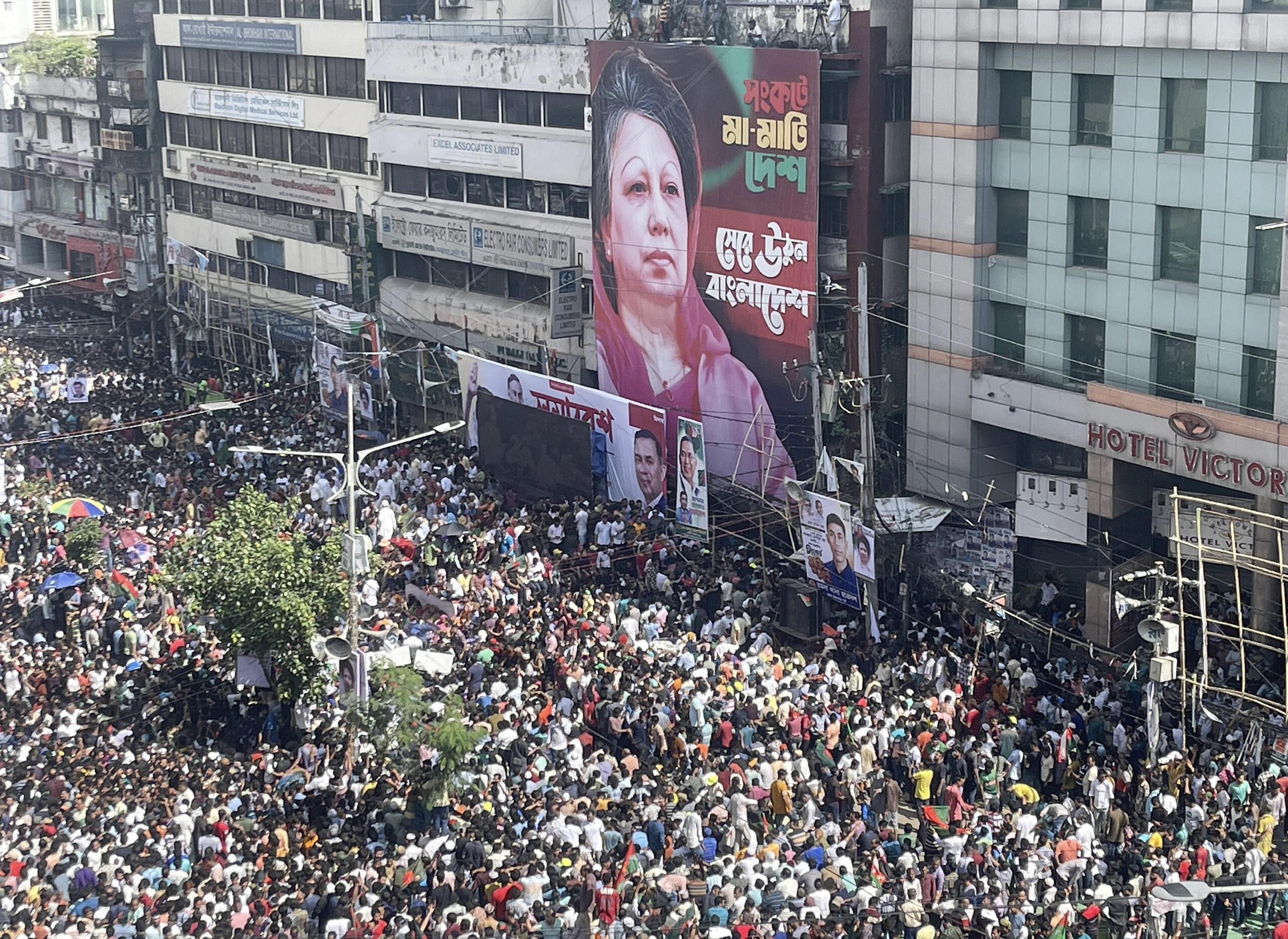
A week of fast-paced developments in Bangladesh, which saw Sheikh Hasina’s ouster, widespread violence and the formation of an interim government, has been capped off with the country’s chief justice agreeing to step down on Saturday. While it is unclear when elections will be held, what is certain is that the Khaleda Zia-led Bangladesh Nationalist Party (BNP), one of the two big political parties in the country, will be playing a key role in them.
Speaking exclusively to NDTV on Saturday, Mirza Fakhrul Islam Alamgir, the general secretary of the BNP, said that the stepping down of the chief justice was brought about by student protests because he was known to be closely associated with Ms Hasina’s regime, which “killed many people” in the country.
In the wide-ranging interview, Mr Alamgir said that Ms Zia will lead the BNP in the elections if she is fit enough to do so and that the party would work to improve the India-Bangladesh relationship if it comes to power. He said that the attacks on Hindus in the country were a result of some people trying to take advantage of the situation and stressed that they were not part of any “systematic agenda”.
The BNP leader also said he believes that the Bangladesh army will not interfere in the political process going forward and also claimed that no extremist elements were involved in the protests.
Asked about the chief justice stepping down, Mr Alamgir said, “The chief justice is known here as an associate of the former regime, which killed so many people in this country and extraordinary, unprecedented corruption was done during this period… So there was always a demand for his removal. He was not exactly free, fair and neutral and that’s why the demand was very high.”
“The judiciary in Bangladesh has totally been destroyed. It is an institution but, with the help of the last regime, it was totally politicised,” he added.
Election Timeframe?
While Nobel laureate Muhammad Yunus has taken oath as the head of an interim government and is seen as popular among the movement that led to Ms Hasina being ousted, the question on everyone’s mind is when elections will be held again in Bangladesh.
When Mr Alamgir was asked about this and the role 78-year-old Khaleda Zia, who was released from prison this week, would be able to play in the elections, he said, “She’s very sick. She’s in the hospital. She’s suffering from multidisciplinary diseases. Her treatment was not going well in this country and we we requested the judiciary as well as the government several times to send her abroad, but that didn’t happen… Doctors say she’s not fit to travel right now and we will have to wait for some time before taking her outside the country. If she’s physically fit, she will definitely contest the election.”
The BNP leader said that while his party is ready for polls at any point, the interim government would need more time to conduct them.
“The entire election machinery has become totally polluted and they are not in a position to hold a free-and-fair election. So they will have to bring some reforms in the election system as well,” he said.
Mr Alamgir also rubbished a claim made by Sheikh Hasina’s son, Sajeeb Wazed, that the prime minister had not resigned, as well as reports that she was removed at gunpoint.
“The President himself, in the presence of political parties and the army, said she had resigned. There was no coercion or anything… It was a revolution. When the mob of lakhs of people was moving towards Ms Hasina’s residence, her security forces and the armed forces told her she had two choices: stay here and be mobbed or leave the country. And, at the last moment, she decided to leave the country,”she said.
Ties With India, Attacks On Minorities
Mr Alamgir emphasised that the India-Bangladesh relationship would continue to be sound and said the BNP would strive to improve it if it came to power.
When the leader was asked about attacks on minorities in the country, including Hindus, Buddhists and Christians, and whether there was a systemic attack, he said, “This is not at all true. When there is a change in our country or any country, especially in third-world countries, there are some people who try to take advantage… In Bangladesh, unfortunately, with every revolution, leaders of the incumbent party are victimised, whether they are Muslims or Hindus. There may be some sporadic attacks (on minorities) but it was not at all a political or systematic agenda. Never,” he said, claiming that communal harmony in the country is “superb”.
UN Involvement
When the BNP leader was asked whether there would be a vendetta against the supporters of Ms Hasina’s Party – the Awami League – or a purge of former army and police officers seen as close to her government, he said that the United Nations has been asked to conduct an investigation.
“If anybody is found guilty of violating human rights, systematic killing of the opposition or enforced disappearances, naturally, their cases will be investigated and they’ll be taken to task,” he said.
Mr Alamgir also said that he did not believe that there would be any interference from the army in the political process going forward.
“People have confidence in the army that they are the saviours of the country. So I don’t think they will do anything which will go against the will of the people,” he said.
Extremist Elements?
The violence in the country has died down to a large extent, Mr Alamgir said, and sought to allay fears of extremist elements being involved in the movement against Ms Hasina’s rule.
“The Jamaat (Jamaat-e-Islami) is not an extremist political party, but there were other extremist groups in Bangladesh and I don’t believe they are in existence now… Extremist elements are not involved (in protests) in any way. Not at all. It is totally (led by) students and most of them are very progressive elements. Some of the people leading the movement are extraordinarily talented. I am certain and I believe that this revolution will definitely succeed,” he added.