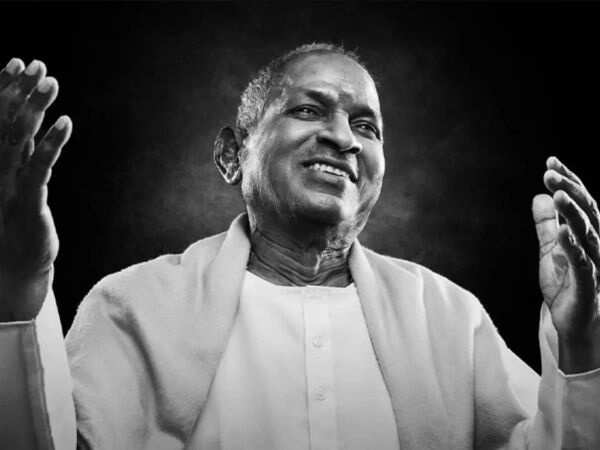
For millions across generations, Ilaiyaraaja’s music has never been background sound. It has been longing, grief, romance, rebellion and comfort stitched into melody. From cassette players to packed cinema halls echoing with SPB and Janaki classics, his compositions shaped the emotional vocabulary of Indian cinema.
As the legendary composer completes 50 years in music, Filmfare’s Editor-in-Chief, Jitesh Pillaai, writes about the mythos, magic, and memory of the man known as Isaignani.
In his words:
It’s been 50 years since the genius. Ilaiyaraaja burst on the collective consciousness with Annakili. I first heard Raja sir in two Balu Mahendra films – the absolutely astounding Oh Babua sung by Asha Bhosle for Sadma, and the complex Thumbi Vaa in Malayalam, sung effortlessly by S Janaki in Olangal.
My on-screen relationship with Sridevi goes back to Hey Hawa, Aye Zindagi and Surmayee Ankhiyon Mein.
But my relationship with Raja sir goes back to the Summer of 1991. On a vacation in Ooty, I’d trawl the malls of Ootacumund, wondering about the music purring out of the Walkmans and tapes. As luck would have it, there was also an Ilaiyaraaja show in the Botanical Gardens. And I was hooked. So for me it was Maasi Maasam Aalanaponnu (Dharama Durai), Ada Uchanthala (Chinna Thambi), Ada Veettukku Veettukku (Kizhakku Vaasal) and Sorgame Endralum (Ooru Vittu Ooru Vanthu).
Much before the AR Rahman wave hit us, Ilaiyaraaja revolutionised South Indian music. And when he composed for Mani Ratnam, it seemed that they were hand in glove to create some seriously experimental yet hugely accessible music. Sample Mouna Raagam, Nayakan and Thalapathi.
There was enough emphasis on tone, textures and hidden rhythms in Agni Natchathiram.
Everything was right. From the incredible music to PC Sreeram’s stylised camerawork to Ratnam’s assured writing and direction. During the 80s and the 90s it was like he gave an adrenalin shot to every score that was being made in Kodambakkam and Hyderabad.
Every song that hooked me was a Raja sir composition- be it Magaliar Mattum or Pathinaaru Vayathinile, or the scores of Kamal Haasan films- Raja Parvai, Kaaki Sattai, Tik Tik Tik, Meendum Kokila.
In the same year, 1982, he had two radically different Kamal Haasan scores- Moondram Pirai and Sakalakala Vallavan. Just like two diametrically different scores- Sagara Sangamam and Sadma back-to-back the next year. Be it the SPB nuggets in Michael Madana Kama Rajan or Nammavar, Gunaa, the SPB, Lata magic in Satya or Ashaji’s irresistible love ballad in Hey Ram, it was as if Raja evoked the soul while other music directors made music.
Is there a more perfect ode to love than Sundari Neeyum sung by S Janaki and Kamal Haasan? Has SPB sounded more dulcet than he did in Ilaya Nila or Thendral Vanthu?
How the solid singer navigates Raja sir’s tune is a minor miracle of nature. Sample his Asha Bhosle melodies like Butterfly, Enga Ooru or Shenbagame to his KS Chithra nuggets from Sindhu Bhairavi like Naan Oru Sindhu. The SPB vocals he employed to plenary perfection in Kelladi Kanmani, to of course his Bharati Rajaa hits like Kizhake Pogum Rail and Alaigal Oivathillai.
It also boggles my mind that in the year 1986 alone, he had composed scores for almost 50 films, with each score a bigger swashbuckler than the other, including Mani Ratnam’s Mouna Raagam. His Malayalam oeuvre was astounding too. Be it Alolam, Mangalam Nerunnu, Poomugapadiyil Ninnemkaathu, Moonambakkam.
So what made Raja sir so accessible and yet so complex? His ability to distil a complex thought into a common man’s love note. His ability to simplify classical notes and make them easy and listenable without ever losing their essence. How did every veteran singer of Isaignani, be it SPB or Chithra or Janaki, sound like they’re singing their first song ever with him, dew fresh?
Tales of his mercurial nature, his stickler for timings and his arrogance did the rounds of Chennai once too many times, but always in the same breath as his genius.
There was and is no stopping the Ilaiyaraaja juggernaut. And most importantly, Raja sir’s music had soul. It could be fast paced, it could be symphony, it could be many things to many people- the first flush of love, the pain of separation, the angst about this business called living, or it could just be intensely political. He was and is truly a king among his sovereigns. Every Isaignani composition is awaited like a fresh bout of rain on parched soil.
When the mind is low, you just need to plug on Sundari from Thalapathy, and you’re guaranteed a bout of gooseflesh. Raja sir’s music doesn’t rearrange memories; it rearranges life. It reminds you what you’ve left behind, and that’s okay to gather it all in your folds and stride and move on. Because tomorrow is yet another dive into the world of Raja sir, a dive into an unforgotten melody.
Also Read: Editor’s Take: Jaya Bachchan, A Quiet Riot of Authenticity
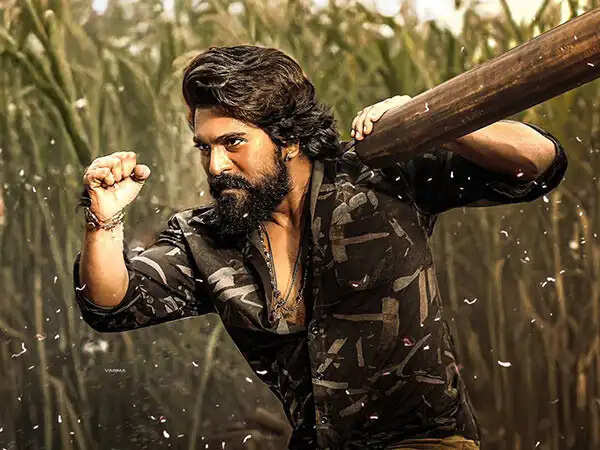
 The much-awaited trailer of Ram Charan’s upcoming film Peddi was unveiled at a grand event in Mumbai on Monday evening. And boy, doesn’t it pack a punch? The trailer has a rustic set up and brings a raw, rooted energy to this rural action–sports drama. It clearly establishes then the protagonist’s love for sport.