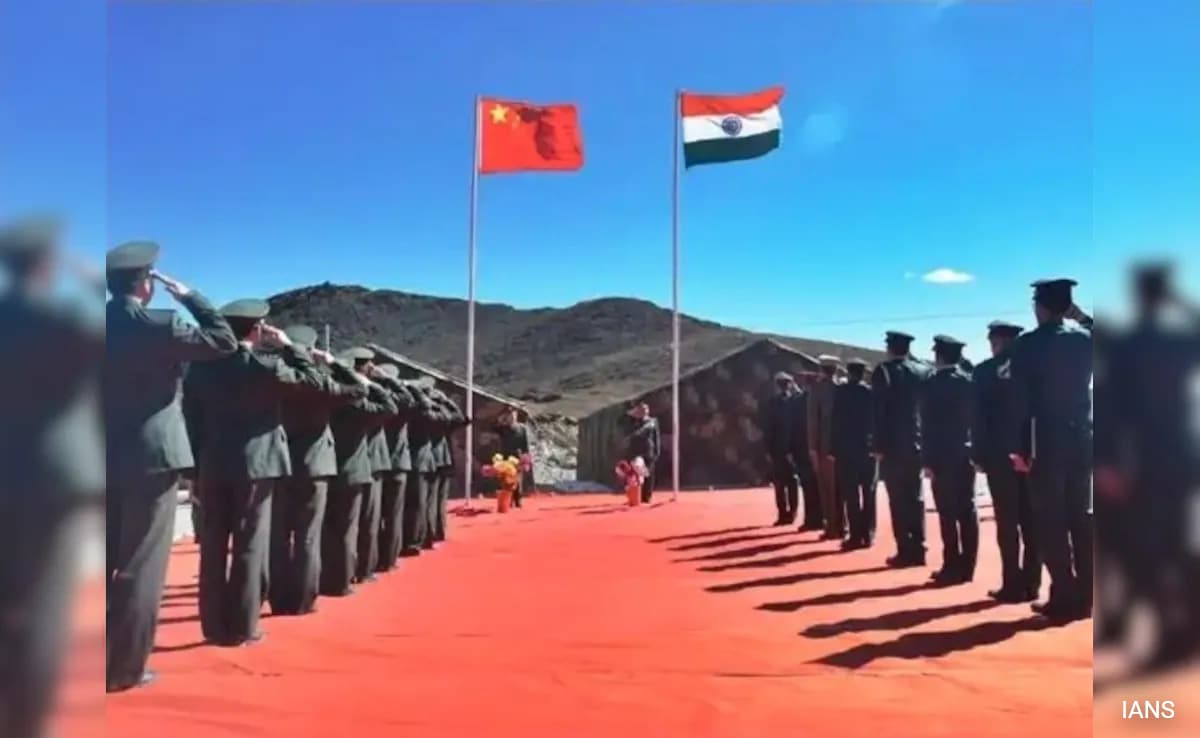
Video Explainer: Understanding The LAC And The Stand-Off With China
Prime Minister Narendra Modi and Chinese President Xi Jinping held a bilateral meeting in Russia’s Kazan today, on the sidelines of the BRICS Summit that both leaders attended. This is the first “formal bilateral meeting” between the PM Modi and President Xi since the military stand-off between both countries began in 2020.
Ties between India and China took a severe hit and came to an abrupt halt after the military clash in Galwan Valley. It took four years of diplomatic and military-level talks between both sides to finally come to an agreement to reinstate the status quo to what it was before the stand-off in 2020.
Both countries welcomed the move and in less than 72 after the disengagement agreement, the two leaders met in Russia today.
To understand what exactly had happened back in 2020, what the friction points were, and the kind of build up China had in place since then – which has now been dismantled, we need maps and satellite images.
UNDERSTANDING THE MAP
This is the map of Ladakh with the Line of Actual Control or LAC marked in red. The area between the LAC and the original border in black is the Aksai Chin region of Ladakh occupied by China since the 1962 war. While Galwan Valley was where the military clash happened in May, 2020, there were several other friction points, namely – Depsang, Galwan, Gogra Hot Springs, Pangong Tso, and Demchok.
Shortly after the uprising in China in 1959, and the occupation of Tibet that year, China started making claims in areas that fall in Ladakh, an “integral and inalienable” part of India. During the Sino-India war of 1962, Chinese troops had crossed the original border but had to withdraw later. It however never withdrew from Aksai Chin.
The dotted red line in the map above represents the approximate patrol points established by India and are the farthest points till where Indian soldiers patrol. All the areas labelled along the LAC are points where Chinese troops blocked Indian soldiers from reaching the last patrol point that would walk up to till 2020. This led to the military stand-off between India and China.
After the Galwan Clash in May, 2020, both sides brought in reinforcements – tens of thousands of troops and military hardware from tanks and artillery guns to fighter jets and drones. At this stage both sides started engaging in talks – both at diplomatic and military levels.
The disengagement talks began and both sides created disengagement zones, also known as buffer zones in the areas of Galwan – where the clash happened, Gogra Hot Springs, and Pangong.
What is a buffer zone?
Soldiers from both sides, as a result of a grievance, agreed to go back a certain number of kilometers, and the areas that fell in between, which included points that were disputed would be where troops from neither side would go. Structures that were built in these locations during the stand-off by either side were also removed as the disengagement talks progressed over the months and years.
SATELLITE IMAGES
Here are a set of satellite images show the way the situation developed since 2020:
This image shows the north side of the Pangong Lake where in June, 2020, Chinese soldiers came to an area that India claims and put markings of the flag of China and wrote beneath it in Mandarin that “This area belongs to China”. This was a time when the Chinese had come right in along the Pangong Lake.
This second image is also from the north bank of the Pangong Lake and a place where the Chinese had a major built-up area.
This third image shows the south bank of the Pangong Lake where the Chinese troops had brought in their boats (left side of the image) and the right side shows how these were eventually removed by Beijing as the disengagement process moved forward at a slow but steady pace.
This fourth image is from where it all began – The Galwan Valley – where the clash took place in which soldiers on either side were killed in action. China set up and built multiple structures along the banks of the river and in the area where the river meanders. In this photo, the LAC is approximately 400 meters south of where the river is seen bending to the right. These were areas where Indian soldiers would patrol in the past, but in 2020, the Chinese soldiers attempted to stop them from doing that.
In this fifth satellite image, we take a look at the Gogra Hot Springs area – an area which had seen conflict in 1962 as well. The screen is divided in two – the left showing the Chinese build-up in 2021, which they later dismantled in 2022 and vacated the area, as seen on the right.
The sixth satellite image shows the relocated Chinese base. This was set up by China 3 kilometers south of the spot they vacated in the image shown above this one.
This seventh image gives a clearer picture of where the Chinese had built a structure and where they relocated to as the disengagement talks continued. This was part of the buffer zone that was created in this particular area.
The eighth image shows the area in Depsang – an area of real concern. In a place called the Y-junction in Depsang, Chinese troops have set up a base and have been preventing Indian soldiers to patrol up to a point where they used to before 2020. As the photo shows, Indian soldiers have been prevented from moving east (right). If after the latest agreement of shifting the status quo to pre-2020 times, then Indian soldiers would now be able to patrol right up to the farthest point where they used to.
WHAT PM MODI TOLD XI JINPING IN THEIR FIRST OFFICIAL MEET AFTER 2020
“Excellency, I am happy to meet you, and like you mentioned, this is a formal meeting between us after five years. It is my belief that the importance of India-China relations is not just for the citizens of our two countries, but also very significant for peace, stability, and progress for the entire world.
Excellency, We welcome the consensus reached on the issues that have arisen in the last 4 years along the border. It should be our priority to ensure there is peace and stability along our border. Mutual trust, mutual respect, and mutual sensitivity should be the basis our bilateral relations. Today, we have got an opportunity to speak about all these issues and I trust that we will hold these talks with an open mind and that our talks will be constructive going forward. Thank you.”