Live · Global · Independent
Live Feeds
PinkVilla
Forbes
NDTV
Hindustan Times
6,600 Gold Bars, Millions In Cash: How Canada’s Biggest Heist Unfolded
onmynews.com

6,600 Gold Bars, Millions In Cash: How Canada’s Biggest Heist Unfolded

Canada on Thursday cracked one of the most audacious heists in its history, unravelling a web of criminal activity that intertwined gold, cash, and firearms. The plot, reminiscent of a script straight out of a crime thriller, unfolded at Toronto’s Pearson International Airport, leaving investigators grappling with a multimillion-dollar puzzle.

The heist, which took place on April 17 in 2023, saw an unexplained disappearance of a staggering cache of riches: over 22 million Canadian dollars’ worth of gold bars and foreign currency stolen away from a secure storage facility within the airport’s premises. The modus operandi to carry out the heist involved forged paperwork to gain access to the precious cargo.

The Heist 

On April 17 last year, cargo container arrived at Pearson International Airport from Zurich, Switzerland, aboard an Air Canada flight. Inside were 6,600 bars of .9999% pure gold, weighing 400 kilograms, along with 2.5 million Canadian dollars’ worth in foreign currency. The precious cargo was destined for secure storage within the airport premises before reaching its final destinations. However, they never did.

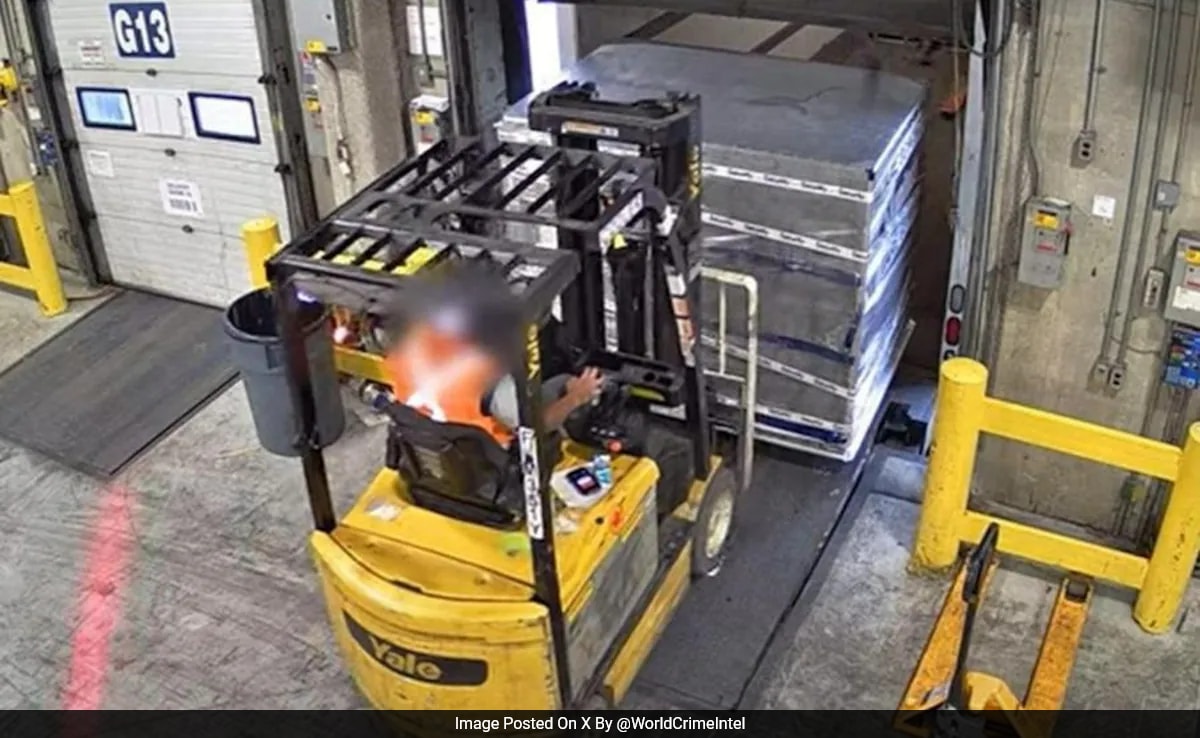
Surveillance footage captured the moment when the truck, driven by one of the accused, pulled up to the warehouse and loaded the container filled with gold bars and banknotes. Within hours of its arrival, the valuable cargo vanished into the night, setting off a chain of events that would reverberate across borders.

Central to the heist plan were individuals employed by Air Canada, the country’s flag carrier, who allegedly played key roles in facilitating the theft. Among those arrested were former and current employees, including Parmpal Sidhu and Simran Preet Panesar, whose positions within the airline provided them with insider knowledge crucial to executing the heist.

The Hunt

The police were alerted to the disappearance of the cargo the following morning, setting off an investigation that spanned international jurisdictions. After months of relentless investigation, law enforcement agencies made significant breakthroughs. Arrests were made, warrants were issued, and a web of connections began to unravel. 

The investigation uncovered a labyrinthine network of individuals, including those of Indian origin, involved in the crime.

The saga did not end with the heist itself. In a dramatic turn of events, police on both sides of the US-Canada border joined forces, unravelling a nexus between the stolen gold and an illegal firearms trafficking operation. The arrest of Durante King-Mclean, a 25-year-old man from Brampton, in the US exposed a parallel criminal network, revealing ties between the gold thieves and a scheme to smuggle firearms into Canada.

Police seized evidence suggesting that the stolen gold had been melted down and transformed into other forms, such as jewellery, in an attempt to conceal its origins. 

In total, seven were arrested after a year-long investigation.
Read full article
A Peek Into Iran And Israel’s Air Arsenal: Fighter Jets, Missiles, Drones
onmynews.com

A Peek Into Iran And Israel’s Air Arsenal: Fighter Jets, Missiles, Drones

Iran’s first direct attack on Israel on April 13 has brought renewed focus on their air defence capabilities as Israeli leaders decide how best to respond.

Below is a look at both countries’ air forces and aerial defence systems:

IRAN

The Iranian air force has 37,000 personnel, but decades of international sanctions have largely cut the country off from the latest high-tech military equipment, according to the International Institute for Strategic Studies in London (IISS).

The Air Force only has a few dozen working strike aircraft, including Russian jets and ageing US models acquired before the Iranian revolution of 1979.

Tehran has a squadron of nine F-4 and F-5 fighter jets, one squadron of Russian-made Sukhoi-24 jets, and some MiG-29s, F7 and F14 aircraft, IISS said.

The Iranians also have pilotless planes designed to fly into targets and explode. Analysts believe this drone arsenal numbers in the low thousands. In addition, they say, Iran has more than 3,500 surface-to-surface missiles, some of which carry half-tonne warheads. The number capable of reaching Israel may be lower, however.

Iran’s Air Force Commander, Amir Vahedi, on Wednesday said the Sukhoi-24s, were in their “best state of preparedness” to counter any potential Israeli attack.

But Iran’s dependence on Sukhoi-24s jets, first developed in the 1960s, shows the relative weakness of its air force.

For defence, Iran relies on a mixture of Russian and domestically produced surface-to-air missile and air defence systems.

Tehran received deliveries of the S-300 anti-aircraft system from Russia in 2016, which are long-range surface-to-air missile systems capable of engaging multiple targets simultaneously, including aircraft and ballistic missiles.

Iran also has the domestically produced Bavar-373 surface-to-air missile platform, as well as the Sayyad and Raad defence systems.

Fabian Hinz, a research fellow at IISS, said: “If there was a major conflict between the two countries, Iran would probably concentrate on occasional successes. They don’t have the comprehensive air defences that Israel has.”

ISRAEL

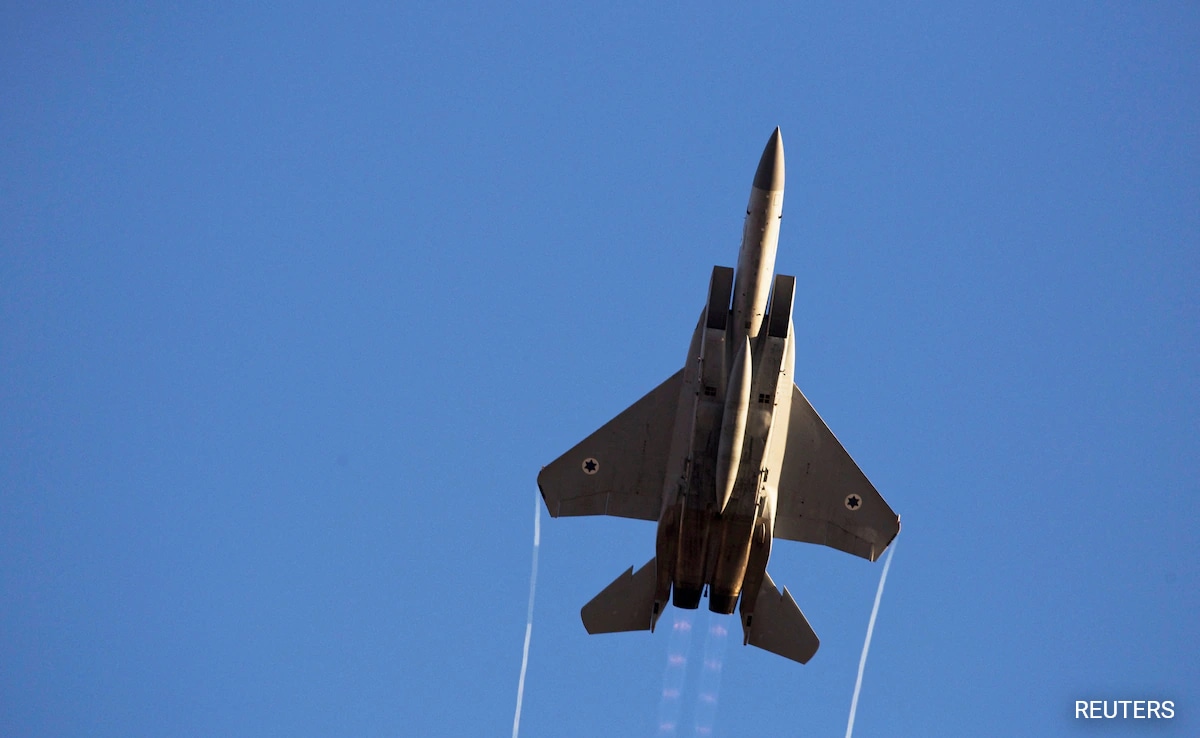
Israel has an advanced, US-supplied air force with hundreds of F-15, F-16 and F-35 multipurpose jet fighters. These played a role in shooting down Iranian drones at the weekend.

The air force lacks long-range bombers, though a smaller fleet of repurposed Boeing 707s serve as refuelling tankers that could enable its fighters to reach Iran for pinpoint sorties.

A pioneer in drone technology, Israel has Heron pilotless planes capable of flying for more than 30 hours, enough for far-flung operations. Its Delilah loitering munition has an estimated range of 250 km (155 miles) – far short of the Gulf, though the air force could close the gap by delivering one of the munitions closer to Iran’s border.

Israel is widely believed to have developed long-range surface-to-surface missiles, but neither confirms nor denies this. In 2018, then-Defence Minister Avigdor Lieberman announced that the Israeli military would get a new “missile force”. The military has not said where those plans now stand.

A multi-layer aerial defence system developed with US help after the 1991 Gulf War provides Israel will several additional options for shooting down long-range Iranian drones and missiles.

The highest-altitude system is Arrow-3, which intercepts ballistic missiles in space. An earlier model, Arrow-2, works at lower altitudes. The mid-range David’s Sling counters ballistic missiles and cruise missiles, while the short-range Iron Dome tackles the kind of rockets and mortars used by Iranian-backed militias in Gaza and Lebanon – but can also, in theory, be fired at any more powerful missiles missed by Arrow or David’s Sling.

The Israeli systems are designed to be patched into counterpart US interceptors in the region for coalition-strength defences.

“Israel’s air defences performed well over the course of the (April 13) attack,” said Sidharth Kausha, a research fellow at the Royal United Strategic Institute in London.

He noted that some of the incoming targets, particularly drones, were shot down by allied aircraft before they reached Israel, “which limited its degree of exposure to some threat types, and there appears to have been sufficient early warning to enable preparation of a coalition response which means the system was better prepared than it might have been if exposed to a similar attack with less early warning.”

(Except for the headline, this story has not been edited by NDTV staff and is published from a syndicated feed.)

Read full article
2 dead in suicide attack on vehicle carrying Japanese nationals in Karachi
onmynews.com

2 dead in suicide attack on vehicle carrying Japanese nationals in Karachi

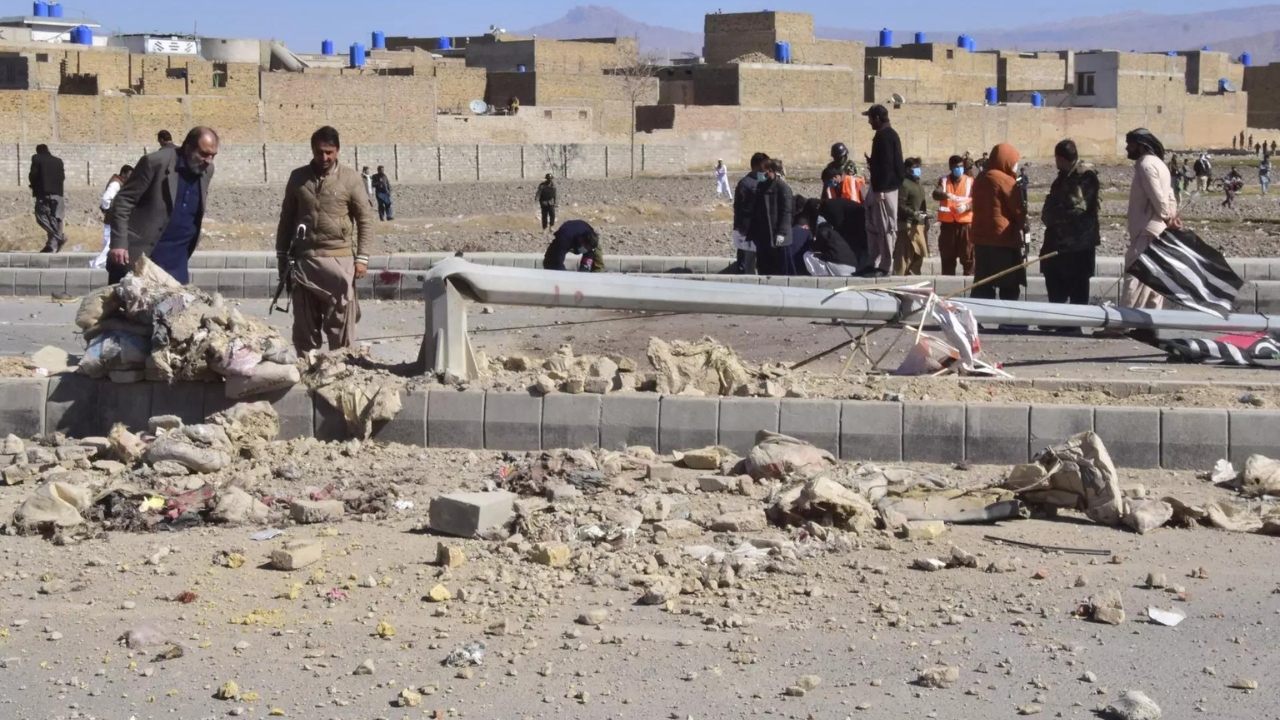
A vehicle carrying five foreign nationals was targeted in a suicide attack in Karachi’s Landhi area on Friday. Senior Superintendent of Police (SSP) Malir, Tariq Mastoi, noted that the assault also led to the deaths of two terrorists involved in the attack and caused damage to another vehicle nearby. The nationalities of the victims have not been disclosed yet.

Read full article
Link copied!