Live · Global · Independent
Live Feeds
PinkVilla
Forbes
NDTV
Hindustan Times
Explained: Militancy In Balochistan – A Shared Iran, Pakistan Problem
onmynews.com

Explained: Militancy In Balochistan – A Shared Iran, Pakistan Problem

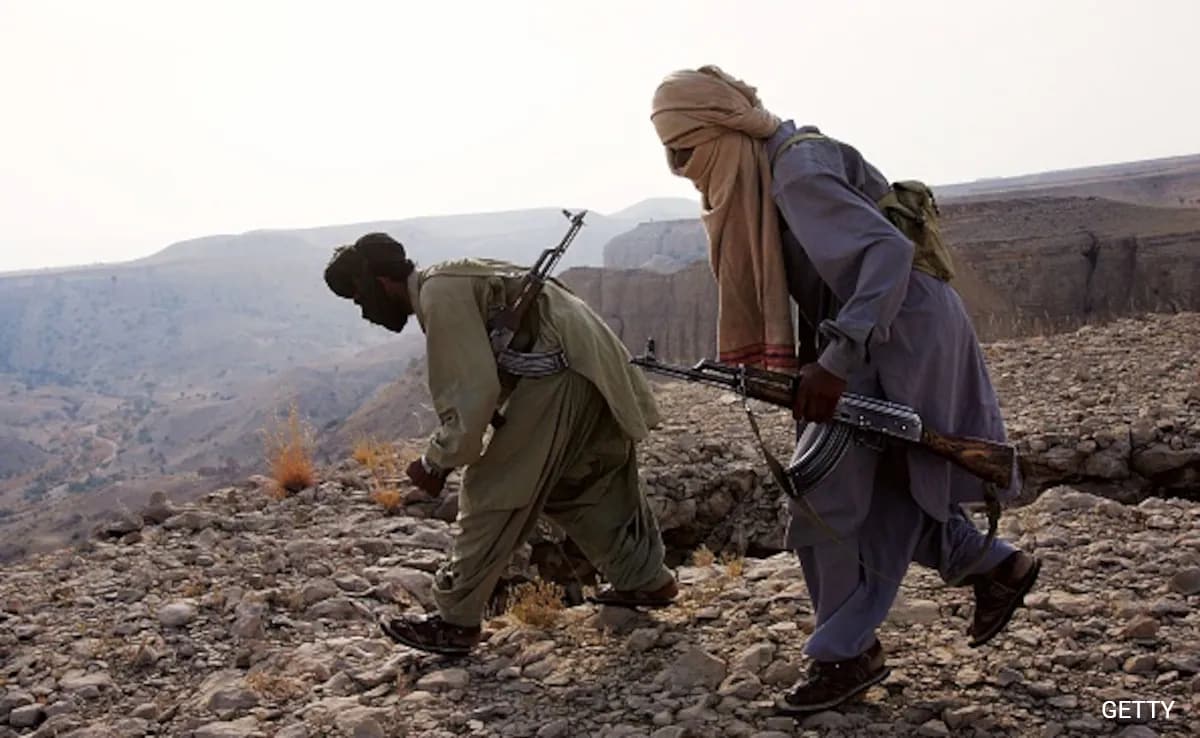
Iran violated Pakistan’s airspace and launched multiple missile strikes to target camps of two bases of the Baluchi militant group Jaish-al Adl. The bases were hit and destroyed by missiles and drones and two children were killed in the attacks. It happened when the caretaker PM of Pakistan, Anwaar ul Haq Kakar, met Iran’s Foreign Minister in Davos, Switzerland on the sidelines of the World Economic Forum. Pakistan retaliated with missile strikes on Iran today after warning the country of “serious consequences”.

Balochistan is Pakistan’s largest province and accounts for 40 per cent of its gas production and is an important checkpoint in China’s so-called “China Pakistan Economic Corridor”, with the Gwadar port located close to the Gulf of Oman. Despite its strategic significance, the region has been ignored by Pakistan’s central leadership, giving rise to an independence movement which began ever since it acceded to Pakistan in 1948.

Militancy In Balochistan – A Shared Problem

The Baluch tribe is a group of people from the Balochistan region and the area is divided into three regions. The northern part is in present-day Afghanistan, the western region in Iran is called the Sistan-Baluchistan region and the remaining in Pakistan. The region was and has been at the centre of a power struggle during British rule and even after that.

The Britishers governed the region with the ‘Sandeman system’, where an indirect rule was established with autonomy to tribes governed by ‘sardars’ or ‘jirgars’. It was established by Robert Groves Sandeman and was called the “Sandemization” of tribes. Pakistan took control of the region in 1948 and the accession agreement led to the first uprising for autonomy, resulting in systemic suppression of the independence movement in Balochistan with violence.

Balochistan Liberation Army, a separatist group, killed four people in a bomb blast in Quetta in April last year.

The Baluchis believe they were colonised or annexed by Pakistan during the Partition and the ethnic group is different from the dominant Punjabis, Sindhis that have dominated the politics of Pakistan. The Pashtun region’s affinity with Afghanistan and the Baluchis seeking independence has become Pakistan’s ‘Achilles Heel’. Fifty-two years ago, a call for independence in East Pakistan led to the creation of Bangladesh. Baloch armed groups were created to “liberate” the region and the Pakistan army and the militants have clashed several times. The groups have also targeted Chinese infrastructure to hamper the projects in the region and create a state of fear like it did when a Confucius Institute in Karachi was attacked in 2022.

There’s a shared sense of subjugation among Balochis on both sides of the border that has created a feeling of Balochi nationalism that aims for independence and also a hotbed for drugs and arms smuggling due to a power vacuum and increased hostility between the state and people.

The Problem In Iran

The western region of Balochistan (now Sistan-Baluchistan), was annexed by Iran’s Reza Shah Pahlavi in a coup by overthrowing the Qajar dynasty. The Iranian Revolution in the 1970s took control of the country and a Shia-dominated regime was in power. Ayatollah Khomeini’s regime saw the Sunni Baluchis indifferently over the years. 

The region was deprived of development, leaving a stark difference in the living conditions of millions of people in the province compared with other regions of Iran. The situation is the same in Pakistan too.

Years of neglect and suppression led to a resistance movement in Iran, too, and gave rise to Sunni Balcuhi militant groups like, Jundullah and Jaish-al Adl, that have taken shelter in Pakistan. The people from both sides of the region help each other and have provided a haven to militant groups on both sides of the border.

The two countries share the same problem – Baluchi militancy. They have agreed in the past to combat militancy. In 2019, the Jaish-al-Adl claimed to have killed 27 Iranian Revolutionary Guards Corps members (IRGCs), leading to tensions between the countries over Pakistan’s failure to crack down on militancy.

A few months later, an attack in the Gwadar district of Pakistan’s Balochistan was seen as a retaliation to the Jaish-Al-Adl’s attack. Pakistan claimed the group that killed 14 people was trained in Iran.

Not The First Incident

There have been instances in the past where Iran has fired mortars to attack militant camps in Balochistan. A fencing along the Iran-Pakistan border now separates families and tribes, which is still in progress.

The recent attacks bring attention to two things – A nuclear-armed nation’s airspace was violated with missile and drone attacks and volatility in Balochistan and the power politics involving regional and global powers.

Iran sees Jaish al-Adl as a proxy of Saudi Arabia, its arch-rival, and Pakistan’s closeness with Saudi Arabia is not acceptable to Iran. It claims the Jundullah group is backed by Al-Qaeda and the Taliban because of the common Sunni faith and blames Pakistan too for the militant group’s rise, though both nations face the same problem.

The Gwadar port in Balochistan and the Chabahar port in Iran are in the Balochistan region and are termed as “sister ports”. Iran has to secure Chabahar and cannot afford instability in Sistan-Baluchistan.

The ongoing Israel-Hamas war has brought the Arab world together against Israel. Iran’s proxy, the Houthis, are continuously targeting merchant ships in the Red Sea in “solidarity with people of Gaza”, but any militancy in its own country is not ideal in the Saudi-Iran cold war. Chabahar and Gwadar are vital ports of trade in the Sea Links of Communication. 

For India, too, Chabahar is a strategic port to counter Gwadar. India and Iran reached a final agreement on the port’s development when External Affairs Minister S Jaishankar visited the country recently. India’s “self-defence” response to Iran’s actions points to Sistan-Baluchistan’s importance for trade.

Read full article
PM “Sleeping On Floor, Drinking Coconut Water” For Ram Temple Event: Sources
onmynews.com

PM “Sleeping On Floor, Drinking Coconut Water” For Ram Temple Event: Sources

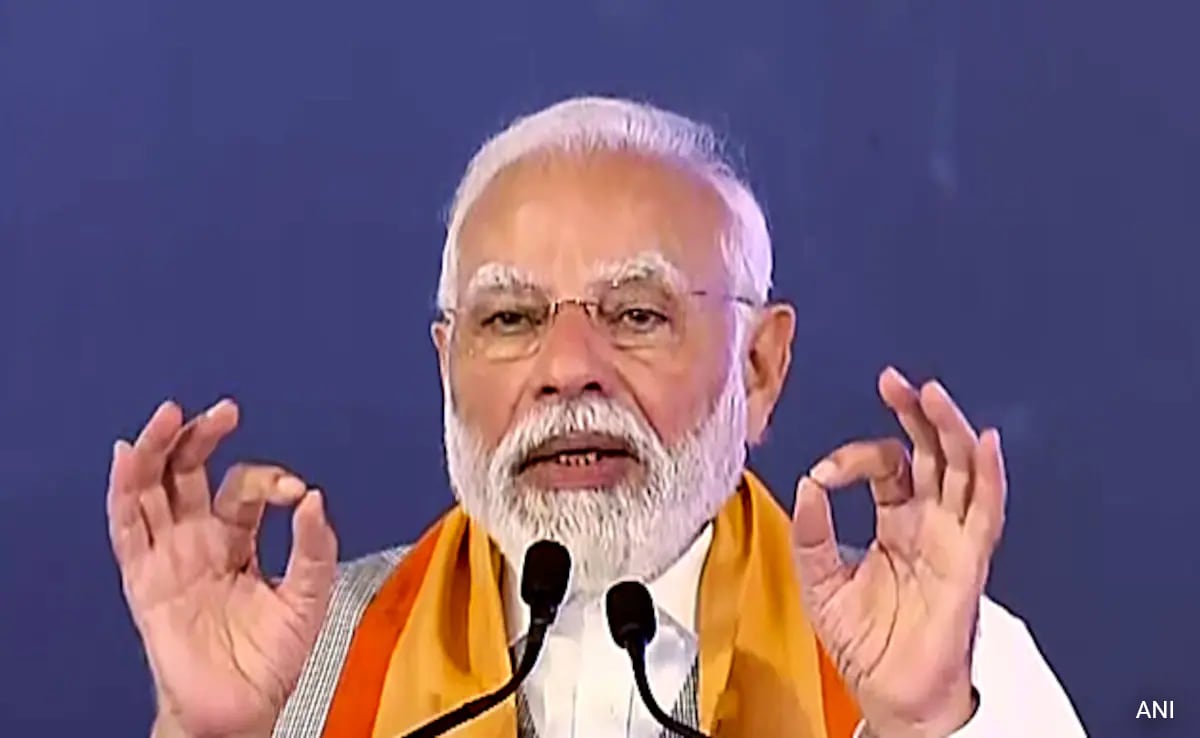
Prime Minister Narendra Modi is strictly following a set of rules and rituals ahead of participation in the consecration ceremony of the Ayodhya Ram temple, due on January 22. Sources said PM Modi is strictly following “Yam rules” for the rituals.

The 11-day code includes penance and purifying the mind and body with meditation and special “satvik” diet that bars onion, garlic and several other items.

Sources said the Prime Minister is sleeping on the floor with only a blanket and has been only drinking coconut water.

The rituals for the temple consecration started from January 12. On January 22, PM Modi will perform the puja for the “Pran Pratistha’, sources have said. A team of priests led by Lakshmikant Dixit will perform the main rituals of the Pran Prathistha.

“Pran Pratistha’ means imbibing the idol with divine consciousness and is a must for every idol that is worshipped in a temple. The auspicious time for it is 12.30 pm on January 22, the temple committee has said.

The Ram Lalla idol — a depiction of Lord Ram at the age of five years in black stone, sculpted by Mysuru-based sculptor Arun Yogiraj — was carried to the temple last night.

It was placed in the sanctorum sanctorum following a special puja ceremony. The formal installation is likely to be held today, Shri Ram Mandir Construction Committee chairperson Nripendra Mishra has said.

The consecration will be witnessed by over 11,000 guests from across the country and abroad who have been specially invited by the temple trust.

The Central government has announced a half-day closure for all its offices.

In the run-up to the consecration ceremony, PM Modi has asked people to conduct cleanliness drives at temples across the country. Last week, he cleaned the premises of the Kalaram Temple in Maharashtra’s Nashik as part of the “Swachchata Abhiyan (cleanliness drive)”.

Read full article
“Can’t Even Imagine…”: J Scindia On Fliers Eating On Airport Tarmac
onmynews.com

“Can’t Even Imagine…”: J Scindia On Fliers Eating On Airport Tarmac

Amid the row over the video in which passengers of an IndiGo flight are seen eating on the tarmac in Mumbai airport while waiting for take-off, Civil Aviation Minister Jyotiraditya Scindia said today that the way security was compromised was “completely unacceptable”.

The minister’s statement comes after the Bureau of Civil Aviation Security (BCAS) slapped a Rs 1.2 crore fine on IndiGo. Aviation regulator Directorate General of Civil Aviation has also pulled up Mumbai airport authorities and imposed a Rs 30 lakh fine.

Mr Scindia’s remarks also come against the backdrop of an uproar over poor airline services and long delays caused by dense fog conditions in north India.

#WATCH | Hyderabad, Telangana | On the imposition of heavy penalties on airlines & MIAL recently, Civil Aviation Minister Jyotiraditya Scindia says, “…We have had a few days of zero visibility. In those days, it becomes difficult if not impossible for landings &… pic.twitter.com/QJJNPRrwqw

— ANI (@ANI) January 18, 2024

The civil aviation ecosystem, Mr Scindia said, is working assiduously to serve the needs of people across the country. “This is a sector that has grown phenomenally well, it is a sector that is going to assume even greater importance and greater demand. It is a sector that has to continuously evolve as the number of passengers grow and also service to them must be of the highest quality level. Having said that, there are vagaries of nature over which we, as human beings, do not complete control,” he said at a press meet today. A video of the remarks was shared by news agency ANI.

Delhi witnessed a couple of days of very dense fog, he said. The national capital is a key airport and when such an airport gets affected, delays and cancellations follow across the system, he explained.

“We have had a had a few days of zero visibility. In those days, even with CAT-III runways, it becomes difficult, if not impossible, for landings and take-offs,” he said. CAT-III refers to high standards at airports that enable precision landing and take-offs amid bad weather conditions.

Mr Scindia explained that it is not the capability of the runway alone that determines flight movement. “They are determined by three independent variables: the capability of runways, the capability of aircraft and the capability of the human resource. It is the highest common factor among the three that determines capability,” he said.

The minister then referred to the January 14 incident at Mumbai airport. An IndiGo Goa-Delhi flight was diverted to Mumbai due to low visibility conditions in the national capital. The flight had taken off after a significant delay, and the fliers were livid after the diversion.

passengers of IndiGo Goa-Delhi who after 12 hours delayed flight got diverted to Mumbai having dinner just next to indigo plane pic.twitter.com/jGL3N82LNS

— JΛYΣƧΉ  (@baldwhiner) January 15, 2024

Mumbai airport authorities said the passengers refused to board the airline coach that would have taken them to the terminal building. Instead, they sat on the tarmac. The airport authorities said the passengers were cordoned off into a safe zone.

Sources have told news agency PTI that the IndiGo aircraft was allotted a remote bay instead of a parking stand with an aerobridge. This meant that passengers could not even use washrooms or eat from the food stalls at the airport.

Saying that a “chain of events” led to the Mumbai airport incident, Mr Scindia said he “cannot even imagine” why the aircraft was not allotted a parking stand. “Within hours of getting information about the incident, beyond the stroke of midnight, a meeting was held with all officials within the Ministry, show-cause notices were immediately issued,” he said.

“The fact the passengers were inconvenienced, the fact that they had to eat on the tarmac, the fact that security had been compromised across all points was completely unacceptable. Within three-four hours, notices were issued and within 24 hours of the notices being issued, the necessary penalties have been levied,” he said.

IndiGo has said in a statement that it apologises to customers and will take necessary steps to avoid any such instances in the future.

The Mumbai incident is, however, just one among many instances for which airlines have been in the news for the past couple of weeks. In one instance, passengers of an Air India flight suffered a 17-hour delay. In another case, a flier onboard a SpiceJet plane was locked in the toilet for the whole flight. Add to this, complaints of long delays and poor communication from airlines.

Rising tempers among passengers has led to unfortunate outbursts. In one case, an IndiGo pilot was attacked by a flier when he was announcing a delay.

Read full article
Link copied!