Live · Global · Independent
Live Feeds
PinkVilla
Forbes
NDTV
Hindustan Times
Explained: Key Events That Forced 93,000 Pak Troops To Surrender In 1971
onmynews.com

Explained: Key Events That Forced 93,000 Pak Troops To Surrender In 1971

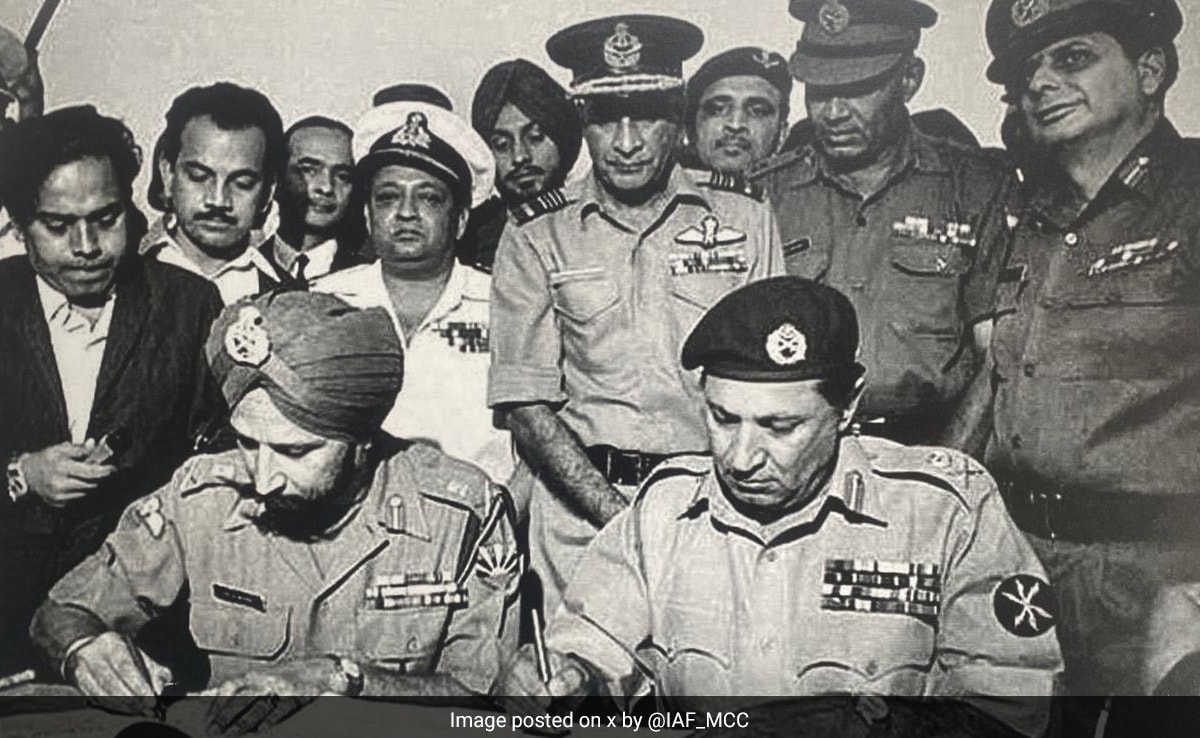
India celebrates Vijay Diwas today to mark the surrender of East Pakistan troops in the 1971 war. Fifty-two years ago the war led to the liberation of East Pakistan and the creation of Bangladesh. 

Some important events played in India’s favour that led to the fall of Pak regime in Dhaka and the surrender of over 90,000 troops in East Pakistan in a fortnight of fighting.

Land, Sea and Air Operation

East Pakistan was isolated from its western half following India’s declaration of a no-fly zone for Pakistani aeroplanes. A naval blockade in the west disrupted all routes to supply relief and ammunition.

Within three days of the start of the war, the Indian Air Force established air superiority in East Pakistan, which helped in the swift advance of the army deep inside Bangladesh. INS Vikrant, the navy’s aircraft carrier, and naval aviators blocked reinforcements to the east, cutting off escape routes and Sea Lines of Communication (SLOC).

Meanwhile, the Indian Army’s 4, 33 and 2 Corps marched toward Bangladesh from three directions. The objective was to capture the “fortress cities” built by Pakistani troops and move through the gaps to take on Dhaka. The fall of Sylhet, Chittagong, Tangail, Khulna, Jessore, etc. ensured no escape route was left. 

Psychological Warfare

Before the war began, the Pakistani troops in the east led by General AAK Niazi believed that India would take territories along the border in West Bengal. This false impression forced Pakistan to create “fortress cities” around Dhaka, leaving insufficient troops in the capital. The fall of each city made Dhaka look closer and air dropping in Tangail, which was reported as a paradrop of 5,000 troops, was a psychological blow.

Then army chief General Sam Manekshaw (later Field Marshal) broadcast a message for Pakistani troops after the fall of Jessore on December 8, warning Pakistani troops and assuring them “Once you surrender, you shall be treated with dignity as per Geneva Convention”. On December 10, in another message, General Manekshaw said, “Your resistance is gallant but fruitless…Your commanders are giving false hopes.” 

US, China Fail To Come To The Rescue

Lt Gen Niazi reportedly told Maj General JFR Jacob after the surrender that he had recognised defeat at least seven days before the troops gave up arms. Pakistan had pinned its hopes on the US and China.  

India’s support from the USSR prompted Pakistan to seek help from the US during the Cold War. The Chinese were recovering from the impact of the ‘Cultural Revolution’ and a war deep inside India did not favour them. Massive mobilization of Chinese troops in winter had to be carried out to penetrate deep inside East Pakistan and ensure supply lines were maintained. For China, diverting Indian troops to the northeast meant going for a high-altitude winter war.  

Then US President Richard Nixon ordered the deployment of its Seventh Fleet comprising its nuclear-powered aircraft carrier – USS Enterprise. President Nixon believed the presence of a US fleet would take on INS Vikrant, weaken India’s naval blockade and force the navy to step back on the defensive because of the US’ “Gunboat Diplomacy”. The Indo-Soviet treaty came to the rescue. USSR deployed frigates, cruisers, tankers and destroyers armed with atomic missiles. 

This deployment brought the two superpowers against each other and hostilities were defused, leaving Pakistan in the east alone.

Surrender

Rapid Indian advance coupled with joint air and naval operations broke the supply of any help to East Pakistan. In the Western theatre, Pakistani troops managed to resist strongly, and the Pakistan Air Force provided air support to its troops, but in the east, the fall of Dhaka was inevitable.

On December 13, Gen Niazi sent a distress signal to Rawalpindi in West Pakistan but was told to continue fighting and hold as much territory as possible. A day later, the Indian Air Force bombed the Governor House in Dhaka when a meeting was ongoing in the building. The air strike had such a demoralizing effect that the East Pakistan government resigned on the spot. This was the last straw on the camel’s back and Niazi chose peace over more fighting.
Read full article
Kamal Nath Replaced, Jitu Patwari Is New Madhya Pradesh Congress Chief
onmynews.com

Kamal Nath Replaced, Jitu Patwari Is New Madhya Pradesh Congress Chief

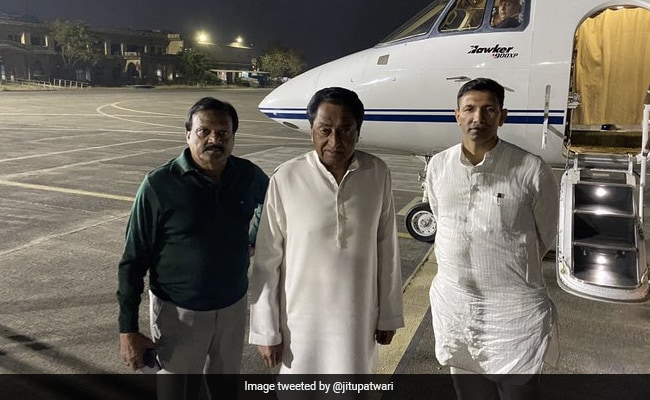
Days after its drubbing in the Madhya Pradesh elections, the Congress has replaced senior leader and former chief minister Kamal Nath as the state unit chief with other backward class (OBC) leader Jitu Patwari. 

OBCs account for over 50% of voters in Madhya Pradesh and the selection of Mr Patwari – who lost to a BJP candidate from the Sau Assembly seat with a margin of over 35,000 votes – is being seen as the party’s attempt to make a fresh start in the crucial heartland state ahead of the all-important Lok Sabha elections, which are less than four months away. 

The Congress had managed to secure only 66 seats in the 230-member Assembly and the BJP had won 163 despite being in power in Madhya Pradesh for nearly two decades. 

Despite the loss in Chhattisgarh, however, the Congress has decided to retain Deepak Baij as the state unit chief.

In Madhya Pradesh the party has also appointed Umang Singhar as the Congress Legislative Party leader, which means that he will be the Leader of the Opposition in the Assembly, and has picked Hemant Katare as the deputy leader.

The picks are significant as, apart from effecting a generational change, they also reflect the Congress’ attempt at caste balancing. Kamal Nath was a Brahmin leader and has now been replaced with an OBC leader in Jitu Patwari. Umang Singhar is a tribal and the nephew of late Jamuna Devi, who was a former deputy chief minister and represented the state both in the Lok Sabha and Rajya Sabha. 
 

Read full article
“Saw Him With Wife For First Time That Day”: Woman Hit By Lover’s Car
onmynews.com

“Saw Him With Wife For First Time That Day”: Woman Hit By Lover’s Car

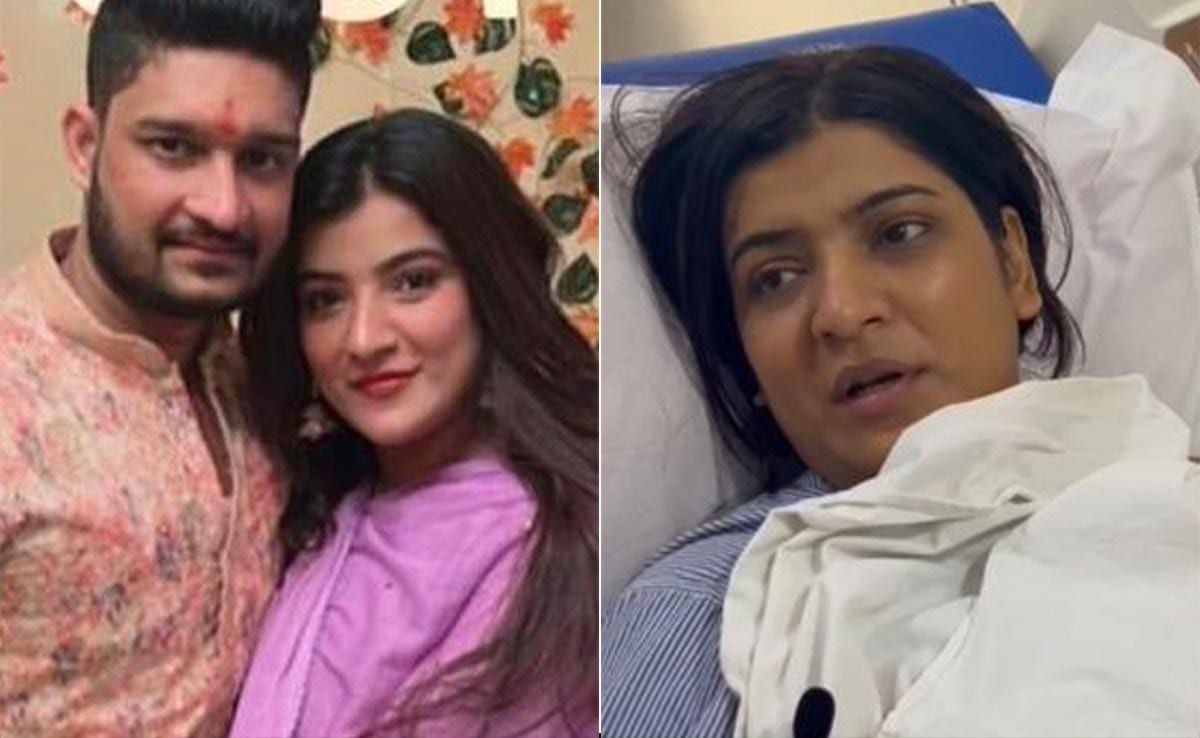
The 26-year-old woman who suffered severe injuries after the son of a senior bureaucrat allegedly tried to run her over with a car in Thane has said that she was in a relationship with the man for four-and-a-half years and had been told he was divorced. 

“For one year, he had hid the fact that he was married. When I found out, he said he had no relationship with the woman and that they were separated and divorced. He said he wanted to stay with me and marry me. We were together for four-and-a-half years,” Priya Singh, who was assaulted by her boyfriend Ashwajit Gaikwad near a hotel on Ghodbunder Road at 4.30 am on Monday, said.

Ashwajit is the son of  Anil Gaikwad, the Managing Director of the Maharashtra State Road Development Corporation.

Lying on a hospital bed, Ms Singh said Ashwajit called her at 4 am on Monday and she went to meet him at a function, which he was attending with his family and some of their common friends. When she reached the location, she saw him with his wife. 

“I had never seen that and I was shocked. I tried to speak to him and asked him to come talk to me privately. He took out his aggression on me. We had an argument,” she said.

Describing the events that followed, the 26-year-old had said, “My boyfriend and his friend used abusive language to which I asked my boyfriend to defend me and not abuse which led to the start of something beyond my imagination. My boyfriend slapped me, tried to strangle my neck, I tried to push him away he bit my hand, beat me, pulled my hair, and his friend out of nowhere pushed me to the ground”.

She alleged that when she reached into Ashwajit’s car to collect her belongings, he asked his driver to run her over. 

“Three bones were broken in my right leg. A surgery was done and a rod has been inserted in the leg. On the left side of my body, I have suffered deep injuries from my shoulder to my hips. I can’t move my body. I had registered a complaint on the day of the incident itself and a case has now been filed,” Ms Singh said. 

Ashwajit has been charged under sections related to causing hurt and rash driving, among others, of the Indian Penal Code. 

In an Instagram post, Ms Singh wrote, “I’m really terrified. I’m very scared for my family and myself. I don’t feel safe. I have lost all faith in humanity. I don’t know if my life is ever going to be normal.”

Read full article
Link copied!