Live · Global · Independent
Live Feeds
PinkVilla
Forbes
NDTV
Hindustan Times
“Divorced From Reality”: US Vetoes UN Resolution On Gaza Ceasefire
onmynews.com

“Divorced From Reality”: US Vetoes UN Resolution On Gaza Ceasefire

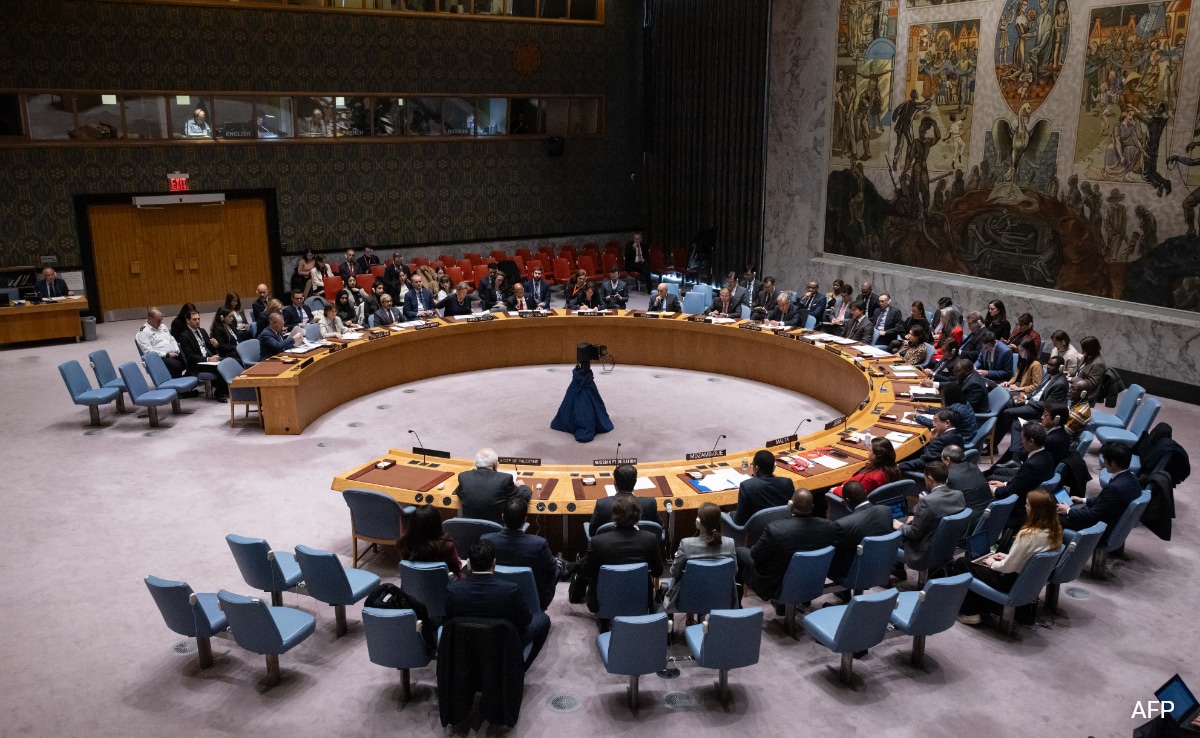
An extraordinary UN bid to call for a ceasefire in Gaza was blocked by the United States on Friday while Israeli forces continued a relentless offensive to destroy Hamas after its deadly attack two months ago.

The fighting has left 17,487 people dead in the Palestinian territory, mostly women and children, according to the latest count from the Hamas-run health ministry.

Israel has vowed to eradicate Hamas over its unprecedented attack on October 7 when militants broke through Gaza’s militarised border to kill around 1,200 people and seize hostages, 138 of whom remain captive, according to Israeli figures.

Vast areas of Gaza have been reduced to a wasteland. The UN says about 80 percent of the population has been displaced, facing dire shortages of food, fuel, water and medicine, and the growing threat of disease.

UN Secretary-General Antonio Guterres invoked the rarely-used Article 99 of the UN Charter to convene an emergency Security Council meeting calling for an immediate ceasefire.

He urged the release of hostages, but said “the brutality perpetrated by Hamas can never justify the collective punishment of the Palestinian people”.

But the US, which supplies billions of dollars in military assistance to Israel, vetoed the resolution.

Its deputy representative at the UN, Robert Wood, said it was “divorced from reality” and “would have not moved the needle forward on the ground”.

That was in spite of warnings from the World Health Organization that civilisation was collapsing in Gaza.

“People are starting to cut down telephone poles to have a little bit of firewood to keep warm or maybe cook, if they have anything available,” WHO spokesman Christian Lindmeier said.

Doctors Without Borders (MSF) said the Security Council was “complicit in the ongoing slaughter”.

– Battles on multiple fronts –

Israel’s military said it had struck 450 targets in Gaza over 24 hours, showing footage of strikes from naval vessels in the Mediterranean.

The Hamas health ministry reported 40 dead near Gaza City in the north, and dozens more in Jabalia and the main southern city of Khan Yunis.

“May God punish those who can see our suffering and remain calm,” said one Gazan, Rimah Mansi, who told AFP they had lost “all those we love”.

Israel has lost 91 soldiers in Gaza.

It said two others were wounded in a failed bid to rescue hostages overnight, and that “numerous terrorists” were killed in the operation.

Hamas claimed a hostage was killed in the operation, and released a video purporting to show the body, which could not be independently verified.

Hamas rocket parts, launchers and other weapons as well as a one-kilometre tunnel were found at Al-Azhar University in Gaza City, the army said, as it warned residents to move west.

Many of the 1.9 million displaced Gazans have headed south, turning Rafah near the Egyptian border into a vast camp.

“It’s so cold, and the tent is so small. All I have are the clothes I wear, I still don’t know what the next step will be,” said Mahmud Abu Rayan, displaced from Beit Lahia in the north.

The death count also rose in the Israeli-occupied West Bank, where Israeli forces shot dead six Palestinians on Friday, the territory’s health ministry said.

The armed wing of Hamas, the Ezzedine al-Qassam Brigades, said it had fired more rockets towards Israeli territory.

– ‘Protect civilians’ –

An attack on the US embassy in Iraq deepened fears of wider regional conflict.

Salvoes of rockets were launched against the mission in Baghdad’s heavily fortified Green Zone, adding to dozens of recent rocket and drone strikes by pro-Iran groups against American or coalition forces in Iraq and Syria.

Thousands of Jordanians demonstrated near the US embassy in Amman to denounce Washington’s support for Israel.

French President Emmanuel Macron was the latest world leader to push for more aid to Gaza, urging Israeli Prime Minister Benjamin Netanyahu in a phone call to reopen the Kerem Shalom checkpoint that handled more than half of goods into the besieged territory before October 7.

The UN said 69 trucks carrying supplies and fuel had entered from Egypt on Thursday — well below the average 500 daily truckloads before the war.

US President Joe Biden earlier urged Netanyahu to open “corridors” to allow civilians to move safely.

– Hanukkah –

Israelis remained deeply traumatised by the Hamas attack and fearful for the fate of hostages as they marked the Jewish festival of lights, Hanukkah, which began Thursday.

A 138-branched menorah candelabrum was lit in Tel Aviv for the remaining captives.

The war has also led to deadly cross-border exchanges on the Lebanese frontier.

An AFP investigation into October 13 strikes in southern Lebanon that killed a Reuters journalist and injured six others, including two from AFP, found it involved a tank shell only used by the Israeli army in this region.

The nature of the strikes and lack of military activity in the immediate vicinity of the journalists indicate the attack was deliberate and targeted, the investigation found.

Amnesty International and Human Rights Watch said the strikes merit a “war crime” investigation.

Israel’s army said the strikes occurred in an “active combat zone” and were under review.

(Except for the headline, this story has not been edited by NDTV staff and is published from a syndicated feed.)

Read full article
Telangana BJP’s oath ‘boycott’ threat as Akbaruddin Owaisi appointed pro-tem Speaker
onmynews.com

Telangana BJP’s oath ‘boycott’ threat as Akbaruddin Owaisi appointed pro-tem Speaker

BJP MLA-elect Raja Singh said he and other BJP MLAs would not participate in the oath-taking event with Akbaruddin Owaisi presiding over the proceedings.

​ 

Telangana Assembly Election Result Live Updates: Get Latest Telangana Election Latest News Today | Hindustan Times 

BJP MLA-elect Raja Singh said he and other BJP MLAs would not participate in the oath-taking event with Akbaruddin Owaisi presiding over the proceedings. 

Read full article
Microsoft Says No Stake In OpenAI As It Faces Antitrust Probe
onmynews.com

Microsoft Says No Stake In OpenAI As It Faces Antitrust Probe

With global regulators examining Microsoft Corp’s $13 billion investment in OpenAI, the software giant has a simple argument it hopes will resonate with antitrust officials: It doesn’t own a traditional stake in the buzzy startup so can’t be said to control it.

When Microsoft negotiated an additional $10 billion investment in OpenAI in January, it opted for an unusual arrangement, people familiar with the matter said at the time.

Rather than buy a chunk of the cutting-edge artificial intelligence lab, it cut a deal to receive almost half of OpenAI’s financial returns until the investment is repaid up to a pre-determined cap, one of the people said. The unorthodox structure was concocted because OpenAI is a capped for-profit company housed inside a non-profit organization.

It’s not clear regulators see a distinction, however. On Friday the UK Competition and Markets Authority said it was gathering information from stakeholders to determine whether the collaboration between the two firms threatens competition in the UK, home of Google’s AI research lab Deepmind. The US Federal Trade Commission is also examining the nature of Microsoft’s investment in OpenAI and whether it may violate antitrust laws, according to a person familiar with the matter.

The inquiries are preliminary and the agency hasn’t opened a formal investigation, according to the person, who asked not to be named discussing a confidential matter.

Microsoft didn’t report the transaction to the agency because the investment in OpenAI doesn’t amount to control of the company under US law, the person said. OpenAI is a non-profit and acquisitions of non-corporate entities aren’t reported under US merger law, regardless of value. Agency officials are analyzing the situation and assessing what its options are.

“While details of our agreement remain confidential, it is important to note that Microsoft does not own any portion of OpenAI and is simply entitled to a share of profit distributions,” a Microsoft spokesperson said in a statement. Earlier Friday, Microsoft President Brad Smith said “the only thing that has changed is that Microsoft will now have a non-voting observer on OpenAI’s board.” He described its relationship with OpenAI as “very different” from Google’s outright acquisition of DeepMind in the UK.

“Our partnership with Microsoft empowers us to pursue our research and develop safe and beneficial AI tools for everyone, while remaining independent and operating competitively. Their non-voting board observer does not provide them with governing authority or control over OpenAI’s operations,” said an OpenAI spokesperson in a statement.

From the beginning, Microsoft and OpenAI took pains to telegraph the two companies’ independence. Microsoft hoped to reassure investors and customers that it’s not overly reliant on one partner. OpenAI didn’t want employees, customers and other investors thinking it was merely an outpost of Redmond, Washington-based Microsoft. That careful positioning was upended last month with the firing of OpenAI Chief Executive Officer Sam Altman and the startup’s near implosion.

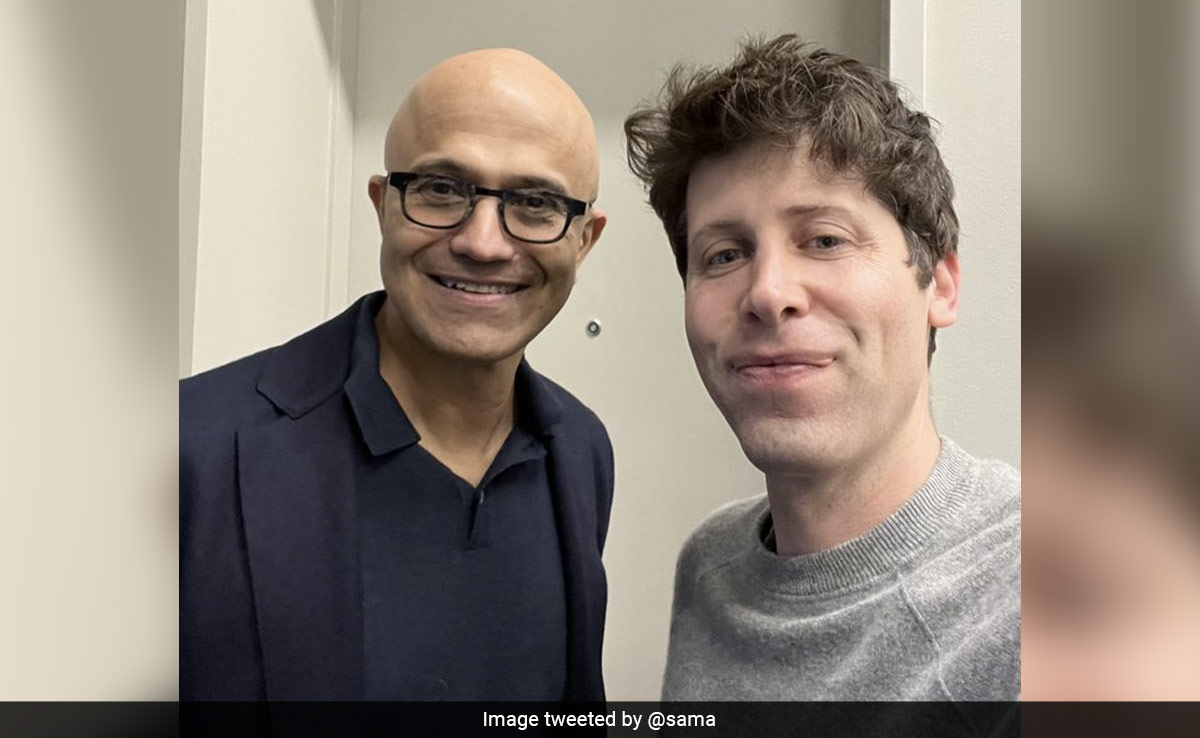
The Altman imbroglio demonstrated both Microsoft’s lack of control and its influence. Microsoft received just minutes notice that the OpenAI board planned to announce Altman’s ouster, and its executives were not consulted in the decision. Still Microsoft CEO Satya Nadella played a key role, along with other investors, in forcing the board to reverse its decision. At one point Microsoft said it would hire Altman and his OpenAI colleagues to form a new Microsoft AI unit.

Once Altman was restored as CEO, Microsoft executives debated the wisdom of taking a seat on the OpenAI board, people familiar with the matter said at the time. On the one hand, executives feared that a board seat or observer slot might draw the attention of regulators. On the other hand, Microsoft wanted to keep a closer eye on its partner and protect its investment-an imperative that carried the day, despite the risks.

Ultimately, Microsoft could face a world of regulatory headaches. Regulators in Europe are also paying attention, according to a spokesperson for the European Commission. In order for a transaction to be notifiable to the Commission under the EU Merger Regulation, it has to involve a change of control on a lasting basis. While this transaction has not been formally notified, the Commission had been following the situation even before the management turmoil, the spokesperson said.

Last month, Germany’s competition authority said it wasn’t subjecting Microsoft’s OpenAI investment to a merger review. But the regulator said they would hold off only because OpenAI didn’t have substantial business in Germany. After reviewing the transaction and talking the companies, the regulator found the investment would give Microsoft a “material competitive influence” over the AI company that might warrant scrutiny in the future if OpenAI increases its activities in Germany.

The partnership raises competition issues if Microsoft cuts back on its own AI research and development or if the investment keeps OpenAI from partnering with the tech giant’s rivals, said Bloomberg Intelligence antitrust analyst Jennifer Rie. Antitrust enforcers may also have concerns about Microsoft’s board observer since it would give Microsoft additional information on OpenAI’s plans even if it doesn’t have rights to influence the decisions.

(Except for the headline, this story has not been edited by NDTV staff and is published from a syndicated feed.)

Read full article
Link copied!