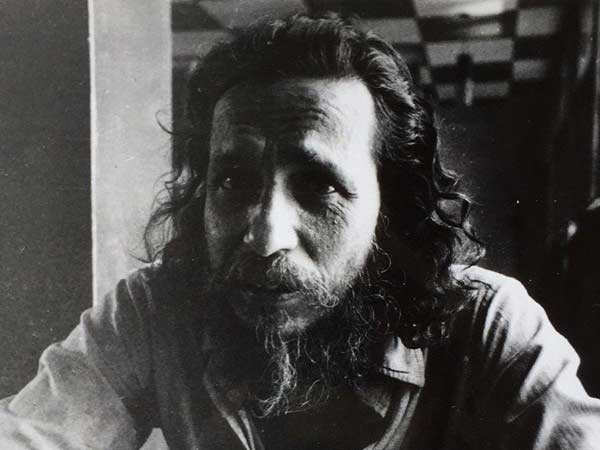
The Firebrand and The Frame: Reassessing John Abrahamâs Radical Cinema

Malayalam cinema’s great radical, John Abraham, is back in conversation. With the restored 4K version of Amma Ariyan, his landmark 1986 Malayalam film, set to have its world premiere at the 79th edition of the Cannes Film Festival, renewed attention is once again turning towards one of the most uncompromising filmmakers Indian cinema has produced.
Born in Kerala in 1937, Abraham studied at the Film and Television Institute of India, where he trained under filmmaker Ritwik Ghatak. The influence of Ghatak’s politically charged storytelling and formal experimentation can be seen across Abraham’s films. At a time when mainstream Indian cinema revolved around star-driven narratives and rigid storytelling structures, Abraham gravitated towards films that resisted neat storytelling and remained deeply rooted in social realities.

John Abraham with cinematographer Venu. Image: Venu
Across just four feature films, Vidyarthikale Ithile Ithile (1971), Agraharathil Kazhuthai (1977), Cheriyachante Kroorakrithyangal (1979) and Amma Ariyan (1986), he questioned authority, caste structures, organised religion and ideological certainties. Though his filmography was brief, its impact on Malayalam parallel cinema remains difficult to ignore.
Challenging Norms Through Cinema
Abraham’s second feature, Agraharathil Kazhuthai, remains one of the sharpest anti-caste satires made in Indian cinema. Inspired by Au Hasard Balthazar by Robert Bresson, the film follows a professor who brings a donkey into a conservative Brahmin settlement, triggering paranoia and hostility within the community. The film won the National Film Award for Best Tamil Feature Film and gradually acquired cult status for its fearless social commentary. Decades later, the film’s portrayal of a community projecting fear and moral panic onto a stray animal still feels unsettlingly familiar.
His Malayalam films pushed even further into philosophical and social territory. Cheriyachante Kroorakrithyangal explored power, guilt, and feudal violence through an experimental narrative structure, while Amma Ariyan examined the emotional aftermath of activism in Kerala during the 1980s.

A Still from Agraharathil Kazhuthai
Amma Ariyan follows a group of friends travelling across Kerala to inform a mother about the death of her son, a percussionist believed to have been involved in radical politics. Along the way, the journey becomes a portrait of a society shaped by protest movements, student politics, and ideological uncertainty. The film blended documentary realism with fiction, often using real locations and non-professional performers to create a sense of immediacy.
The film also stood apart formally. Rather than following a conventional dramatic structure, Amma Ariyan unfolded through conversations, encounters, and fragments of memory. Cinematographer Venu used a stark visual style that gave the film an almost reportage-like texture.
Reinventing the Idea of People’s Cinema
Abraham’s politics extended beyond the stories he told. In the mid-1980s, he co-founded the Odessa Collective, a people’s film movement that sought to break away from traditional production and distribution systems. Members of the collective travelled across Kerala screening films in public spaces and collecting small donations from ordinary people to finance new projects.

A still from Amma Ariyan
This grassroots fundraising model eventually helped produce Amma Ariyan, making it one of India’s earliest crowd-funded films. At a time when independent filmmakers had limited access to institutional funding, the Odessa Collective offered an alternative model built around community participation.
The movement also changed how films were exhibited. Odessa screenings took place in village squares, factory spaces, and local gatherings rather than conventional theatres. For Abraham, cinema was not meant to exist only within commercial structures. It was meant to provoke discussion, circulate among people, and remain connected to public life outside the screen.
Though Abraham died in 1987 at the age of 49 after an accidental fall, his influence continues to be felt across Malayalam cinema. Filmmakers and scholars frequently revisit his work for its formal experimentation, social engagement and rejection of cinematic convention. The renewed international attention surrounding Amma Ariyan’s restoration has once again brought focus to a filmmaker who believed cinema should remain inseparable from political and public life.
Also Read: Check out Akshay Kumar and John Abraham’s crackling camaraderie