onmynews.com
“Without Human Authorisation…”: OpenAI Robotic Head Quits Over US Deal
OpenAI struck its deal with the Pentagon in late February following the breakdown of talks between the Trump administration and Anthropic PBC.

OpenAI struck its deal with the Pentagon in late February following the breakdown of talks between the Trump administration and Anthropic PBC.

This viral trend, that is slowly gaining momentum online, is a trigger of microaggressions and sexism that women face on a daily basis. For instance, being overlooked in professional setups, being mansplained, assuming a police officer or the CEO is a man, watching the waiter present the bill to the man at the restaurant, bifurcation of drinks, clothes and emotions as girly and manly, referring to God as “He”, frowning upon a man who dresses up in pink and a host of others. In quiet rebellion against the likes of these notions’ women hold their ground and employ subtle objection in their everyday lives. And this practice is known as microfeminism.
Microfeminist acts, in such cases would involve, clapping back at this inherited misogynistic mindset like deliberately using female pronouns when talking about hierarchical positions like police officers, lawyers or entrepreneurs and complementing a man for wearing whatever colour he pleases and whatever emotion he shows without associating gendered connotations. You would find multiple reels online with supers that read “Tell me your favourite acts of microfeminism”. And the comments would follow saying:
“I assume, when talking to a man about sports, that he’s talking about women’s sports and make him clarify”
“When a man says he is babysitting his children I make sure to correct it to parenting”.
Safe to say, slowly but steadily this movement is brewing on social media as a nuanced expression of feminism.
The current trend in Bollywood relies heavily on hyper masculine or Toxic (pun intended) masculine narratives. Male protagonists with scathing egos, are in a battle to prove who is the “big daddy” and who is more alpha. Amidst this phallocentric cinema, there exist movies and characters who embody microfeminism at its best.

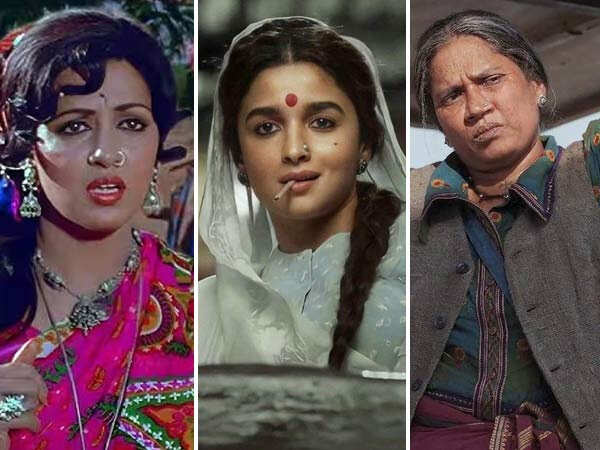
In Sholay (1975), Basanti played by the evergreen Hema Malini is one of the most fitting characters in this essence. Long before the “strong independent woman” was a viral trope, Basanti was already living it. She drove her Tonga, a role carried mostly by men, through the streets of Ramgarh, indifferent to the societal norms. She took the road not taken, literally and figuratively. In one of the film’s key scenes when we meet Basanti, she addresses taunts that she often receives from the villagers. “Log kehte hain Basanti, ladki hokar tanga chalati ho?” She responds, “Dhanno ghodi hokar tanga kheench sakti hai toh Basanti ladki hokar kyon nahi chala sakti?” It’s subtle yet loud enough to make you realize that Basanti is not just a vivacious village belle. She represents female agency and mobility with understated impact.

Another sharp jab at the patriarchy mind comes in Gangubai Kathiawadi (2022). Gangu (Alia Bhatt) claims her identity proudly as a prostitute when she goes to meet the principal to seek admission for her daughters. Mother’s name, Gangubai Kathaiwadi, she asks him to write on the admission form. The principal asks for father’s name, with cold deliberation. “Aur Baap ka naam kya likhe?” He questions. “Maa ka naam kaafi nahi hain na?” Gangu fires back. Would this question be raised if the woman was divorced or widowed? Perhaps not.
This situation mirrors many inherited gendered practices the society follows to marginalize women of lower class. Microfeminism tries to defy such an inherited patriarchal mindset with small rebellions. Gangu doesn’t get mad or scream at the principal for throwing an obnoxious question at her. Instead, she simply sits back and cheekily answers saying Dev Anand is the father’s name, subjugating the snobbish principal with ease. This is what microfeminism essentially advocates. To hold your stance with such a wit and ease that makes the misogynist crumble with frustration.

Manju Maai (Chhaya Kadam) from Laapataa Ladies (2023) also takes up the gauntlet of cleansing this inherited social conditioning. Manju, who runs a snacks stall at the railway station, exposes the tenets of the “fraud scheme” rigorously that pedestalizes the man’s world. “Dekhne jaye toh auratoon ko mardoon ki kouno khaas jarurat waise hai nahi, par ee baat agar aurtoon ko pata chal gayi, toh marad bichara kya baajana bajayega?” (If you think about it, women don’t really need men at all. But if all women figured this out, men would be screwed, wouldn’t they?” Manju Maai tells Phool (Nitanshi Goel). Microfeminism aims at dismantling biases exactly like this. Not just by screaming and suffering, but in everyday conversations and practices that will hopefully instigate a change one day.
Beyond these everyday acts, Hindi cinema has also showcased characters embodying feminism at its finest. From Deepika Padukone in Piku to Taapsee Pannu in Pink, Kangana Ranaut in Queen, Vidya Balan in Kahaani, Sridevi in English Vinglish, and even male allies like Aamir Khan in Dangal, Shah Rukh Khan in Chak De! India, and Amitabh Bachchan in Pink, have brought to light the resilient and courageous stories of women.
All these narratives aim at challenging the ingrained prejudices for women to feel seen, heard and valued. While an unwritten societal manual still dictates the roles of women as caregivers and men as providers, it is very important to erase and rewrite these rules. And microfeminism, in today’s time, is one important step in doing the same.
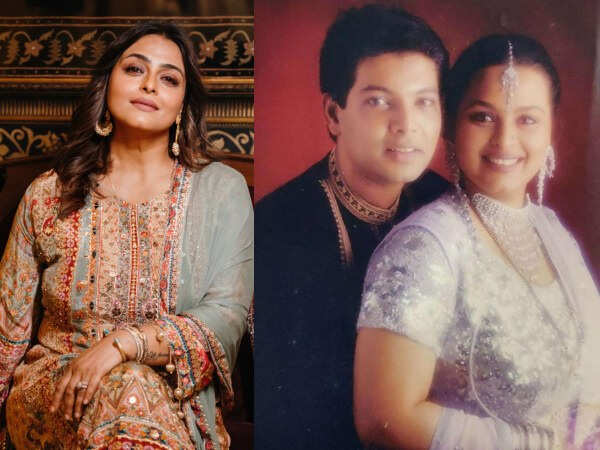


What shook her drastically was the demise of her parents, dad Nitin Shirodkar and mom Vanita Shirodkar, between 2007- 2008. Tragically, both succumbed to cancer. Dubbing it as ‘the darkest phase’ in her life, she returned to Mumbai in 2010 to be close to sister/actor Namrata Shirodkar. Anti-depression treatments and spiritual therapies later, Shilpa at 40 went on to do television shows Ek Mutthi Aasman, Silsila Pyar Ka… It was post the pandemic in 2024 that Shilpa consumed by loneliness returned to India for good. If participating in Bigg Boss 18 rebooted her personality, doing films relit her love for the camera. She’s ecstatic celebrating her homecoming – the emotional baggage behind her, the panorama ahead full of promises…

Another significant film was Kishen Kanhaiya (1990). To be noticed in a Madhuri Dixit-Anil Kapoor film was an achievement for me. I was nervous about shooting the ‘waterfall’ song – Radha bina hai Kishen akela. The thought that I was working with Anil Kapoor and Gudduji (director Rakesh Roshan) on a huge project was as overwhelming. Dance master Kamalji was a strict professional. During the first scene itself, I slipped on the rocks and my foot was bruised. They put some spirit, made me feel comfortable and we continued shooting. There was no time to sulk. We completed the song in four days.
He sat and watched the shooting. I was finding it difficult to do my steps. Mukulji told Amitji she’s ‘nervous’. Amitji calmly said, “Don’t be nervous. Just do your work.” Then on, I went about ‘doing my work’, giving retakes and not being embarrassed about it. I learnt the value of time and work from Amitji. Of being kind and humble even in that position.


In 2024, I took a one-way ticket to India. I came back home. I was actually in Hyderabad with Namrata, when I got a call to participate in the show Bigg Boss 18. When I joined the house in October 2024, it was alleged that Namrata was upset. In fact, I signed the show while I was with her. Namrata and I are extremely close. She means everything to me. There’s nothing that we don’t share or discuss. She’s taken over my parents’ position in my life. I don’t know what I’d have done without her.

HOME AGAIN

In retrospect, there’s nothing that I’d like to redo about my life. We should own it all however things might have been. Challenges shape you. This is the third time I’ve got an opportunity to come back and do what I love. I’m God’s favourite child. He gives me everything at the right time.
Also Read: Exclusive: When Janhvi Kapoor Spoke About Expressing Her Opinions at Work