Live · Global · Independent
Live Feeds
PinkVilla
Forbes
NDTV
Hindustan Times
Rain Brings Down Delhi’s Pollution Levels, But Air Quality Remains Poor
onmynews.com

Rain Brings Down Delhi’s Pollution Levels, But Air Quality Remains Poor

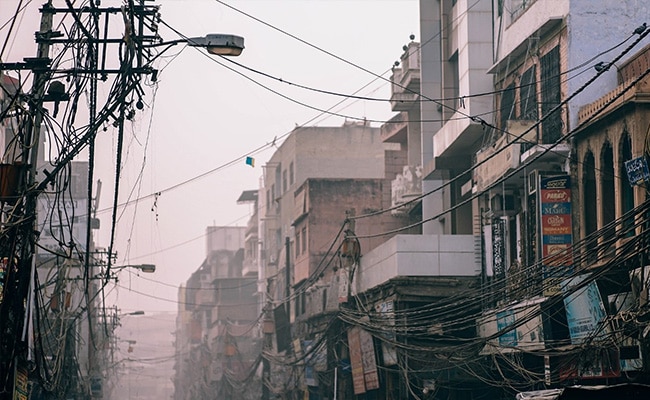
Air quality across Delhi remains in the “poor” category, according to the Central Pollution Control Board (CPCB), a day after rain in the national capital and surrounding areas washed away the toxic haze, bringing some relief to residents and improving air quality marginally. 

The Air Quality Index (AQI) today in Anand Vihar, RK Puram, Punjabi Bagh, and ITO was recorded at 282, 220, 236, and 263, respectively.

Delhi was gasping for air after a week of suffocating pollution, with levels of harmful particles up to 100 times the World Health Organization’s safe limit. The city was the world’s most polluted last Thursday.

To reduce pollution in Delhi and ensure adherence to anti-pollution measures, the Delhi Police inspected trucks carrying non-essential goods at the Ghazipur and Tikri borders on Friday night, as part of the GRAP 4 regulations.

Delhi’s air pollution control plan (GRAP Stage IV) only allows CNG, electric, and BS VI-compliant vehicles from other states to enter the city, except for essential services.

Delhi Police inspected trucks entering the city at the Ghazipur border on Friday night, enforcing GRAP 4 regulations that permit only CNG and electric trucks to enter. Another team of Delhi Police at the Tikri border checked the trucks entering the national capital.

The weather department forecasts partly cloudy skies with mist or shallow fog in the mornings on Sunday and Monday, followed by mainly clear skies with shallow fog in the mornings on Tuesday and Wednesday.

An IMD official said following the passage of the western disturbance, wind speeds are expected to increase from the current 5-6 kmph to around 15 kmph on November 11. This anticipated increase in wind speed could help disperse pollutants and improve air quality ahead of Diwali. The weather department has predicted “mainly clear skies with shallow fog” for today. 

Delhi-NCR’s air quality plummeted over the past week due to falling temperatures, stagnant winds that stifled pollution dispersion, and a surge in post-harvest paddy stubble burning in Punjab and Haryana.

Delhi’s air quality is one of the worst among capital cities globally, with a University of Chicago report finding that air pollution reduces life expectancy by almost 12 years.

Read full article
4 Killed After Oil Tanker Hits Car, Pickup Van Near Gurugram: Police
onmynews.com

4 Killed After Oil Tanker Hits Car, Pickup Van Near Gurugram: Police

At least four people were killed after an oil tanker hit a car and a pickup van near Sidhrawali village in Gurugram on the Delhi-Jaipur Highway on Friday night, police said.

According to the investigation officer of Bilaspur police station, Vinod Kumar, an oil tanker coming from Jaipur broke the divider and hit a car. The passengers inside were probably travelling to Jaipur, said the police. The car was engulfed in fire due to the CNG cylinders inside it.

The accident killed all three passengers due to fire following the collision.

The police further informed that after hitting the car, the oil tanker collided with a pickup van on the highway, due to which the driver of the van died on the spot.

“We received information regarding the accident that occurred on the Delhi-Jaipur Highway. When we reached the spot, we found that a car was gutted with fire, and three people were killed. Later, we also found that the oil tanker had collided with a pickup van due to which the driver of the van died on the spot,” IO Kumar said.

“However, the accused driver of the oil tanker fled away, and efforts are underway to catch him,” he added.

Further investigation into the matter is underway.

Read full article
Survivor Recalls Watching Israel Music Fest Massacre From Atop Tree
onmynews.com

Survivor Recalls Watching Israel Music Fest Massacre From Atop Tree

Like most others his age, Uriel Balas was just excited to celebrate his 26th birthday with friends, having saved up for his ticket to Israel’s much-anticipated Supernova music festival.

But excitement would soon give way to horror.

The two-day festival in the fields around Kibbutz Reim, just beyond the Gaza border in southern Israel, drew more than 3,000 people on October 6 and 7.

Nearly one in 10 people would never come back.

Balas scrolled through his last photos from the party, showing his friends giving a thumbs up and the festival in full force.

It was 6:00 am (0400 GMT) and the young Israeli and his friends were enveloped in the ecstatic fog of the party.

“Sunrise is the moment everyone waits for. Everyone lets loose, and the party begins,” he told AFP in an interview in his apartment in Tel Aviv.

“Suddenly, we went from the party to complete vulnerability under missile fire,” he said, describing dozens of rockets launched by Hamas flying over the dance floor.

It marked the start of the Hamas attack that would see 1,400 people killed, mostly civilians, in the worst attack on Israel in its 75-year history, according to Israeli authorities.

Israel has responded with an assault on Gaza that has killed over 11,000 people in just over a month, among them more than 4,000 children, according to the health ministry in Hamas-run Gaza.

‘Everything is fine’

That day, as festival security asked everyone to evacuate, Balas’s group staggered back to their car.

They had hoped to find an after party in Tel Aviv — before the first shots fired by Hamas militants’ automatic rifles sobered them up to a brutal reality.

“In the car, my friend and I held each other’s hands and repeated ‘everything is fine'” between swigs of gin, he said.

But the shots were getting closer.

They tried erratically to escape the fire in their car, before “we realised we were surrounded”.

They needed to change course and abandoned the car.

“We started to run through a field and I could hear bursts of gunfire behind me and zipping past my ears,” he said, mimicking the whistling sound of bullets.

“You see people falling right in front of you,” he said, noting that there were “hundreds of us” in the field.

“I told myself that this is it — today I leave this world, today I die,” he said.

Become invisible

Reaching an orange orchard, Balas climbed a bushy tree to hide, with one thought on his mind: how to become invisible in the foliage.

“I pushed my white socks inside my boots, and took off my rings.”

He tried to make himself “as small as possible”, staying in his hiding place for two hours, helpless to stop the “incessant shooting” under him.

Curled up between two branches, he focused on his breathing to calm his trembles which were shaking the leaves and betraying his position.

“A terrorist will come, scream, and shoot me like a toy,” he thought, praying for a shot to the head so he “wouldn’t suffer”.

When the shooting started to fade into the distance, he began running among the bodies, away from the festival, finding other survivors hiding in the bushes.

They hid behind a car, in the trunk of which two bodies lay lifeless, as a man convulsed beside them, bleeding to death.

The police took their call but, overwhelmed and helpless, wished them “good luck” before hanging up.

It was 9:00 am (0700 GMT) by then, and help “took several hours” more to arrive.

When they were eventually evacuated, he was crammed in a vehicle with 10 other people, while a policeman aimed his rifle out the window.

‘Laughter and crying’

According to rescue services and the Israeli army, other than the hostages taken, more than 260 people were killed at the festival.

Since the beginning of the war, Balas has tried to keep himself focused on his job delivering food, but he has been smoking heavily, and can sleep only with antianxiety medication.

When he finally returned to his mother’s house on October 7, a neighbour filmed his arrival.

His shirt torn, he stumbled “between laughter and crying”.

Two hours later, he said he felt “an indescribable anger and anxiety”.

Balas says he was exhibiting post-traumatic shock: the inability to live in the moment after having come so close to death.

“I lost part of my optimism there, as well as my sense of safety… Even when I’m home, how can I know that terrorists won’t come here?”

“I also lost some of my faith in human beings, in humanity,” he said.

But he promised to respond to his attackers in his own way: “To go back to partying as soon as possible.”

Read full article
Link copied!