Live · Global · Independent
Live Feeds
PinkVilla
Forbes
NDTV
Hindustan Times
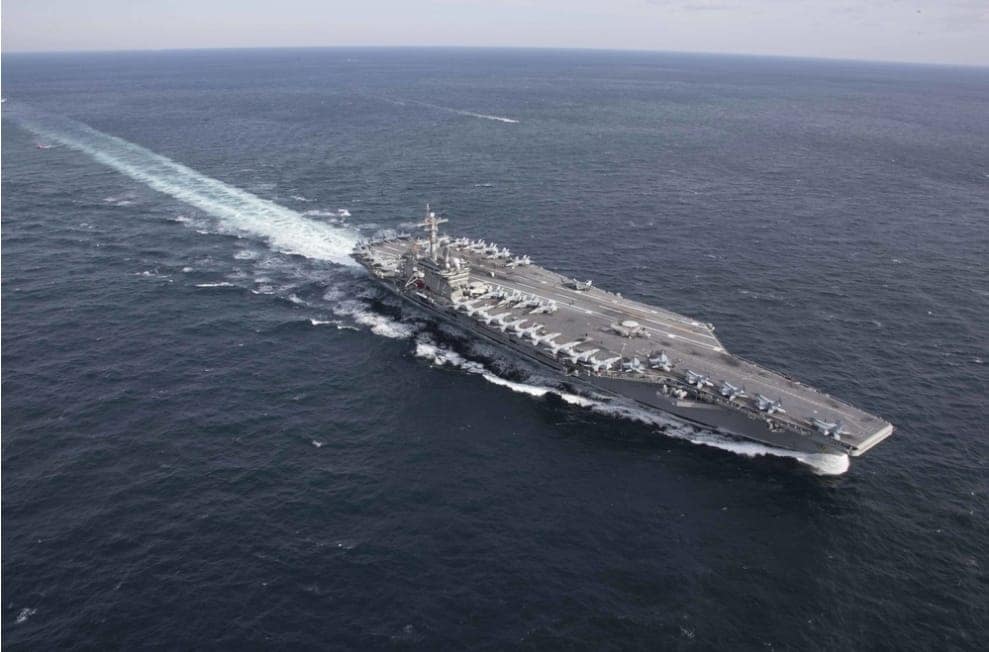
Massive US Deployment In Middle East After Iran Threatens To Attack Israel
onmynews.com

Massive US Deployment In Middle East After Iran Threatens To Attack Israel

The United States will bolster its military presence in the Middle East, deploying additional warships and fighter jets to protect US personnel and defend Israel amid soaring tensions in the region, the Pentagon said Friday.

The announcement comes after Iran and its regional allies vowed retaliation for the killings of a Hamas leader in Tehran and a Hezbollah commander in Beirut, fueling fears of a broader Middle East conflict.

“The Department of Defense continues to take steps to mitigate the possibility of regional escalation by Iran or Iran’s partners and proxies,” deputy Pentagon Press Secretary Sabrina Singh said in a statement.

“Since the horrific Hamas attack on Israel on October 7, the Secretary of Defense has reiterated that the United States will protect our personnel and interests in the region, including our ironclad commitment to the defense of Israel.”

The aircraft carrier strike group led by the USS Abraham Lincoln will replace one helmed by the USS Theodore Roosevelt in the region, Singh said.

Defense Secretary Lloyd Austin has also ordered additional ballistic missile defense-capable cruisers and destroyers to the Middle East and areas under US European Command, as well as a new fighter squadron to the Middle East.

Israel killed Hezbollah commander Fuad Shukr in Beirut on Tuesday, a move it said was a response to deadly rocket fire last week on the annexed Golan Heights.

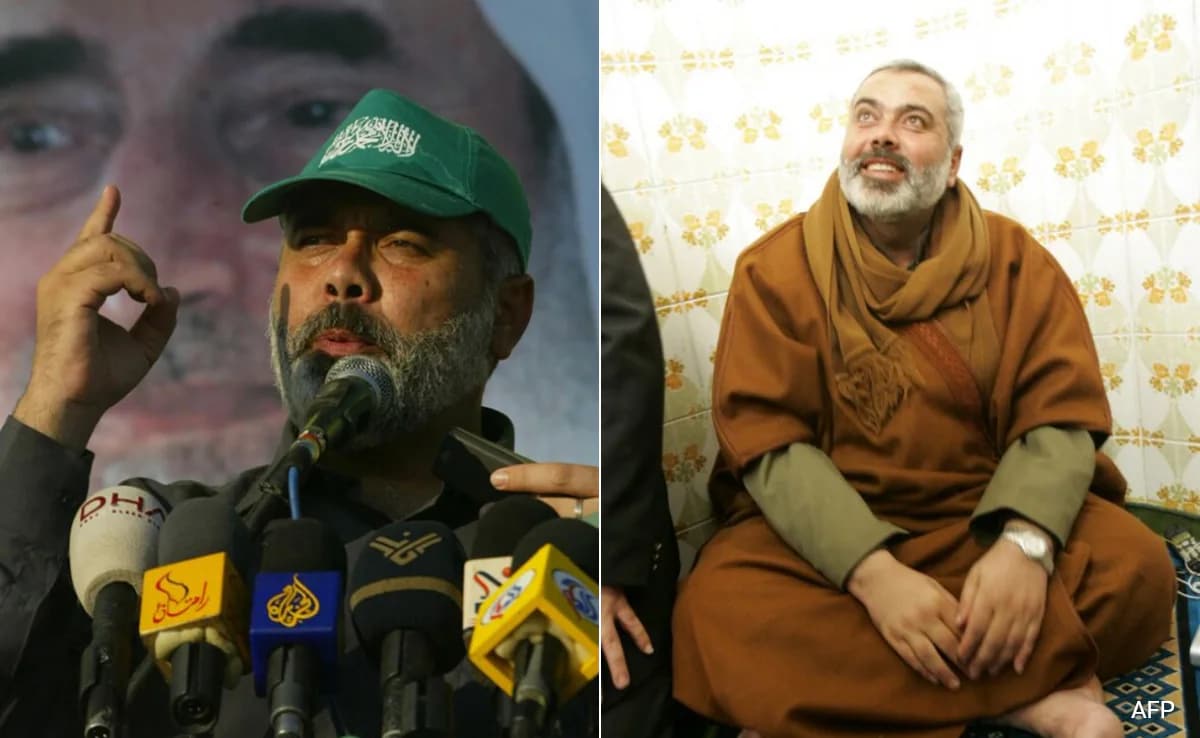
Hours later, Hamas leader Ismail Haniyeh was killed in the Iranian capital — an attack on which Israel has not yet commented.

A source close to Hezbollah told AFP that Iranian officials met in Tehran on Wednesday with representatives of the so-called “axis of resistance,” a loose alliance of Tehran-backed groups hostile to Israel, to discuss their next steps.

“Two scenarios were discussed: a simultaneous response from Iran and its allies or a staggered response from each party,” said the source, who had been briefed on the meeting, requesting anonymity to discuss sensitive matters.

In April, Iran carried out its first direct attack on Israeli soil, firing a barrage of drones and missiles after a strike blamed on Israel killed Revolutionary Guards at Tehran’s consulate in Damascus.

American forces helped defend Israel against the attack.

“As we have demonstrated since October and again in April, the United States’ global defense is dynamic and the Department of Defense retains the capability to deploy on short notice to meet evolving national security threats,” Singh said.

“The United States also remains intently focused on de-escalating tensions in the region and pushing for a ceasefire as part of a hostage deal to bring the hostages home and end the war in Gaza.”
 

(Except for the headline, this story has not been edited by NDTV staff and is published from a syndicated feed.)
Read full article
2 Iran Agents, Bombs In 3 Rooms: Inside Mossad’s Kill Op For Hamas Chief
onmynews.com

2 Iran Agents, Bombs In 3 Rooms: Inside Mossad’s Kill Op For Hamas Chief

Israel’s elite intelligence agency Mossad enlisted Iranian security agents to plant explosives in a building in Tehran where armed Palestinian group Hamas’s political leader Ismail Haniyeh was staying, The Telegraph reported.

The initial plan was to assassinate Haniyeh in May during his visit to Tehran for the funeral of former Iranian President Ebrahim Raisi. The operation was aborted due to overwhelming crowds, which posed a major risk of failure, according to two Iranian officials who spoke to The Telegraph.

Therefore, the operation had to be modified. Two agents, working under Mossad’s direction, placed explosive devices in three separate rooms of the Islamic Revolutionary Guard Corps (IRGC) guesthouse in northern Tehran. This location was strategically chosen as it was likely that Haniyeh would stay there.

How Mossad Functions 

With a $3 billion annual budget and 7,000-strong staff, Mossad is the second-largest espionage agency in the West after the CIA.

Mossad has several departments, but the details of its internal structure are mostly hidden. It not only has a network of informants and agents inside Palestinian militant groups, but also in hostile countries like Lebanon, Syria, and Iran. The intelligence agency’s vast spy network provides them with intimate knowledge of militant leaders’ movements, enabling them to execute precise assassinations as and when necessitated.

Explained | How Mossad Functions And Why It Failed To Stop Hamas Attack

The Special Operations Division, also known as Metsada, carries out highly sensitive assassinations, sabotage, paramilitary, and psychological warfare operations.

Operation To Eliminate Haniyeh

According to The Telegraph, surveillance footage, held by Iranian officials, shows the agents moving stealthily, entering and exiting multiple rooms within minutes. After planting the devices, they exited Iran undetected but maintained a source within the country. In the early hours of Wednesday, at 2 am, the operatives remotely detonated the explosives in the room where Haniyeh was staying.

The explosion resulted in the death of Haniyeh, who was in Tehran to attend the inauguration of President Masoud Pezeshkian. This assassination has been confirmed by officials within the IRGC, who now believe Mossad employed agents from the Ansar-al-Mahdi protection unit, a group responsible for safeguarding high-ranking officials inside and outside the country. 

“This is a humiliation for Iran and a huge security breach,” an IRGC official told The Telegraph. A special working group has been established to devise strategies to mitigate the perception of this breach, the official added.

Potential Ramifications

In response to this breach, the IRGC is considering its options for retaliation. A direct strike on Tel Aviv, potentially involving Hezbollah and other Iranian proxies, is reportedly a primary option under evaluation.

Since the Islamic Revolution of 1979 that upended Iran’s political and societal structure, the country has made a conscious effort to fan its influence across the Middle East with proxy groups. 

Explained | Axis Of Resistance And Iran’s Proxy Network Across Middle East

The Quds Force, one of the five branches of the IRGC, which specialises in intelligence and covert operations, serves as the main point of contact for these proxy groups, providing them with weapons and training to solidify Iran’s regional agenda.

The timing of the assassination, coinciding with President Pezeshkian’s first day in office, has sparked suspicions about its intentionality. During his campaign, President Pezeshkian had pledged to move away from the Islamic Republic’s provocative policies and to restore Iran’s standing through dialogue.

President Pezeshkian, a seasoned lawmaker and cardiac surgeon, has long supported both domestic and international reforms in Iran. His win in the recent elections is viewed as a call for change since it follows a general unhappiness with the hardline policies of his predecessors. But the dynamics of Iranian politics, where hardliners still control the majority and the Supreme Leader Ayatollah Ali Khamenei retains ultimate authority, will put Mr Pezeshkian’s ability to carry out his vision to the test.

Read full article
How UP managed to give quiet passage to ‘explosive’ Nazul Bill
onmynews.com

How UP managed to give quiet passage to ‘explosive’ Nazul Bill

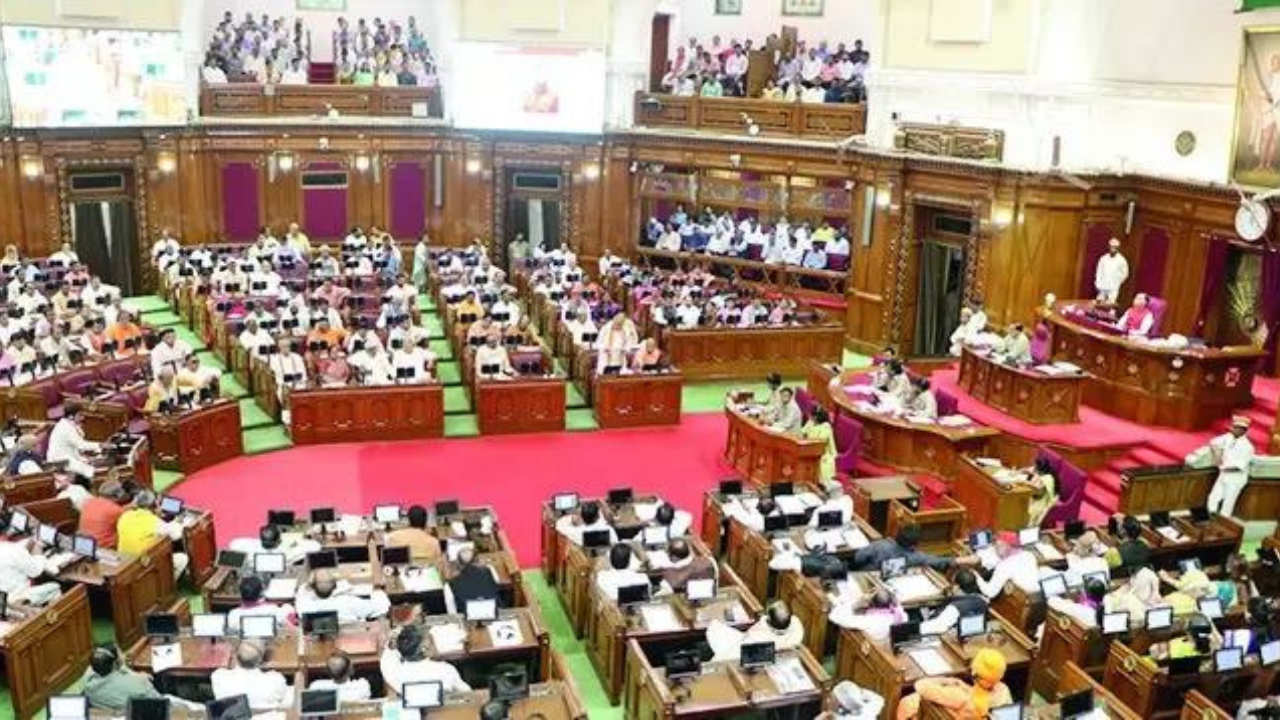
On March 7, 2024, Yogi government notified the ordinance which barred conversion of Nazul land into freehold in favour of a private person.

Read full article
Link copied!