Live · Global · Independent
Live Feeds
PinkVilla
Forbes
NDTV
Hindustan Times
Israeli Tanks On Edge Of Gaza City, Key Road Cut: Report
onmynews.com

Israeli Tanks On Edge Of Gaza City, Key Road Cut: Report

Israeli tanks advanced into the fringes of Gaza City on Monday, witnesses said, as it ramped up its war on Hamas saying it had killed dozens of operatives in hundreds of strikes.

“We have hit more than 600 targets in the past 24 hours,” a military spokesperson told AFP, up from 450 the previous day, with Hamas operatives also reporting “heavy fighting” in northern Gaza.

Tanks entered the Zaytun district on the southern fringes of Gaza City, cutting a key road from the north to the south of the war-torn Palestinian territory, witnesses told AFP on Monday.

“They have cut the Salahedin Road and are firing at any vehicle that tries to go along it,” said one resident who did not give his name.

Israel has on several occasions warned the 1.1 million people living in northern Gaza, including Gaza City, to head south to avoid its military strikes as it pushes ahead with a mission to “destroy” the territory’s Hamas rulers.

Although huge numbers have left in recent weeks, tens of thousands more are believed to be still in the zone.

Since Friday, Israeli forces have stepped up their ground offensive as part of the military response to the October 7 Hamas attacks that officials say killed 1,400 people, mostly civilians, with another 239 people taken hostage.

The health ministry in Hamas-run Gaza says more than 8,000 people, mainly civilians, mostly civilians and more than half of them children, have since been killed in Israeli air and ground strikes.

The Israeli army said troops killed “dozens” of operativs in overnight clashes, saying they had “barricaded themselves inside buildings and tunnels and attempted to attack the troops”.

In one incident, a fighter jet targeted a building “with over 20 Hamas terrorist operatives inside,” while another fighter jet was guided to an anti-tank missile launching post in the area of Al-Azhar University, it said. The university is in the heart of Gaza City.

It also said it hit “weapons depots, dozens of anti-tank missile launching positions, as well as hideouts and staging grounds used by the Hamas terrorist organisation”.

Read full article
100-Year-Old Kenyan Man Demands Compensation From King Charles, Here’s Why
onmynews.com

100-Year-Old Kenyan Man Demands Compensation From King Charles, Here’s Why

When the then-Princess Elizabeth visited Kenya in 1952, Kibore Cheruiyot Ngasura was among a group of young men chosen to sing for her at an event near Lake Victoria.

The men planned to use the occasion to petition Elizabeth to relocate their parents from a detention camp in the barren, mosquito-infested town of Gwassi, where members of the Talai clan had been held for nearly two decades on suspicion of fomenting resistance to British colonial rule.

The event never happened. Before Elizabeth could make it to Lake Victoria, word came that her father, King George VI, had died. The new queen hurried back to London.

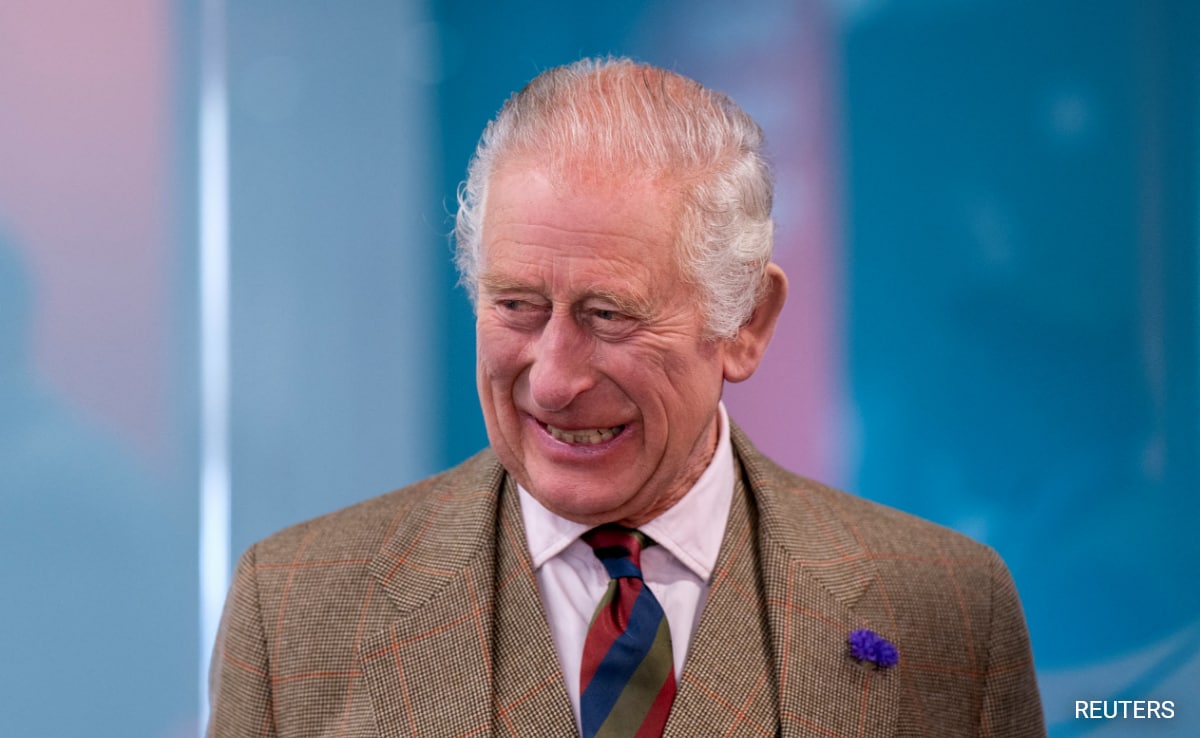
More than 70 years later, Elizabeth’s son, King Charles, will visit Kenya this week on a state visit. And Ngasura, now about 100 years old, again has a message for the royal visitor.

“I wish to inform him that we should be compensated for the hardship that we went through,” Ngasura told Reuters outside his house, a small wooden and iron structure on a grassy hill with two lightbulbs and no running water.

Buckingham Palace has said Charles’ visit, which begins on Tuesday, will acknowledge “painful aspects of the UK and Kenya’s shared history”. The British ruled for more than six decades before Kenyan won its independence in 1963.

But for some communities in western Kenya’s fertile highlands, the injustices caused by British colonisation are as much present-day realities as historical memories.

A U.N. report in 2021 said more than half a million Kenyans around the western town of Kericho suffered gross human rights violations including unlawful killings and land expropriation during British colonial rule.

The colonial administration took hundreds of square kilometres of land that communities in western Kenya had lived on for generations and handed it to British settlers. Much of it became tea plantations that today belong to multinational companies, the U.N. report said.

“Our people, most of them, are living below poverty level,” said Joel Kimetto, a representative of the Kipsigis ethnic group, of which the Talai are one of 196 clans.

“The majority of the vast fertile lands were taken by the British and our people were chased away to the native reserves where it is hilly, rocky, slopey and unproductive,” he said.

A spokesperson for the British government’s Foreign, Commonwealth and Development Office noted that the UK government had previously expressed regret for abuses committed during a 1952-1960 uprising in central Kenya against colonial rule.

It agreed to an out-of-court settlement in 2013 to pay almost 20 million pounds to elderly Kenyans who suffered torture and abuse during what is known by Kenyans as “the emergency” after a London court ruled the victims could sue.

“We believe the most effective way for the UK to respond to the wrongs of the past is to ensure that current and future generations learn the lessons from history, and that we continue to work together to tackle today’s challenges,” the spokesperson said in response to questions from Reuters.

The spokesperson did not address the allegations raised by the Kipsigis and Talai, which are separate from the abuses during the emergency. Buckingham Palace did not respond to a request for comment.

‘NO INTENTION’ TO COMPENSATE

Charles will not travel to western Kenya during his visit, which will take him to the capital Nairobi and eastern port city of Mombasa, according to a statement from the palace.

The British government has not been receptive in the past to requests by the Kipsigis and Talai to discuss compensation. In 2019, it informed the communities it had “no intention to enter any process” to resolve the claims, according to the U.N. report.

Ngasura said he was about 12-years-old – he does not know his exact birth date – in 1934 when the British rounded up around 700 Talais and forced them to march for weeks to reach Gwassi.

Following protests by the young men, he and a few dozen others were relocated in 1945 to a detention camp closer to Kericho, where they could find wives from their community.

They were finally released in 1962, but the land where they had once grazed their livestock and collected honey now belonged to British settlers and tea companies.

Ngasura was able to scrape together the money to buy a small plot from a British army captain. Today, he and his descendants who live there survive off of a half-dozen cows and some maize crops.

It is no comparison to what he knew as a child.

“We could take cows anywhere. The land was huge,” he recalled. “This land is not big enough. Otherwise we would have kept a lot of cows and grown coffee.”

Read full article
Explained: What Is COP And What To Expect This Year
onmynews.com

Explained: What Is COP And What To Expect This Year

The crunch climate talks being held in Dubai from November 30 to December 12 will be the 28th such gathering of world leaders under UN auspices known as COPs.

AFP unpacks the workings of the high-level summit, where countries will aim to thrash out a new agreement as accelerating climate change threatens the world with costly and destructive consequences.

What is a COP? 

COP stands for Conference of the Parties, referring to the 198 parties including the European Union that have signed the United Nations Framework Convention on Climate Change, originally adopted in Brazil in 1992.

COPs have been held every year in different cities since 1995, with the exception of COP26 in Glasgow, which was delayed by a year due to the coronavirus pandemic.

They are numbered in chronological order, with the United Arab Emirates welcoming the world’s movers and shakers at COP28 after taking over the presidency from COP27 hosts Egypt.

COPs also exist for other UN conventions and treaties on issues including desertification and biodiversity.

What are the outcomes? 

The long, complex and occasionally acrimonious negotiations between world leaders are supposed to end with a final text, which is often hammered out well past the official deadline.

Numerous lobbyists, NGOs, international organisations and other observers gather on the sidelines of the talks.

The agreement must be reached by consensus, meaning different positions and interests have to be reconciled, all while aiming for progress in the fight against climate change.

Outcomes of little substance have emerged from some COPs, in stark contrast with the acceleration of climate change and its increasingly destructive consequences.

Swedish climate activist Greta Thunberg has dismissed COPs as “greenwashing machines”, summing up the result of a recent summit as “bla, bla, bla”.

In 2009, COP15 in Copenhagen was widely viewed as a failure as no global deal was reached, despite a last-minute text involving the world’s two largest economies, the United States and China.

But other editions have a more favourable place in history, notably COP21 in 2015, which gave birth to the historic Paris Agreement that 195 parties have ratified.

The accord was the first to unite the international community behind the goal of keeping global temperature rises “well below” two degrees Celsius compared with industrial levels, and to 1.5C if possible.

In a first, COP26 in 2021 designated fossil fuels as the primary cause of global warming, but under pressure from China and India the final text only called for a “phasedown” of coal rather than a “phaseout”.

What to expect this year? 

COP28 is due to host a record 80,000 people, according to the Emirati presidency.

The choice of Sultan Al Jaber — head of the UAE’s national oil company ADNOC — as COP president has sparked fury among environmental campaigners.

But Jaber and others see it as an opportunity for a business leader from the fossil fuel industry to discuss the energy transition, which will once again be a key topic of discussion.

The COP presidency has set concrete goals for 2030: tripling global renewable energy capacity as well as doubling energy efficiency and hydrogen production.

COP28 will also see a first “global stocktake” of the world’s progress in achieving the Paris goals.

A technical report released in September concluded — unsurprisingly — that the world was well off course and that “much more is needed now on all fronts”.

As always, money will be at the centre of bitter debate.

Rich countries have pledged financial support for developing nations to help them adapt to and mitigate the havoc wrought by climate change.

A historic “loss and damage” fund for vulnerable countries was agreed at COP27, but its governance, location and funding mechanisms remain up in the air.

Read full article
Link copied!