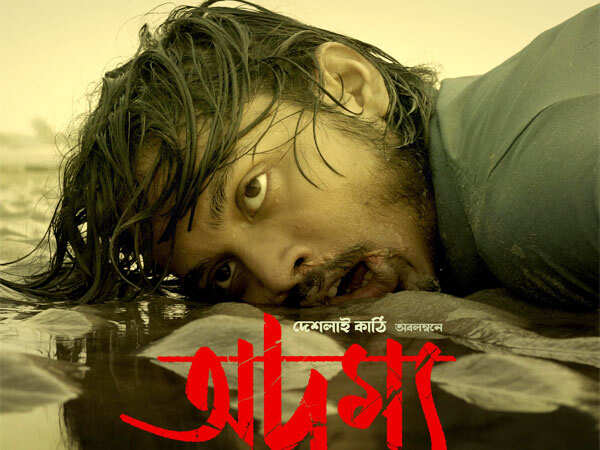

On one hand, we have the massively mounted Hollywood product One Battle After Another, a film that confronts the cost of struggle against authority, bringing us up close to the lives and contradictions of those who call themselves revolutionaries. On the other hand, there is Adamya, Ranjan Ghosh’s quietly searing Bengali work that traverses similar ideological terrain from a strikingly different vantage point. The contrast is as much aesthetic as it is economic: while the former operates on scale, Adamya is shaped by constraint, made on a shoestring budget and shot in a guerrilla style amid the raw, unpredictable landscape of the Sundarbans. But human survival remains at the core of both films. Courage is what drives us and in both films, we see the protagonists confronting their fears way past the breaking point.
Bengal has always been a hub of political thought. And Bengali filmmakers have never shied away from political commentary. Directed by Ghosh and presented by Aparna Sen, Adamya emerges as a compelling addition to contemporary Bengali cinema, blending political urgency with intimate storytelling. Set against the fragile, conflict-ridden terrain of the Sundarbans, the film traces the journey of Palash, a young man thrust into the shadows after a failed assassination attempt. His flight from authority becomes less a physical escape and more an inward reckoning, as his ideological certainties begin to fracture under pressure. Young Aryuun Ghosh has done a remarkable job as the lead in this one character drama. He makes sure you root for him all the way. Be it his long trek in the woods or his heroic escape by the sea, you want him to succeed.
Ghosh crafts a narrative that resists easy binaries, probing the uneasy intersection between dissent and extremism. The film’s tone is marked by restraint, eschewing overt melodrama in favour of a slow-burning tension that mirrors its protagonist’s psychological state. Themes of youth radicalisation, systemic inequities, and the erosion of democratic ideals are woven seamlessly into the narrative fabric, lending the film both immediacy and depth. Arkaprabho Das’ cinematography needs to be lauded. Using natural light and handheld cameras, he creates a visual palette that goes hand-in-hand with the film’s thematic curves. The sound design and production design too are realistic.
Inspired by the poetry of Sukanta Bhattacharya, Adamya integrates literature with political cinema. It carries a certain cultural gravitas, enriched by its subtle invocation of revolutionary thought. Ultimately, it lingers not as a definitive statement, but as a question, inviting viewers to interrogate the cost of resistance and the ambiguity of conviction in turbulent times.
Also Read: Everything We Are Watching This Week: Project Hail Mary, Daredevil: Born Again Season 2 And
