onmynews.com
‘We’re Studying Implications’: MEA On Donald Trump’s Reciprocal Tariffs
Washington has imposed a 27% discounted reciprocal tariff on all Indian goods.
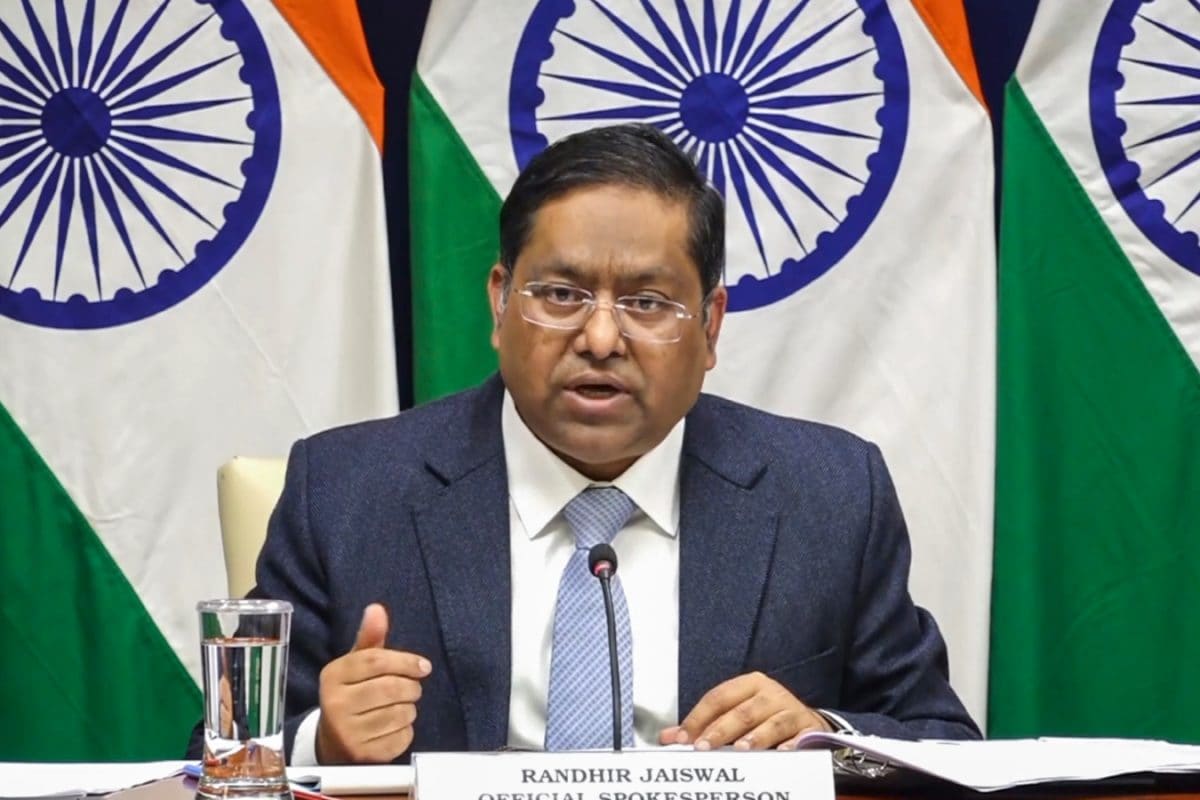
Washington has imposed a 27% discounted reciprocal tariff on all Indian goods.
The government has terminated the trans-shipment facility that allowed export cargo from Bangladesh to third countries using Indian land customs stations en route to ports and airports, according to a government circular.
Indian exporters, mainly from the apparel sector, had asked the government to withdraw this facility to the neighbouring country.
The facility enabled smooth trade flows for Bangladesh’s exports to countries like Bhutan, Nepal, and Myanmar. It was provided by India to Bangladesh in June 2020.
“It has been decided to rescind… circular… dated June 29, 2020, as amended with immediate effect. Cargo already entered into India may be allowed to exit the Indian territory as per the procedure given in that circular,” the Central Board of Indirect Taxes and Customs’ circular, dated April 8, said.
The announcement comes at a time when the US imposed sweeping tariffs against a number of countries, including India and Bangladesh.
The earlier circular allowed transshipment of export cargo from Bangladesh to third countries using Indian land customs stations (LCSs) en route to Indian ports and airports.

According to trade experts, the decision will help many Indian exporting sectors like apparel, footwear, and gems and jewellery.
Bangladesh is a big competitor of India in the textile sector.
“Now we will have more air capacity for our cargo. In the past, exporters have complained about lesser space due to the transhipment facility given to Bangladesh,” Federation of Indian Export Organisations (FIEO) Director General Ajay Sahai said.
Apparel exporters’ body AEPC had asked the government to suspend this order, which allowed trans-shipment of Bangladesh export cargo to third countries through the Delhi air cargo complex.
AEPC chairman Sudhir Sekhri said 20-30 loaded trucks arrive in Delhi every day, which slows down the smooth movement of cargo, and airlines are taking undue advantage of this. This leads to an excessive increase in air freight rates, delay in handling and processing of export cargo, and severe congestion at the cargo terminal at Indira Gandhi International Airport in Delhi, resulting in exports of Indian apparel through the Delhi air cargo complex becoming uncompetitive.
“This will help in rationalization of freight rates resulting in less transportation cost to the Indian exporters besides decongesting the airports leading to the shorter transit time to ship the goods,” AEPC secretary general Mithileshwar Thakur said.
Think tank Global Trade Research Initiative (GTRI) founder Ajay Srivastava said the withdrawal of this facility is expected to disrupt Bangladesh’s export and import logistics, which depend on Indian infrastructure for third-country trade.
“The previous mechanism offered a streamlined route through India, cutting transit time and cost. Now, without it, Bangladeshi exporters may face logistical delays, higher costs, and uncertainty. Additionally, Nepal and Bhutan, both landlocked nations, may raise concerns about restricted transit access to Bangladesh, especially as this move will hamper their trade with Bangladesh,” Mr Srivastava said.
He said Bangladesh’s plans for creating a strategic base near the Chicken’s Neck area with China’s help may have prompted this action.
India has always supported Bangladesh’s cause, as it allowed one-way zero tariff access to Bangladesh goods (all except alcohol and cigarettes) to the vast Indian market for the last two decades.
However, India-Bangladesh relations nosedived dramatically after the interim government headed by Muhammad Yunus failed to contain attacks on minorities, especially Hindus, in that country.
India-Bangladesh trade stood at $12.9 billion in 2023-24.
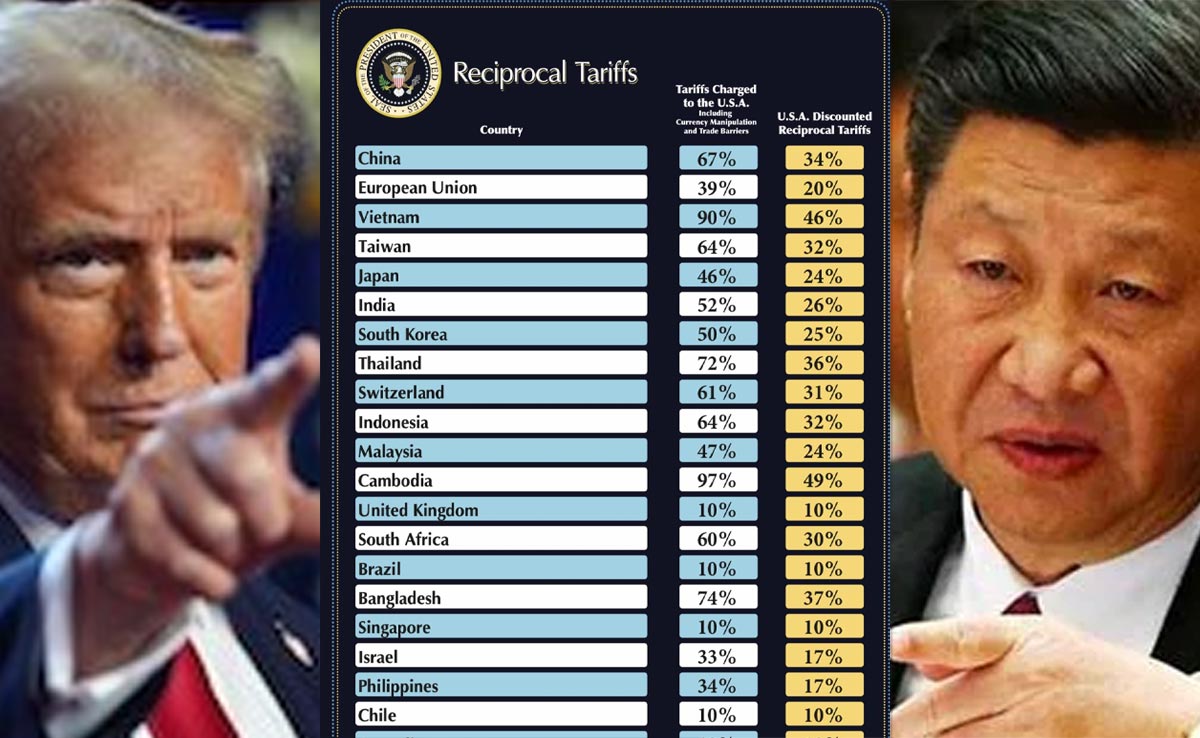
The two largest economies in the world – the United States and China – are at war, with tariffs being used by either side as its weapon. While the US has increased reciprocal tariffs on all Chinese goods from 10 per cent on April 1, to 104 per cent today; China has retaliated by upping tariffs on all American goods from 67 per cent on April 3 to 151 per cent today.
The rest of the world, still unsettled by the crash of the global stock markets – where trillions of dollars were wiped out within a matter of days, is sensing the gravity of the situation. Fears of a worldwide recession arising from this tit-for-tat battle seem to be heading towards becoming a reality.
While the two major economies clash with each other, dealing blow after blow, both leaders are in the midst of a staring contest – with neither willing to blink. US President Donald Trump is determined to teach “tariff abuser” China a bitter lesson, and Chinese President Xi Jinping has said he is willing to “fight to the very end” over what his country has described as American “blackmail”.
What started off as a reciprocal tariff move by Trump, seems to have turned into a no-limits poker duel. While the US President raised tariffs on China on April 2nd, calling it “Liberation Day”, Beijing matched Washington’s move, over and above its old tariffs, infuriating Trump.
The US President then sent an ultimatum to his Chinese counterpart and gave him 24 hours to “withdraw” his move. China’s Xi decided to ‘check’, standing his ground, hoping to call Trump’s ‘bluff’. But Trump followed through by ‘raising’ tariffs further.
Xi Jinping, now ‘committed’ to the high-stakes battle, ‘matched’ Donald Trump yet again in terms of reciprocity of retaliatory tariffs – resulting in China exceeding US’ 104 per cent to reach 151 per cent, leaving President Trump to make his next move.
As both Trump and Xi well on their way to go ‘all-in’, dragging the rest of the world into an uncertain economic future, here is a look at how the tariffs stand so far:
The trade war between the United States and China has surged in less than a week and shows no signs of dying down. Economists have warned of a possible recession in the making, as stock markets, oil prices, trade, supply chains, and logistics have taken a massive hit.