Asian stock markets took a huge plunge Monday (April 7) as market sell-off tied to US President Donald Trump’s “reciprocal” tariffs continued. Exchange operators in Japan and Taiwan had to briefly call a halt to trading to pause panic selling as investors wagered the mounting risk of recession could see US interest rates cut as early as May.
In Japan, the “circuit breaker” system paused trading for 10 minutes when the widely traded Nikkei 225 futures product was poised to fall more than 8 per cent. The circuit breaker was kicked in at 8:45 am Tokyo time for the Nikkei 225 and several other futures contracts, according to a report by The Wall Street Journal. It ended 10 minutes later, without affecting the spot trading-direct buying and selling of shares on the Tokyo Stock Exchange.
In early trade on Monday in Japan, the Nikkei 225 was off an eye-watering 6.5 percent, recovering somewhat after earlier falling nearly 9 per cent.
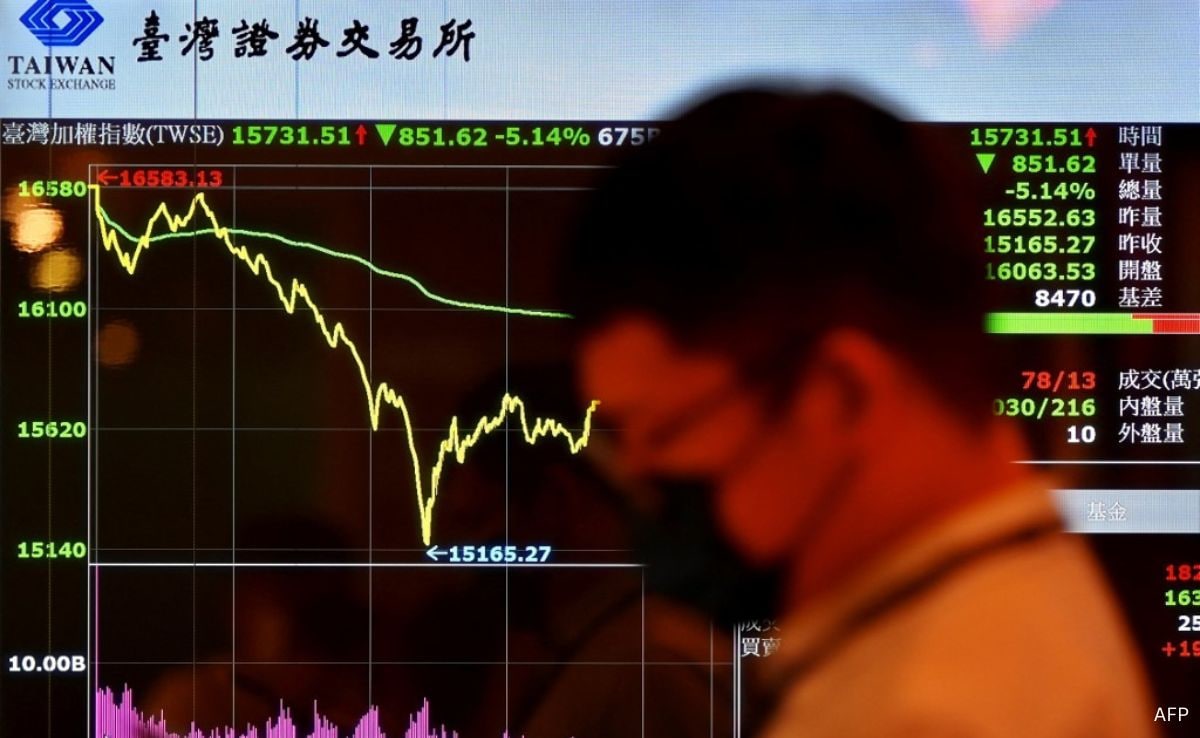
Taiwanese stock operators also pulled a circuit breaker after experiencing a steep decline of nearly 10 per cent on Monday. The head of Taiwan’s stock exchange indicated that further stabilization measures would be implemented if needed to counter the market volatility.
The Taiex, the weighted index on the Taiwan Stock Exchange, plunged 9.8 percent at the open, as trading resumed following a long weekend. Taiwanese markets were closed Thursday and Friday for a holiday, as trillions of dollars were wiped off the value of global stocks and countries scrambled to limit the impact of Trump’s levies.
This is the lowest point in Taiwan’s benchmark index in over a year. Anticipating turmoil, Taiwan’s chief financial regulator on Sunday imposed temporary limits on short selling — a bet that shares will fall — in a bid to stabilise the market when trading resumed on Monday.
The measures will be in place until Friday, the Financial Supervisory Commission said in a statement.
Taipei had sought to avoid Trump’s threatened tariffs by pledging increased investment in the United States and more purchases of US energy, but it was still hit by a 32 percent tax on its imports, excluding semiconductor chips. Shares of key Taiwanese companies, including chipmaker TSMC and electronics giant Foxconn, saw declines close to 10 per cent.
Other markets, including Asia’s Singapore and Hong Kong, also witnessed a blood bath. Stocks in Singapore were down by 8.5 percent, while South Korea’s Kospi was off 4.8 percent. Stocks in Hong Kong plunged more than nine percent. The Hang Seng Index dropped 9.28 percent, or 2,119.76 points, to 20,730.05, while in mainland China the Shanghai Composite Index shed 4.21 percent, or 140.84 points, to 3,201.17.
Australian blue-chip stocks, a benchmark index of the country’s largest 200 listed companies, also sank 6 per cent after trading opened on Monday minutes after opening. A circuit breaker was triggered on the Taiwan stock exchange as stocks plunged 9.8 per cent at the open.
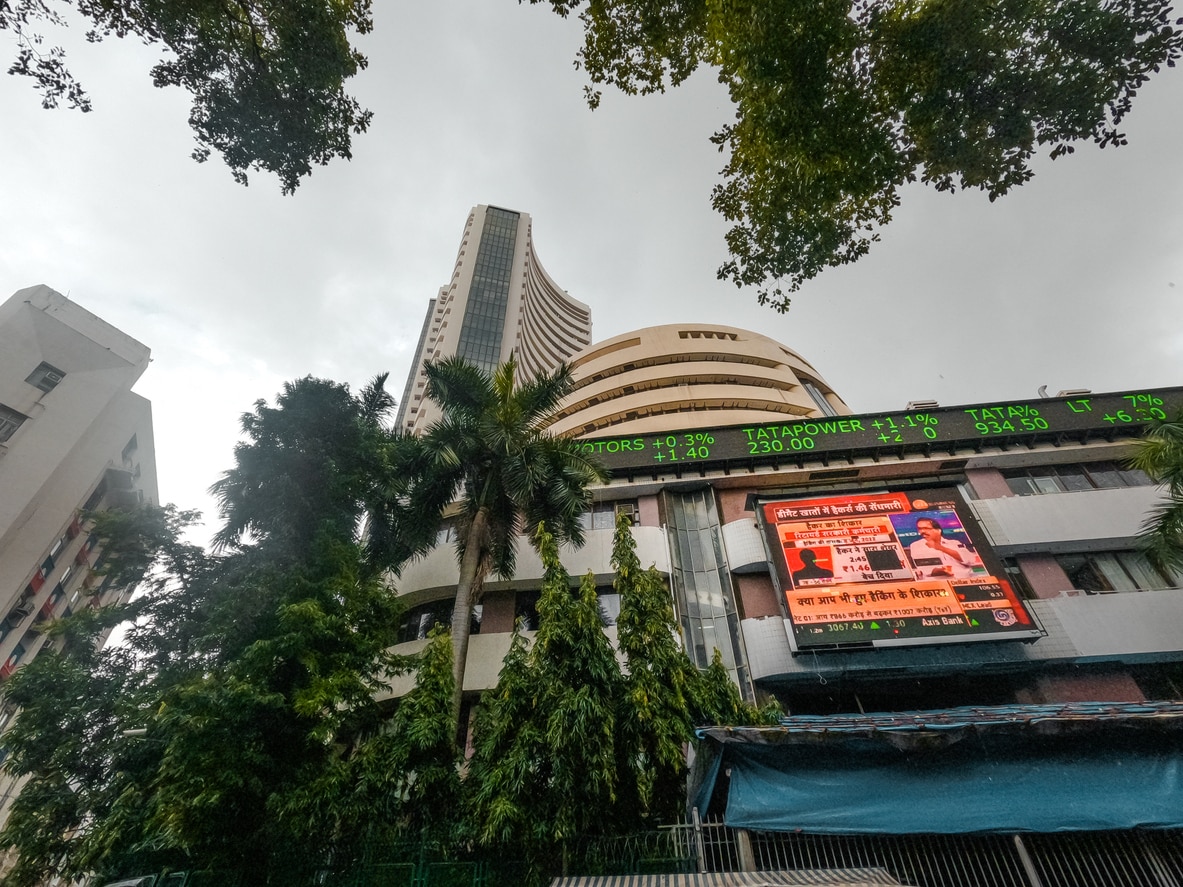
Indian shares also opened sharply lower on Monday. The Nifty 50 declined 5 per cent to 21,758.4 in pre-open trade as of 09:08 am IST, while the BSE Sensex fell 5.29 per cent to 71,379.89.
All 13 major sectors declined. The broader small-caps and mid-caps lost 10 per cent and 7.3 per cent, respectively.
This came as the US market showed no signs of revival, with futures contracts for the New York Stock Exchange’s main boards sharply down Sunday, suggesting more pain for battered Wall Street stocks when markets open Monday. Benchmark S&P 500 futures slid 4.31 per cent in volatile trade, while Nasdaq futures dived 5.45 per cent, adding to last week’s losses.
What Are Circuit Breakers
Circuit breakers are a stock market feature that halt trading across exchanges when markets fall rapidly. The measure was born out of the “Black Monday” stock-market crash of 1987. The intention behind the move is to pause panic selling and avoid a further downward stock-market spiral. The pauses are applied in multiple levels.
In the US, if the S&P 500 drops by 7 per cent or 13 per cent, trading would be halted for 15 minutes. If it drops 20 per cent, trading would stop for the rest of the day.