Live · Global · Independent
Live Feeds
PinkVilla
Forbes
NDTV
Hindustan Times
Trump Actively Negotiating India Trade Deal After Hiking Tariff: Report
onmynews.com

Trump Actively Negotiating India Trade Deal After Hiking Tariff: Report

US President Donald Trump’s latest tariff policy has sparked fear among Indian exporters. With duties raised to 26% in addition to a baseline tariff of 10%, domestic sellers fear their foreign sales could be hit. However, a solution may be around the corner with Indian and US officials negotiating a trade deal before the tariffs come into force next week, suggest media reports.

Trump is “actively negotiating” trade deals with India, Vietnam, and Israel, CNN cited a senior adviser to the US president told CNN.

The 10% base tariff will be effective from today while a flat 26% country-specific duty for India will come into force next Wednesday (April 9).

The Indian government has said it is “carefully examining” the implications of the tariffs announced by Trump on April 2, and that the Commerce Ministry is assessing the situation along with all stakeholders. Feedback is being taken from exporters and the department is also studying the opportunities that may arise due to the tariff changes.

Trump has billed the increased duties as “Liberation Day” tariffs that seek to stop foreign sellers from “ripping off” US industries.

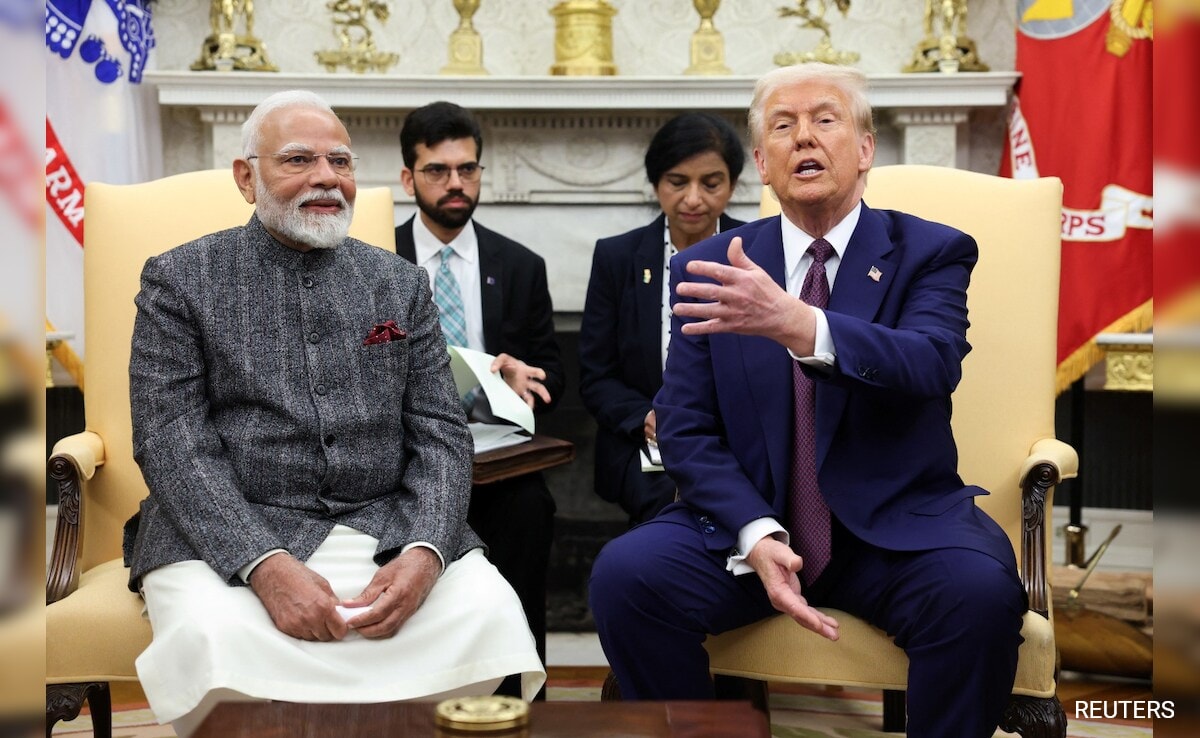
The US President, who has repeatedly called India one of the “highest tariffing nations”, used a mild tone while announcing the tariffs for New Delhi, calling Prime Minister Narendra Modi a “good friend” – pointing to their camaraderie that has continued since Trump’s first presidency. But he recalled telling the Indian leader when he visited the US in February that New Delhi was “not treating us right”.

The White House said Indian tariffs made it costly for American companies to sell their products in India – which, if removed, would increase US exports by at least $5.3 billion annually.

Experts fear the increased tariff would impact electronic exports worth nearly $14 billion and gems and jewellery exports worth $9 billion. Largely spared by the current tariff, auto components and aluminum exports would feel the brunt of the 25% duty announced earlier on these products.

The government, however, is trying to resolve it through dialogue with the Trump administration – with an eye on doubling bilateral trade to $500 billion by 2030, as was announced after PM Modi met Trump at the White House in February.

Indian and US teams are trying to expedite a multi-sectoral bilateral trade agreement that is mutually beneficial, India’s commerce ministry said a day after the US President announced the tariffs. The trade deal will cover a range of issues of mutual interest that include deepening supply chain integration.

Indian officials are in touch with the Trump administration, the government said, adding that their talks are focused on increasing trade, investments, and technology transfers.
Read full article
Trump’s “Baseline” 10% Tariff Takes Effect, Higher Rates To Come Soon
onmynews.com

Trump’s “Baseline” 10% Tariff Takes Effect, Higher Rates To Come Soon

US President Donald Trump’s widest-ranging tariffs to date took effect Saturday, in a move which could trigger retaliation and escalating trade tensions that could upset the global economy.

A 10 percent “baseline” tariff came into place past midnight, hitting most US imports except goods from Mexico and Canada as Trump invoked emergency economic powers to address perceived problems with the country’s trade deficits.

The trade gaps, said the White House, were driven by an “absence of reciprocity” in relationships and other policies like “exorbitant value-added taxes.”

Come April 9, around 60 trading partners — including the European Union, Japan and China — are set to face even higher rates tailored to each economy.

Already, Trump’s sharp 34-percent tariff on Chinese goods, set to kick in next week, triggered Beijing’s announcement of its own 34-percent tariff on US products from April 10.

Beijing also said it would sue the United States at the World Trade Organization and restrict export of rare earth elements used in high-end medical and electronics technology.

But other major trading partners held back as they digested the unfolding international standoff and fears of a recession.

Trump warned Friday on social media that “China played it wrong,” saying this was something “they cannot afford to do.”

Markets collapse

Wall Street went into freefall Friday, following similar collapses in Asia and Europe.

Economists have also warned that the tariffs could dampen growth and fuel inflation.

But Trump said on his Truth Social platform that his “policies will never change.”

Trump’s latest tariffs have notable exclusions, however.

They do not stack on recently-imposed 25-percent tariffs hitting imports of steel, aluminum and automobiles.

Also temporarily spared are copper, pharmaceuticals, semiconductors and lumber, alongside “certain critical minerals” and energy products, the White House said.

But Trump has ordered investigations into copper and lumber, which could lead to further duties soon.

He has threatened to hit other industries like pharmaceuticals and semiconductors as well, meaning any reprieve might be limited.

Canada and Mexico are unaffected as they face separate duties of up to 25 percent on goods entering the United States outside a North America trade agreement.

Retaliation risk

While Trump’s staggered deadlines allow space for countries to negotiate, “if they can’t get a reprieve, they are likely to retaliate, as China already has,” Oxford Economics warned this week.

EU trade chief Maros Sefcovic said the bloc, which faces a 20-percent tariff, will act in “a calm, carefully phased, unified way” and allow time for talks.

But he said it “won’t stand idly by.”

France and Germany have said the EU could respond by imposing a tax on US tech companies.

Japan’s prime minister called for a “calm-headed” approach after Trump unveiled 24-percent tariffs on Japanese-made goods.

Meanwhile, Trump said he held a “very productive” call with Vietnam’s top leader, with imports from the Southeast Asian manufacturing hub facing extraordinary 46-percent US duties.

Since returning to the presidency, Trump has hit Canada and Mexico imports with tariffs over illegal immigration and fentanyl, and imposed an additional 20-percent rate on goods from China. Come April 9, the added levy on Chinese products this year reaches 54 percent.

Trump’s 25-percent auto tariffs also took effect this week, and Jeep-owner Stellantis paused production at some Canadian and Mexican assembly plants.

Trump’s new global levies mark “the most sweeping tariff hike since the Smoot-Hawley Tariff Act, the 1930 law best remembered for triggering a global trade war and deepening the Great Depression,” said the Center for Strategic and International Studies.

Oxford Economics estimates the action will push the average effective US tariff rate to 24 percent, “higher even than those seen in the 1930s.”

(Except for the headline, this story has not been edited by NDTV staff and is published from a syndicated feed.)

Read full article
Bengaluru suitcase murder: How a Marathi song led to techie killing his wife
onmynews.com

Bengaluru suitcase murder: How a Marathi song led to techie killing his wife

In Bengaluru, Rakesh Khedekar confessed to killing his wife, Gouri Sambrekar, over ongoing insults towards his family. After a heated argument fueled by alcohol, he stabbed her multiple times in rage. He attempted to hide her body in a suitcase but fled when the plan failed. Rakesh was arrested in Shirwal, Maharashtra.

Read full article
Link copied!