onmynews.com
Over 1 Lakh Members Of Hasina’s Awami League Fled to India, Claims Bangladesh Advisor
The adviser said that the government has already formed a commission to investigate enforced disappearances.
The adviser said that the government has already formed a commission to investigate enforced disappearances.
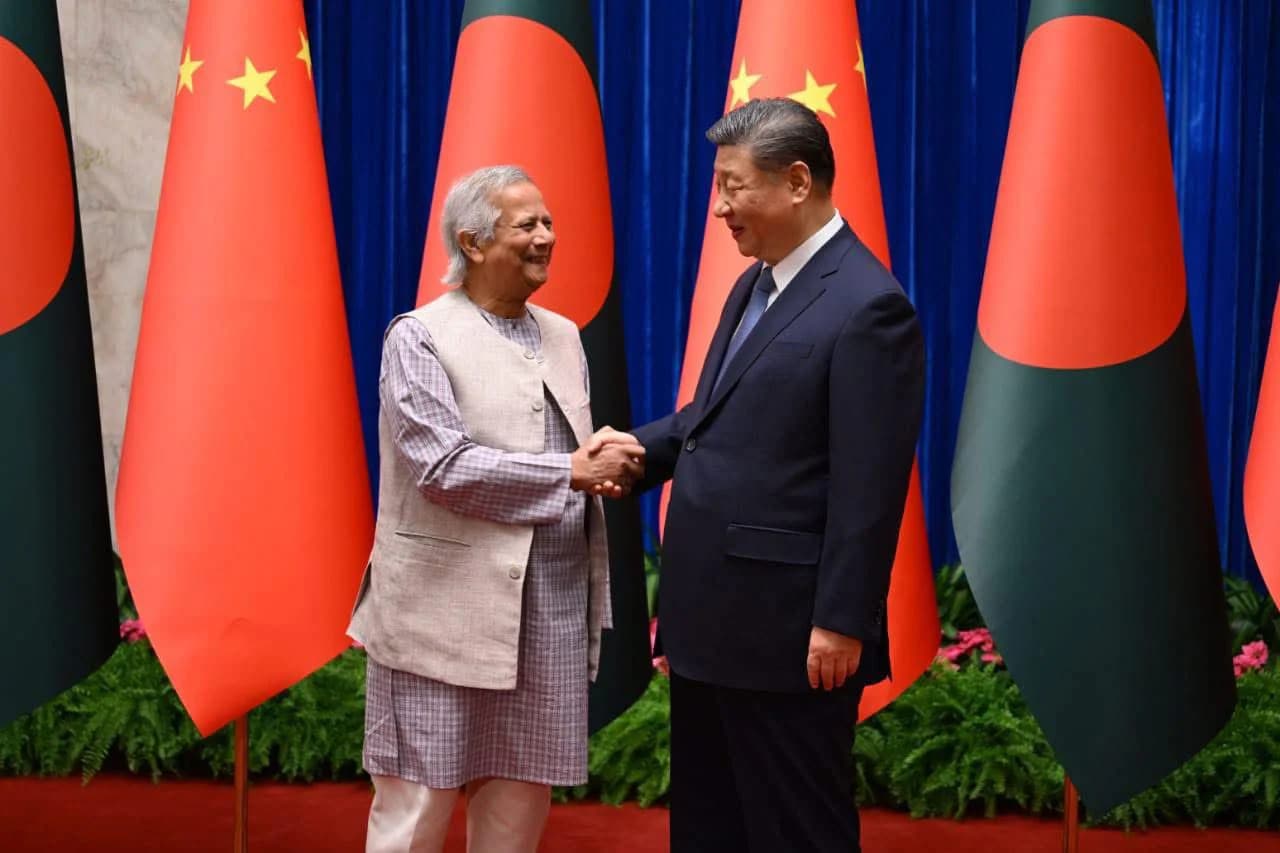
Bangladesh leader Mohd Yunus‘ comments about the seven northeastern states – which he called “an extension of the Chinese economy” and which he seemed to urge Beijing to take over – have triggered fierce reactions from Indian politicians, including one to “break up Bangladesh”. The comment was made by Pradyot Manikya, the founder of Tipra Motha, the second-largest party in Tripura.
In a post on X, Mr Manikya, a member of the state’s erstwhile royal family. suggested Delhi “rather than spending billions” on ways to establish and maintain physical control of, and communications with, the northeast, simply take control of parts of Bangladesh that have “always wanted to be part of India”.
This, he declared, would also give the northeastern states “our own access to the sea”, something the Bangladesh interim government head told China is lacking at present.
“The Chittagong hill tracts were always inhabited by indigenous tribes that have always wanted to be part of India… there are lakhs and lakhs of Tripuri, Garo, Khasi, and Chakma people who reside in Bangladesh (but) in terrible conditions in their traditional lands,” he noted on X.
“This should be utilised for our national interest and their well-being,” he said.
The Chittagong Hill Tracts have been a problem for Bangladesh since the nation was created, with protests taking place under the leadership of MN Larma and the ‘Shanti Bahini‘, or ‘Peace Force’, which was the armed wing of a political group representing the indigenous people there.
Rather than spending billions on innovative and challenging engineering ideas we might as well break up Bangladesh and have our own access to the sea . The Chittagong hill tracts were always inhabited by indigenous tribes which always wanted to be part of india since 1947 . There… https://t.co/rcjs6msae7
— Pradyot_Tripura (@PradyotManikya) April 1, 2025
The group sought autonomy and recognition of the indigenous identities of the various tribal communities in the region. Eventually, a peace deal was signed by Sheikh Hasina in 1997.
The X post drew criticism from certain quarters but the Tipra Motha chief was unfazed, insisting “Bangladesh was never our friend… so let’s not be fooled”.
The only ‘friend’ India had in that country, he said, was the late Sheikh Mujiur Rahman, whose daughter, Sheikh Hasina, was Prime Minister till last year’s revolution.
READ | “No Response Yet”: Mohd Yunus On Sheikh Hasina Extradition
Ms Hasina is now in India and the subject of an extradition request by the Yunus administration.
“Let us not fool ourselves… I live here in the northeast and we see clear and present danger every day. I understand your Left leanings makes it difficult… but appreciate our views too.”
Mr Manikya’s suggestion has some basis in history but its significance but the current context is equally important, for it follows comments by Assam Chief Minister Himanta Biswa Sarma.
Mr Sarma had called Mr Yunus’ remarks “offensive” and “strongly condemnable”, and called on the union government to develop rail and road links between the rest of the country and the northeast, land access to which is only through the Siliguri, or ‘Chicken’s Neck’, Corridor.

This corridor is only 22km wide at its narrowest.
NDTV Explains | Dagger To Chicken’s Neck? Why Yunus’ Remarks Enrage
The Bangladesh leader’s remark, the Chief Minister also said, “underscores the persistent vulnerability narrative associated with the corridor”. He pointed further to comments by “internal elements (that) have dangerously suggested severing this critical passageway…”
The row broke after Mr Yunus had invited China to take advantage of his country’s position as “the guardian of the ocean” in the region, referring to three major sea ports – Chattogram (formerly Chittagong), Mongla, and Payra – and an under-construction fourth – Matabari.
READ | Dhaka Asks For China’s “Extension” In Veiled Threat To Northeast India
The Chattogram Port has enormous strategic importance. Not only is it the largest in Bangladesh, but it was also being considered by Delhi as a transhipment hub to move goods to Tripura capital Agartala.
A paper by the Asian Development Bank noted that transportation costs from the Kolkata Port to Agartala is between Rs 6,300 and Rs 7,000 per ton. Costs for the Chattogram route – i.e., from Kolkata to the Bangladeshi port and then on by rail – are much less
But the change of government in Bangladesh has complicated issues.
Meanwhile, there are also concerns over Bangladesh inviting China to be part of the Teesta Water Management project. During Mr Yunus’ trip to China, Dhaka said talks with Beijing on this had moved forward. If this happens, it will give China a presence south of districts like Bengal’s Jalpaiguri.
This, coupled with China already building a military presence to the north, would have very grave implications for security of the Chicken’s Neck Corridor, necessitating India keep strategic countermeasures ready to tackle threats to the corridor or the northeast.