Live · Global · Independent
Live Feeds
PinkVilla
Forbes
NDTV
Hindustan Times
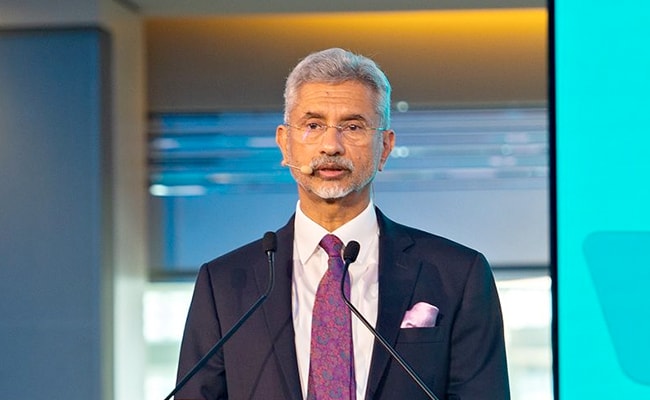
Indian Diplomats Were “Threatened, Intimidated” In Canada: S Jaishankar
onmynews.com

Indian Diplomats Were “Threatened, Intimidated” In Canada: S Jaishankar

India expects action against the culprits involved in last year’s attacks on its high commission in London and consulate in San Francisco as well as those involved in threatening the Indian diplomats in Canada, External Affairs Minister S Jaishankar on Monday said.

The external affairs minister said India had to suspend issuance of visas in Canada as its diplomats were repeatedly “threatened and intimidated in many ways” and we “got very little comfort from the Canadian system that time”.

In September last year, India temporarily suspended issuance of visas to the Canadian citizens, a move that came days after Canadian Prime Minister Justin Trudeau’s allegations of a “potential” involvement of Indian agents in the killing of Khalistani separatist Hardeep Singh Nijjar.

The visa services were resumed several weeks later.

India strongly rejected Trudeau’s allegations.

India has been asserting its “core issue” with Canada remained that of the space given to the separatists, terrorists and anti-India elements in that country.

“We expect the culprits in the attack in our consulate in San Francisco to be brought to book, we expect action against people who stormed into our high commission in London and we expect action against people who threatened our diplomats (in Canada),” Mr Jaishankar said at a summit organised by TV9 Network.

The Indian high commission in London was attacked by certain pro-Khalistani elements in March 19 last year while there was an attempted arson at the Indian Consulate in San Francisco in July.

The Indian diplomats faced threats in Canada in September.

“We had to suspend issuance of visas in Canada because our diplomats were not safe going to work. Our diplomats were repeatedly threatened. They were intimidated in many ways and we got very little comfort from the Canadian system that time,” Mr Jaishankar said.

“We reached a stage when as a minister, I could not risk exposing the diplomats to the kind of violence which was very clearly prevalent in Canada at that time. That part of it has been rectified. Today, our visa operations are pretty much normal,” he added.

Mr Jaishankar said the situation has improved since then.

To a question on the space given to the Khalistani elements in Canada, he cited instances of throwing of smoke bombs into the Indian missions in that country.

“They (Canada) keep telling us that we are a democracy. There is freedom of speech and, therefore, people say these things,” Mr Jaishankar said.

“Freedom of speech cannot extend to intimidating diplomats who are doing their duty. Throwing smoke bombs to embassy and consulates, advocating violence and separatism against a friendly state is not freedom of speech, this is misuse of freedom of speech,” he added.

Mr Jaishankar said the culprits involved in these attacks must be brought to book.

“In the UK, we actually saw our high commission being attacked by mobs and honestly we did not get the kind of protection which we expected to get,” Mr Jaishankar said.

“Things have improved in the UK. We find today a much firmer response in Australia and in the US,” he added.

“If a receiving state does not investigate and take action against someone who attacks our embassy and consulates, there is a message in it. I do not think it is good for any of these countries to send that kind of message for their own reputation,” Mr Jaishankar said. 

(Except for the headline, this story has not been edited by NDTV staff and is published from a syndicated feed.)
Read full article
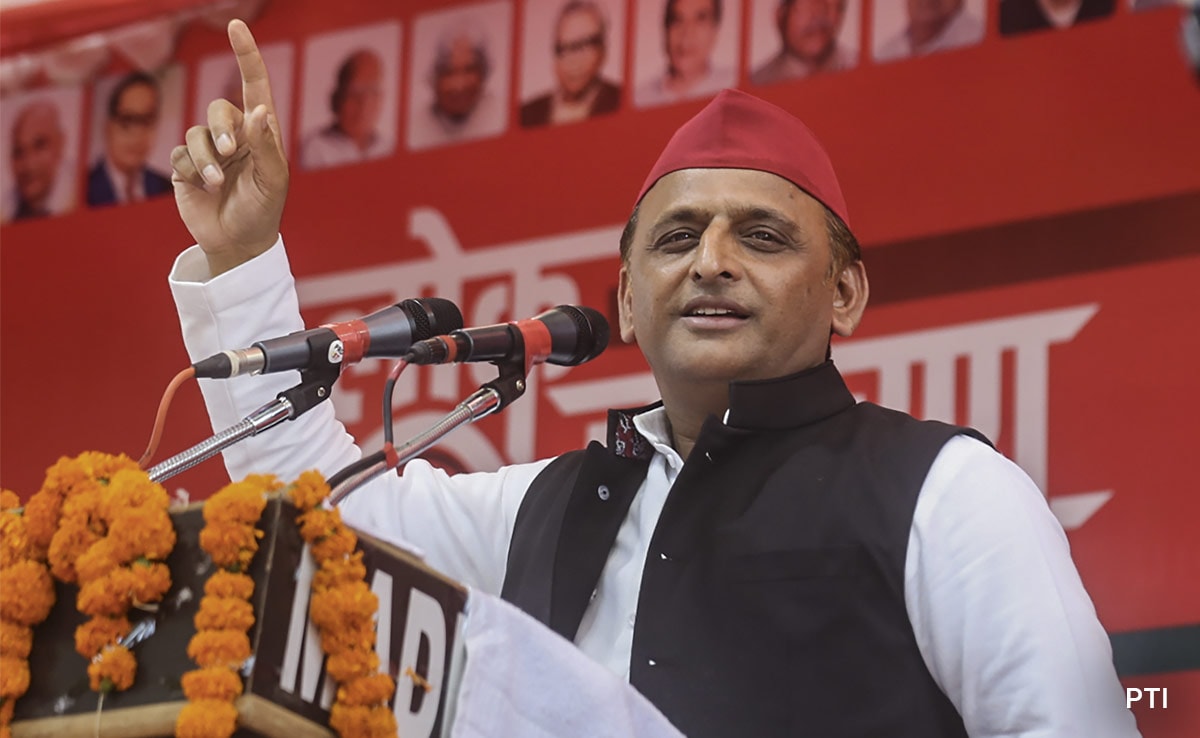
“Whip”Lash For Akhilesh Yadav On Key Poll Day, Hours After Dinner Surprise
onmynews.com

“Whip”Lash For Akhilesh Yadav On Key Poll Day, Hours After Dinner Surprise

In a major setback to Samajwadi Party ahead of the voting for 10 Rajya Sabha seats in Uttar Pradesh, its chief whip in the Assembly resigned this morning. The resignation of Manoj Kumar Pandey, MLA from Unchahar, came hours after as many as 8 MLAs skipped a dinner hosted by party chief Akhilesh Yadav  – a cause for worry amid the cross-voting buzz in the election to the Upper House.   

Besides hitting the SP’s prospects in this key election, cross-voting will compound the party’s worries months ahead of the general election. The SP will be contesting 63 Lok Sabha seats in Uttar Pradesh as part of the INDIA alliance and a mutiny months before the polls will be a massive blow.   

Earlier, SP chief Akhilesh Yadav had alleged that the BJP is putting pressure on the party’s MLAs. “This is how they work. They instil fear, threaten people, use agencies or take up any old case and pressure them. All these will not work in this election,” he said yesterday.

This morning, however, he was less confident. “We hope all three candidates of Samajwadi Party win. BJP can use all the tactics to win elections. BJP will do everything possible for victory. Some of our leaders who want personal gains can go to the BJP,” he said.

A total of 56 Rajya Sabha seats became vacant this year. Forty-one candidates were elected unopposed. Of the remaining, 10 are in Uttar Pradesh, four in Karnataka and one in Himachal Pradesh.

For the 10 seats in Uttar Pradesh, 11 candidates are in the race — 8 from the ruling BJP and 3 from main Opposition Samajwadi Party.

The BJP is confident of the victory of all its candidates, especially after it recently secured the support of the Jayant Chaudhary-led Rastriya Lok Dal. “We have the support of Nishad Party, Suhel Dev Samaj Party, Apna Dal, Rashtriya Lok Dal and Jansatta Dal. I am confident all 8 NDA candidates will win,” state BJP president Bhupendra Singh Chaudhary has said.

Earlier, leaders of the BJP had claimed that a section of SP legislators were in touch with them. The Akhilesh Yadav-led party had denied this, but the absence of eight MLAs at last night’s dinner has left the main Opposition worried.

Speaking to news agency ANI, SP legislator Zahid Baig said, “Many people did not come. Maybe they are busy. But if they have taken money (to cross-vote), people will not forgive them.”

The BJP’s eight candidates are former Union Minister RPN Singh, former MP Chaudhary Tejveer Singh, general secretary of BJP’s Uttar Pradesh unit Amarpal Maurya, former state minister Sangeeta Balwant (Bind), party spokesperson Sudhanshu Trivedi, former MLA Sadhna Singh, former Agra mayor Naveen Jain and Sanjay Seth. The SP has fielded actor MP Jaya Bachchan, retired IAS officer Alok Ranjan and Ramji Lal Suman. The BJP has adequate numbers to get seven candidates elected, but its move to field an eighth has forced a contest. And it may succeed if cross-voting happens.

What’s Happening in Karnataka, Himachal

Five candidates are in the contest for four Rajya Sabha seats in Karnataka. The ruling Congress is confident of winning three seats, and the BJP-JDS combine has the numbers to win at least one. But the Opposition alliance’s naming of a second candidate has made it an exciting contest. Taking no changes, the ruling Congress has shifted its MLAs to a private hotel. State party chief and Deputy Chief Minister DK Shivakumar has denied any possibility of cross-voting.

In Himachal, only one seat is going to polls. The Congress has a comfortable strength in the Assembly, but the BJP has forced a contest by fielding a candidate.

Read full article
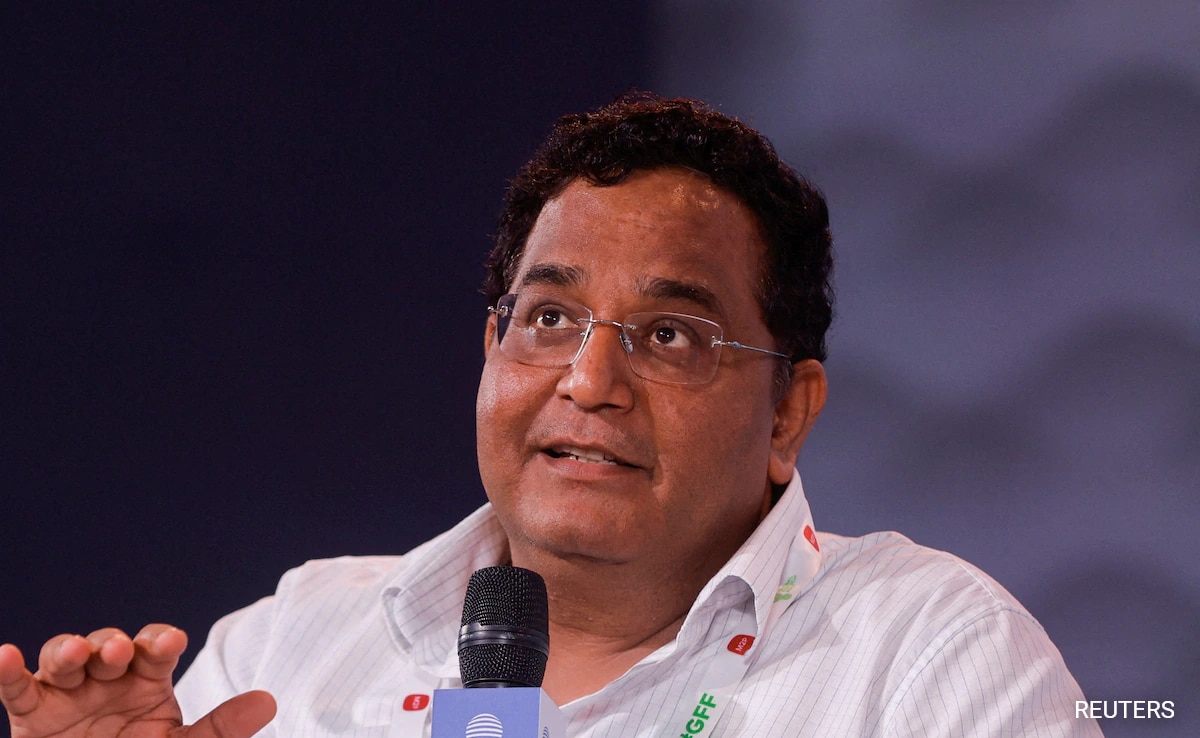
Why Vijay Shekhar Sharma Resigned As Paytm Payments Bank Chairman
onmynews.com

Why Vijay Shekhar Sharma Resigned As Paytm Payments Bank Chairman

Paytm CEO Vijay Shekhar Sharma on Monday resigned as non-executive chairman and board member of Paytm Payments Bank, amid ongoing regulatory challenges faced by the digital payments giant. The decision follows a series of measures imposed by the Reserve Bank of India (RBI), including an order for Paytm Payments Bank to wind down operations by March 15 due to persistent compliance issues and supervisory concerns.

The RBI’s action against the payments bank stemmed from various concerns, including inadequate customer identity checks and a perceived lack of arms-length distance from the parent company, Paytm. These issues prompted a major board overhaul, with former chairman of Central Bank of India, Srinivasan Sridhar, former Bank of Baroda Executive Director Ashok Kumar Garg, and two retired Indian Administrative Service (IAS) officers joining the payments bank’s board.

Paytm’s decision to reconstruct the board with independent and executive directors is seen as an effort to demonstrate compliance with regulatory norms and salvage the situation. While the RBI did not explicitly mandate the board reconstruction, it is speculated that the move aims to reassure the regulatory body about Paytm’s commitment to adhering to norms.

Why Vijay Shekhar Sharma Quit

Mr Sharma owns a 51 per cent stake in Paytm Payments Bank while One 97 Communications, as Paytm was formally known, owns the rest. Mr Sharma said that his resignation from the board and the appointment of independent directors were strategic steps to enable a smooth transition and enhance governance structures. The move is also seen as an attempt to disassociate Paytm from its payments bank unit and position it as an independent entity.

The regulatory challenges faced by Paytm have impacted its stock value, with a significant drop since the RBI’s order. However, the stock has shown signs of recovery, attributed to Paytm’s partnership with new banking entities and the RBI extending the deadline for winding down the payment bank’s operations.

Nirmala Sitharaman’s Action

Finance Minister Nirmala Sitharaman on Monday convened a meeting with representatives from the fintech industry to discuss their concerns and issues. However, the developments at Paytm Payments Bank were not specifically addressed during this meeting, according to two government officials who were present, reports Reuters.

In response to the crisis, the finance ministry has announced plans to hold discussions with Indian law enforcement agencies and fintech firms in the near future. This upcoming meeting aims to facilitate communication between fintech firms and various enforcement agencies, as mentioned in a statement released by the ministry.

The concerns raised by some listed fintech companies regarding their ownership structures will be examined by both the central bank and the government. This move signals a broader effort to enhance transparency and accountability in the fintech sector.

Additionally, the government has pledged to simplify ‘know your customer’ (KYC) norms across the fintech space. Simplifying KYC requirements could streamline onboarding processes for users, potentially addressing some of the operational challenges faced by fintech firms.
 

Read full article
Link copied!