Live · Global · Independent
Live Feeds
PinkVilla
Forbes
NDTV
Hindustan Times
Aamir Khan offers condolences to his Dangal co-star Suhani Bhatnagars family in Faridabad
onmynews.com

Aamir Khan offers condolences to his Dangal co-star Suhani Bhatnagars family in Faridabad

Suhani Bhatnagar, the actress who portrayed young Babita Phogat in the film Dangal, passed away on February 16 at the age of 19 due to a rare autoimmune disease called dermatomyositis. She was undergoing treatment at AIIMS Delhi, where she breathed her last.

Her death deeply shocked the industry, with many offering their condolences to her family and expressing their grief.

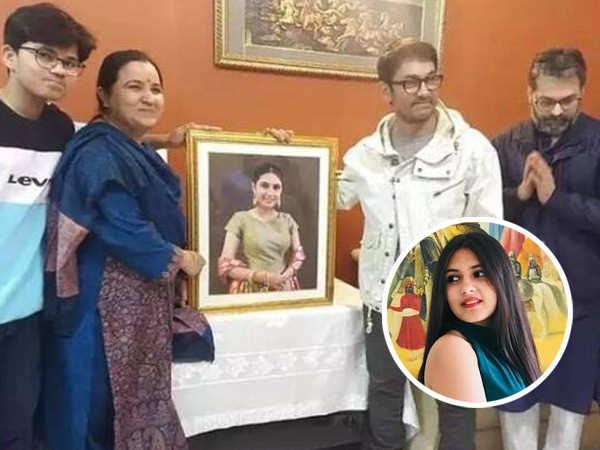
Aamir Khan, recently visited his Dangal co-star Suhani Bhatnagar’s home in Faridabad to offer his condolences and meet with her family. A photo from his visit has surfaced on the internet, showing Aamir Khan with Suhani’s parents and relatives, holding a framed photo of Suhani.

Following Suhani’s passing, Aamir Khan Productions issued a statement mourning her death: “We are deeply saddened to hear about the passing of our Suhani. Our heartfelt condolences to her mother, Poojaji, and the entire family. Such a talented young girl and such a team player, Dangal would have been incomplete without Suhani. Suhani, you will always remain a star in our hearts. May you rest in peace.”

Babita Phogat, whose character Suhani portrayed in Dangal, also visited Suhani’s residence in Faridabad to attend her prayer meeting and offer her condolences. She posted a photo with Suhani’s family on Instagram.

Aamir Khan played the character of Mahavir Singh Phogat, Babita Phogat’s (Suhani) father, in the Nitesh Tiwari directorial Dangal.
Read full article
Congress On Seat Share Speed Run, Deal Done With AAP For Delhi, Gujarat
onmynews.com

Congress On Seat Share Speed Run, Deal Done With AAP For Delhi, Gujarat

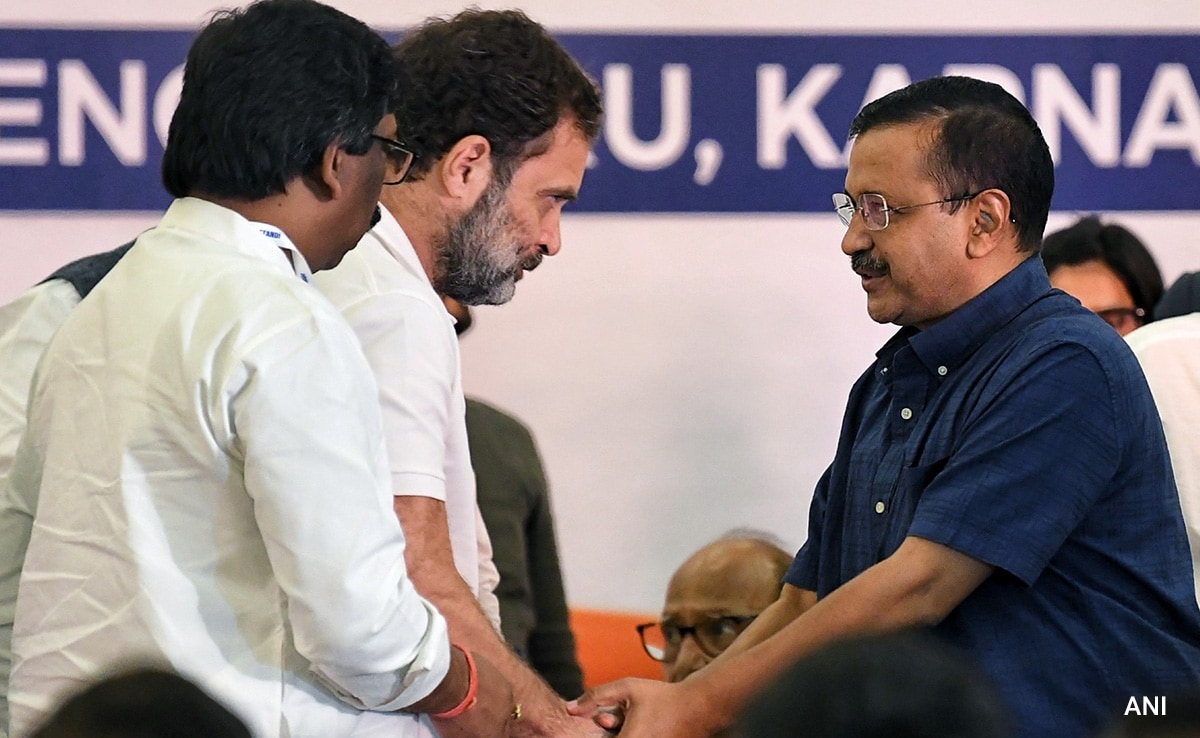
The Congress and the Aam Aadmi Party – who this week delivered the INDIA bloc’s first electoral win, in the Chandigarh mayoral poll – have finalised seat-share deals for Lok Sabha polls in Delhi, Gujarat, Goa, and Haryana, sources told NDTV Friday afternoon.

The details will be revealed at a press conference later today, but the INDIA bloc members are understood to have agreed a four-three split of Delhi’s seven seats.

Sources have said the AAP will field candidates from East, West and South Delhi, in addition to New Delhi, while Congress will contest from North West and North East Delhi, and Chandi Chowk.

In the 2019 election the BJP won all seven seats.

Hours later NDTV was told a deal had also been struck for Goa, Chandigarh, Gujarat, and Haryana, with reports indicating two seats in Gujarat, and one each in Haryana and Chandigarh, are part of the deal.

READ | After Delhi, AAP-Congress Seal Seat Deal For Goa, Haryana, Gujarat: Sources

The last-known position in each of these states was that in Gujarat – Prime Minister Narendra Modi’s home state – the AAP will contest two seats, the sole Lok Sabha seat in Chandigarh will go to the Congress, as will the South Goa seat, while the AAP will get at least one seat in Haryana.

Of these, the BJP swept Gujarat and Haryana in the last election, winning all 26 in the former and all 10 in the latter. In Goa, which has only two Lok Sabha seats, the BJP picked up North Goa and finished less than 10,000 votes behind the Congress’ Francisco Sardinha in South Goa.

Mr Modi’s party also won the Chandigarh seat; the Congress held this for three terms previously, with Pawan Kumar Bansal winning in 1999, 2004, and 2009. There was talk the AAP would insist on this seat.

The Congress-led INDIA has been busy this week – with just days for Lok Sabha election dates to be announced – wrapping up deals in Uttar Pradesh, closing in on an agreement in Maharashtra, and hoping for a revival of fortunes in Bengal.

READ | “Even With Binoculars…”: Trinamool Sources On Congress’ 5-Seat Demand

These accords have not, for now, changed the equation in Punjab, where the AAP is set to contest all 13 seats. That was confirmed by party boss and Delhi Chief Minister Arvind Kejriwal last week, who took a swipe at the Congress as he did so.

The UP deal – under which the Congress will contest 17 of the state’s 80 seats and Akhilesh Yadav’s Samajwadi Party (and regional allies) the other 63 – was INDIA’s first major seat-share contract, and came after Mr Yadav’s ‘ultimatum’ about his participation in the party’s ‘Bharat Jodo Nyay Yatra’.

READ | INDIA Bloc’s UP Seat Sharing Pact Finalised, Congress To Fight On 17 Seats

Set up in June to defeat Mr Modi and the BJP, the INDIA bloc has already lost Bihar Chief Minister Nitish Kumar’s Janata Dal (United) – a founding member – and Jayant Chaudhary’s Rashtra Lok Dal, which has influence among the Jat community in western UP. Both the JDU and the RLD have aligned with the BJP

Aware that further losses, or delays in sealing seat-share deals, will make it even harder to fight the BJP’s formidable election-winning machinery, the Congress has stepped up its negotiating efforts this week, with senior leaders – Rahul Gandhi, Priyanka Gandhi Vadra, and Sonia Gandhi – all playing key roles.

READ | To Solve UP Seat-Sharing Deadlock, Sonia, Priyanka Gandhi Stepped In

Mr Gandhi has spoken to Shiv Sena (UBT) boss Uddhav Thackeray to complete talks in Maharashtra and Ms Gandhi Vadra ensured the deal with Akhilesh Yadav was struck. Sonia Gandhi may be called on to help settle a deal with Bengal Chief Minister Mamata Banerjee, with whom she has a good relationship.

NDTV is now available on WhatsApp channels. Click on the link to get all the latest updates from NDTV on your chat.
Read full article
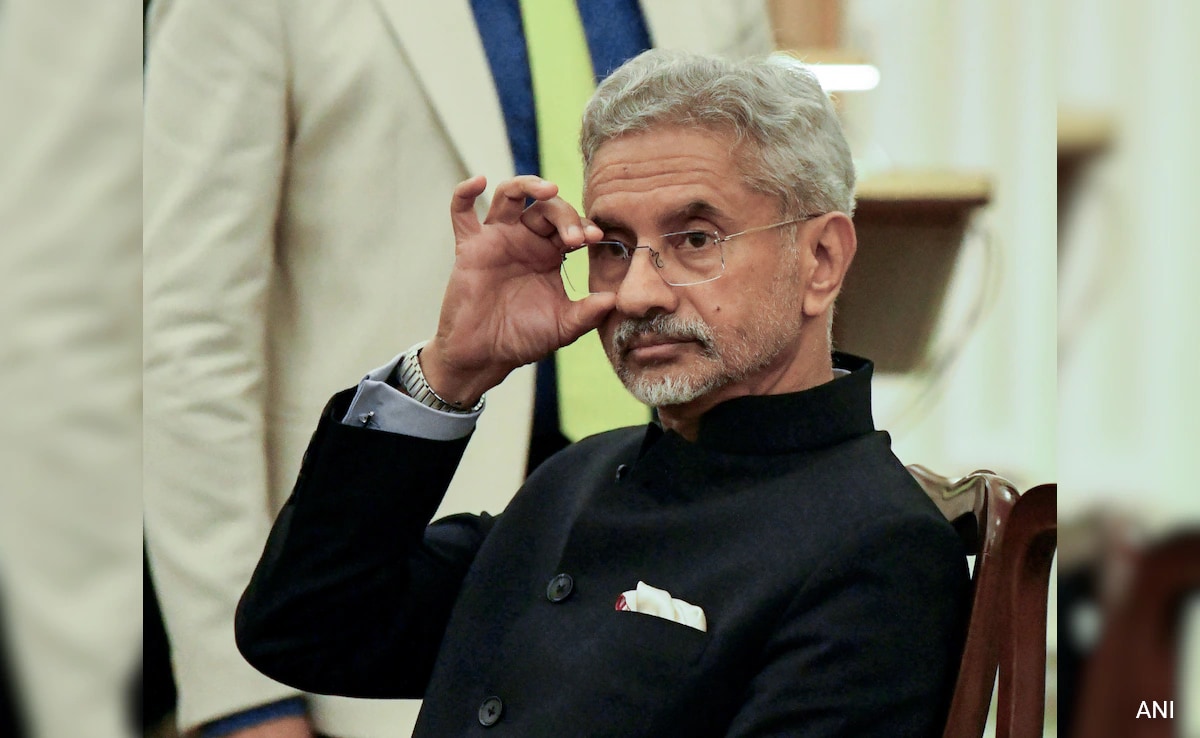
On India-China Ties, S Jaishankar Talks About “Mind Games Played”
onmynews.com

On India-China Ties, S Jaishankar Talks About “Mind Games Played”

External Affairs Minister S Jaishankar on Friday said arriving at an equilibrium and maintaining it is going to be one of the “biggest challenges” for India-China ties even as he asserted that the immediate issue at hand was Beijing’s departure from laid down norms triggering the border row in eastern Ladakh.

In an interactive session at the Raisina Dialogue, he cautioned against China’s “mind game” to restrict the issues under the bilateral framework and said India must not forgo its rights to harness other factors in the world to get better terms on an equilibrium.

On the economic front, the external affairs minister said there would be a period when the Chinese economy will be flattening out and India will be growing and referred to projections by Goldman Sachs that suggested that by 2075, both countries could end up as USD 50 trillion plus economies.

Mr Jaishankar said India should be confident enough to “leverage” the international system to create the “best possible outcome”.

His remarks came when asked whether there would be a settling point between China and India and would the two countries finally find an equilibrium or a balance in their frosty relations.

“Here is the immediate issue which is: From the late 1980s, we had an understanding on the border precisely because it suited both of us. Now there was a departure after almost 30 years. A departure on their side in terms of how they behaved on the border. And there was a pushback from our side,” he said.

“I think arriving at an equilibrium, then maintaining those and refreshing those is going to be one of the biggest challenges for both countries. It is not going to be easy,” he noted.

The external affairs minister said “mind games” will be played which would be that it is “just between the two of us”.

“The other 190 odd countries do not exist in our relationship. That will be the mind game which will be played. I do not think we should play it,” he said.

“Because if there are other factors out there in the world which can be harnessed by me to get better terms on an equilibrium, then why should I forgo that right,” he said.

“Today, when I say think through your own solution, do not give another country, which is clearly a competitive country, a veto over our policy choices. Unfortunately, in the past that has happened from time-to-time,” he said.

Talking about the two economies, Mr Jaishankar said the Chinese started off “earlier and much more intensively and robustly” than India did.

“But it is in the nature of things that at some stage everybody flattens out. So there will be a period when they will be flattening out and we will be growing,” he said.

“I am not in denial of what the numbers today suggest. But if one looks for an example in Goldman Sachs predictions which is that we will both really by around 2075 end up as USD 50 trillion plus economies and will be the two closest to each other,” he said.

“The international version of that issue will be — if both of us are moving vis-a-vis each other and vis-a-vis the world, how do we construct an equilibrium; that There will be occasions when one or the other would want to do something to press home a particular advantage and the other would resist it,” he said.

(Except for the headline, this story has not been edited by NDTV staff and is published from a syndicated feed.)

Read full article
Link copied!