onmynews.com
News18 She Shakti Suraksha Survey 2025: 7% Women Faced Harassment In Public Spaces Last Year
The CNN-News18 She Shakti Suraksha Survey 2025 shows 7% of women faced public harassment last year, with 60% of it being verbal

The CNN-News18 She Shakti Suraksha Survey 2025 shows 7% of women faced public harassment last year, with 60% of it being verbal

The United States Supreme Court rejected an “emergency application” by 26/11 Mumbai terror attack accused Tahawwur Rana, which opposed his extradition to India claiming he will be tortured there as he is a Muslim of Pakistani origin.
Rana, a Canadian national of Pakistani origin, had filed an “Emergency Application For Stay” with the Associate Justice of the Supreme Court of the United States and Circuit Justice for the Ninth Circuit.
In that petition, Rana argued that his extradition to India violates United States law and the United Nations Convention Against Torture “because there are substantial grounds for believing that, if extradited to India, petitioner will be in danger of being subjected to torture.” “The likelihood of torture in this case is even higher though as petitioner faces acute risk as a Muslim of Pakistani origin charged in the Mumbai attacks,” the application said.
The application also said that his “severe medical conditions” render extradition to Indian detention facilities, a “de facto” death sentence in this case. It cited medical records from July 2024 showing that he has multiple “acute and life-threatening diagnoses”, including multiple documented heart attacks, Parkinson’s disease with cognitive decline, a mass suggestive of bladder cancer, stage 3 chronic kidney disease, and a history of chronic asthma, and multiple COVID-19 infections.
Rana, through an appeal, stated that “if a stay is not entered, there will be no review at all, and the US courts will lose jurisdiction, and the petitioner will soon be dead.”
The action comes weeks after Prime Minister Narendra Modi met US President Donald Trump in Washington, with the latter announcing the extradition of “very evil” Rana “to face justice in India” over his role in the 26/11 attacks in Mumbai that killed 166 people.
Eight locations in south Mumbai were targeted by terrorists on November 26, 2008 and rescue operations concluded on November 29. Rana, 64, is known to be associated with Pakistani-American terrorist David Coleman Headley, one of the main conspirators of the 26/11 attacks.
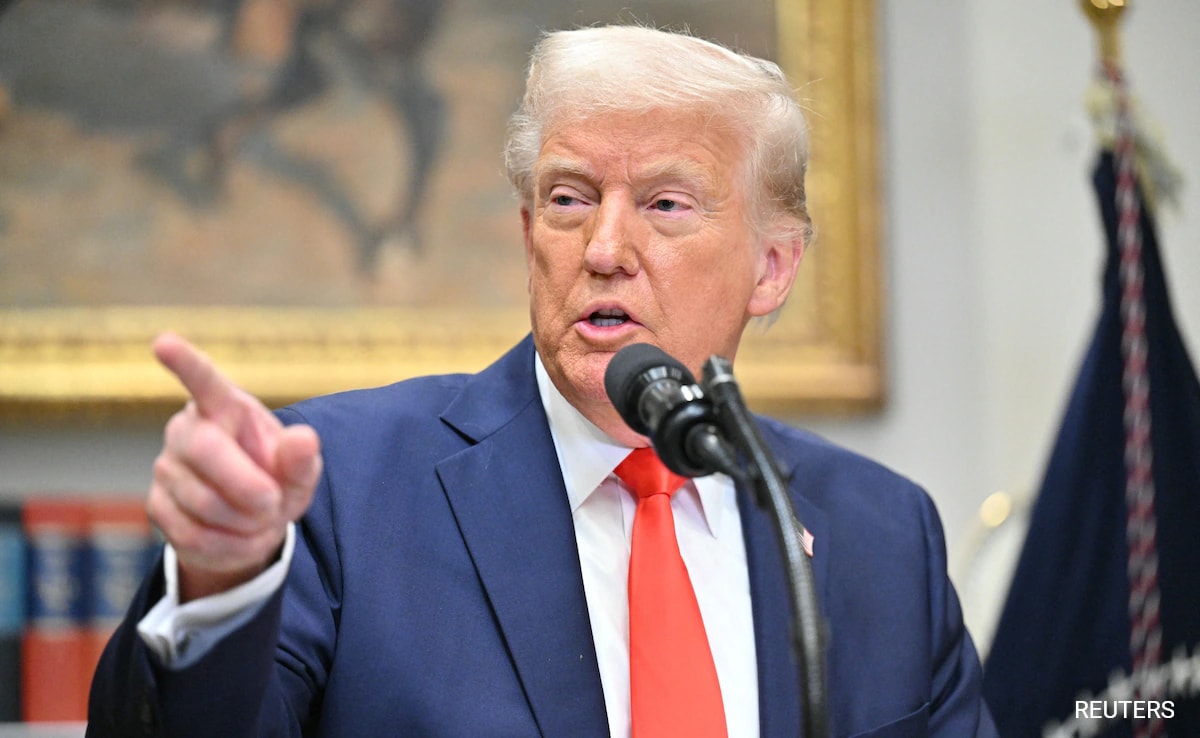
US President Donald Trump on Thursday delayed some tariffs targeting Canada and Mexico — leading Ottawa to halt an upcoming wave of countermeasures — in moves that bring reprieve to companies and consumers after blowback on financial markets.
Stock markets tumbled after Trump’s duties of up to 25 percent took effect Tuesday, as economists warned that blanket levies could weigh on US growth and raise inflation.
But Trump signed orders Thursday to delay the fresh tariffs for Canadian and Mexican imports covered by a North American trade agreement, though he dismissed suggestions that his decisions were linked to market turmoil.
The halt — which will last until April 2 — offers relief to automakers.
In the auto sector, parts cross North American borders multiple times during production.
Following talks with the “Big Three” US automakers — Stellantis, Ford and General Motors — Washington initially announced a one-month exemption on autos coming through the United States-Mexico-Canada Agreement (USMCA).
A White House official told reporters that about 62 percent of Canadian imports will still face the new tariffs, although much of these are energy products hit by a lower rate of 10 percent.
About half of Mexican imports come through the USMCA.
The latest moves make conditions “much more favorable for our American car manufacturers,” Trump said Thursday.
Shortly after Trump’s decision, Canadian Finance Minister Dominic LeBlanc wrote on X that his country “will not proceed with the second wave of tariffs on $125B of US products until April 2nd, while we continue to work for the removal of all tariffs.”
Trump said Thursday that more tariffs would come on April 2, adding they will be “reciprocal in nature.” He had earlier vowed reciprocal levies to remedy practices Washington deems unfair.
At that point, Canadian and Mexican goods could still face levies.
The US president also said he would not modify broad tariffs for steel and aluminum imports, which are due to take effect next week.
US stock markets slumped again Thursday despite Trump’s partial tariff delay.
Trump told reporters Thursday in the Oval Office that he had a “very good conversation” with Mexican President Claudia Sheinbaum.
He claimed “tremendous progress” on both illegal immigration and drugs coming into the United States — both reasons that Washington cited in imposing levies on Mexico, Canada and China.
His remarks stood in sharp contrast to simmering tensions with Canadian Prime Minister Justin Trudeau.
Trudeau said Thursday that Ottawa will remain in a trade war with Washington for “the foreseeable future” even if there are “breaks for certain sectors.”
“Our goal remains to get these tariffs, all tariffs removed,” Trudeau added.
Canada contributes less than one percent of fentanyl to the illicit US supply, according to Canadian and US government data.
China, meanwhile, has pushed back on US allegations of its role in the fentanyl supply chain, calling this a domestic issue that tariffs will not resolve.
For Scott Lincicome, vice president of general economics at the Cato Institute, Trump’s easing of tariffs was “a recognition of economic reality.”
The move was an acknowledgment that tariffs disrupt supply chains, that the burden of levies fall to Americans, and “that the market doesn’t like them and certainly doesn’t like the uncertainty surrounding them,” Lincicome told AFP.
Since taking office for his second term in January, Trump has made tariff threats on allies and adversaries alike.
US Treasury Secretary Scott Bessent said Thursday that he was not concerned Trump’s tariffs would be inflationary, adding that any impact on prices would likely be temporary.
He told the Economic Club of New York that “access to cheap goods is not the essence of the American Dream,” saying this was instead rooted in the idea that citizens can achieve upward mobility and economic security.
Trump has referred to tariffs as a source of US government revenue and a way to remedy trade imbalances.
The US trade deficit surged to a new record in January, ballooning 34 percent to $131.4 billion as imports rose.
Analysts say the deficit was likely bolstered by gold imports, but that data suggests businesses were also trying to get ahead of tariffs.
(Except for the headline, this story has not been edited by NDTV staff and is published from a syndicated feed.)