Live · Global · Independent
Live Feeds
PinkVilla
Forbes
NDTV
Hindustan Times
Israel Finds Itself Increasingly Alone As Anger Grows Over Gaza
onmynews.com

Israel Finds Itself Increasingly Alone As Anger Grows Over Gaza

Jordan’s Queen Rania Al Abdullah was offered a chance to express horror at the Oct. 7 Hamas killing and abduction of Israelis.

How did she feel, she was asked in a CNN interview, “as an Arab, as a Palestinian, a human being, a mother?”

The monarch launched into an impassioned denunciation of Israel’s subsequent bombing of Gaza and the West’s “double standard,” juxtaposing what happened in southern Israel with what is occurring in Gaza. “Are we being told it is wrong to kill an entire family at gunpoint but it’s OK to shell them to death?”

The interview, greeted with fury in Israel, is part of a growing disconnect between how the Jewish state views the conflict, and how it is seen by the rest of the Middle East and many further afield.

Inside Israel, a powerful sense of foreboding was evidenced by a new poll showing 64% of Israelis now fear for their physical safety. Hamas continues to fire rockets and missiles into the country every day while militants try to sneak in via land or sea. Security officials believe some of those who entered on Oct. 7 may be in hiding in preparation for a second attack. 

Outside of Israel, many see things differently. On Tuesday, United Nations Secretary General Antonio Guterres said of the Hamas killings that they “did not happen in a vacuum,” adding, “The Palestinian people have been subjected to 56 years of suffocating occupation.”

Israel’s ambassador to the UN, Gilad Erdan, was so outraged at the notion that Hamas’ violence needed this context that he called on Guterres to resign. The sentiment wasn’t limited to those on the right of Israeli politics. “Dark are the days when the United Nations Secretary General condones terror,” opposition leader Benny Gantz posted to X, the social media platform formerly known as Twitter.

Germany, which has been quick to show its support to Israel in the days since the Oct. 7 attacks, made a point of rejecting its ally’s demand. “The UN secretary general has of course the trust of the German government,” said government spokesman Steffen Hebestreit in Berlin.

Israelis don’t deny that the events of Oct. 7 – when 1,400 were killed and another 200 people abducted – require context. But for them, that context is not the mistreatment of Palestinians. They see the attack by Hamas as an extension of anti-Semitic assaults through the centuries.

The Holocaust memorial centre in Jerusalem, known as Yad Vashem, issued a statement in response to Guterres, saying Oct. 7 was different from the Holocaust only “because Jews have today a state and an army. We are not defenseless and at the mercy of others. However, it puts to test the sincerity of world leaders, intellectuals and influencers who come to Yad Vashem and pledge ‘Never Again.'” 

There has been a parade of Western leaders through Tel Aviv offering solidarity and support. This follows a visit by President Joe Biden who came offering billions in military aid and referred to painful Jewish history. 

After that visit, Israelis felt understood. They believed that their plan to destroy Hamas would gain world sympathy as they publicized gruesome videos the killers themselves took of slaughter and abuse.

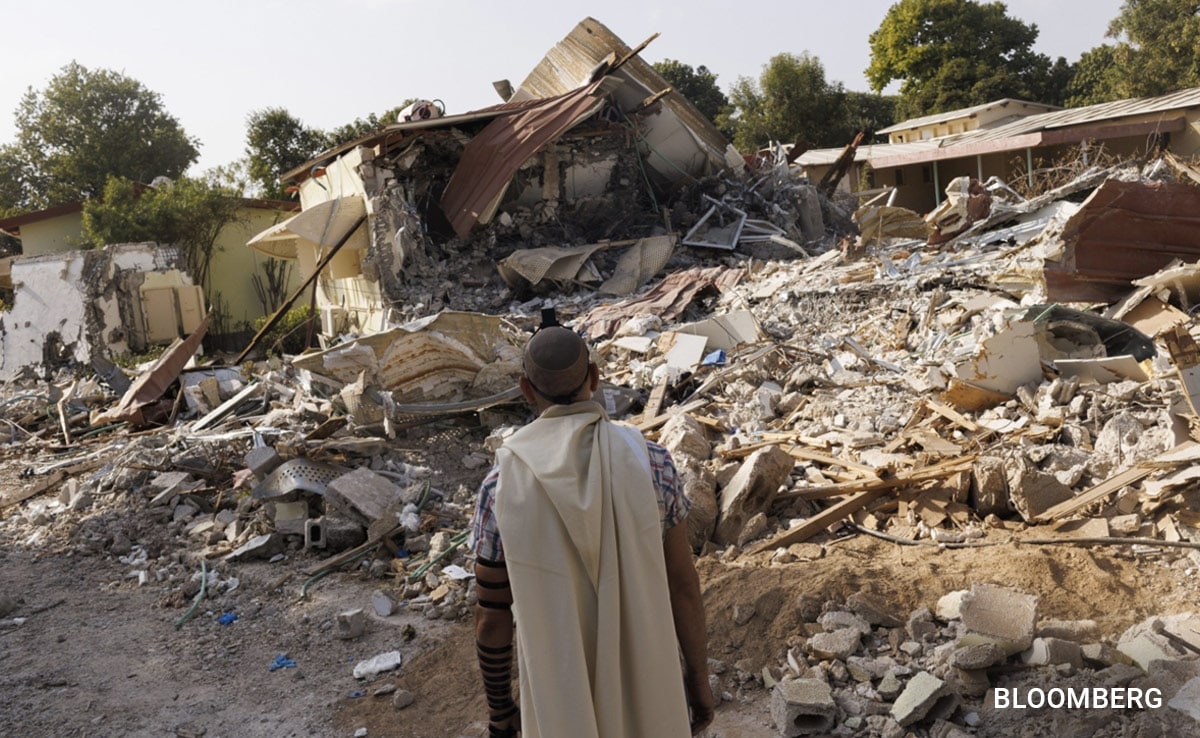
As Israeli fighter jets took to the skies over Gaza and bombarded it, killing thousands, that sympathy has come with qualifications they did not expect. 

Rescuers search the site of collapsed buildings following an Israeli airstrike in Khan Younis, Gaza

Turkey’s President Recep Tayyip Erdogan on Wednesday canceled a visit to Israel that was meant to take place later this year and added, “Hamas isn’t a terror organization but is instead a group of liberators and mujahideen defending their land and people. We will never allow for the killing of children.” Turkey also paused plans for energy cooperation with Israel.

Elsewhere in the Muslim world, Malaysia’s Prime Minister Anwar Ibrahim said that no Muslim leader expects the events in Gaza to be resolved easily. Why? “Israel has become too arrogant with the support of the US and Europe,” he said. “It is the level of insanity to allow people to be butchered, babies to be killed, hospitals to be bombed, and schools to be destroyed. It is the height of barbarism in this world.”

Israel refers to Hamas as the new ISIS, and has vowed to destroy the militant group, which is designated a terrorist organization by the US and European Union. 

“Saying that Hamas is the new ISIS is not only analytically inaccurate but also carries the risk of making all residents of Gaza vulnerable targets,” said Lina Khatib, the Director of the SOAS Middle East Institute in London. “Arabs and Muslims are widely rejecting this simplistic and dangerous characterization.”

Many world leaders are calling for a ceasefire that would allow for more aid to get into Gaza, although some describe it as a “humanitarian pause.” On Tuesday, eight trucks got in, followed by another 17 on Wednesday, according to Israeli officials, who said every truck was checked by their officers to make sure nothing was going in to help Hamas. 

The aid that’s arrived so far is “a drop in the ocean,” said Tommaso Della Longa, spokesperson for The International Federation of Red Cross and Red Crescent Societies, earlier this week.

In Israel, as concerns grow that Hezbollah may enter the war from Lebanon to its north, some speak of leaving for the US or Europe, at least for a period. But others say the anti-Israeli demonstrations across Western cities make them feel even less safe abroad than at home. 

This is a fight, many say, for the Jewish homeland, a second war of independence. But what that will create internally remains unclear. Gun license applications, officials report, are poised to triple. 

Rachel Goldberg-Polin, whose son Hersh was taken captive by Hamas at a music festival, spoke at the UN and asked why there wasn’t more agitation over the abducted. “Where is the world?” she said in anguish. “Where are you?”
Read full article
Russia To Train Forces For “Massive Retaliatory Nuclear Strike”: Minister
onmynews.com

Russia To Train Forces For “Massive Retaliatory Nuclear Strike”: Minister

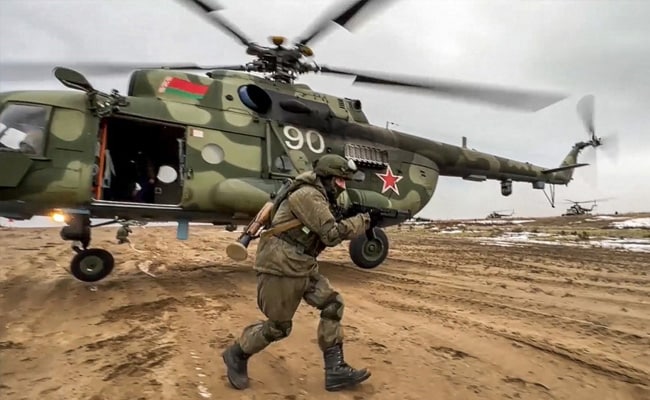
Russian President Vladimir Putin oversaw ballistic missile drills Wednesday, the Kremlin said, with Moscow’s Defence Minister Sergei Shoigu announcing forces will practise a “massive” retaliatory nuclear strike.

The exercises came after Moscow moved to revoke a key nuclear test ban treaty, 20 months into Russia’s Ukraine offensive.

During the dragging conflict, Putin and Russian officials have given mixed signals about the possible use of nuclear weapons, prompting alarm in the West.

Russian state television showed the longtime leader being briefed by Shoigu and armed forces chief Valery Gerasimov, who spoke by video link.

“Comrade Supreme Commander-in-Chief,” Sergei said, addressing Putin.

“Training is being conducted to direct the Armed Forces of the Russian Federation, during which the task of delivering a massive nuclear strike by strategic offensive forces in retaliation to an enemy nuclear strike will be practised.”

It was not clear from Shoigu’s comments if the test had already taken place.

The Kremlin said ballistic missiles had been fired in the Russian Far North.

“Under the leadership of the Supreme Commander-in-Chief of the Russian armed forces, Vladimir Putin, a training exercise was conducted with the forces and equipment of ground, sea and air components of nuclear deterrent forces,” it said in a statement.

It said one of the missiles was fired from the Plesetsk cosmodrome in the Russian north and that another missile was fired from a nuclear-powered submarine in the Barents Sea.

Moscow said “long range Tu-95Ms planes” took part in the training.

It added that the drills checked the “level of preparedness of military command and control bodies.”

The exercises came hours after Moscow edged closer to revoking its ratification of the Comprehensive Nuclear Test Ban treaty.

The landmark agreement outlaws all nuclear explosions, including live tests of nuclear weapons.

– ‘Not ready to say’ –

Russia’s upper house of parliament, the Federation Council, approved the revocation of the treaty earlier on Wednesday.

The 1996 treaty outlaws all nuclear explosions including live tests of nuclear weapons, but it has never come into force because some key countries — including the United States and China — have not ratified the treaty.

To be revoked, it still needs to be signed into law by Putin.

The Russian leader said earlier this month he was “not ready to say” whether Russia needed to carry out live nuclear tests.

The drills also came after Russia said Wednesday it would study US proposals to resume dialogue on nuclear arms control, but that it would not accept them unless Washington dropped its “hostile” stance towards Moscow.

The US and Russia used to regularly inspect each other’s nuclear facilities and limit warheads under the New START treaty, but Moscow suspended the treaty in February amid tensions over Ukraine.

Deputy Foreign Minister Sergei Ryabkov told Russian news agencies that Moscow had received an informal memo from the US calling for renewed dialogue, but that talks were out of the question for now.

– ‘Impossible to return to dialogue’ –

“The (US) suggests putting dialogue on strategic stability and arms control on a systematic footing, doing so in isolation from everything that is going on,” Ryabkov said.

“We are not ready for this,” he added.

“It is simply impossible to return to dialogue on strategic stability, including New START… without changes in the United States’ deeply, fundamentally hostile course towards Russia,” he said.

Putin has repeatedly invoked Russia’s nuclear doctrine since launching the full-scale offensive against Ukraine in February last year.

Last year, Putin said he was “not bluffing” about his readiness to use destructive weapons should Russia face an existential threat.

He has also sent tactical nuclear arms to Russia’s ally Belarus, which neighbours the EU and helped Moscow launch its Ukraine offensive last year.

Tactical nuclear arms are battlefield weapons that, while devastating, have a smaller yield compared to long-range strategic weapons.

Read full article
PM Modi Chairs Meet To Review 8 Key Projects Worth Rs 31,000 Crore
onmynews.com

PM Modi Chairs Meet To Review 8 Key Projects Worth Rs 31,000 Crore

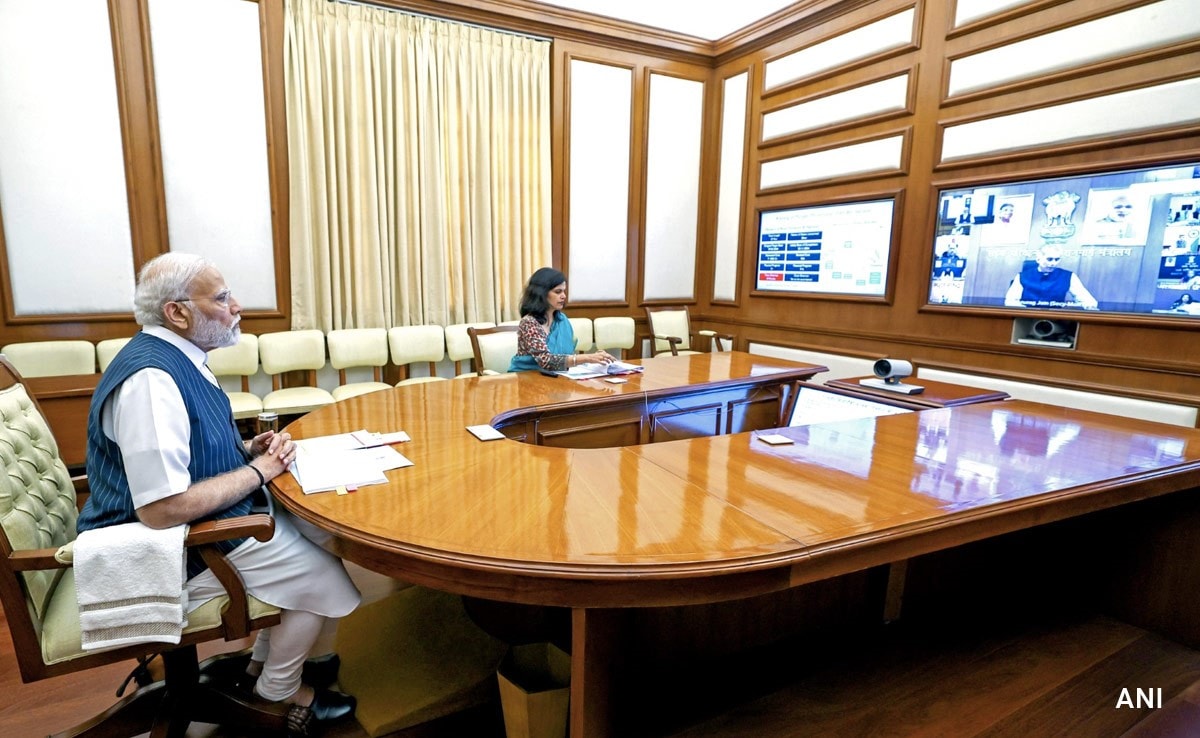
Prime Minister Narendra Modi on Wednesday chaired a PRAGATI meeting to review the progress of eight key projects, spread across seven states and having a cumulative worth of around Rs 31,000 crore, his office said in a statement.

PRAGATI is the multi-modal platform for Pro-Active Governance and Timely Implementation of the projects involving the Centre and states. It was the 43rd edition of the meeting.

Among the projects, four were concerned with water supply and irrigation, two related to expanding national highways and connectivity, and two more related to rail and metro rail connectivity.

“These projects have a cumulative cost of around Rs 31,000 crore and relate to 7 states: Bihar, Jharkhand, Haryana, Odisha, West Bengal, Gujarat and Maharashtra,” it said.

The prime minister emphasised that PM Gati Shakti National Master Plan Portal in conjunction with technologies such as satellite imagery can help address various issues of implementation and planning relating to location and land requirements for projects.

He said all the stakeholders executing projects in high population-density urban areas may appoint nodal officers and form teams for better coordination.

For irrigation projects, he advised that visits of stakeholders be organised where successful rehabilitation and reconstruction work has been done, the statement said.

The transformational impact of such projects may also be shown. This may motivate the stakeholders for the early execution of projects, it added.

During the interaction, he also reviewed ‘Mobile Towers and 4G Coverage under USOF Projects’.

Under the Universal Service Obligation Fund (USOF), 33,573 villages with 24,149 mobile towers are to be covered for saturation of mobile connectivity.

Modi asked officials to ensure the setting up of mobile towers in all uncovered villages within this financial year with regular meetings with all stakeholders. This will ensure saturation of mobile coverage in the remotest of the areas.

Up to the 43rd edition of PRAGATI meetings, 348 projects having a total cost of Rs 17.36 lakh crore have been reviewed, the statement said. 

Read full article
Link copied!