Live · Global · Independent
Live Feeds
PinkVilla
Forbes
NDTV
Hindustan Times
2 Babies Diagnosed With HMPV Virus In Bengaluru, No Travel History: Centre
onmynews.com

2 Babies Diagnosed With HMPV Virus In Bengaluru, No Travel History: Centre

Two cases of Human Metapneumovirus (HMPV) were reported in Bengaluru today – a 3-month-old baby who has been discharged and an 8-month-old who is recovering at a hospital in the Karnataka capital. This marks the first reported cases of HMPV in India. 

The infected infants and their families have no recent travel history, ruling out exposure from other regions or countries.

“Both cases were identified through routine surveillance for multiple respiratory viral pathogens, as part of ICMR’s ongoing efforts to monitor respiratory illnesses across the country. HMPV is already in circulation globally, including in India, and cases of respiratory illnesses associated with HMPV have been reported in various countries,” the Centre said in a statement. 

The Health Ministry has convened a meeting on HMPV preparedness today. 

HMPV is a respiratory virus that often causes mild symptoms resembling a cold but can lead to other complications, particularly in infants, the elderly, and those with weakened immune systems. The virus can occasionally trigger pneumonia or exacerbate chronic respiratory conditions. Cases typically rise during the winter and early spring.

The Centre announced on Sunday that it is monitoring HMPV and other respiratory viruses, especially following recent reports of increased respiratory illnesses in China. A Joint Monitoring Group (JMG) convened on January 4 to evaluate the situation, with representatives from the World Health Organisation (WHO), National Centre for Disease Control (NCDC), Indian Council of Medical Research (ICMR), and other health organisations participating.

Respiratory illnesses in China align with seasonal variations caused by viruses such as influenza, RSV, and HMPV. Current surveillance data from India does not indicate any unusual surge in respiratory infections, according to the Ministry of Health and Family Welfare.

As a precaution, the Centre has increased laboratory capacity for HMPV testing. The ICMR will monitor HMPV trends throughout the year, alongside other respiratory illnesses such as influenza-like illness (ILI) and severe acute respiratory infections (SARI). A robust network of surveillance systems, including those operated by ICMR and the Integrated Disease Surveillance Programme (IDSP), continues to track respiratory infections across the country.

Hospitals have been advised to strengthen isolation protocols for suspected cases, ensure the availability of essential medicines, and promptly report ILI and SARI cases through the Integrated Health Information Platform (IHIP). 
Read full article
‘Antariksha Jugalbandi’: How India Aims Historic Docking Experiment In Space
onmynews.com

‘Antariksha Jugalbandi’: How India Aims Historic Docking Experiment In Space

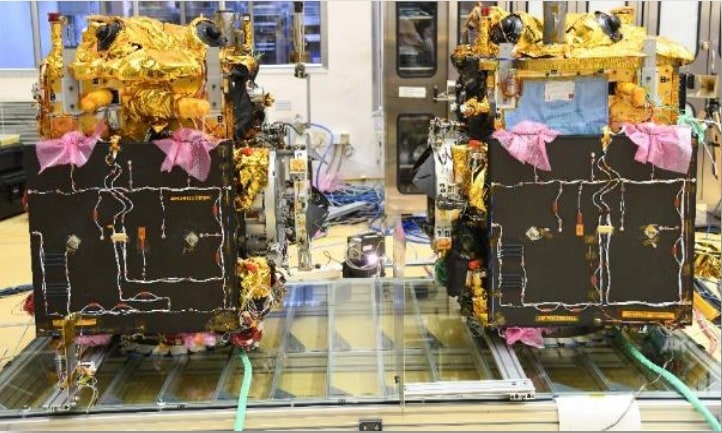
India will conduct a docking experiment in space for the first time. This can also be referred to as “ISRO’s Ballet in Space”, or an “antariksha jugalbandi“. Two small, functioning homegrown satellites will be mated together in space. The complexities of this hugely significant mission are many.

Here are some of the challenges:

Two satellites in space are mated together to make one spacecraft.

On December 30, 2024, India successfully launched the SpaDeX mission using the workhorse Polar Satellite Launch Vehicle (PSLV). The twin 220-kg satellites were released in a precise 470-km circular orbit.

Since then, the chaser and the target satellites – as they are called – have been stabilised in the same orbit, separated by a 20-km difference. Both satellites are equipped with a suite of special homegrown ranging and tracking sensors.

The satellites in orbit will be flying at 28,800 kmph, or 10 times the speed of a bullet. But since both travel together, they appear stationary to each other as the relative velocity is what matters.

When the docking process begins, the satellites will be progressively brought closer. The chaser will approach the target with progressively reduced inter-satellite distances of 5 km, 1.5 km, 500 m, 225 m, 15 m, and 3 m, ultimately leading to the precise docking of the two spacecraft.

When the docking happens, the chaser will inch closer to the target at a speed of 10 mm per second. Then the special clasps will hold the satellites together in a tight embrace.

To test if docking is successful, electrical power will be transferred from one satellite to the other. After docking, the satellites will be controlled as a single spacecraft.

Once the space-docking experiment is completed, the two satellites will be separated and then each will go on to do independent experiments.

The system, developed indigenously, is named Bhartiya Docking System. India needs to master this docking technology for completing future missions such as Chandrayaan 4 and to make the Bhartiya Antariksha Station and Gaganyaan.

This is such a complex process that only Russia, the US, and China have perfected it till now. No nation shares fine details of this challenging technology, hence the swadeshi effort. If successful, India will become a full-fledged space-faring nation.

Read full article
Plane with 76 onboard catches fire, makes VOR landing in Nepal’s Kathmandu
onmynews.com

Plane with 76 onboard catches fire, makes VOR landing in Nepal’s Kathmandu

Post Content

Read full article
Link copied!