Live · Global · Independent
Live Feeds
PinkVilla
Forbes
NDTV
Hindustan Times
“For Instagram Followers”: 24-Year-Old Who Made Rashmika Mandanna Deepfake
onmynews.com

“For Instagram Followers”: 24-Year-Old Who Made Rashmika Mandanna Deepfake

A 24-year-old arrested for creating and circulating a deepfake video of actor Rashmika Mandanna told police that he wanted to gain followers on Instagram. The mastermind in the case, which sparked a debate on deepfakes around the country, was arrested in Andhra Pradesh and is being brought to New Delhi.

Deepfakes are a form of synthetic media crafted using artificial intelligence, employing sophisticated algorithms to manipulate both visual and audio elements. The term gained prominence in 2017 when a Reddit user introduced a platform for sharing manipulated videos.

The accused has been identified as Eemani Naveen, a digital marketer. Delhi Police zeroed in on Naveen after examining over 500 social media accounts associated with the deepfake video.

During investigation, the 24-year-old confessed to the crime said he created the video to gain followers on Instagram.

Naveen said he is a fan of Rashmika Mandanna and used to run a fan page of the actor. He created a deepfake video of the ‘Animal’ actor and shared it on the page. He told police that the post went viral within minutes and there was a significant increase of followers on the account.

Realising that this could land him in trouble, Naveen deleted the posts and changed the Instagram channel name. He also removed relevant digital data from his devices.

The video in question initially showcased British-Indian influencer Zara Patel, entering a lift in a black outfit. However, through the use of deepfake technology, Ms Patel’s face seamlessly morphed into that of Ms Mandanna.

The aftermath of the viral deepfake video prompted the Centre to issue an advisory to social media platforms, stressing the legal provisions covering deepfakes and the potential penalties associated with their creation and circulation.

Read full article
Surya Tilak, A Mirror And Lens System From Scientists For Ram Lalla Idol
onmynews.com

Surya Tilak, A Mirror And Lens System From Scientists For Ram Lalla Idol

Once a year a special ‘surya tilak’ will adorn the forehead of Ram Lalla. On every Ram Navami, or on the birthday Ram Lalla the incarnate will get a gift of special surya tilak designed by Indian scientists.

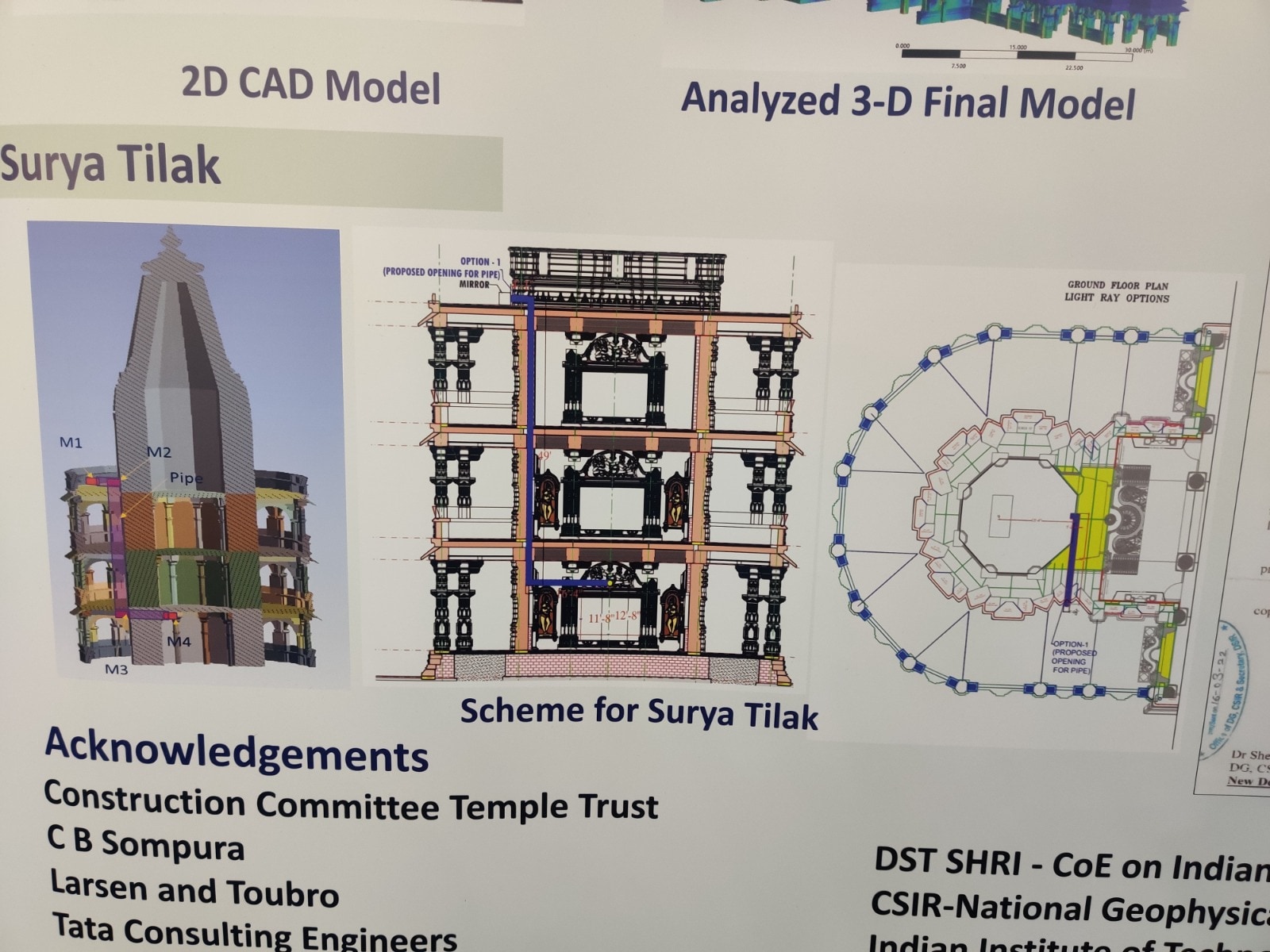
Scientists from a top government institution have designed a special mirror- and lens-based apparatus which will ensure that every Ram Navami day at noon, there is a ray of sunlight that falls directly on the forehead of the ‘achal Ram Lalla’ statue.

It is officially called the ‘Surya Tilak mechanism’. It was a scientific and engineering challenge to get it right.

“The Surya Tilak mechanism would be fully operational when the full temple is constructed,” says Dr Pradeep Kumar Ramancharla, Director of the Central Building Research Institute (CBRI), Roorkee.

CBRI is India’s top institution, which is also a part of the Council of Scientific and Industrial Research (CSIR). Currently, only the structure till the first floor has been made, says Dr Ramancharla. “All the equipment that was to be installed in the garba griha and ground floor has been completed.”

The Surya Tilak mechanism is designed by a team of scientists from the CBRI in such a manner that sunrays will fall on the forehead of Lord Ram’s idol at 12 pm on Ram Navami day every year for about six minutes.

A gearbox and reflective mirrors and lenses have been arranged such that sunrays from the third floor near the shikara will be brought to Garbha Griha using well-known principles of tracking the Sun’s path.

The Indian Institute of Astrophysics (IIA), Bengaluru, provided technical support on the Sun’s path and Optica, a Bengaluru-based company, is involved in manufacturing the lenses and brass tubes.

The fabrication and installation of this device will be carried out by Rajendra Kotaria, MD of Optica. The team from CBRI was led by Dr SK Panigrahi, along with Dr RS Bisht, Kanti Lal Solanki, V Chakradhar, Dinesh, and Sameer.

CBRI scientist Dr Pradeep Chauhan, who helped in the design of the Ram temple, says, “100 per cent the Surya Tilak will anoint the forehead of the statue of Ram Lalla.”

Since the date of Ram Navami is fixed using the lunar calendar, special arrangements of 19 gears had to be put in place to make sure that the auspicious anointment takes place as scheduled. “No electricity or battery or iron is used in the gear-based Surya Tilak mechanism,” Dr Chauhan says.

India’s foremost institution on all issues astronomy, the Indian Institute of Astrophysics (IIA) came up with the solution to bridge the seemingly intractable confluence of the lunar and solar (Gregorian) calendars.

“We have the necessary expertise on positional astronomy,” says Dr Annapurni Subramaniam, director of IIA. “This domain knowledge was translated so that the Sun’s rays in the form of a surya tilak could then anoint the idol of Ram Lalla every Ram Navami.”

The IIA also had the expertise with optics as they have designed some of India’s best telescopes. That was extended to make sure this periscope-like device brings sunlight into the enclosed garba griha.

“It was an interesting scientific experiment where the 19-year repeat cycle of the two calendars’ helped solve the problem,” says Dr Subramaniam.

Even as the Sun’s energy will be harvested and directed to the forehead of the statue of the Ram Lalla, another equally ambitious project to make the Ram temple complex green and near net-zero by using solar energy panels to generate electricity could not be implemented.

“The presence of many monkey troops led to the abandoning of the solar energy project,” says Nripendra Misra, chairperson of the temple construction committee of the Shri Ram Janmabhoomi Teerth Kshetra Trust.

“There are so many monkeys, and they are all revered. They would have damaged the exposed solar panels,” he says.

A similar surya tilak mechanism already exists in some Jain temples and at the Sun Temple at Konark, but they are engineered differently.

Read full article
Devotees Splurge On Jets, Gold-Plated Idols As Ram Temple Opens Monday
onmynews.com

Devotees Splurge On Jets, Gold-Plated Idols As Ram Temple Opens Monday

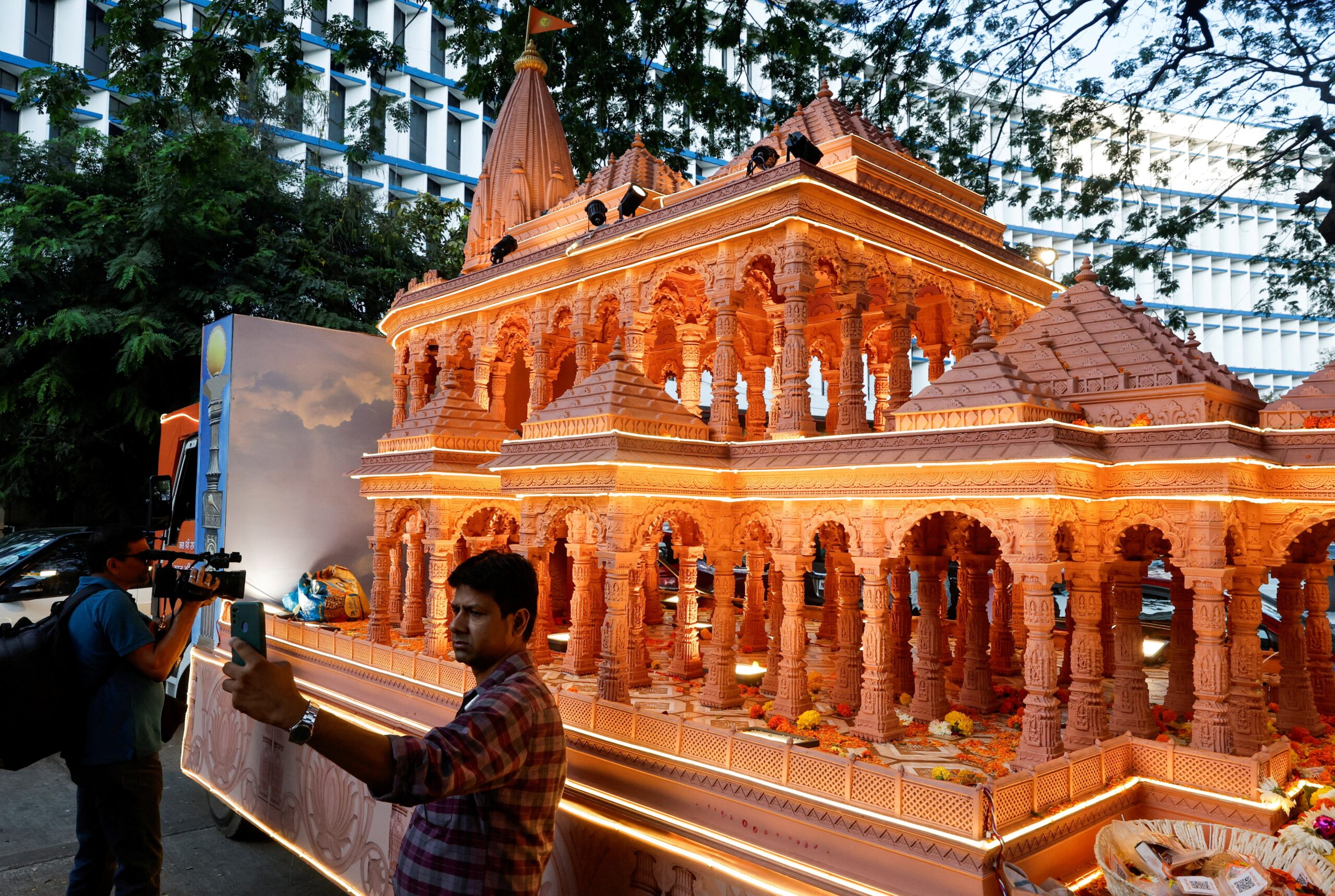
The private jet parking lots at airports near the city of Ayodhya are full and the shops have run out of gold-plated idols, as wealthy devotees prepare for the invite-only opening ceremony of one of Hinduism’s holiest temples.

Prime Minister Narendra Modi and Asia’s richest man Mukesh Ambani are among the 8,000 or so attendees at Monday’s inauguration event for the Ram Temple.

The construction of the temple fulfils a key campaign promise of PM Modi and his party BJP.

The opening ceremony, organised by the trust that built the temple, comes months before a national election, and the who’s who of India is expected to be there.

“It’s become like a status symbol to be invited to this event,” said Rajan Mehra, CEO of Indian luxury charter service Club One Air, adding that his fleet, which includes the Dassault Falcon 2000, is booked to make multiple trips next week.

Officials estimate 100 private jets will descend on Jan. 22 on Ayodhya airport, filling it to capacity. Slots at Varanasi, a city around four hours away by car, are also full, as are jet spaces in Gorakhpur airport, which is a three-hour drive away.

Mehra did not disclose the price of the charters, but private jet booking website JetSetGo lists the price of a Mumbai-Gorakhpur flight on a Falcon 2000 jet with nine passengers on board at about $74,000.

The ceremony is also giving jewellers and gold traders a boost.

Some retailers say gold and gold-plated statues of Lord Ram and temple replicas – priced at between Rs 30,000 ($361) and Rs 220,000 ($2,647) – are so popular that they have run out of stock. Some items were imported from Thailand, they added.

“Customers are asking for them for gifting and for keeping them at homes. There is a waiting period of two weeks,” said Baldev Singh, a manager at HS Jewellers in Lucknow city.

The temple has already ushered an economic boom in Ayodhya, set to emerge as a pilgrimage hotspot for India’s 1.1 billion Hindus, and property prices have skyrocketed.

This week, Bollywood superstar Amitabh Bachchan bought a 10,000 square foot (929 square meter) plot for $1.7 million, government officials said, roughly nine times the average land prices in this dusty city just a few years ago.

The plot is part of the House of Abhinandan Lodha (HoABL) luxury development which includes a spa and a pool.

“There’s huge demand for the project from domestic professionals, non-resident Indians. This is unlike any other demand,” HoABL Chairman Abhinandan Lodha told Reuters.

“People are betting on economic prosperity but there’s also emotional attachment to be part of the Ayodhya story.”

Read full article
Link copied!