Live · Global · Independent
Live Feeds
PinkVilla
Forbes
NDTV
Hindustan Times
Pakistan, Iran Agree To “De-Escalate” After Missile Strikes Along Border
onmynews.com

Pakistan, Iran Agree To “De-Escalate” After Missile Strikes Along Border

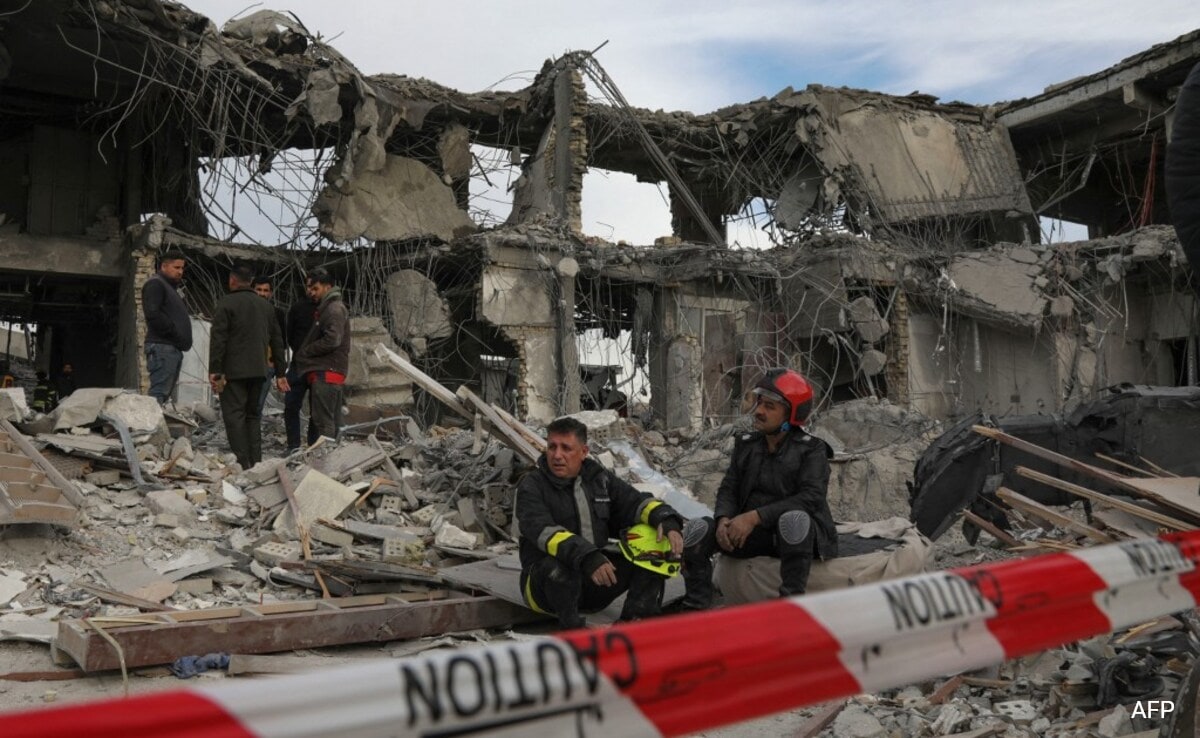
Pakistan and Iran on Friday agreed to de-escalate tensions that arose from a series of military actions in the border region of Baluchistan. The recent exchange of deadly airstrikes on militant targets has heightened regional tensions, already strained by the conflict between Israel and Hamas.

The situation unfolded with Iran initiating a missile and drone attack on what it termed “terrorist” targets in Pakistan Tuesday night. In response, Pakistan conducted precision strikes on militant targets inside Iran on Thursday. The tit-for-tat actions prompted both nations to recall their ambassadors, raising concerns about the potential closure of borders and its impact on the local population.

The international community, including the United Nations and the United States, called for restraint, while China offered to mediate between the two countries. However, a phone conversation between Pakistan’s Foreign Minister Jalil Abbas Jilani and his Iranian counterpart Hossein Amir-Abdollahian has paved the way for both nations to defuse the situation.

A joint statement released by Islamabad’s foreign ministry highlighted their agreement to “de-escalate the situation” and strengthen coordination on counter-terrorism and other mutual concerns.

“The Foreign Minister stressed that respect for territorial integrity and sovereignty must underpin this cooperation,” the Pakistani foreign ministry said in a statement. 

What Happened

The Baluchistan region shared between Pakistan and Iran, has long been a hotspot for militant activities. The recent events saw Iran carrying out a missile and drone strike on what it deemed “terrorist” targets in Pakistan, triggering a retaliatory response from Pakistan on Thursday. 

The rare military actions escalated tensions, prompting Pakistan to recall its ambassador from Tehran and block the return of Iran’s envoy to Islamabad.

A collective death count of 11 — mostly women and children — was reported from both sides of the border, as per news agency AFP. 

Political Implications In Pakistan 

Against this backdrop, Pakistan’s caretaker Prime Minister Anwaar-ul-Haq Kakar held an emergency security meeting, cutting short his visit to the World Economic Forum in Davos, Switzerland, with the general elections scheduled to take place on February 8.

“The forum reiterated the unflinching resolve that sovereignty and territorial integrity of Pakistan are absolutely inviolable,” said a statement released by Kakar’s office. “Any attempt by anyone to breach it on any pretext will be responded with [the] full might of the state.”

“The meeting also concluded that in line with the universal principles governing the conduct of good neighbourly relations, the two countries would mutually be able to overcome minor irritants through dialogue and diplomacy and pave the way to further deepen their historic relations,” the statement read.

The security meeting stressed that Pakistan and Iran should “address each other’s security concerns in the larger interest of regional peace and stability”.

In the remote villages near the strike site, villagers expressed concerns over the potential fallout of deteriorating relations. Fears of border closures loomed large, threatening to cut off residents from Iranian trade, a crucial source of employment and food imports. 

Experts believe that the Baluch separatist insurgency, already simmering for decades, could be further fueled by economic hardship resulting from a closed border.

“If Iranians close the border, the people will starve and it will cause more militancy because youth will join the separatist organisations,” said 55-year-old Haji Mohammad Islam, one of the villagers as quoted by news agency AFP. 

Who Said What

Following the skirmish, India underlined its “zero tolerance” stance towards terrorism, but has also said it understands “actions that countries take in their self-defence”.

“This is a matter between Iran and Pakistan. Insofar as India is concerned, we have an uncompromising zero tolerance towards terrorism. We understand actions that countries take in their self-defence,” Foreign Ministry spokesperson Randhir Jaiswal told a press briefing.

Condemning Iran’s actions, the US State Department said, “I think it is a little rich… on one hand Iran (is) the leading funder of terrorism in the region, and, on the other hand, (it claims) it needs to take these actions to counter-terrorism.”

Maintaining a neutral position, China said, “We call on the two sides to avoid actions that escalate tension, and jointly keep the region peaceful.”
Read full article
Israel Will “Receive Slap In The Face” If Aggression Continues: Hezbollah
onmynews.com

Israel Will “Receive Slap In The Face” If Aggression Continues: Hezbollah

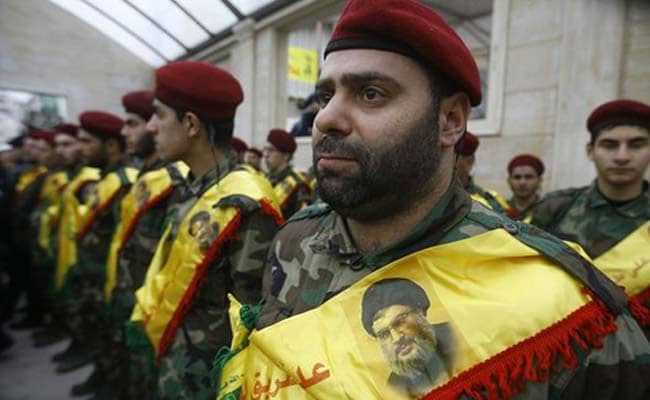
A top official from Lebanon’s Iran-backed militant group on Friday warned Israel would “receive a real slap in the face” if it expanded the conflict along the Lebanon-Israel border.

Since the surprise October 7 attack by Hamas on southern Israel, there have been near daily exchanges of cross-border fire between the Israeli army and militant group Hezbollah, an ally of the Palestinian militants.

Israel has repeatedly bombarded border villages, with the violence killing more than 195 people in Lebanon, including at least 142 Hezbollah fighters, according to an AFP tally.

On the Israeli side, 15 people have been killed, of whom nine were soldiers and six civilians, according to the Israeli army.

“If Israel decides to expand its aggression, it will receive a real slap in the face in response,” Hezbollah’s number two, Naim Qassem, said in a statement.

Any restoration of stability on the border is contingent on “the end of the aggression in Gaza”, he added.

“The enemy must know the party is ready, that we are preparing based on the principle that an endless aggression can happen, just like our will to push back the aggression is infinite.”

His remarks came after Israeli air strikes “completely destroyed” at least three houses in southern Lebanon on Friday, the official Lebanese news agency NNA and the mayor of the affected border community said.

The agency reported four houses were targeted “since this morning by the Israeli air force in Kfar Kila”, a village near the Israel-Lebanon border, while three were “completely destroyed”.

A fifth home was also targeted by artillery fire, NNA said.

The Israeli army said on Friday it had “conducted air strikes and carried out artillery and tank fire against Hezbollah observation posts and terrorist infrastructure” in the Kfar Kila sector.

“There are around 100 residents left in Kfar Kila, but by chance, when the bombings took place, the destroyed homes were empty,” the mayor of the village, Hassan Chite, told AFP.

On Friday afternoon, Hezbollah claimed three attacks, including two against “deployments of soldiers of the Israeli enemy” on the border, including using Burkan missiles, which can carry a large explosive payload.

Israel “is not prepared for a war against what the Islamic resistance in Lebanon has in store for it”, Mohamed Raad, the head of the Islamist militants’ parliamentary bloc, said on Friday, according to the NNA.

On Wednesday, Israeli army chief Herzi Halevi said the probability of a war between Israel and Hezbollah “in the coming months is much higher than it was in the past”.

The same day, UN Secretary General Antonio Guterres said a “total confrontation” between the two would be a “complete disaster”.

(Except for the headline, this story has not been edited by NDTV staff and is published from a syndicated feed.)

Read full article
As More Myanmar Soldiers Enter India, Mizoram Reaches Out To Centre
onmynews.com

As More Myanmar Soldiers Enter India, Mizoram Reaches Out To Centre

As fighting rages between rebel forces in Myanmar and the junta-regime, hundreds of Myanmar Army personnel are fleeing to India. Mizoram government has alerted the centre about the development and urged them to quickly ensure that the soldiers from the neighbouring nation are sent back.

Nearly 600 Myanmar Army soldiers have crossed into India amid intense clashes. They took refuge in Mizoram’s Lawngtlai district after their camps were captured by the Arakan Army (AA) militants – an ethnic armed group in the western Myanmar state of Rakhine – government sources said. The soldiers have been sheltered in an Assam Rifles camp, they said.

The situation has prompted urgent talks between Mizoram Chief Minister Lalduhoma and Union Home Minister Amit Shah at the plenary session of the Northeastern Council meeting in Shillong.

Government sources say Mizoram emphasised the need for a swift repatriation of the Myanmar Army personnel who have taken refuge within the state. This plea comes amid growing concerns about the escalating tension and the impact it could have on the region’s stability.

Speaking to reporters after the plenary session, Mizoram Chief Minister Lalduhoma shed light on the ongoing situation.

“People are fleeing from Myanmar to our country for shelter, and we are helping them on humanitarian grounds. Soldiers of Myanmar keep coming, seeking shelter, and earlier we used to send them back by air. Around 450 army personnel were sent back,” Chief Minister Lalduhoma said.

Myanmar’s generals are facing their biggest test since they seized power in a 2021 coup after three ethnic minority forces launched a coordinated offensive in late October, capturing some towns and military posts and forcing soldiers to flee.

Read full article
Link copied!