Live · Global · Independent
Live Feeds
PinkVilla
Forbes
NDTV
Hindustan Times
Anna Wintour Spills Beans On How Baz Luhrmann Made Rihanna’s Table Dance At Met Gala Happen
onmynews.com

Anna Wintour Spills Beans On How Baz Luhrmann Made Rihanna’s Table Dance At Met Gala Happen

At the LACMA Art + Film Gala, on Saturday, host Anna Wintour praised the guest of honor Baz Luhrmann by offering a humorous anecdote about Rihanna. The gala gathered in one place a horde of stars and raised a staggering amount of 6.4 million USD for good causes, which is a new record. The brattiest detail of the festivities included Charli XCX’s music that headlined the gala.

Wintour presented a special tribute to the avant-garde director Luhrmann, who is her longtime friend and associate. In her speech, she recalled various incidents where Luhrmann’s creative inputs have aided her in the past. One of the anecdotes she shared involved Rihanna dancing on a table at the Met Gala and it was Luhrmann who made it happen, as per The Hollywood Reporter.

She said, “The year we put on a show of Chinese art and fashion, he announced before the gala that the evening could not go on unless we tracked down a giant gong with which to announce dinner. While we were locating and trying to figure out how to deliver this enormous instrument, Baz had somehow persuaded Rihanna to surprise everybody by dancing down the center of the dinner table.”

“Incidentally, we are no longer allowed to give dinners in that gallery, but no one has stopped talking about that night,” Wintour added.

Luhrmann who is behind successful films such as Romeo + Juliet, The Great Gatsby, Moulin Rouge, and Elvis, did not shy away from the limelight dressed in a smart Gucci suit as he encouraged those artists to lift up younger generations. He emphasized how artists should try create art where the future generations can be inspired.

He stressed the need for the people in the room to be active and help young voices and energies who are getting into the arts, promoting both collaboration and imagination. “It’s our job now to turn around and to make space and to lift up the new voices and the new energies and the new generations, and let that new energy smash through this ossified world we’re in.”

Baz Luhrmann clarified that he was not talking about retirement, rather he meant that those icons his generation had looked up to helped them by creating space for them, and that’s the duty that falls on the shoulders of artists already present in the room.

ALSO READ: Rihanna Confirms 2025 Met Gala Appearance Alongside A$AP Rocky; Admits She’s ‘Concerned’ About What To Wear

Read full article
“Will Have To Stop Somewhere”: Sharad Pawar’s Big Retirement Hint
onmynews.com

“Will Have To Stop Somewhere”: Sharad Pawar’s Big Retirement Hint

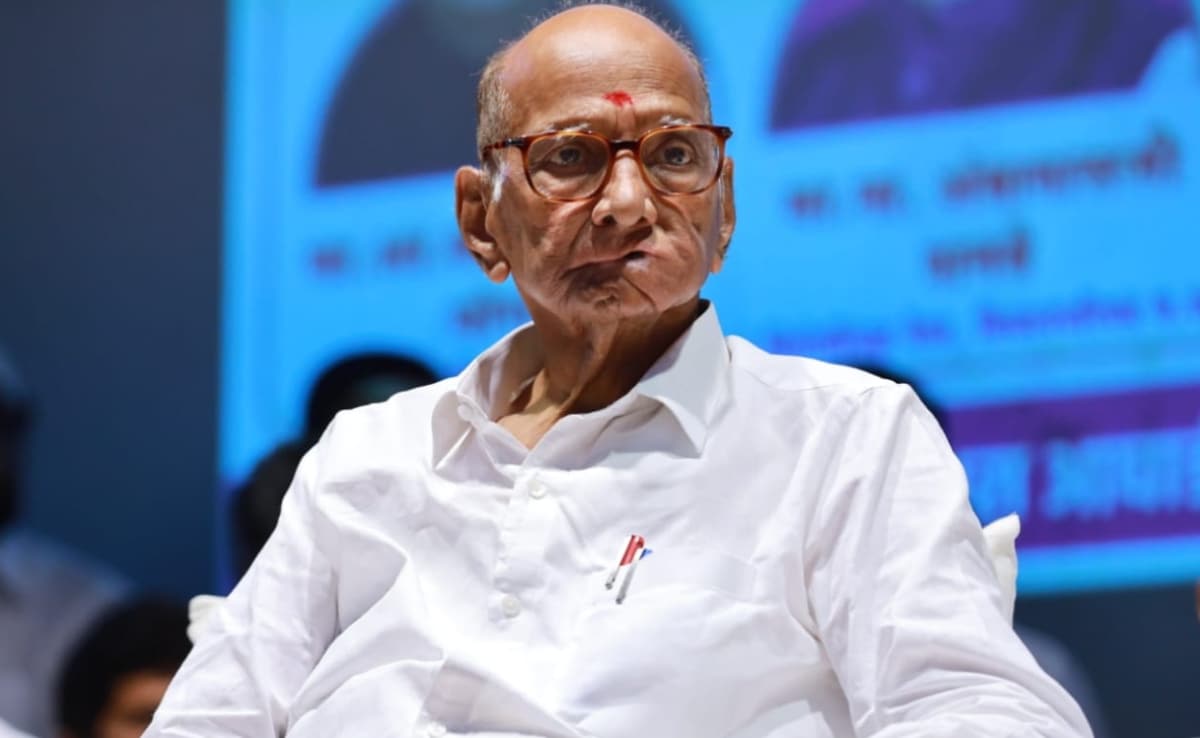
Nationalist Congress Party leader Sharad Pawar, 83, on Tuesday hinted at retirement as he said he may not contest any more elections after his Rajya Sabha term ends in 18 months.

The veteran politician – who set up the NCP in 1999 and is widely regarded as the ‘grand old man’ of Maharashtra politics – was speaking at his family stronghold of Baramati in western Maharashtra, which will see a Pawar vs Pawar contest in the November 20 Assembly election.

“I am not in power… and my tenure in the Rajya Sabha has one-and-a-half years left. (After that) I will not contest any election in the future. (I) will have to stop somewhere…” he said, thanking the voters of Baramati for making him an MP and MLA a staggering 14 times overall.

The potential close of a nearly six-decade-long political career comes as the NCP and its allies – the Congress and the Uddhav Thackeray-led Shiv Sena group – contest this month’s election.

In that context, the fight for Baramati is being seen as a referendum on Sharad Pawar’s continuing influence over voters, since it sees his grandnephew, Yugendra Pawar, do battle against his nephew Ajit Pawar, whose led the rebellion last year that forced the NCP to split.

Ajit Pawar is a five-time MLA from Baramati but, in each of his earlier wins, he had the backing of his uncle’s party. This will be the first state poll in which he contests under his own banner.

The result of the election for the Baramati Lok Sabha seat – the people voted overwhelmingly for Sharad Pawar’s candidate – his daughter Supriya Sule – underlines Ajit Pawar’s task at hand.

In his comments on Baramati and the rebel nephew, Sharad Pawar seemed to play down the family vs family angle, declaring, “I have no grudge against him (Ajit Pawar) … he led you for nearly 30 years… ” but also pitching the message of a generational change in leadership.

“Now it is time for me to prepare a young (and) dynamic leadership… which can take over for the next 30 years,” Pawar senior said, appearing to underline Yugendra Pawar’s future position.

“I am not seeking your votes… you have always been magnanimous with all Pawar family members in this time…” the canny Sharad Pawar said, looking to not lose support from those who may be leaning towards his nephew, “But we have to look ahead now at the future.”

Speculation over Sharad Pawar’s final innings in electoral politics has been circulating for some time now, and was raked up again in January by nephew Ajit Pawar, who had fought against and forced a split of his uncle’s party, leading the rebels into an alliance with the Bharatiya Janata Party and a faction of the Shiv Sena that had earlier broken away from Uddhav Thackeray.

Back then Pawar junior hit out at Pawar senior for not sticking to a 2023 resolution to step down from the party’s top post. “Some people,” Ajit Pawar said, simply refused to retire.

“People should stop after reaching a certain age… but some are not ready… even after turning 80, this person (the reference to his uncle was clear) is not ready to retire,” he declared.

Sharad Pawar offered a typically pithy reply to his nephew’s jab.

“Na tired hu, na retired hu.” (I am neither tired nor retired),” he scoffed, echoing the late former Prime Minister Atal Bihari Vajpayee’s remarks. “Who are they to tell me to retire? I can still work.”

In May last year – while the NCP was battling its internal crisis – Sharad Pawar announced his resignation as party boss. The announcement was unanimously rejected by top leaders.

“All of us want Sharad Pawar to continue… he should respect the feelings of lakhs of us, and he should continue,” Praful Patel, who has since joined the ranks of Ajit Pawar’s NCP, had said.

Days later Mr Pawar took back his resignation.

NDTV is now available on WhatsApp channels. Click on the link to get all the latest updates from NDTV on your chat.

Read full article
“Can We Castigate…”: An Objection To Chief Justice’s Remark On Past Judge
onmynews.com

“Can We Castigate…”: An Objection To Chief Justice’s Remark On Past Judge

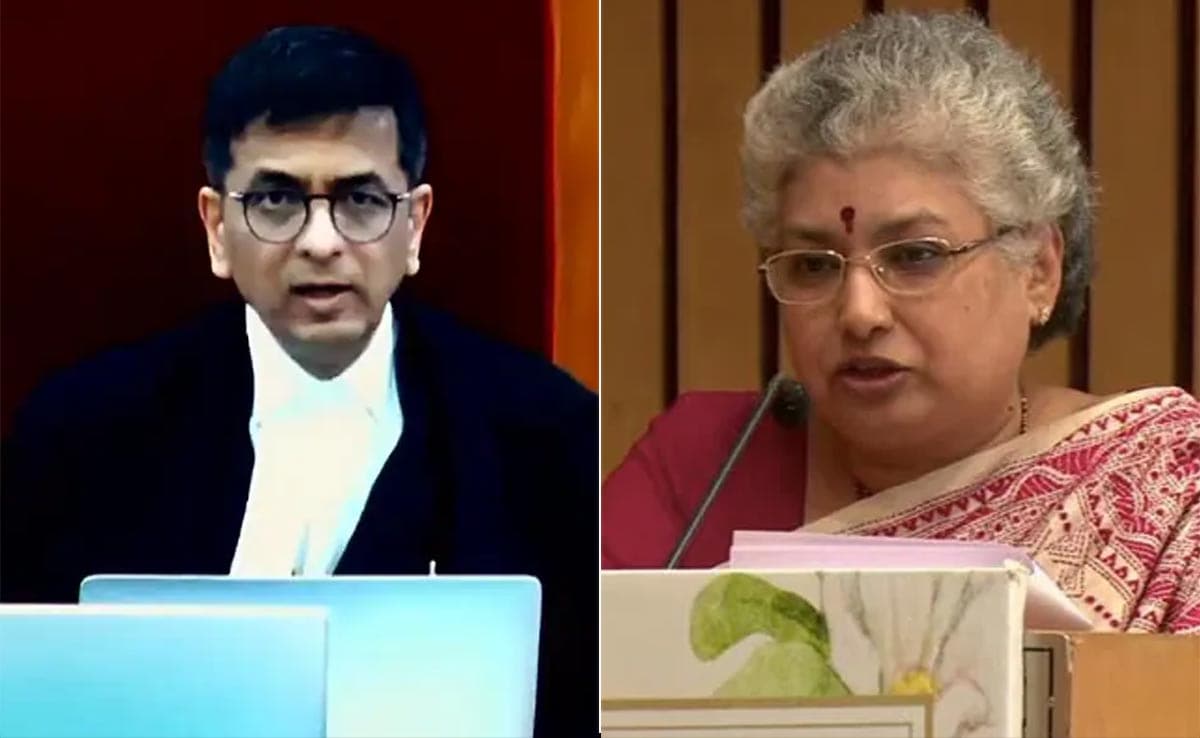
Judges should be mindful of not castigating past judges only because they reached a different outcome while deciding a case, Justice BV Nagarathna said today. The remark was made as the Supreme Court ruled that all privately owned property does not qualify as community resources that the State can take over for the common good.

The landmark verdict was delivered by a nine-judge Constitution bench led by Chief Justice of India DY Chandrachud and comprising Justice Hrishikesh Roy, Justice Nagarathna BV, Justice Sudhanshu Dhulia, Justice JB Pardiwala, Justice Manoj Misra, Justice Rajesh Bindal, Justice SC Sharma and Justice AG Masih. The bench passed the ruling with an 8-1 majority. Three judgments were authored — the Chief Justice wrote one for himself and six colleagues, Justice BV Nagarathna wrote a concurrent but separate judgment and Justice Sudhanshu Dhulia dissented.

One of the past verdicts referred to extensively during today’s judgment was the 1977 ruling in the State of Karnataka vs Ranganath Reddy case. This case addressed the issue of nationalisation of private transport companies and the extent to which the State can intervene in private enterprises. The matter had come up when the then Karnataka government brought a law to nationalise private bus services. A seven-judge bench had then ruled with a 4-3 majority

that all private property did not fall within the ambit of material resources of the community. Justice VR Krishna Iyer, one of the judges in the minority, had contended that both public and private resources fell within the ambit of “material resources of the community” under Article 39(b) of the Constitution.

“We have been guided by the thought that an all-too-large gap between the law and public needs, arising out of narrow notions, must be bridged by broadening the constitutional concepts to suit the changing social consciousness of the emerging Welfare State. Institutional crises and confrontations can be and should be avoided by evolving a progressive interpretation, discarding over-sensitivity to under-valuation when private property is taken for public good,” Justice Iyer had said.

Delivering the judgment today, the Chief Justice said, “Does material resource of a community used in 39B include privately owned resources? Theoretically, the answer is yes, the phrase may include privately owned resources. However, this court is unable to subscribe itself to the minority view of Justice Iyer in Ranganath Reddy. We hold that not every resource owned by an individual can be considered a material resource of a community only because it meets the qualifier of material needs.”

The Chief Justice also pointed out that Justice Iyer referred to Karl Marx in his judgment. “The judgment is rooted in the economic ideology that private property can be used by the state for the welfare of people. The role of this court is not to lay down economic policy but to facilitate to lay down economic democracy,” he said, adding that the country’s economy has shifted from a socialist approach to a liberal economic regime.

“The doctrinal error in the Krishna Iyer approach was, postulating a rigid economic theory, which advocates for greater state control over private resources, as the exclusive basis for constitutional governance,” the Chief Justice said. 

In response, Justice Nagarathna said Justice Iyer’s judgment on community resources came against a backdrop of a constitutional and economic structure that gave primacy to the State in a sweeping manner. “Can principles of liberalisation, privatisation and globalisation adopted in India since the year 1991, reforms in the economy and structural changes that have been brought about in these last three decades hold a mirror against the socioeconomic policies that were followed in the decades immediately after India attained independence? As a result, can the judgments of this Court which interpreted the Constitution to be compatible with the policies of the State then be considered to be “a disservice to the broad and flexible spirit of the Constitution” and the authors of the said judgments being critiqued today?” she said.

Justice Nagarathna flagged some of the Chief Justice’s observations on Justice Iyer’s judgment and said they are “unwarranted and unjustified”. “It is a matter of concern as to how the judicial brethren of posterity view the judgments of the brethren of the past, possibly by losing sight of the times in which the latter discharged their duties and the socio-economic policies that were pursued by the State and formed part of the constitutional culture during those times. Merely because of the paradigm shift in the economic policies of the State to globalisation and liberalisation and privatisation, compendiously called the “Reforms of 1991″, which continue to do so till date, cannot result in branding the judges of this Court of the yesteryears ‘as doing a disservice to the Constitution’,” she wrote. 

She noted that such observations made by the Supreme Court create a “concavity in the manner of voicing opinions on judgments of the past and their authors by holding them doing a disservice to the Constitution of India and thereby implying that they may not have been true to their oath of office as a Judge of the Supreme Court of India”. Justice Nagarathna, however, agreed with the majority judgment and said a “flexible interpretation” of the Constitution is needed as times change.

Justice Nagarathna said the Indian judiciary has an obligation to meet newer challenges by “choosing only that part of the past wisdom which is apposite for the present without decrying the past judges”. “I say so, lest the judges of posterity ought not to follow the same practice. I say that the institution of the Supreme Court of India is greater than individual judges, who are only a part of it at different stages of history of this great country,” she said. 

Justice Dhulia, who delivered a dissenting judgment, too, flagged the Chief Justice’s remark in the majority judgment on Justice Iyer’s ruling. “I must also record here my strong disapproval on the remarks made on the Krishna Iyer Doctrine as it is called. This criticism is harsh, and could have been avoided,” he said. 
Read full article
Link copied!