Live · Global · Independent
Live Feeds
PinkVilla
Forbes
NDTV
Hindustan Times
When Deepika Padukone’s XXX: The Return of Xander Cage co-star Vin Diesel accidentally REVEALED Ranveer Singh was her BF; THROWBACK
onmynews.com

When Deepika Padukone’s XXX: The Return of Xander Cage co-star Vin Diesel accidentally REVEALED Ranveer Singh was her BF; THROWBACK

Deepika Padukone and Ranveer Singh, who became new parents this year, are one of the most stunning couples in Bollywood. Deepika and Ranveer dated each other for six years before tying the knot in 2018. While the couple remained tight-lipped about their love affair for many years, there was a time when Deepika’s XXX: The Return of Xander Cage co-star Vin Diesel accidentally REVEALED that Ranveer was her boyfriend. 

During the promotion of their 2017 film, XXX: The Return of Xander Cage, Vin Diesel spoke about Ranveer Singh while discussing his interaction with the Padmaavat actor.

Referring to Ranveer as Deepika Padukone‘s boyfriend, Vin told Film Companion, “Just last night, Ranveer, her boyfriend gave me this really sweet compliment…” The Hollywood actor recalled that Ranveer praised his body in his films and how the latter was awed by his personality.

The Fast & Furious actor revealed that Ranveer was impressed with the way he turns or stands as it gives more impact than his lines. Vin explained to the actor that he was a bouncer in the US. The Hollywood star quipped that he would stand at the front door with a look on his face and be like, ‘Don’t even think about it’.

For the uninitiated, Deepika Padukone made his Hollywood debut with XXX: The Return of Xander Cage in 2017. While Vin played the lead role of Xander Cage, an athlete turned XXX field agent, and Deepika was cast as Serena Unger in the American action thriller.

Coming back to Deepika and Ranveer, the latter proposed to her in 2015. The couple kept their engagement secret until they revealed the proposal story on Koffee With Karan Season 8. Deepika and Ranveer started dating on the sets of Sanjay Leela Bhansali’s Goliyon Ki Rasleela Ram-Leela.

The lovebirds tied the knot in November 2018 and welcomed their first child, a daughter, on September 8, 2024.

On the work front, Deepika Padukone and Ranveer Singh have also worked together in movies like Bajirao Mastani and Padmaavat. Ranveer played a cameo in Deepika’s 2014 film, Finding Fanny, and Deepika made a special appearance in his 2022 movie, Cirkus.

ALSO READ: Deepika Padukone and Ranveer Singh confirm becoming parents to baby girl; emotional fans shower love on couple

Read full article
Hamas Chief And “Mass Murderer” Yahya Sinwar Eliminated: Israel
onmynews.com

Hamas Chief And “Mass Murderer” Yahya Sinwar Eliminated: Israel

Israel said Thursday its forces killed Hamas chief Yahya Sinwar in a Gaza operation, dealing a massive blow to the group it has been fighting since the October 7, 2023 attack.

“The mass murderer Yahya Sinwar, responsible for the massacre and atrocities of October 7, was eliminated… by IDF (Israeli military) soldiers,” Foreign Minister Israel Katz said in a statement.

The military later confirmed that “after a year-long pursuit”, soldiers “eliminated Yahya Sinwar, the leader of the Hamas terrorist organisation, in an operation in the southern Gaza Strip” on Wednesday.

Hamas has not confirmed his death.

Israel accuses Sinwar of masterminding the October 7 attack, the deadliest in Israeli history, and had been hunting him down since the start of the Gaza war.

He rose through the ranks of the Palestinian group to become first its leader in Gaza, then its overall head after the killing in July of political chief Ismail Haniyeh.

Israel’s announcement on Sinwar comes weeks after it assassinated Hezbollah chief Hassan Nasrallah in a massive strike in Lebanon, where the Israeli military has been at war since late September.

A slew of other Iran-backed operative commanders have also been killed in recent months.

Israel said earlier this year that it had killed Mohammed Deif, Hamas’s military chief, though the Palestinian group has not confirmed it.

Deif stood accused of planning, with Sinwar, the October 7 attack.

With Hamas massively weakened more than a year into the Gaza war, Sinwar’s death could deal a seismic blow to the organisation.

Before the Israeli foreign minister confirmed Sinwar’s death, the military said in a brief statement that during “operations in the Gaza Strip, three terrorists were eliminated”, with the Hamas leader possibly one of them.

An Israeli security official told AFP that the military was conducting a DNA test on a operative’s body to confirm whether it was Sinwar’s.

In a post on X, Israel’s Defence Minister Yoav Gallant said the country would “reach every terrorist and eliminate them”.

US President Joe Biden was briefed aboard Air Force One while heading to Germany and was being kept informed of developments, a US official said Thursday.

War on many fronts

Israel has been at war with Hamas since the October 7 attack, which resulted in the deaths of 1,206 people, mostly civilians, according to an AFP tally of official Israeli figures.

Israel’s retaliatory campaign in Gaza has killed 42,438 people, the majority civilians, according to data from the health ministry in the Hamas-run territory, which the UN considers reliable.

Following the attack, Prime Minister Benjamin Netanyahu vowed to crush Hamas and bring home all 251 hostages seized by operatives in their cross-border onslaught. Ninety-seven remain in Gaza, including 34 Israeli officials say are dead.

Israel has since expanded the scope of its operations to Lebanon, where Hamas ally Hezbollah opened a front against Israel by launching low-intensity cross-border strikes that forced tens of thousands of Israelis to flee their homes.

Israel on Thursday launched strikes on the south Lebanese city of Tyre, where the group and its allies hold sway.

Israel also issued evacuation warnings for civilians in parts of Lebanon’s eastern Bekaa Valley, a Hezbollah stronghold.

It had earlier struck a Hezbollah target in Syria, according to a war monitor, while Israel’s main ally the United States used heavy bombers to hit rebel targets in Yemen.

Syria, the Huthi rebels in Yemen, Hezbollah in Lebanon and Hamas in Gaza all belong to the “axis of resistance” of groups aligned with Iran.

Tehran on October 1 conducted a missile strike on Israel, over which Israel has vowed to retaliate, sparking concern around the world that what is already a war on multiple fronts could morph into an all-out regional conflict.

Iran warning

Iran’s Revolutionary Guards chief Hossein Salami on Thursday warned Tehran would hit Israel “painfully” if it attacks Iranian targets.

The Syrian Observatory for Human Rights, a Britain-based monitor, said the Israeli raid on the Syrian city of Latakia targeted a “weapons depot belonging to Hezbollah”.

The Israeli military did not comment on the strike when contacted by AFP.

In Huthi-controlled areas of Yemen, the United States conducted multiple B-2 bomber strikes on weapons storage facilities, according to the US military and defence department.

The Huthis’ political bureau said “the American aggression will not pass without a response”, and vowed to continue the group’s “support and assistance to Gaza and Lebanon”.

The war in Lebanon since last month has left at least 1,373 people dead, according to an AFP tally of Lebanese health ministry figures, though the real toll is likely higher.

Israeli troops and Hezbollah fighters have been clashing near Lebanon’s southern border, where Hezbollah on Thursday said it hit four Israeli tanks with guided missiles.

Rescue workers affiliated with the Amal party, a Hezbollah ally, in the southern city of Qana were digging through the rubble of several buildings destroyed in strikes this week.

“More than 15 buildings have been completely destroyed, total destruction in a neighbourhood in Qana,” said Mohammed Nasrallah Ibrahim, one of the rescuers.

Israel has faced criticism over its strikes in Lebanon, including from its tops arms supplier the US.

Hunger in Gaza

In northern Gaza’s Jabalia, two hospitals said Israeli air strikes on a school sheltering displaced people killed at least 14 people.

The military reported that it had hit operatives.

Some 345,000 Gazans face “catastrophic” levels of hunger this winter after aid deliveries fell, a UN-backed assessment said Thursday, warning of the persistent risk of famine.

Nearly 100 percent of Gaza’s population now lives in poverty, with a “staggering” unemployment rate of nearly 80 percent, the UN’s International Labour Organization said on Thursday.

The impact of the war on Gaza “will be felt for generations to come,” said the ILO’s Ruba Jaradat.

(Except for the headline, this story has not been edited by NDTV staff and is published from a syndicated feed.)

Read full article
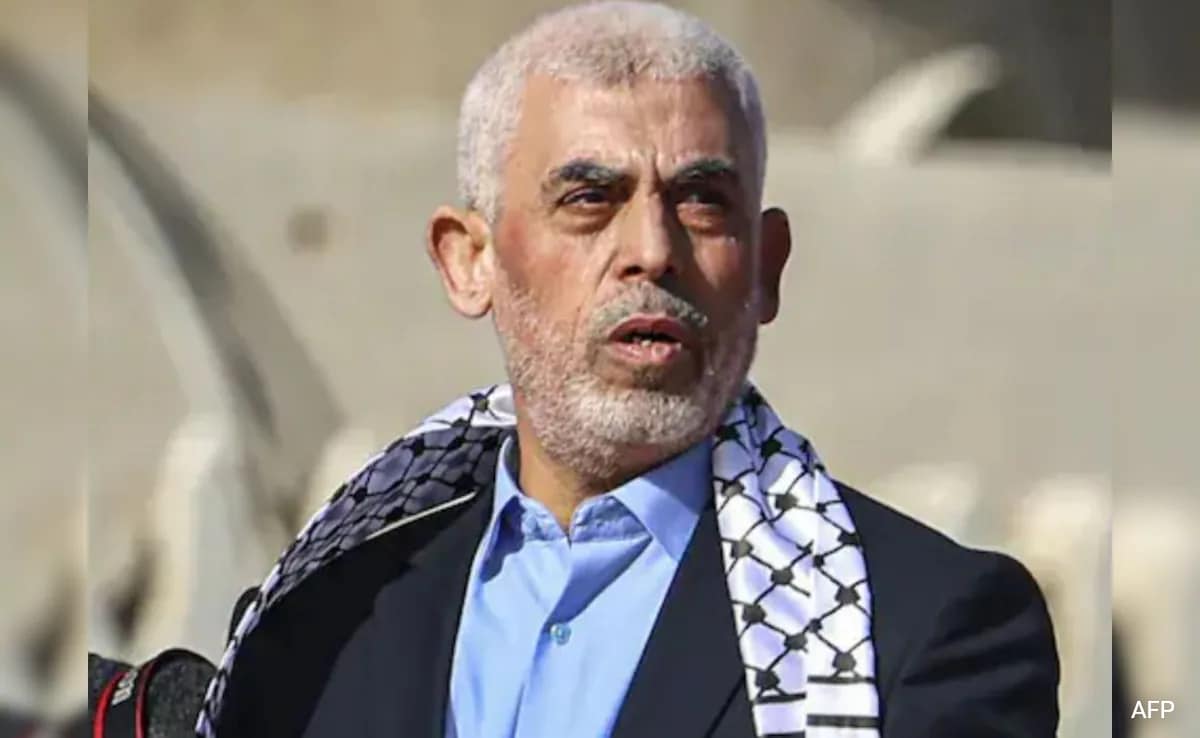
All About Yahya Sinwar: Hamas Chief Who Was Committed To Eradicating Israel
onmynews.com

All About Yahya Sinwar: Hamas Chief Who Was Committed To Eradicating Israel

Hamas leader Yahya Sinwar remains unrepentant about the October 7 attacks a year ago, people in contact with him have said, despite unleashing an Israeli invasion that has killed tens of thousands of Palestinians, laid waste to his Gaza homeland and rained destruction on ally Hezbollah.

On Thursday, Israel said it had killed Sinwar, 62, the architect of the Hamas cross-border raids that became the deadliest day in Israel’s history.

For Sinwar, armed struggle remained the only way to force the creation of a Palestinian nation, four Palestinian officials and two sources from governments in the Middle East said, speaking in weeks leading up to the October 7 anniversary.

The October 7 attacks killed 1,200 people, mainly civilians, and captured 250 hostages, according to Israeli tallies, in the deadliest day for Jews since the Holocaust.

Israel responded by launching a massive offensive, killing 42,400 people and displacing 1.9 million, according to Palestinian health authorities and UN figures.

Now the conflict has spread to Lebanon, with Israel heavily degrading the Iranian-backed operator group Hezbollah, including killing most of its leadership. Hamas patron Tehran is at risk of being pulled into open war with Israel.

Sinwar has drawn Iran and its entire “Axis of Resistance” – comprising Hezbollah, Yemen’s Houthis and Iraqi militias – into conflict with Israel, said Hassan Hassan, an author and researcher on Islamic groups.

“We’re seeing now the ripple effects of October 7. Sinwar’s gamble didn’t work,” Hassan said, suggesting that the Axis of Resistance may never recover.

“What Israel did to Hezbollah in two weeks is almost equal to a whole year of degrading Hamas in Gaza. With Hezbollah, three layers of leadership have been eliminated, its military command has been decimated, and its important leader Hassan Nasrallah has been assassinated,” added Hassan.

However, Sinwar’s grip on the Hamas remains unwavering, despite some signs of dissent among Gazans.

He was chosen as the Islamist movement’s overall leader after his predecessor Ismail Haniyeh was killed in July by a suspected Israeli strike during a visit to Tehran. Israel has not confirmed its involvement in the strike.

Operating from the shadows of a network of labyrinthine tunnels under Gaza, two Israeli sources said Sinwar and his brother, also a top commander, had appeared to have survived Israeli airstrikes, which have reportedly killed his deputy Mohammed Deif and other senior leaders.

Dubbed “The Face of Evil” by Israel, Sinwar operates in secrecy, moving constantly and using trusted messengers for non-digital communication, according to three Hamas officials and one regional official. He has not been seen in public since October 7, 2023.

Over months of failed ceasefire talks, led by Qatar and Egypt, that focused on swapping prisoners for hostages, Sinwar was the sole decision-maker, three Hamas sources said. Negotiators would wait for days for responses filtered through a secretive chain of messengers.

Hamas and Israel did not respond to requests for comment.

Sinwar’s high tolerance for suffering, both for himself and for the Palestinian people, in the name of a cause, was apparent when he helped negotiate the 2011 exchange of 1,027 prisoners, himself included, for one kidnapped Israeli soldier held in Gaza. The kidnapping by Hamas had led to an Israeli assault on the coastal enclave and thousands of Palestinian deaths.

Half a dozen people who know Sinwar told Reuters his resolve was shaped by an impoverished childhood in Gaza’s refugee camps and a brutal 22 years in Israeli custody, including a period in Ashkelon, the town his parents called home before fleeing after the 1948 Arab-Israeli war.

The question of hostages and prisoner swaps is deeply personal for Sinwar, said all the sources, who requested anonymity to speak freely about sensitive matters. He has vowed to free all Palestinian prisoners held in Israel.

Sinwar became a member of Hamas soon after its founding in the 1980s, adopting the group’s radical Islamist ideology, which seeks to establish an Islamic state in historic Palestine and opposes Israel’s existence.

The ideology views Israel not only as a political rival but as an occupying force on Muslim land. Seen in this light, hardships and suffering are often interpreted by him and his followers as part of a larger Islamic belief of sacrifice, experts on Islamic movements say.

“What lies behind his resolve is tenacity of ideology, tenacity of goal. He’s ascetic and satisfied with little,” said one senior Hamas official who requested anonymity.

FROM SACKCLOTH TO LEADER

Before the war, Sinwar, would sometimes tell of his early life in Gaza during decades of Israeli occupation, once saying his mother made clothes from empty UN food-aid sacks, according to Gaza resident Wissam Ibrahim, who has met him.

In a semi-autobiographical novel written in prison, Sinwar described scenes of troops bulldozing Palestinian houses, “like a monster crushing its prey’s bones,” before Israel withdrew from Gaza in 2005.

A ruthless enforcer tasked with punishing Palestinians suspected of informing for Israel, Sinwar then made his name as a prison leader, emerging as a street hero from a 22-year Israeli sentence for masterminding the abduction and murder of two Israeli soldiers and four Palestinians. He then quickly rose to the top of the Hamas ranks.

His understanding of the everyday hardships and brutal realities in Gaza was well-received by Gazans and made people feel at ease, four journalists and three Hamas officials said, despite his fearsome reputation and explosive anger.

Sinwar is regarded by Arab and Palestinian officials as the architect of Hamas’ strategy and military capabilities, bolstered through his strong ties with Iran, which he visited in 2012.

Before orchestrating the October 7 raids Sinwar made no secret of his desire to strike his enemy hard.

In a speech the year before, he vowed to send a flood of fighters and rockets to Israel, hinting at a war that would either unite the world to establish a Palestinian state on land Israel occupied in 1967, or leave the Jewish nation isolated on the global stage.

By the time of the speech, Sinwar and Deif had already hatched secret plans for the assault. They were even running training drills in public that simulated such an attack.

His goals have not been fulfilled. While the issue is once again at the top of the global agenda, the prospect of a Palestinian nation is as distant as ever.

Israeli Prime Minister Benjamin Netanyahu has categorically rejected a post-war plan for Gaza that would include a firm timeline for the establishment of a Palestinian state.

‘HEAD HARDER THAN A ROCK’

Sinwar was arrested in 1988 and sentenced to four life sentences, accused of orchestrating the abduction and murder of two Israeli soldiers and four suspected Palestinian informants.

Nabih Awadah, a former Lebanese Communist operator who was imprisoned with Sinwar in Ashkelon between 1991-95, said the Hamas leader viewed the 1993 Oslo peace accords between Israel and the Palestinian Authority as “disastrous” and a ruse by Israel, which he said would only relinquish Palestinian land “by force, not by negotiations.”

Calling him “willful and dogmatic”, Awadah said Sinwar would light up with joy whenever he heard of attacks against Israelis by Hamas or Lebanon’s Hezbollah group. For him, military confrontation was the only path “to liberating Palestine” from Israeli occupation.

Awadah said Sinwar was an “influential model to all prisoners, even those who were not Islamists or religious.”

Michael Koubi, a former official with Israel’s Shin Bet security agency who interrogated Sinwar for 180 hours in prison, said Sinwar clearly stood out for his ability to intimidate and command.

Koubi once asked the operator, then aged 28 or 29, why he was not already married. “He told me Hamas is my wife, Hamas is my child. Hamas for me is everything.” Sinwar married after his release from prison in 2011 and has three children.

In jail, he continued to pursue Palestinian spies, Awadah said, echoing reports from Shin Bet interrogators.

His sharp instincts and caution allowed him to identify and expose Shin Bet informants infiltrated in the prison, Awadah said.

He said Sinwar’s leadership was pivotal during a hunger strike in 1992, in which he led over 1,000 prisoners to survive solely on water and salt. Sinwar negotiated with prison authorities and refused to settle for partial concessions.

He also used his time in prison to learn fluent Hebrew.

Awadah said Sinwar frequently recalled that Ashkelon, where they were imprisoned together, was his family’s ancestral hometown.

When playing table tennis in the courtyard of Ashkelon jail, in present day Israel, Sinwar would often play barefoot, saying he wanted his feet to touch the land of Palestine.

“Sinwar often told us: ‘I’m not in prison; I’m on my land. I am free here, in my country.'”
Read full article
Link copied!