Live · Global · Independent
Live Feeds
PinkVilla
Forbes
NDTV
Hindustan Times
Renukaswamy Case: Darshan Thoogudeepa moves Karnataka High Court for another bail petition, requests for an emergency hearing
onmynews.com

Renukaswamy Case: Darshan Thoogudeepa moves Karnataka High Court for another bail petition, requests for an emergency hearing

Trigger: This article contains references to gruesome details of murder, which might be triggering for some readers. 

Kannada actor Darshan Thoogudeepa’s previous bail plea got rejected by the Bangalore sessions court back on October 14, 2024, in reference to the ongoing case of the murder of Renukaswamy, a resident of Chitradurga. Not just him, even actress Pavithra Gowda’s bail plea was rejected during the same hearing. And now, recent reports suggest that Darshan has moved to the higher court and submitted a bail plea, thereby challenging the rejection of the same by the lower court previously.

As per Times Now, Darshan Thoogudeepa’s fresh bail petition submitted to the Karnataka High Court includes a request for an emergency hearing. Pavithra Gowda has also approached the court for her bail as well. The HC is expected to take up the matter by October 22, 2024.

For the unversed, Renukaswamy, who happened to be a fan of actor Darshan Thoogudeepa, allegedly sent inappropriate messages to his rumored ladylove Pavithra Gowda, thereby enraging him. 

As a result, he got Renukaswamy kidnapped and kept in a shed, where Darshan and his accomplices engaged in violently torturing the victim with brutal force and even electric shock, until the 33-year-old was killed. 

Later on June 9, 2024, Renukaswamy’s body was discovered by local authorities near a stormwell drain in the Sumanahalli region of Bangalore. His post-mortem report revealed that the deceased victim had a missing ear, ruptured testicles and innumerable wound and bruise marks all over his body.

While the grieving family of Renukaswamy continues to fight for justice, in a miraculous turn of events, the victim’s wife recently gave birth to a baby boy. Wife Sahana was five months pregnant at the time of her husband’s death and delivered a healthy son on October 16, 2024. Despite the heartbreaking circumstances, the family has found a new ray of hope with the baby’s arrival.

Disclaimer: If you need support or know someone who is struggling with any kind of abuse, please reach out to your nearest mental health specialist, NGO or speak to someone about it. There are several helplines available for the same.

ALSO READ: Renuka Swamy Case: Court adjourns jailed actor Darshan’s bail plea hearing; counsel accuses police of fabricating evidence
Read full article
65 Bullets, YouTube Videos, Bikes: How Baba Siddique Murder Was Planned
onmynews.com

65 Bullets, YouTube Videos, Bikes: How Baba Siddique Murder Was Planned

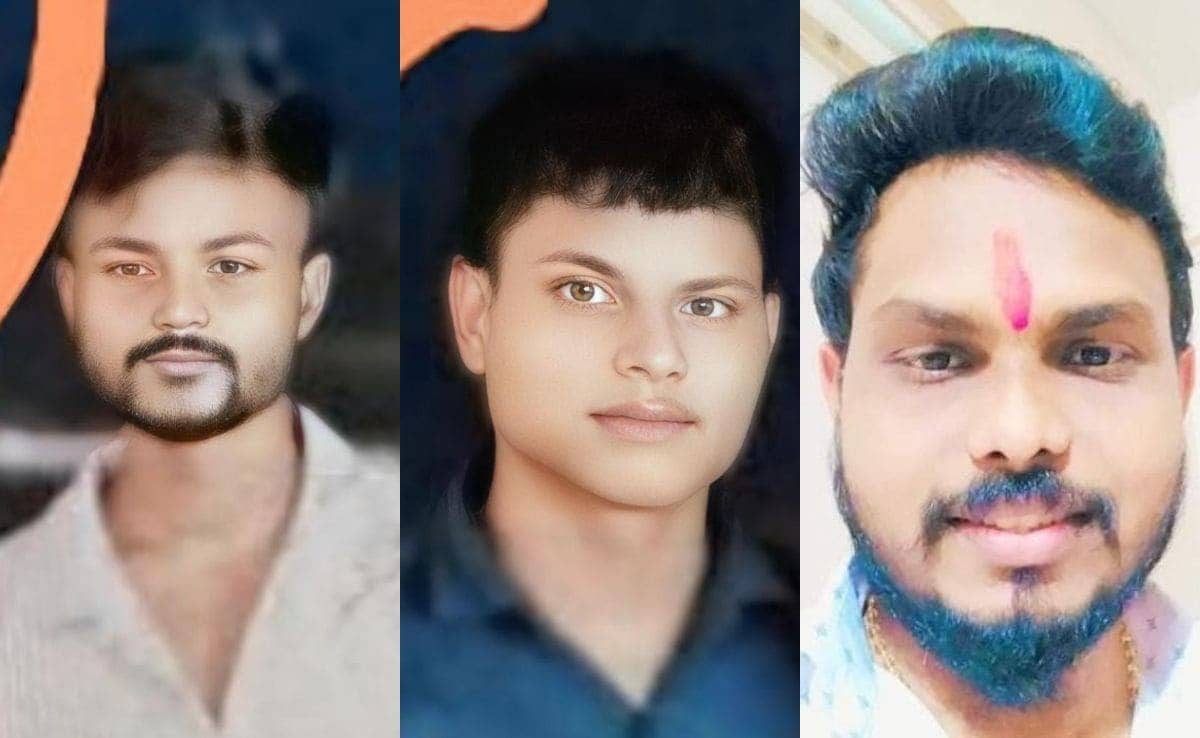
Investigation into the murder of former Maharashtra minister Baba Siddique has revealed details of the planning behind the operation which included the acquisition of a substantial cache of bullets, YouTube firearms training, and the careful orchestration of getaway plans. The plotters aimed to ensure the murder was executed with precision, taking no chances on ammunition or escape routes.

So far, four individuals have been arrested, including Haryana resident Gurmail Baljit Singh (23), Uttar Pradesh native Dharmaraj Rajesh Kashyap (19), both alleged shooters; Harishkumar Balakram Nisad (23), and “co-conspirator” Pravin Lonkar, who belongs to Pune.

Nisad and Kashyap belong to the same village as the wanted accused Shivkumar Gautam. 

According to police sources, the accused responsible for Mr Siddique‘s murder – Gurmail Singh (23) and Dharamaraj Kashyap (19) – were equipped with 65 bullets, a stockpile intended to guarantee they would not run out of ammunition. Six of these bullets were fired on the night of October 12, when Mr Siddique was shot dead outside his son Zeeshan Siddique’s office in the Nirmal Nagar area in Bandra.

Authorities have recovered two firearms used by the accused – an Austrian-made pistol and a locally manufactured country-made pistol. Alongside these weapons, police found 28 live bullets on Singh and Kashyap at the time of their arrest. The investigative team also discovered a black bag, located just a short distance from the murder site, containing a Turkish-made 7.62 bore pistol and 30 live rounds. This bag also held two Aadhar cards – one in the name of Shivkumar Gautam, who is also a suspect in the case, and another under the name Sumit Kumar, though both cards bore Shivkumar’s photo.

Motorbike Plan Foiled By Accident

According to the police, the accused had initially planned to carry out the attack using a motorbike. The idea was for the shooters to ride up to the location, execute the murder, and then escape quickly by bike. However, a traffic accident involving two of the suspects caused them to abandon this plan. Instead, the three perpetrators decided to travel by auto-rickshaw to the site of the crime. After the murder, they quickly changed their clothes to avoid detection.

Harishkumar Balakram Nisad, one of the arrested co-conspirators, had transferred Rs 60,000 for the purchase of a motorbike. Out of this amount, Rs 32,000 was used to buy a second-hand bike, which was intended to be used in the assassination.

Manhunt And Escape Attempts

The investigation has revealed the involvement of several suspects, with the prime accused, Shubham Lonkar, an alleged member of the Lawrence Bishnoi gang who is still at large. Mumbai Police have issued a Look Out Circular (LOC) against Lonkar, who is believed to be attempting to flee to Nepal. His photographs have been circulated at the Nepal border in an effort to prevent his escape.

Lonkar had remained active on social media until just three days before the murder, with responsibility for Mr Siddique’s killing reportedly being claimed via his Facebook profile on October 9. His brother, Praveen Lonkar, has been arrested for allegedly providing financial support to the killers. 

Authorities have not yet managed to track down Shubham’s exact location, but intelligence suggests he may have been in contact with key criminal networks. 

YouTube Training And Firearm Mastery

According to the police, the shooters learned to operate guns by watching YouTube tutorials. In the weeks leading up to the murder, the accused rented a house in the Kurla area of Mumbai, where they practised loading, unloading, and handling weapons. Due to a lack of open space, they engaged in “dry practice” drills and rehearsing with unloaded guns.

Investigations also revealed that Shivkumar Gautam, another prime suspect, had experience with firearms from celebratory firings at weddings in Uttar Pradesh, where he is believed to have honed his shooting skills. Gautam, described as the “main shooter,” not only participated in the planning but also trained Kashyap and Singh in the handling of guns. The trio communicated frequently via social media platforms like Snapchat and Instagram, using these apps to stay under police radar while coordinating the assassination plan.

Shubham Lonkar, the key suspect on the run, was previously arrested in January under the Arms Act in Maharashtra’s Akola district. His arrest had led to the seizure of more than ten firearms. 

Read full article
Big Supreme Court Ruling On Citizenship Of Immigrants In Assam Before 1971
onmynews.com

Big Supreme Court Ruling On Citizenship Of Immigrants In Assam Before 1971

The Supreme Court has upheld the validity of a key citizenship rule that recognised the Assam Accord, granting citizenship to Bangladeshi refugees who had arrived before 1971. Section 6A of the Citizenship Act was introduced in 1985 to allow refugees from Bangladesh (then East Pakistan), who entered India between 1966-1971, to register as Indian citizens.

A five-judge constitutional bench led by Chief Justice of India DY Chandrachud upheld the validity of Section 6A by a 4:1 majority with Justice JB Pardiwala dissenting. The bench also comprised Justices Surya Kant, MM Sundresh, and Manoj Misra.

“The court’s decision means that the non-resident Indians who came from Bangladesh between January 1, 1966 and March 25, 1971 are eligible for citizenship. Those who have got citizenship under this will retain their citizenship,” the bench said.

The order came on a petition that contended that the arrival of Bangladeshi refugees had impacted the demographic balance of Assam. It said Section 6A of the Citizenship Act violated the political and cultural rights of the original residents of the state.

The Chief Justice said the enactment of Section 6A was a “political solution” to a unique problem faced by Assam since the influx of refugees had threatened its culture and demography.

“The central government could have extended the act to other areas as well, but it did not do so because it was unique to Assam. The number of migrants coming to Assam and their impact on culture etc. is higher in Assam. The impact of 40 lakh migrants in Assam is more than that of 57 lakh in West Bengal because the land area in Assam is less than that of West Bengal,” the Chief Justice said.

The Assam Accord was signed on August 15, 1985 between the centre and representatives of the Assam movement in response to a massive refugee influx during the Bangladesh liberation war. As a humanitarian measure, Section 6A was added to the Citizenship Act to allow the migrants who came before March 25, 1971 to get Indian citizenship, but without voting rights.

The Supreme Court said the centre was right in its contention that uncontrolled immigration in Assam affected its culture and that it’s the duty of the government to prevent illegal immigration.

Holding that March 25, 1971 was a reasonable cut-off date, the court contended that Section 6A was neither under-inclusive nor over-inclusive. “Citizenship can be given between the cut-off dates subject to fulfilling the conditions. Immigrants who enter after March 25, 1971 cannot be conferred citizenship,” said Justice Surya Kant.

Read full article
Link copied!