Live · Global · Independent
Live Feeds
PinkVilla
Forbes
NDTV
Hindustan Times
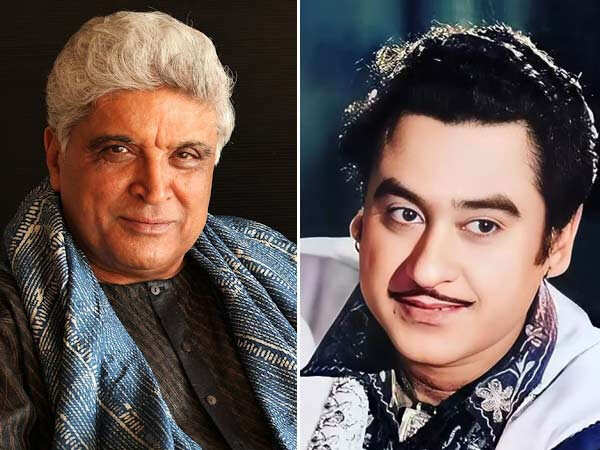
Javed Akhtar: Kishore Kumars voice had a sophistication – Exclusive
onmynews.com

Javed Akhtar: Kishore Kumars voice had a sophistication – Exclusive

I’ve been a proud Kishore Kumar fan ever since I’ve heard him on the Binaca Geetmala at the age of 11. The programme used to be for a duration of half an hour and was later extended to an hour. I was mesmerised by that voice in songs like Jeevan ke safar mein (Munimji, 1955). He didn’t sing for any other hero except Dev Anand (perhaps with the only exception when in Pyar Ka Mausam, 1969, he sang Tum bin for Bharat Bhushan). It was only in the late 60s, a tornado was unleashed in the form of Kishore Kumar in Aradhana and then there was no looking back.


Kishore’s voice had a certain “sophistication” and westernised quality which the urban middle class loved. They were the ones going to the theatres then and spending money. His urbane voice appealed to them. It was like a sharp arrow from a taut bow that pierced the soul. There was a “persona” to his voice- be it a happy song or a sad song. Mohd Rafi saab too was a master singer whose range is unparalleled. I consider Rafi saab the first real playback singer in the world because he used to change his voice quality and style to match the voice of the actor who would lip sync that particular song.

Kishore da, who was known for his light-hearted, romantic and some funny songs with his “yodelling”, was equally effective in sad songs. Kishore’s voice in contrast was free flowing, like I mentioned, almost westernised. Perhaps his lack of classical training too contributed to his freewheeling voice. I can only hazard a guess.


It is shocking that in a population of 140 billion people we are yet to find a voice that comes anywhere close to Kishore da’s voice. In fact, every time Shankar the composer and I sit down to write and compose a song we wonder aloud only if Kishore da had sung our song.


You see, the flexibility in his voice, whether it is Dukhi man mere (Funtoosh, 1956) or Kiska rasta dekhe (Joshila, 1973). If he could be deeply melancholic, then he would also sing gibberish and make you roll with laughter. No singer with the exception of say the formidable voice of Asha Bhosle could match him note to note. You hear the duets together. That’s magic.

My life’s first song ever Dekha ek khwab (Silsila, 1981) was sung by him. And with that one song my career as a lyricist took off.


He liked me a lot, perhaps it was also my sense of humour which he too possessed in spades. He was so humorous and funny. He would keep us entertained for hours. Of course he was at least 20 years senior to me and it was a matter of privilege for him to be singing my songs or to be acquainted with him.


I remember he was in the recording booth and he was singing Zindagi aa raha (Mashaal, 1984). So me who was sitting outside pointed out that he was unnecessarily stressing on the word “hai”. He joked and insisted that I show him how to sing the line. I was so mortified and we all had a good laugh about it.

Around the time we recorded for Saagar (1985), he had suffered a heart attack and we were very worried if he would be able to sing our songs. Technology had progressed a lot by then and even for a duet we could record the singers separately and match their voices together. For the Yun hi gaate raho song, we recorded SP Balasubramaniam who himself was a musical genius. He sang separately and then left for Chennai. I was astounded by his singing. Balasubramaniam was absolutely smashing brilliant. As a Kishore fan I was worried. A few days later Dada came to the studio, heard the song which Pancham I think sang to him on the harmonium. He learnt his lines and went straight for the take. The way he sang! He hit it out of the park. You please hear the song again, you will never be able to say this peerless singer had just recorded this song after a heart attack. I was beyond relieved.


But behind the practical jokes and fun persona was a deeply hurt man. I think his formative years at Bombay Talkies weren’t happy. Ashok Kumar his older brother was the shining superstar and usually the younger sibling is not taken seriously. I’m told lots of mean and uncharitable things were said to him. They said he was no good and should return back to Khandwa.


I remember Yusuf bhai, an assistant of Kamal Amrohi on Mahal (1949) used to tell me he would be drumming away happily on the tables of the Bombay Talkies canteen and people would pass snide and cutting remarks. I guess he stored up all that deep hurt.


I remember him telling me that he wanted to be buried in Khandwa. He used to say funerals in Bombay are like film premieres—everyone is only celebrity spotting and looking at which star arrived and clapping.


Years later I received the Kishore Kumar award from the Madhya Pradesh government in Kishore da’s hometown Khandwa. It’s wonderful that his legacy is preserved there and his songs continue to be played with love and affection. So many songs come rushing to my mind but for now I’m happy in the memories of the Amir Garib (1974) song…. Main aaya hoon khwaab mein…
Read full article
SEVENTEEN releases mini album named Spill the Feel  
onmynews.com

SEVENTEEN releases mini album named Spill the Feel  

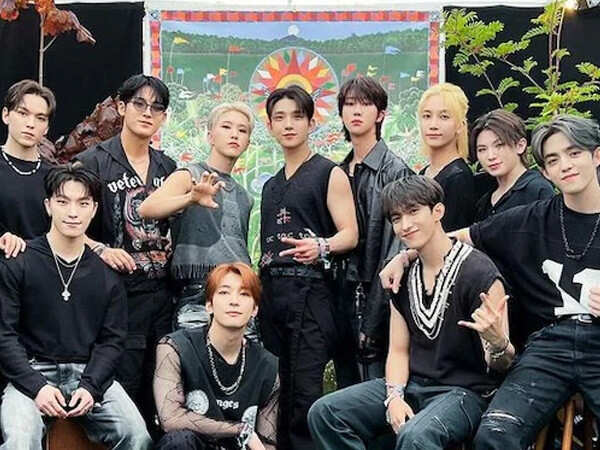
K-pop boy band SEVENTEEN dropped their 12th mini album Spill the Feels today, opening doors to a wider audience with deepened honesty and authenticity instilled in every track. Spill the Feels is an anagram of ‘I Felt Helpless’ which is reflective of the 13-member band’s transformative journey.

Ahead of its official release, the mini album recorded over 3.4 million copies in pre-orders, adding to the group’s total album sales of 5.32 million in just the first half of the year.
This continues SEVENTEEN’s record-breaking streak after extraordinary accolades such as being recognized with the ‘Biggest-selling global album in 2023’ by IFPI and having the two best-selling albums in K-pop history.

The release’s lead single “LOVE, MONEY, FAME (feat. DJ Khaled)” is an R&B/Hip-hop track layered with groovy melodies. The song explores the universal theme of ‘love’ in juxtaposition with ‘money’ and ‘fame’, values juggled in modern life. The accompanying music video follows each member’s unique perspective and storyline to confront the profound emotion of love, which ultimately converges on the shared realization that the essence of love lies in honest expression. The mini album comprises a total of 6 songs.
Meanwhile, the band’s SEVENTEEN [RIGHT HERE] WORLD TOUR kicked off on October 12 with two sold-out shows at Goyang Stadium in Korea and will see them make their way to 13 cities across the U.S., Japan and Asia, starting later this month through to next year.
Read full article
In A First, Niira Radia Shares Why Ratan Tata Decided To Build The Nano
onmynews.com

In A First, Niira Radia Shares Why Ratan Tata Decided To Build The Nano

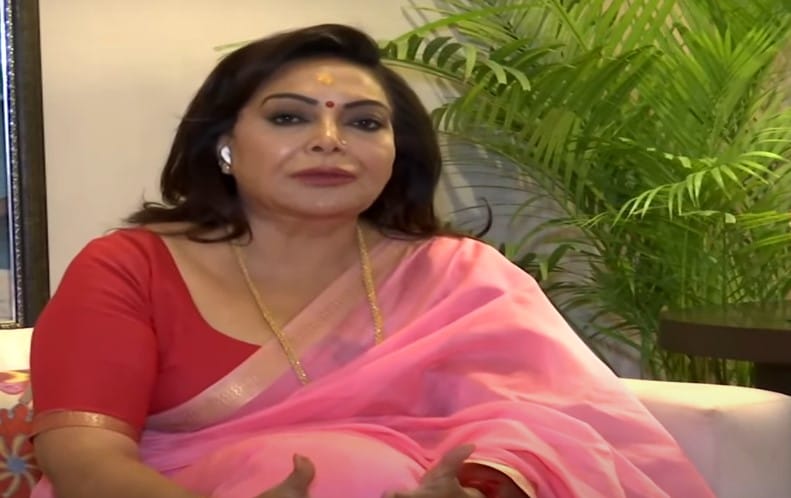
Former corporate public relations professional Niira Radia in her first media interview in over 12 years and the first ever on the Tata group shared snippets from the time she worked with industrialist and philanthropist Ratan Tata, who died at 86 on October 9.

The launch of Tata Motors’ hatchback Indica, the big-ticket acquisition of the steel major Corus, the purchase of Jaguar Land Rover from Ford, and the launch of the ‘Rs 1 lakh car’ Nano, among others – Ms Radia shared stories behind these milestones of the Tata group as a global enterprise headquartered in India.

“He was a dreamer and a visionary. India was his national pride. He loved his country, the people. He’d say it was so important to globalise. ‘The only reason why I need to go global is to bring technology to India and upgrade our own companies to make better platforms’, Ratan Tata would say,” Ms Radia told NDTV in an exclusive interview today.

She explained why Ratan Tata decided on making the ‘Rs 1 lakh car’ Nano, a statement which has been narrated many times over the years.

“He wanted something for the common person. He wanted a person on a bike to not get wet in the rain, for example. A newspaper had said Ratan Tata wanted a Rs 1 lakh car. But we had never given a number,” said the former chairperson of the defunct company Vaishnavi Corporate Communications, who had an inside view of some of the most crucial decisions made by the Tata group.

READNiira Radia Recounts Her Association With Humble Leader Ratan Tata

On why Ratan Tata chose Singur in West Bengal as the site for building the Nano, Ms Radia said the industrialist simply had his heart set on Bengal to create jobs and bring industrialization.

“He announced Singur. It really surprised me because we were not told about the location earlier. It was natural for him. Why shouldn’t it be Singur? He was for development, not to play politics,” Ms Radia said.

Tata group was in talks on the big-ticket Corus deal when the huge battle over the Nano plant in Bengal erupted, Ms Radia told NDTV, adding they were in Bengal in the midst of two critical decisions – a bid was going on for Corus, and there was trouble on the ground in Singur.

“Why should the Rs 1-lakh car be not built in Bengal? His dream was to industrialise the state… I think this Rs 1 lakh number was there because he must have done his calculation at that time, that it may be possible. Of course he was criticised too. But the man had a dream, he had a vision. Those were more important,” Ms Radia said.

“He was disappointed,” she added, on the Nano not reaching heights Ratan Tata may have envisaged.

“The price point changed subsequently. I want to stay focused on who he was, not the business side. When he went to Bengal, he felt it needed to be industrialised. He wanted to create jobs. The whole road from Kolkata to Singur could have been developed beautifully. It (Nano project) went to Sanand (in Gujarat). Today, Sanand is like Gurugram,” Ms Radia said.

READNiira Radia Recounts When Ratan Tata’s Dog Went Missing On Marine Drive

The Singur problem was not about the Nano or Ratan Tata, she said.

“The fight was a political fight. Singur was the constituency of a leader of the then ruling party… We visited many other states to look for a site. We were also called by Punjab, Karnataka, many others… We went to Gujarat as it was a bit more industrialised and moving towards development, so it would be easy to set up there,” said Ms Radia, who handled public relations for the Tata group between 2000 and 2012.

Ms Radia headed Vaishnavi Communications during the most critical time when the Tata group decided to consolidate its brand at the group level. She also remained a dear friend and a close confidante of Ratan Tata till his death.

Read full article
Link copied!