Live · Global · Independent
Live Feeds
PinkVilla
Forbes
NDTV
Hindustan Times
“Captain, Aged 22…”: Israel Says 1st Soldier Killed In Lebanon Combat Ops
onmynews.com

“Captain, Aged 22…”: Israel Says 1st Soldier Killed In Lebanon Combat Ops

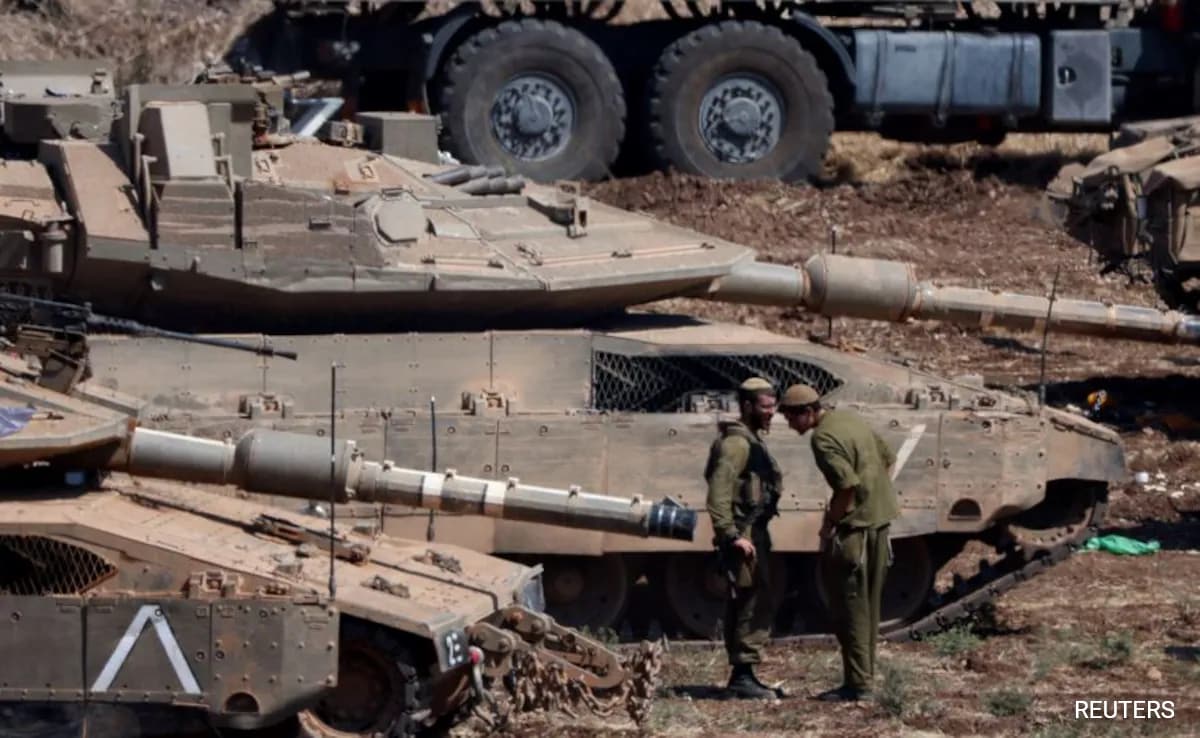
The Israeli military said one of its soldiers was killed in combat operations in Lebanon on Wednesday, marking the first loss since its forces crossed the border to target Hezbollah.

“Captain Eitan Itzhak Oster, aged 22… fell during combat in Lebanon,” the military said in a statement.

A military website said Oster was killed on Wednesday, without providing further details.

Hezbollah said its fighters were clashing with Israeli troops who had “infiltrated” a southern border village.

The group said earlier it had forced Israeli soldiers to withdraw after they attempted to enter the border village of Adaysseh further northeast.

It was the first time the Iran-backed group said there was fighting on Lebanese soil since the start of an escalation in recent weeks when the Israeli army began pounding south Lebanon and later killed Hezbollah leader Hassan Nasrallah in an air strike.

“This is just the start of the confrontation,” Hezbollah spokesman Mohammad Afif told media on a tour in the Lebanese capital’s southern suburbs.

“The resistance in the south is at its highest level of readiness,” he added, referring to Hezbollah fighters.

The Lebanese army also said Israeli forces had briefly breached the demarcation line between the countries.

“Israeli enemy forces breached the Blue Line by approximately 400 metres (yards) into Lebanese territory” in two areas, “then withdrew a short time later”, it said on X.

Earlier Wednesday, the Israeli army called for the evacuation of additional areas in southern Lebanon, telling residents to leave over 20 villages and towns in south Lebanon.

The move came a day after a similar evacuation call was made by the Israeli military as it announced the launch of ground operations.

(Except for the headline, this story has not been edited by NDTV staff and is published from a syndicated feed.)
Read full article
Explained: Israel’s Tiered Missile Defence Systems vs Iranian Arsenal
onmynews.com

Explained: Israel’s Tiered Missile Defence Systems vs Iranian Arsenal

What kinds of weapons Iran used to strike Israel on Tuesday night? Iran has an arsenal of ballistic and cruise missiles and drones, which have been used in the recent past to target Israel. It is believed nearly 200 ballistic missiles were fired by Iran on Tuesday night.

Let’s focus on that for a moment. Now, Iran operates for starters a 300-km range missile called the Shahab-1. That’s a relatively short-range missile which cannot hit Israel. It can only strike targets in a region well away from Israel.

Another missile is the Fateh missile which flies between 300 and 500 km. Again, that missile doesn’t have the range to hit Israel.

The other missile is the Shahab 2, which has got longer legs – 500 km, but still out of range to hit targets in Israel.

The Zolfaghar missile can just about touch Israel. It has got a range of 700 km, so parts of Israel can just about be targeted by this missile.

VIDEO | Iran Launching Hundreds Of Ballistic Missiles At Israel

There is a missile called Qiam-1 with a range of 750 km, or 50 km more than the Shahab-2. It is a relatively more advanced missile and can target a few more areas, but not deep inside Israel.

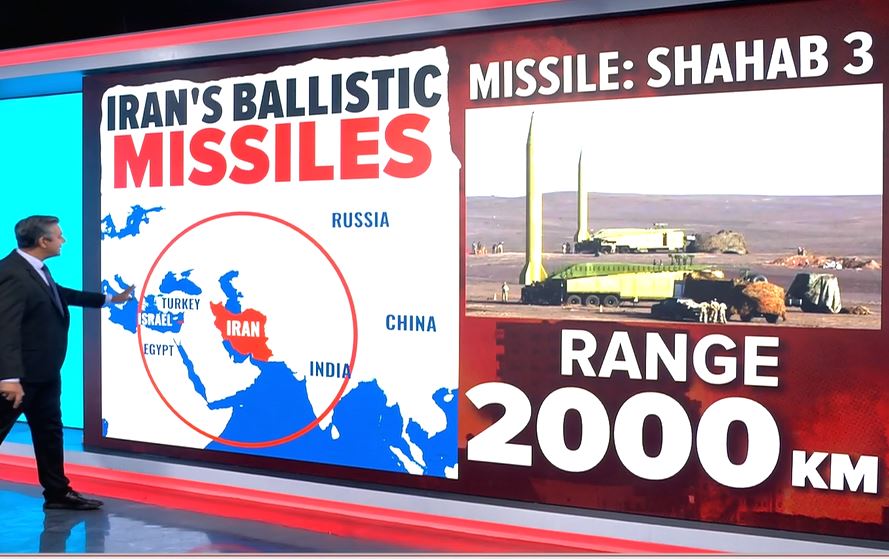
But there is the Shahab-3 with a range of 2,000 km which can quite easily strike all of Israel. In fact, it can strike many areas in the region. So that’s the missile, variants of which may have been actually used in Tuesday’s attacks.

But Israel has the world’s most sophisticated ballistic missile defence systems. It’s a tiered defence system, which was clearly breached last night. Videos show Iranian missiles hit Tel Aviv. Iran also released videos of the ballistic missiles being launched from its territory.

What we don’t know is how many of these missiles hit their targets and whether some of the impacts were fragments of missiles coming down after they were intercepted by the Israeli missile shield. While we do talk about Israeli surface-to-air missiles (SAMs) being fired in defence, we really need to take a look at the distance that these interceptor SAMs travelled and the altitude they reached to take out Iranian ballistic missiles.

READ“Captain, Aged 22…”: Israel Says 1st Soldier Killed In Lebanon Combat Ops

For starters, let’s talk a little bit about Israel’s Arrow system. It is a part of a system, so the word missile and system are used interchangeably. Now, when one talks about SAM systems, you have to talk about the range and the altitude it can reach.

Israel’s Arrow system can intercept incoming ballistic missiles in the exosphere, just outside the atmosphere. It has a range of 2,000 to 2,400 km. It can fly to an altitude of a whopping 100 km; perhaps it’s the most advanced system of its class in the world.

There were other systems presumably used to intercept Iranian missiles last night. Let’s look at the next one, which is David’s Sling system. It can fly to a range of 300 km and an altitude of about 15-odd km in making interceptions.

And finally, what we all talk about is the Iron Dome. It’s a relatively short range missile system. In fact, when one speaks about what Israel has, people say it’s the Iron Dome in action. But the Iron Dome is a part of the entire missile defence tier and the last line of defence. It can fly to an altitude of 10 km and has a range of about 70 km. It’s not optimally suited to take out ballistic missiles. It is better equipped to take on short-range rockets of the type Hamas and Hezbollah have been firing.

Obviously, there have been breaches of the system as well. But many lives have not been lost and the damage primarily is believed to be at Israeli military bases.

The big question is will there be an Israeli response, and when would it happen?

Read full article
Sophie Turner Reveals She Would Love To Return As Sansa Star In Game Of Throne On THIS Condition; Find Out
onmynews.com

Sophie Turner Reveals She Would Love To Return As Sansa Star In Game Of Throne On THIS Condition; Find Out

Game of Thrones star Sophie Turner has made comments regarding a potential ninth-season comeback, and it shows why the show shouldn’t, or most likely couldn’t, make a return. Even though the HBO smash show’s finale to Game of Thrones five years ago is still very controversial, viewers still love the entire series.

Turner spoke on the potential return to the world of Game of Thrones in an interview with Variety to promote her upcoming series Joan. When asked whether she will ever play Sansa again, the actor said, “Maybe.”

Turner outlined the terms of her comeback. “Maybe. I mean, if it weren’t for the same cast and crew, I wouldn’t return, and that would just be Season 9.”

“I don’t think we’re going to do a Season 9, but, I mean, I loved playing Sansa, and I do wonder, often, what she would be doing now,” Turner stated. The Joan actress further added, “Five years later, where would she be? And what would she be doing? In the North, would she still be queen? Could she rule effectively? Would there have been another awful war of that sort? I really hope to watch it.”

Turner’s observation that a Game of Thrones extension would essentially amount to simply season 9 highlights an important challenge to the show’s success. 

Despite the backlash and reactions to Game of Thrones season 8, the production value was unparalleled on television, and it would be highly difficult to bring it back.

All the actors continued in a variety of roles after the conclusion. Turner is one of them; she has worked on several films, including Joan, Do Revenge, X-Men: Dark Phoenix, and The Staircase. Given that Sophie Turner played Sansa Stark for the majority of her life, it is important to note that the character ends up in a positive place.

ALSO READ: New Movie About Two Robins On The Cards? Check Out As James Gunn Reveals THIS DC Studios Project

Read full article
Link copied!