Live · Global · Independent
Live Feeds
PinkVilla
Forbes
NDTV
Hindustan Times
Shah Rukh Khan drops Dunki song O Maahi promo explains movie title. Watch:
onmynews.com

Shah Rukh Khan drops Dunki song O Maahi promo explains movie title. Watch:

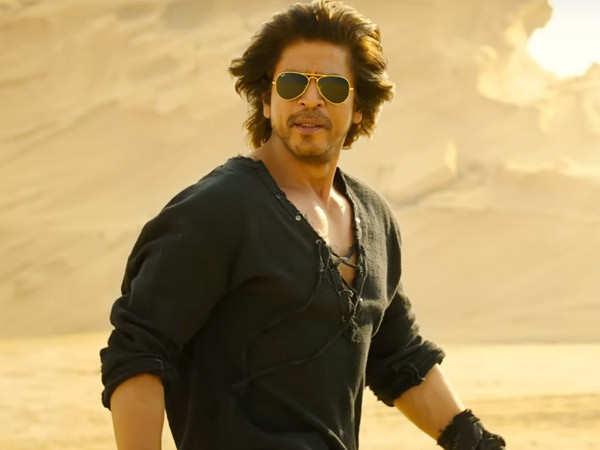
Shah Rukh Khan is gearing up for the release of his upcoming film Dunki. On Monday, the star shared a new promo for the film’s third song O Maahi. 

Shah Rukh Khan took to his social media handles to share the promo version of O Maahi O and it’s reminding fans of Suraj Hua Maddham. Check it out here: 
SRK also revealed what the film’s title means. He wrote, “Sab poochte hain Iss liye bata raha hoon. Dunki ka matlab hota hai apno se door rehna….aur jab apne paas ho toh bas lagta hai qayamat tak uske saath hi rahein. O Maahi O Maahi. Feel the love before sun sets on the horizon today. #DunkiDrop5 – #OMaahi Promotional Video Out Soon!”

To note, the full music video of Dunki’s next track O Maahi will arrive today. 

Directed by Rajkumar Hirani who is collaborating with SRK for the first time, Dunki also features Taapsee Pannu, Vicky Kaushal, Boman Irani and others in pivotal roles. 

Dunki will release on December 21, 2023. 
Read full article
Centre’s Move To Scrap Special Status To J&K Valid: Supreme Court
onmynews.com

Centre’s Move To Scrap Special Status To J&K Valid: Supreme Court

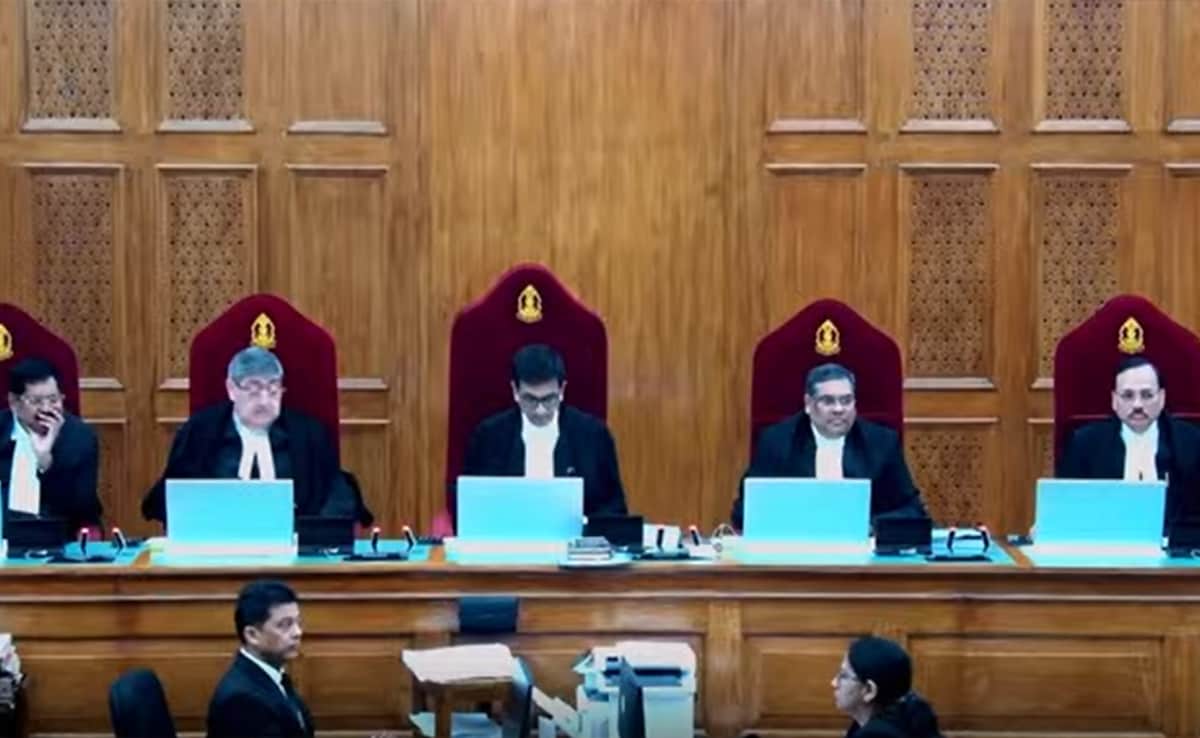
The Supreme Court today upheld the Centre’s move to scrap special status to Jammu and Kashmir under Article 370 of the Constitution. A five-member bench of the Supreme Court led by Chief Justice of India DY Chandrachud ruled that Article 370 was a temporary provision to ease Jammu and Kashmir’s merger with India.

The Supreme Court also ordered the Election Commission to hold election in Jammu and Kashmir by September 2024.

Jammu and Kashmir did not retain sovereignty when it joined India and its constituent assembly ceased to exist the moment it merged with India, the Supreme Court said, referring to why special status was not needed.

“The J&K constituent assembly was not intended to be a permanent body. It was formed only to frame the Constitution. The recommendation of the Constituent Assembly was not binding on the President,” the Supreme Court said.

The Supreme Court, however, explained why the state continued to enjoy special status even after its merger with India, despite the state not having “internal sovereignty”.

“When the constituent assembly ceased to exist, the special condition for which Article 370 was introduced also ceased to exist. But the situation in the state remained, and thus the Article continued,” the Supreme Court said.

“All states in the country have legislative and executive power, albeit to differing degrees. Article 371A to 371J are examples of special arrangements for different states. This is an example of asymmetric federalism… Jammu and Kashmir does not have internal sovereignty different from other states,” the Supreme Court said.

The bench gave three separate judgments – one authored by Chief Justice Chandrachud on behalf of himself, Justice BR Gavai and Justice Surya Kant; another concurring judgment by Justice Sanjay Kishan Kaul, and a third judgment concurring with the other two by Justice Sanjiv Khanna.

Article 370 gave Jammu and Kashmir its own Constitution and decision-making rights for all matters barring defence, communications and foreign affairs. Its removal ended special status to the state.

Contained within Article 370 was Article 35A, which allowed the erstwhile state to define who it acknowledged as permanent residents and gave special rights, such as government jobs and owning property.

The Supreme Court said it did not find it necessary to see whether the reorganisation of Jammu and Kashmir into a Union Territory was valid since it was a temporary arrangement until the election and restoration of statehood.
Read full article
Removing Special Status Of J&K Constitutionally Valid: Supreme Court
onmynews.com

Removing Special Status Of J&K Constitutionally Valid: Supreme Court

Supreme Court upholds the validity of the scrapping of Article 370 in Jammu and Kashmir. The Supreme Court cannot sit in appeal over the decision of the President of India on whether the special circumstances under Article 370 exist. History shows the gradual process of constitutional integration was not going on. It was not as if after 70 years, the Constitution of India was applied in one go. It was a culmination of the integration process. 
We direct that the restoration of statehood in the Union Territory of Jammu and Kashmir shall be done at the earliest.
We direct that steps be taken by the Election commission to conduct elections of Jammu and Kashmir Assembly by September 30, 2024.
We have held that all provisions of the Constitution of India can be applied to Jammu and Kashmir using Article 370(1)(d) in one go. We do not find the use of Presidential power to issue CO 273 was mala fide. Thus we hold the exercise of Presidential power to be valid.
The principle of consultation and collaboration was not required to be followed for the exercise of Presidential power. Concurrence of the state government was not required to apply all provisions of the Constitution using Article 370(1)(d). So the President taking the concurrence of the Union Govt was not mala fide.
We have held that Article 370 is a temporary provision. Article 370 was an interim arrangement due to war conditions in the state. 
The state of Jammu and Kashmir does not have internal sovereignty different from other states. Whether Jammu and Kashmir retained an element of sovereignty or internal sovereignty when it joined the Union of India, we have held no. 
There is a clear absence in the Constitution of Jammu and Kashmir to the reference of sovereignty. That the State of Jammu and Kashmir became an integral part of India is evident from Articles 1 and 370 of the Constitution of India.
The Supreme Court refuses to rule on the validity of the Presidential rule imposed in Jammu and Kashmir in December 2018 since it was not specifically challenged by the petitioners.
When a proclamation under Article 356 comes into force, countless decisions are taken by the Centre. Not every action can be challenged. 

Read full article
Link copied!