Live · Global · Independent
Live Feeds
PinkVilla
Forbes
NDTV
Hindustan Times
EXCLUSIVE: Dhvani Bhanushali and Aashim Gulati on working with each other
onmynews.com

EXCLUSIVE: Dhvani Bhanushali and Aashim Gulati on working with each other

Popular singer Dhvani Bhanushali has made her debut in Bollywood with the movie Kahan Shuru Kahan Khatam, which stars Aashim Gulati in a lead role alongside her. Recently, the duo engaged in a tête-à-tête with Filmfare, as Dhvani and Aashim candidly opened up about their chemistry from the very first day on sets.

While speaking to Filmfare’s Editor-In-Chief Jitesh Pillaai, Aashim jokingly noted that working with Dhvani wasn’t an easy experience. “Honestly, it was very difficult to work with her (Laughs).” When asked if she was the easiest person to work with, Aashim enthusiastically noted that she was. ” She’s is the best. Her superpower is her innocence. Maybe she won’t remember me after doing many more movies, but she is quite lovely as of now.”

Dhvani opened up on her experience of working with Aashim. She revealed being nervous on the sets as a rookie actress. “I was initially nervous because Aashim has a lot of years of experience over me. Going into a film with someone who has done so much of work can get intimidating,” she added. Opening up about working with Saurabh Dasgupta and Laxman Utekar, Dhvani instantly noted that she felt “quite unnerving.”

She opened up further, noting that Aashim made her feel comfortable on sets. “As a co-actor, Aashim really did good. He was constantly there for me.”

Take a look at the episode below:

Read full article
Top Hezbollah Commander Killed As Israeli Strike Rattles Beirut: Report
onmynews.com

Top Hezbollah Commander Killed As Israeli Strike Rattles Beirut: Report

A strike on Hezbollah’s stronghold in Lebanon’s capital Beirut on Friday killed eight people and wounded dozens of others, with a source close to the movement saying a top military leader was dead.

The Israeli military said it had conducted a “targeted strike”, while the Lebanese health ministry said the attack had killed eight people and wounded 59 more.

Requesting anonymity to discuss sensitive matters, the source close to Hezbollah said the strike on the militant group’s stronghold in south Beirut had killed the head of its elite Radwan unit, Ibrahim Aqil.

The air strike is the third to hit the southern suburbs of Beirut since the start of the Israel-Hamas war on October 7, with the focus of the violence shifting dramatically this week from Gaza to Lebanon.

Earlier this year, strikes blamed on Israel killed a top commander of Hezbollah, Fuad Shukr, and a leader of its allied Palestinian militant group Hamas, Saleh al-Aruri.

“The Israeli air strike killed Radwan Force commander Ibrahim Aqil, its armed force’s second-in-command after Fuad Shukr,” the source close to Hezbollah said.

Hezbollah has not officially confirmed his death, but it said after the strike that it had hit an Israeli intelligence base it claimed was responsible for unspecified “assassinations”.

The United States had offered a $7 million reward for information on Aqil, describing him as a “principal member” of the organisation that claimed the bombing of the US embassy in Beirut in 1983 that killed 63 people.

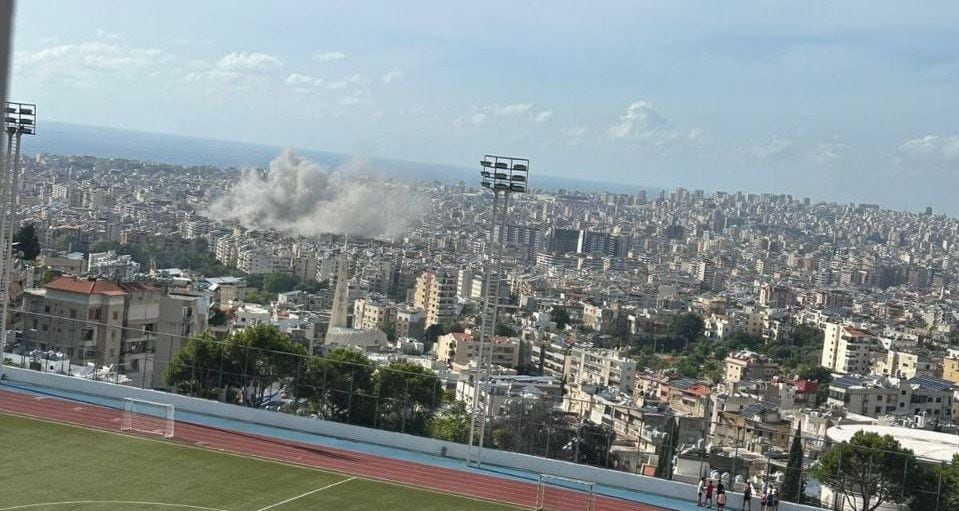
Footage posted on social media and verified by AFP showed smoke rising over southern Beirut on Friday.

Communication device explosions

Israeli troops and Hezbollah fighters have battled each other along the Israel-Lebanon border since Hamas sparked the war in Gaza with its October 7 attack.

The focus of Israel’s firepower for nearly a year has been on Gaza, but with Hamas much weakened, the focus of the war has shifted dramatically to Israel’s northern border.

Months of near-daily border clashes have killed hundreds in Lebanon, most of them fighters, and dozens in Israel, and forced thousands on both sides to flee their homes.

On Tuesday and Wednesday, Hezbollah was hit by an unprecedented attack that it has blamed on Israel, though Israel has yet to comment.

The attack saw thousands of Hezbollah operatives’ communication devices explode across two days, killing 37 people and wounding thousands more.

Hezbollah chief Hassan Nasrallah vowed on Thursday that Israel would face retribution for the blasts.

Earlier Friday, Israel said Hezbollah had fired dozens of rockets from Lebanon following air strikes which destroyed dozens of the militant group’s launchers.

Israel announced this week it was shifting its war objectives to its northern border with Lebanon.

Speaking to troops on Wednesday, Israeli Defence Minister Yoav Gallant said: “Hezbollah will pay an increasing price” as Israel tries to “ensure the safe return” of its citizens to border areas.

“We are at the start of a new phase in the war,” he said.

Israeli Prime Minister Benjamin Netanyahu meanwhile delayed his scheduled departure to the United States, where he is due to address the UN General Assembly, by a day, with an official citing the situation on the northern front.

Earlier Friday, Hezbollah said it targeted at least six Israeli military bases with salvos of rockets after overnight bombardment that people in south Lebanon described as among the fiercest so far.

‘Fear of wider war’

Residents of Marjayoun, a Lebanese town close to the border, said the overnight bombardment was among the heaviest since the border clashes began last October.

“We were very scared, especially for my grandchildren,” said Nuha Abdo, 62. “We were moving them from one room to another.”

Clothing store owner Elie Rmeih, 45, counted more than 50 strikes.

“It was a terrifying scene and unlike anything we have experienced since the escalation began.

“We live in fear of a wider war, you don’t know where to go.”

Calls for restraint

International mediators have been scrambling to stop the Gaza war from turning into an all-out regional conflict.

US Secretary of State Antony Blinken, who has been scrambling to salvage efforts for a Gaza ceasefire and hostage release deal, called for restraint on all sides.

“We don’t want to see any escalatory actions by any party” that would endanger the goal of a Gaza ceasefire, he said.

Hamas’s October 7 attacks that sparked the Gaza war resulted in the deaths of 1,205 people, mostly civilians, on the Israeli side, according to an AFP tally based on Israeli official figures that include hostages killed in captivity.

Out of 251 hostages seized by militants, 97 are still held in Gaza, including 33 the Israeli military says are dead.

Israel’s retaliatory military offensive has killed at least 41,272 people in Gaza, most of them civilians, according to figures provided by the Hamas-run territory’s health ministry. The United Nations has acknowledged the figures as reliable.

(Except for the headline, this story has not been edited by NDTV staff and is published from a syndicated feed.)

Read full article
“100% Correct”: Top Official On Report “900 Militants” Came From Myanmar
onmynews.com

“100% Correct”: Top Official On Report “900 Militants” Came From Myanmar

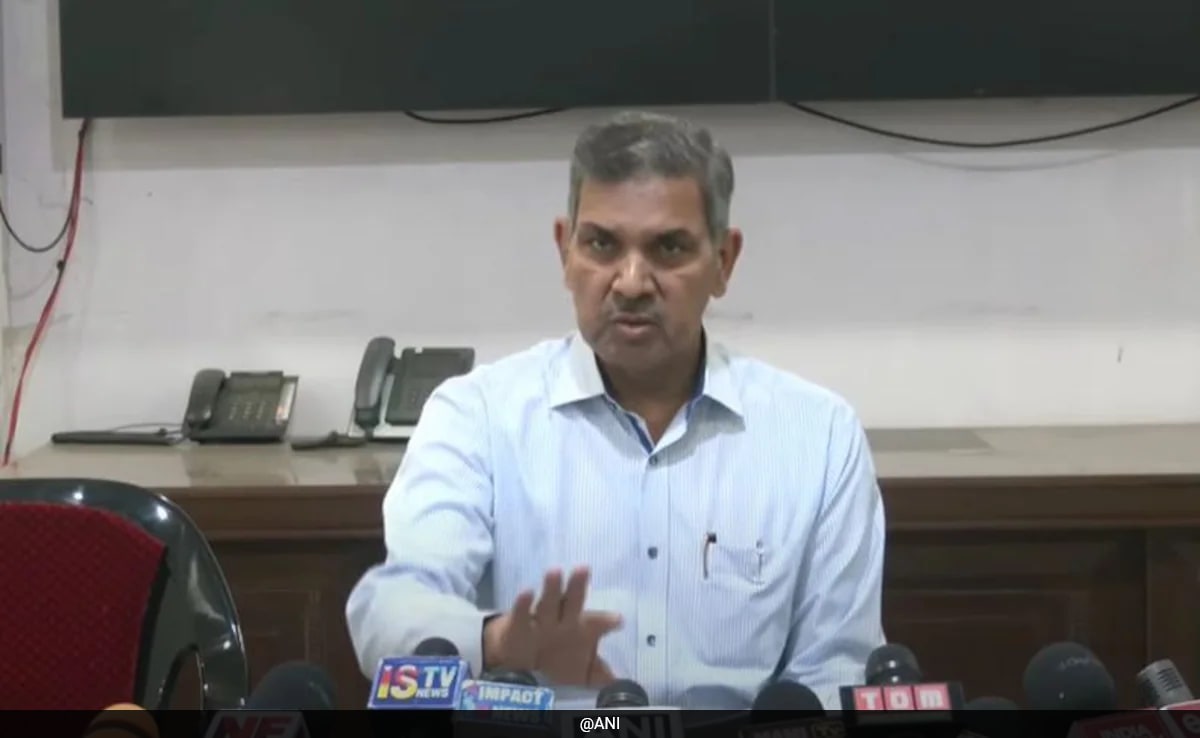
The Security Adviser to the Manipur government today for the first time publicly confirmed they have received an intelligence report that alerted about the entry of “900 Kuki militants” trained in jungle warfare and use of weaponised drones to Manipur from neighbouring Myanmar. The intelligence report cannot be taken lightly, Manipur Security Adviser Kuldiep Singh told reporters today.

The intelligence report was sent to all Senior Superintendents of Police in the districts along the India-Myanmar border in southern Manipur, top intelligence sources told NDTV, requesting anonymity. The report, sent on Thursday, mentioned that “900 Kuki militants, newly trained in use of drone-based bombs, projectles, missiles and jungle warfare have entered Manipur from Myanmar”, the sources said.

The “Kuki militants” are believed to be grouped in units of 30 members each and at present are scattered in the periphery, the intelligence sources told NDTV, adding they may launch multiple coordinated attacks on Meitei villages in the last week of September.

In the press conference today, Mr Singh said they believe the report to be “100 per cent correct”.

“Unless and until it is proved wrong, we believe that it is 100 per cent correct. Because any intelligence input you have to take 100 per cent correct and prepare for that. If it doesn’t come true, then there are two things. Either it didn’t happen at all, or because of your efforts it didn’t happen. You cannot take it lightly,” Mr Singh told reporters.

Ethnic armed groups in Myanmar’s Chin State and other states have been fighting the junta, and have taken large parts of the country which the junta earlier controlled. Some of the fighting has taken place close to the border with India, with instances of some junta troops fleeing into India after Chin State rebels overran them.

READRow Over Assam Rifles Ex Chief’s “Meitei Police, Kuki Police” Comment; Cops Say “Myopic Mindset”

The Manipur government has long maintained that the ethnic violence in the state was a direct result of a huge spike in the population of illegal immigrants – among other factors – in southern Manipur, which shares a border with Chin State and the Sagaing Region.

In January, on a question about attacks on police commandos in Manipur’s border trading town Moreh, the Security Adviser had denied the involvement of Myanmar-based militants. He had, however, admitted there was a possibility that Myanmar militants might have come, though there was no evidence then.

There are many villages of the Kuki tribes in the hills surrounding the Meitei-dominated valley. The clashes between the Meitei community and the nearly two dozen tribes known as Kukis – a term given by the British in colonial times – who are dominant in some hill areas of Manipur, has killed over 220 people and internally displaced nearly 50,000.

The general category Meiteis want to be included under the Scheduled Tribes category, while the Kukis who share ethnic ties with people in neighbouring Myanmar’s Chin State and Mizoram want a separate administration carved out of Manipur, citing discrimination and unequal share of resources and power with the Meiteis.

No Value Of Agreements?

The involvement of overground insurgents from both communities in the Manipur clashes was confirmed recently by the police after a gunfight in Jiribam district, neighbouring Assam.

Three Kuki insurgents who were killed in the gunfight were members of the Kuki Liberation Army (KLA), whose two factions are part of the two umbrella Kuki-Zo groups that have signed the controversial tripatriate Suspension of Operations (SoO) agreement – a sort of ceasefire – with the state government and the Centre.

A member of the Meitei insurgent group United National Liberation Front (Pambei), or UNLF(P), was also killed in the Jiribam gunfight. The UNLF is the oldest Meitei insurgent group, which later broke up into two factions; the Pambei faction signed a tripartite peace agreement with the Centre and the state government in November 2023.

READ“Prosecute Manipur Chief Minister”: 10 Kuki-Zo MLAs To Probe Panel On ‘Audio Clip’ Leak Row

India-Myanmar Border Fencing

Union Home Minister Amit Shah on Tuesday said fencing work had been completed in 30 km of the porous India-Myanmar border in the Manipur section.

The Cabinet Committee on Security has, in principle, approved the construction of border fencing and roads along the 1,643-km international border between India and Myanmar at an approximate cost of Rs 31,000 crore.

The India-Myanmar border passes through Manipur, Mizoram, Nagaland and Arunachal Pradesh. The Union Home Minister said India has scrapped the Free Movement Regime (FMR), which allows people living close to the border to go 16 km into each other’s territory without any documents. Foreigners can enter from Myanmar using the standard method i.e. with visas, Mr Shah had said.

Read full article
Link copied!