Live · Global · Independent
Live Feeds
PinkVilla
Forbes
NDTV
Hindustan Times
Who Is Yerin Ha? All We Know About Actress Set To Play Benedict’s Love Interest in Bridgerton Season 4
onmynews.com

Who Is Yerin Ha? All We Know About Actress Set To Play Benedict’s Love Interest in Bridgerton Season 4

In the latest set of events, Korean-Australian actress Yerin Ha is all set to play Sophie Beckett, Benedict Bridgerton’s love interest, in season 4 of Netflix’s mega-hit series Bridgerton. The news was first reported by Variety, which confirmed that Ha will be cast alongside Luke Thompson (Benedict Bridgerton) in a leading role for the show’s fourth season, which is based on Julia Quinn’s An Offer From A Gentleman (the third book in the Bridgerton novel series). 

In Seasons 2 and 3, we witnessed Anthony and Colin Bridgerton’s journey to find their perfect match. Season 4 will focus on the love story of the second-eldest brother, Benedict Bridgerton. 

The novel shows how, despite seeing elder and younger brothers happily married, Benedict is vehemently opposed to the idea of matrimony until he meets a captivating Lady in Silver at his mother’s masquerade ball. The Lady in Silver is none other than Sophie Beckett and she is the illegitimate daughter of an earl and was brought up in her father’s house as a maid. 

The 29-year-old actress is best known for her role in the Paramount+ science-fiction show Halo, where she played the role of Kwan Ha in both seasons. She is also set to appear in HBO Max’s upcoming prequel series Dune: Prophecy, which is expected to release in November. Her other notable projects include the Australian shows Bad Behaviour, Reef Break, Troppo, and the horror feature film Sissy. 

An advocate of Asian representation in Hollywood, Ha grew up in Sydney but auditioned for a performing arts school in South Korea when she was 15, after which she pursued her training in the country. She comes from a family of actors and stated once that her family’s cinema and theatrical background encouraged her to pick the same route. 

The first season of Bridgerton aired in 2020. Season 3 was recently released in two parts and took Netflix by storm, garnering almost 103 million views. Given the massive popularity of the series, it is expected to continue beyond the next season. All three seasons currently rank among the top 10 most-watched English-language TV series on Netflix.

Season 4 is expected to stream on Netflix in 2026.

ALSO READ: Bridgeton Reunion at 2024 Met Gala as Phoebe Dynevor and Simone Ashley Seen Together

Read full article
Pak-Origin Man, Involved In 26/11 Attack, Extraditable To India: US Court
onmynews.com

Pak-Origin Man, Involved In 26/11 Attack, Extraditable To India: US Court

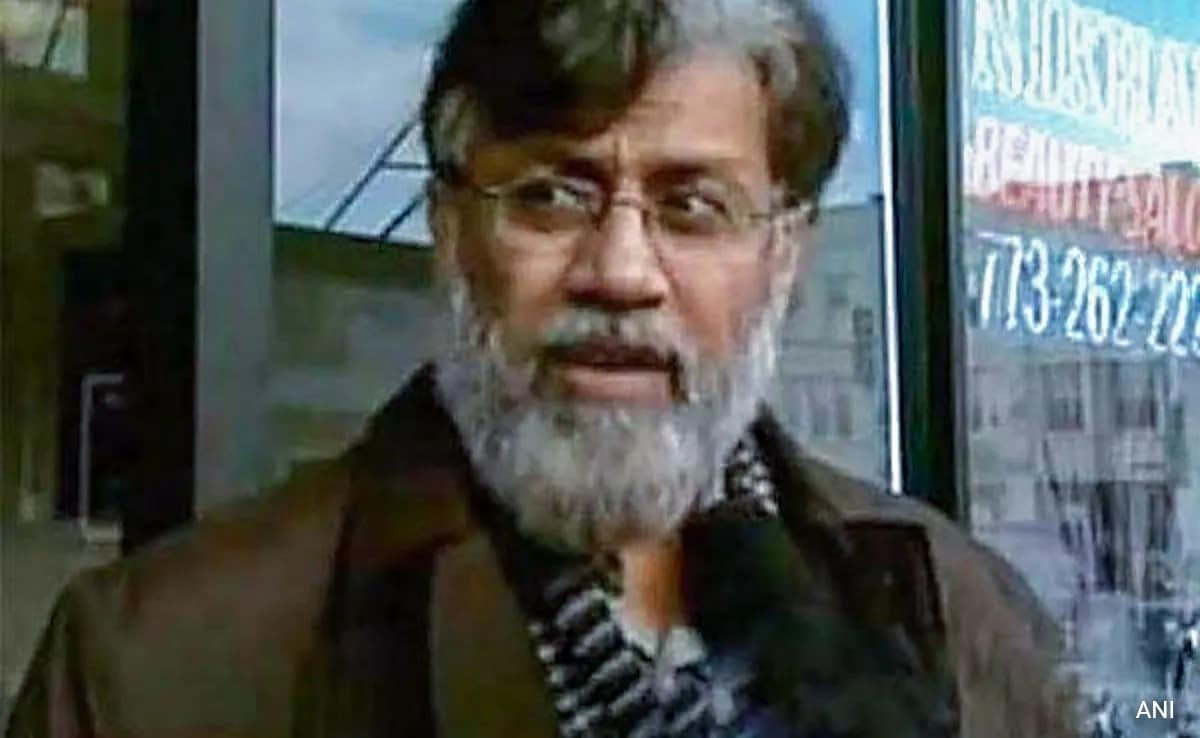
In a major setback to Pakistani-origin Canadian businessman Tahawwur Rana, who is sought by India for his involvement in the 2008 Mumbai terror attack, the US Court of Appeals for the Ninth Circuit has ruled that he is extraditable to India under the extradition treaty between the two countries.

“The (India-US Extradition) Treaty permits Rana’s extradition,” the court said in its ruling on August 15.

Ruling on an appeal filed by Rana, a panel of judges of the US Court of Appeals for the Ninth Circuit affirmed the District Court in the Central District of California’s denial of his habeas corpus petition challenging a magistrate judge’s certification of his as extraditable to India for his alleged participation in terrorist attacks in Mumbai.

Under the limited scope of habeas review of an extradition order, the panel held that Rana’s alleged offense fell within the terms of the extradition treaty between the United States and India, which included a Non Bis in Idem (double jeopardy) exception to extraditability “when the person sought has been convicted or acquitted in the Requested State for the offence for which extradition is requested”.

Relying on the plain text of the treaty, the State Department’s technical analysis, and persuasive case law of other circuits, the panel held that the word “offence” refers to a charged crime, rather than underlying acts, and requires an analysis of the elements of each crime.

The panel of three judges concluded that a co-conspirator’s plea agreement did not compel a different result. The panel held that the Non Bis in Idem exception did not apply because the Indian charges contained distinct elements from the crimes for which Rana was acquitted in the United States.

In its ruling, the panel also held that India provided sufficient competent evidence to support the magistrate judge’s finding of probable cause that Rana committed the charged crimes. The three panel of judges were Milan D Smith, Bridget S Bade, and Sidney A Fitzwater.

Rana, a Pakistani national, was tried in a US district court on charges related to his support for a terrorist organisation that carried out large scale terrorist attacks in Mumbai. A jury convicted Rana of providing material support to a foreign terrorist organisation and conspiring to provide material support to a foiled plot to carry out terrorist attacks in Denmark.

However, the jury acquitted Rana of conspiring to provide material support to terrorism related to the attacks in India. After Rana served seven years in prison for those convictions and upon his compassionate release, India issued a request for his extradition to try him for his alleged participation in the Mumbai attacks.

Before the magistrate judge who initially decided Rana’s extraditability (the extradition court), Rana argued that the US extradition treaty with India protected him from extradition because of its Non Bis in Idem (double jeopardy) provision. He also argued that India did not provide sufficient evidence to demonstrate probable cause that he committed the charged crimes.

The extradition court rejected Rana’s arguments and certified that he was extraditable. After Rana raised the same arguments in a habeas petition in district court (the habeas court), the habeas court affirmed the extradition court’s findings of facts and conclusions of law.

In his appeal, Rana argued that he cannot be extradited based on conduct for which he was acquitted in the United States because the word “offence” refers to underlying acts. The US government argued that “offence” refers to a charged crime and requires an analysis of the elements of each charged crime.

Thus, according to the government, the Treaty permits Rana’s extradition because the Indian charges contain distinct elements from the crimes for which he was acquitted in the United States.

Judge Smith said that the Treaty’s plain terms, the post-ratification understanding of the signatories, and persuasive precedent all support the government’s interpretation. Rana argued, however, that, based on the government’s interpretation of the Treaty in Headley’s plea agreement, we should judicially estop the government from advocating for its current interpretation of the Treaty. “We decline to do so,” Judge Smith said.

“Because the parties do not dispute that the crimes charged in India have elements independent from those under which Rana was prosecuted in the United States, the Treaty permits Rana’s extradition,” Judge Smith said.

Rana has the option of appealing against this ruling. He still has not run out of all the legal options to prevent his extradition to India.
 

(Except for the headline, this story has not been edited by NDTV staff and is published from a syndicated feed.)
Read full article
How Can India Create More Jobs? IMF’s Gita Gopinath Has Some Tips
onmynews.com

How Can India Create More Jobs? IMF’s Gita Gopinath Has Some Tips

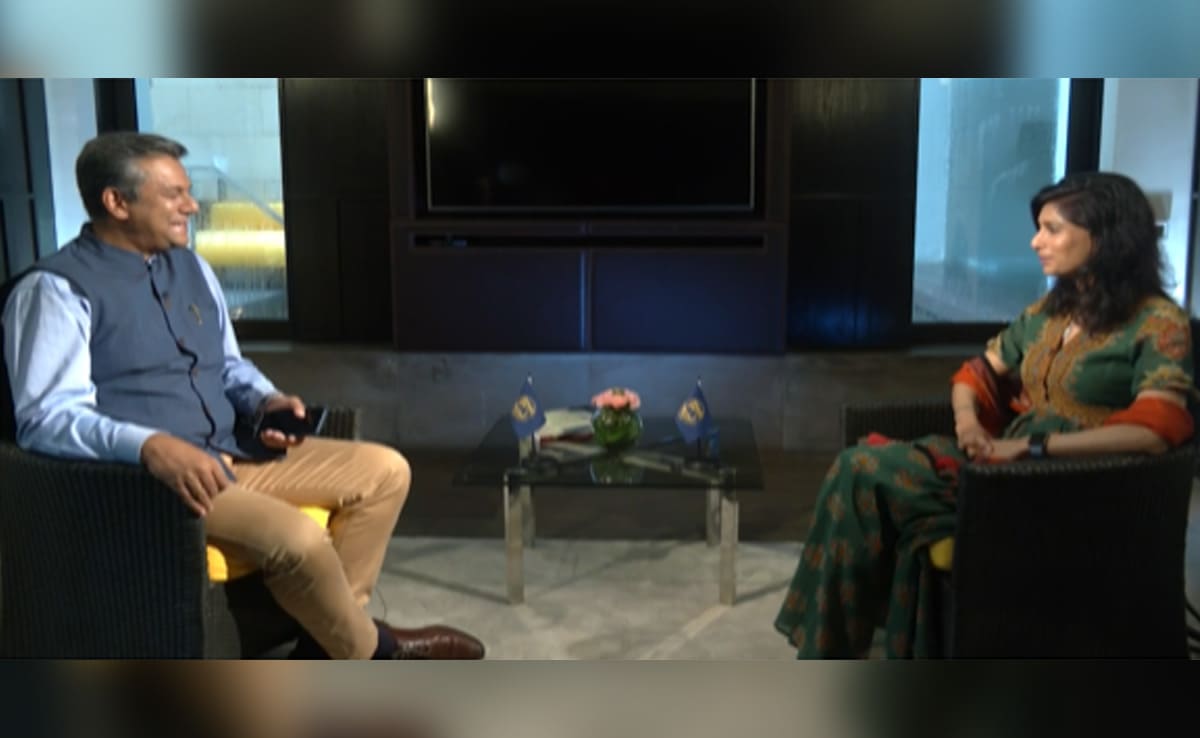
India will need a multi-pronged approach to create jobs instead of targeting only a few areas to add more workers, the International Monetary Fund (IMF) First Deputy Managing Director Gita Gopinath told NDTV today.

She said at least in India, any disruption caused by artificial intelligence (AI) in the jobs sector will have a lower impact as a majority of India’s workforce is in labour-intensive agriculture.

“India has done extremely well in headline growth numbers… It is the fastest-growing major economy in the world. If you look at the last decade, growth has averaged around 6.6 per cent. Certainly India’s growth has been much more capital intensive, but much less in hiring a lot more workers, in creating a lot more jobs,” Ms Gopinath told NDTV.

She gave a small list of to-dos in order to create more jobs in India.

“In the near-term, it is helpful to improve the ease of doing business. We see that in Gujarat and Tamil Nadu. Removing trade restrictions also plays a very important role. Public infrastructure investment is already happening, and more of that will absolutely help,” the key IMF officer said.

“But to make this a medium-long term growth story requires more investment in human capital and scaling up the workforce. You look at India’s workforce in terms of the number of years of education. It is much lower compared to its peers. So investing in raising the skill level of the country is going to be absolutely critical,” Ms Gopinath said.

She said creating jobs has to be a multi-pronged approach. “The numbers are large. It cannot be done by targeting a few areas. It’s going to require broad-based job creation,” she said.

On concerns over AI derailing India’s plans and policies to increase the number of jobs, the Indian-origin IMF officer said only 10 per cent of India’s workforce is at risk of displacement by AI.

“Since a majority of India’s workforce is in labour-intensive agriculture, the impact of AI is going to be lower. We assume 24 per cent (of India’s workforce) is exposed to AI, of which 10 per cent is at risk of displacement. This is a small number. The question is what are we going to see around the world?” Ms Gopinath said.

At the IMF, Mr Gopinath oversees the work of staff, represents the fund at multilateral forums, maintains high-level contacts with member governments and board members, the media, and other institutions, and leads the IMF’s work on surveillance and related policies, and oversees research and flagship publications.

She previously served as the Chief Economist of the IMF from 2019-22. In that role, she was the Economic Counsellor of the IMF and Director of its Research Department.

Read full article
Link copied!