Live · Global · Independent
Live Feeds
PinkVilla
Forbes
NDTV
Hindustan Times
Old Money teaser ft. Salman Khan and AP Dhillon is out now
onmynews.com

Old Money teaser ft. Salman Khan and AP Dhillon is out now

AP Dhillon, a name that resonates with fans of Punjabi music, has once again captured our attention. Best known for his hit tracks like Brown Munde, Excuses, and Summer High, Dhillon is ready to set the stage on fire with his latest project, Old Money. Joining the excitement is Bollywood superstar Salman Khan, who posted the teaser on his Instagram, creating buzz among fans.

Salman Khan shared the teaser of Old Money and captioned it as, “Old Money out on August 9th,” alongside a clip that has left fans eagerly awaiting the release. In response, AP Dhillon dropped goat emojis in the comments, symbolizing greatness and adding to the anticipation.

In a heartfelt Instagram note, AP Dhillon expressed what this project means to him. “I started out as an artist hoping to inspire the next generation and leave a legacy that really impacts our culture and community,” he wrote. Reflecting on his journey, he emphasized the importance of focusing on the music and the art rather than the accolades. He shared, “With God’s blessings, I got 2 of the biggest icons our world has ever seen to support me in accomplishing this goal.”

Dhillon’s motion poster for Old Money, captioned, “I know you didn’t see this one coming…,” has further fueled excitement. Known for his chart-topping hits and powerful performances, including a memorable appearance at the Coachella Valley Music and Arts Festival, AP Dhillon continues to push the boundaries of his musical journey.

Check out the teaser here:

Read full article
What Went Down At Sheikh Hasina’s Home Before She Fled Bangladesh
onmynews.com

What Went Down At Sheikh Hasina’s Home Before She Fled Bangladesh

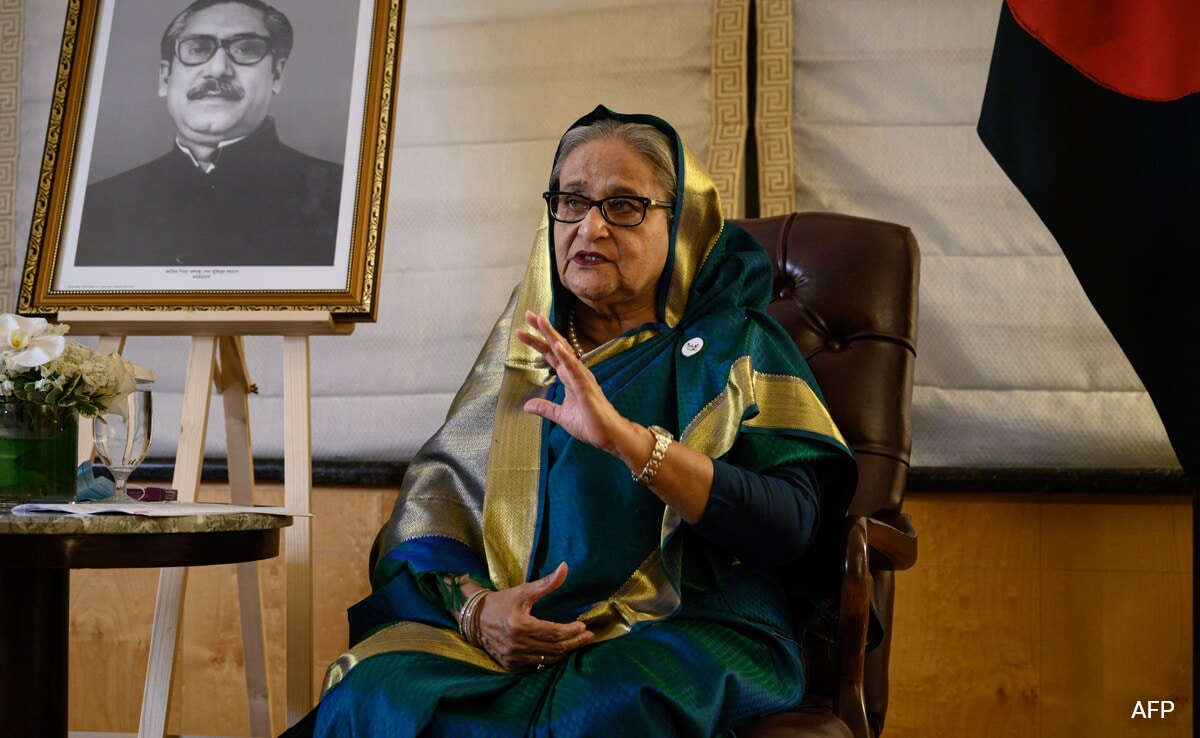
Sheikh Hasina did not want to resign as Bangladesh Prime Minister and wanted security forces to intensify the crackdown on nationwide protests, but security bosses said the protests cannot be contained by force, according to a report in Prothom Alo newspaper.

The report details what went down in the Prime Minister’s official residence before her last-minute escape in a military aircraft, shortly before hundreds of protesters stormed in and went on the rampage.

Morning Meet With Security Chiefs

According to the Prothom Alo report, the Awami League leader called the top officers of the security establishment and police force to her residence. The death count was rising, and some of her advisors had tried to talk her into transferring the power to the Army. But the 76-year-old five-time Prime Minister was adamant. She asked the forces to strengthen the curfew already in place. On the streets, however, the situation was changing fast. Despite the curfew, protesters had started gathering at various spots in Dhaka.

At her meeting with the security bosses, she questioned why they had not been able to contain the protests. She pointed to visuals of protesters climbing atop police vehicles and asked why the forces were not cracking down harder. At one point, she reminded them that they had been elevated to these positions because she trusted them.

During the meeting, Sheikh Hasina praised police’s response to the protests. But the police chief conveyed that the situation is such that police won’t be able to contain it for long.

Son Convinced Hasina To Leave

The security forces, the report says, tried to explain to her that more force is not the answer. But the veteran leader did not budge. Then the officers spoke to Sheikh Hasina’s sister Rehana in another room and urged her to convince the Prime Minister to step down. Rehana spoke to Hasina, but that did not help. At this point, Sheikh Hasina’s son Sajeeb Wazed Joy stepped in. Based in the US, Joy spoke to his mother and managed to convince her to resign.

Speaking to NDTV, Joy yesterday said his mother did not want to leave Bangladesh. “She wanted to stay, she did not want to leave the country at all. But we kept insisting that it wasn’t safe for her. We were concerned for her physical safety first; so we persuaded her to leave,” he said.

“I spoke to her this morning. The situation in Bangladesh, as you can see, is anarchy. She is in good spirits, but she is very disappointed. It’s very disheartening for her because it was her dream to turn Bangladesh into a developed country and she worked so hard for it over the last 15 years, keeping it safe from militants and as well as from terrorism and in spite of all of that this vocal minority, the opposition, the militants have now seized power,” he said.

The Speech That Was Not Recorded

The crowd of protesters was swelling, and intelligence inputs said Ganabhaban — the Prime Minister’s official residence — may be stormed. Sheikh Hasina was given 45 minute to pack up. She wanted to record one last speech addressing the people of the country, but there was no time. Accompanied by sister Rehana, she left hom. There was a short halt at Bangabhaban, the Bangladesh President’s official residence, where she completed the resignation formalities.

Around 2.30 pm, the ousted leader took off in a military aircraft, bringing the curtain down on her 15-year uninterrupted term. Her ouster and flight also represents a massive shift in Bangladesh politics. Fifty years after her father and Bangladesh’s tallest leader Sheikh Mujibur Rahaman led the struggle for the country’s independence, Ms Hasina was forced to flee as protesters vandalised her father’s statues. The legacy of Mujibur Rahman, fondly known as Bangabandhu, is no longer a symbol of Bangladesh’s war of liberation. Instead, it represents her daughter’s politics that protesters claim focused on suppressing dissent.

What Led To This

The protests in Bangladesh, which began last month, started as an agitation against a quota system under which 30 per cent of government jobs were reserved for family members of Muktijoddhas — those who fought in Bangladesh’s war of independence in 1971. The protesters said this system favours supporters of the ruling Awami League and wanted a merit-based system to replace it. As the protests grew, the Awami League dispensation tried to crush it with an iron fist. And then, a remark by Hasina sparked fury. “If not the grandchildren of the freedom fighters, then who will get quota benefits? The grandchildren of the ‘Razakars’?” she asked. A paramilitary force recruited by the Pakistan Army during the 1971 liberation war, Razakars carried out mass atrocities, including mass killings, rapes, and torture. Naturally, the remark touched a raw nerve.

Reservation has been a burning issue in Bangladesh for years now. In 2018, an agitation on this issue forced the government to water down the reservation system and cancelled quotas for some positions.

The latest unrest was sparked by a high court order that declared illegal the 2018 government circular cancelling 30 per cent quota for freedom fighters’ descendants in government jobs. This order was scrapped by the country’s Supreme Court. The Supreme Court ordered that 93 per cent of government jobs must be allocated on merit and the remaining be reserved for relatives of freedom fighters. But even the top court’s order could not pacify the protesters.

Read full article
Ex-PM, Nobel Winner, Student Leader: Key Faces In New Bangladesh Government
onmynews.com

Ex-PM, Nobel Winner, Student Leader: Key Faces In New Bangladesh Government

A new “interim government” – to be advised, most likely, by Nobel laureate Muhammad Yunus – is taking shape in crisis-hit Bangladesh following Sheikh Hasina resigning as Prime Minister.

Bangladesh President Mohammed Shahabuddin gave his assent late Monday for that temporary administration. A meeting was held at his residence that was attended by the chiefs of the country’s Army, Navy, and Air Force, as well as political party leaders and civil society members.

In speculation that has emerged (inevitably so) since Mrs Hasina quit, three key names are at the forefront, two of whom are the Army, which took charge after Mrs Hasina quit, and which may have given her a 45-minute ultimatum; and her nemesis and former Prime Minister Khaleda Zia, who was jailed in 2018 on corruption charges and whose release was ordered by the President.

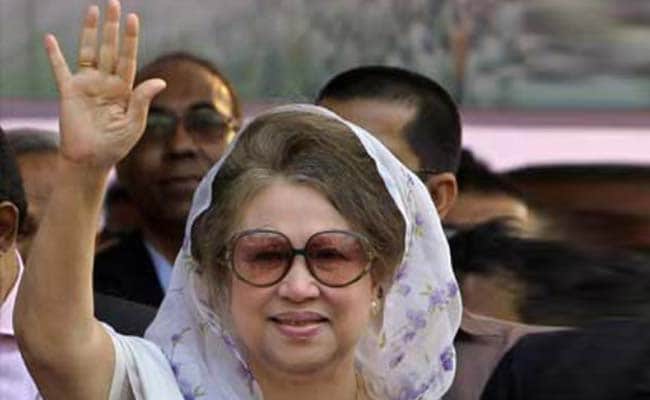
Who Is Khaleda Zia

In 1991 Mrs Zia, now 78 and unwell, became Bangladesh’s first woman Prime Minister.

She won a second term in 1996 but the elections were boycotted and denounced as unfair by the major opposition parties, including Sheikh Hasina’s Awami League. Her second term lasted 12 days; a caretaker government was installed and fresh elections were held, which Mrs Hasina won.

Mrs Zia returned to power five years later.

READ | Who Is Khaleda Zia, Jailed Ex-PM To Be Freed Amid Turmoil

In 2007 she was arrested on corruption charges. She was convicted and jailed in 2018, but multiple health concerns meant she has spent most of the time since in a hospital.

It is unclear if she will be well enough to assume the Prime Minister’s post, should she be selected.

The third is Mr Yunus, who won the Nobel Peace Prize in 2006 for founding the Grameen Bank, a microfinance organisation working towards community development in Bangladesh.

Mr Yunus is widely seen as protesting students’ pick – a bid to ensure the focus of their agitation does not get ignored as Sheikh Hasina’s rivals scramble to pick up power following her resignation.

Who Is Md Yunus

An economist with a PhD from Vanderbilt University – a private research institution in Tennessee in the United States – Mr Yunus taught there briefly before returning to Bangladesh to head the department at Chittagong University.

He set up the Grameen Bank in 1983. The bank provides tiny loans (as small as Rs 2,000) to women in rural Bangladesh to start small businesses. This helped millions lift themselves out of poverty, earning him the nickname ‘banker to the poor’. The model is now replicated in over 100 countries.

READ | Unstable Bangladesh Can Lead To “Volcanic Eruption”, Says Nobel Laureate

However, in June he was indicted on charges of corruption and embezzlement of 252.2 million taka (Rs 219.4 crore) from the workers’ welfare fund of his telecoms company, Grameen Telecom.

The 83-year-old has denied wrongdoing and claimed the charges are politically motivated. In January, he was also sentenced to six months in prison for labour law violations but secured bail.

READ | Who Is Md Yunus, Possible Advisor Of Interim Bangladesh Government

Also in the fray is Tariq Rahman, the exiled Chairperson of Mrs Zia’s Bangladesh Nationalist Party.

As in the case of Khaleda Zia, there is no formal confirmation Mr Rahman will be party of any new government, but there is strong speculation to suggest Mrs Zia and her BNP could make a return.

Mr Rahman is widely expected to return to Bangladesh, at least according to news agency ANI, which quoted BNP Secretary General Mirza Fakhrul Islam Alamgir to that effect.

A potential fifth figure is Nahid Islam, a Dhaka University student seen as the protest leader.

Who Is Nahid Islam

Mr Islam, a Sociology student, served as a National Coordinator for the ‘Students Against Discrimination’ Movement, which demanded reforms to the quota system for government jobs.

In the flurry of announcements and statements made last night Mr Islam claimed an outline for the interim government would be revealed within 24 hours.

Mr Nahid has been vocal against Sheikh Hasina’s party, calling them “terrorists” on the roads.

In July he was abducted by at least 25 men in plain clothes from a house in Sabujbagh.

READ | Who Is Nahid Islam, Student Leader Of Protests Against Sheikh Hasina

He was blindfolded, handcuffed and tortured during repeated interrogations about his involvement in the protests. Two days later, he was found unconscious and battered under a bridge in Purbachal.

He was kidnapped a second time a week later by individuals claiming to be from intelligence agencies, including the Dhaka Metropolitan Police’s Detective Branch. But the police denied involvement. 

Sheikh Hasina Resignation

Mrs Hasina, 76, a five-time PM and daughter of the country’s founding father, Sheikh Mujibur Rahman – quit and fled Dhaka Monday evening after weeks of violent protests over a government jobs quota.

Shortly after Ms Hasina resigned, Army chief General Waker-Uz-Zaman said the military will form an “interim government” and urged to protesters to stand down.

Over 400 people have died in clashes between authorities and mobs for and against the scheme assuring 30 per cent quota to family members of Bangladesh’s 1971 war with Pakistan.

The protests that have roiled Bangladesh were sparked by Mrs Hasina’s government announcing a 30 per cent quota for family members of her country’s 1971 war of independence against Pakistan.

READ | India’s Diplomatic Problem In Dhaka Power Shift, Sheikh Hasina’s Ouster

The students’ movement gathered pace after the Bangladesh Supreme Court reinstated the quota, after first slashing it to five per cent. The students have alleged the quota is discriminatory.

Mrs Hasina left Dhaka in a military aircraft and flew to India’s Hindon Air Force Base in Uttar Pradesh’s Ghaziabad; she is expected to fly to London to claim political asylum.

Mrs Hasina was met on arrival by National Security Advisor Ajit Doval. There is no word yet if Prime Minister Narendra Modi will meet her.

READ | “Want To Give Her Time,” S Jaishankar Told MPs On Sheikh Hasina: Sources

Mr Modi has been briefed and External Affairs Minister S Jaishankar today chaired an all-party meeting to discuss the Bangladesh issue. He briefed all parties about steps being taken by the government to address potential security, economic, and diplomatic repercussions.

India’s Border Security Force is on high alert across the country’s 4,096 km border with Bangladesh, with field commanders ordered to take “on ground” positions and be prepared for anything. Indian Railways and the country’s airlines have temporarily stopped services to Bangladesh.

NDTV is now available on WhatsApp channels. Click on the link to get all the latest updates from NDTV on your chat.

Read full article
Link copied!