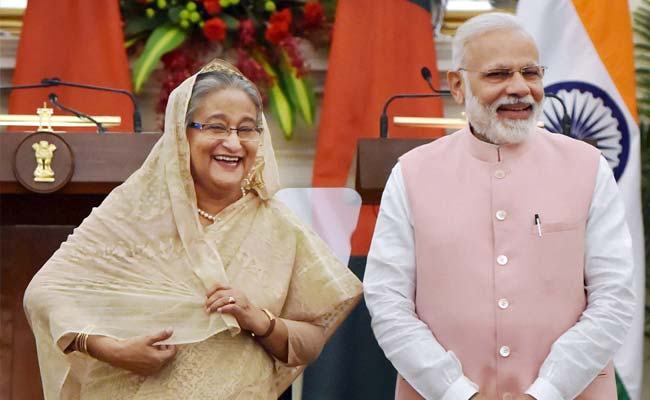
The shocking turn of events leading to Sheikh Hasina’s ouster as Bangladesh Prime Minister has put India in an extremely tricky situation. Prime Minister Narendra Modi chaired a meeting of the Cabinet Committee on Security last night to discuss the Bangladesh situation that has immense strategic ramifications for New Delhi. The Centre is yet to publicly state how it plans to navigate this neighbourhood crisis and External Affairs Minister S Jaishankar will brief MPs at an all-party meeting soon. Here’s why the Bangladesh situation is a tightrope for India
Sheikh Hasina Is In India
After her escape from Dhaka in turmoil, Ms Hasina landed at the Hindon airbase in Delhi and is likely to fly to the UK today to seek political asylum. However, there is no confirmation on whether the UK has offered asylum to her, so it is not clear what happens if the UK does not give her a green signal. In its response to the Bangladesh situation, London has only called for a UN-led probe but has not touched upon the asylum issue. The question then is will Ms Hasina then stay in India or seek another destination. India now faces a diplomatic dilemma and does not want to be seen as overtly backing the ousted leader because that may complicate its relationship with the new dispensation in Bangladesh. Also important is the history of Sheikh Hasina’s relationship with India. Long before she became Prime Minister, the Indira Gandhi government had given her refuge after her whole family, including father Mujibur Rahaman, was assassinated during the 1975 unrest in Bangladesh. So abandoning her at this point will also not be an easy decision, considering her equations with Delhi.
A Friend Loses Power
In Sheikh Hasina, New Delhi had a friend in Bangladesh, and her uninterrupted tenure since 2009 saw a major boost in New Delhi-Dhaka ties. From road and rail connectivity to border management to defence cooperation, the ties between India and Bangladesh strengthened during this time. When protests against Ms Hasina gathered steam in Bangladesh, India’s response was that it is an “internal matter”. With the 76-year-old leader now ousted, India must now build bridges with the new Dhaka dispensation. Bangladesh Army chief Waker-uz-Zaman yesterday said an interim government will be formed to run the affairs of the country. It is not clear what role the Bangladesh Nationalist Party and the Jamaat-e-Islami, who backed the protests in Bangladesh, will play in the new government. Both these parties are no friends of India. The term of BNP chief Khaleda Zia was a rocky phase in Delhi-Dhaka ties. Khaleda Zia, who was freed from prison after Sheikh Hasina’s ouster, has in the past used her anti-India stance as an election plank and pressed that New Delhi has been interfering in Bangladesh’s internal politics. The Jamaat on the other hand has close links with Pakistan, and India would be closely watching the developments in Dhaka.
Fear Of Refugee Influx
A big concern for India amid reports of violence against minorities in Bangladesh is a large-scale influx of refugees fleeing atrocities. India and Bangladesh share a 4,096-km border that is very porous. Influx of Bangladesh refugees has been a key issue in India, especially in the Northeast and West Bengal.
Following yesterday’s developments in Bangladesh, the Border Security Force (BSF) has issued a high alert across the international border. Pradyot Kishore Manikya Debbarma, leader of Tripura’s Tipra Motha, has said that he had spoken to Union Home Minister Amit Shah and has been assured that no infiltration would be allowed.
A Disturbed Neighbourhood
A big challenge staring India in the face is the geopolitical ramifications of the Dhaka turmoil. With Bangladesh slipping out of the control of Awami League, India is watching who takes over. Jamaat-e-Islami and BNP may be more aligned to China, and Beijing would leave no opportunity to fish in troubled waters. This is not good news for India’s strategic outlook in the region. The past few years have seen unrest in India’s neighbourhood, whether it is Sri Lanka or Myanmar or Afghanistan and now Bangladesh. China and Pakistan have formed a bloc and new dispensation in some countries, the Maldives for example, have suggested that they are aligned more to this bloc than to New Delhi. In Afghanistan, the Taliban’s return scuttled India’s strong ties with the earlier government. Amid this, the boost in diplomatic relations with Dhaka was a silver lining, but that changed yesterday and India must now return to the drawing board to navigate this new crisis.