Live · Global · Independent
Live Feeds
PinkVilla
Forbes
NDTV
Hindustan Times
Complaint filed against Major Ravi for wearing his military uniform while visiting landslide-affected areas in Wayanad
onmynews.com

Complaint filed against Major Ravi for wearing his military uniform while visiting landslide-affected areas in Wayanad

A complaint has been filed against Major Ravi, a movie director and former army officer, for wearing his military uniform while visiting the landslide-affected areas in Wayanad, Kerala. The complaint alleges that this act violates military regulations, which prohibit the use of military uniforms for non-official purposes or in contexts that could be seen as exploiting military status for personal gain or publicity.

Major Ravi, who is known for his work in the film industry, was present in Wayanad to assess the situation following devastating landslides that have resulted in significant loss of life and property. The complaint was lodged by a local resident, citing concerns that his appearance in uniform could mislead the public regarding the official military presence in the area and may undermine the dignity of the armed forces, as per media reports.

Meanwhile, actor Mohanlal, who holds the rank of Lieutenant Colonel in the Indian Territorial Army, also visited the landslide-affected areas of Wayanad, Kerala on August 3. Accompanied by Major Ravi, Mohanlal aimed to assess the damage and offer support to the victims of the disaster that occurred on July 30, which resulted in significant loss of life and property.

Check out the post here:

During his visit, Mohanlal, dressed in his military uniform, pledged Rs. 3 crore through his NGO, the Vishwashanthi Foundation, for rehabilitation efforts in the region. He expressed deep concern over the devastation, stating that the scale of destruction could only be understood through first-hand observation. Mohanlal highlighted the commendable work done by the army and various rescue organizations, acknowledging their efforts in the challenging circumstances.

Major Ravi, who accompanied Mohanlal, also committed to the reconstruction of a local school that was severely damaged in the landslides. However, the visit was not without controversy as Major Ravi also faced criticism for taking a selfie during the visit, which some netizens deemed inappropriate given the tragic context of the situation.

ALSO READ: Mohanlal pays visit to victims of Wayanad landslide; promises initial help of 3 crore for rehabilitation

Read full article
Abraham Alliance vs Axis Of Resistance: Players In Israel-Iran Shadow War
onmynews.com

Abraham Alliance vs Axis Of Resistance: Players In Israel-Iran Shadow War

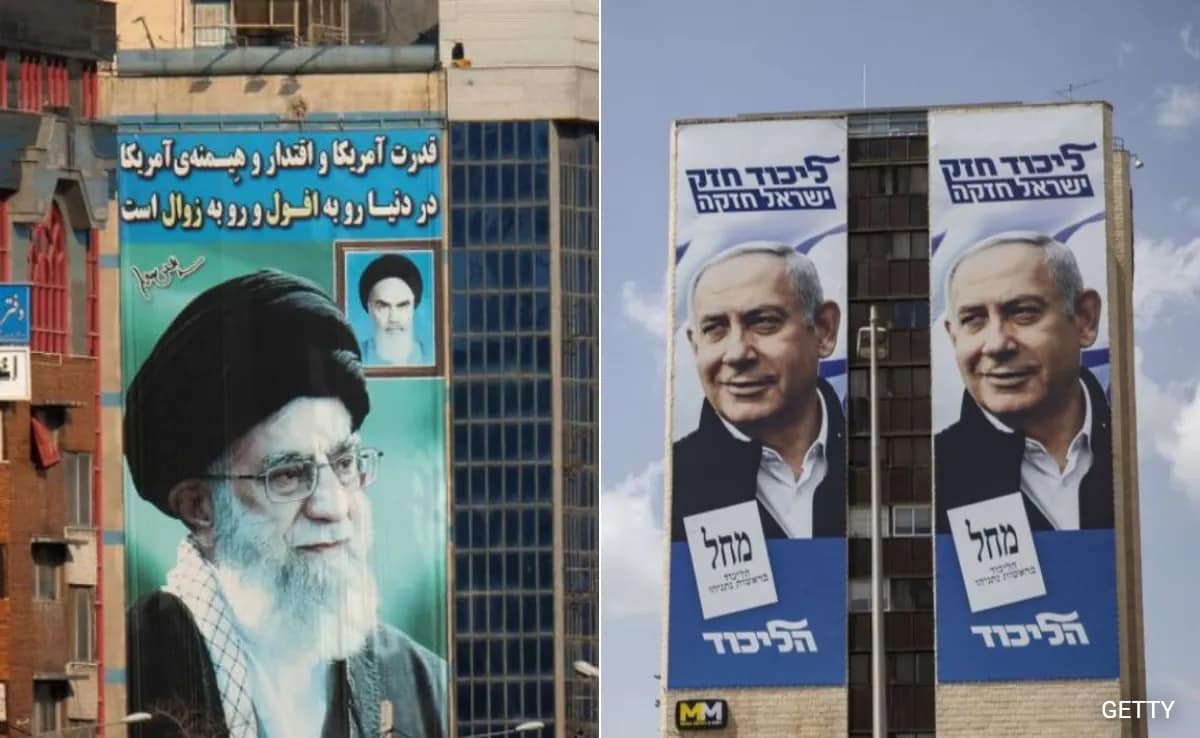
In a speech to the United States Congress last month, Israel’s Prime Minister Benjamin Netanyahu envisioned a new regional coalition in the Middle East, termed the “Abraham Alliance“. This proposed alliance, an expansion of the Abraham Accords, aims to unite countries with diplomatic ties to Israel against Iran’s influence, particularly its network of proxy forces collectively known as the “Axis of Resistance“.

The Abraham Alliance

The Abraham Accords, initiated in September 2020, normalised relations between Israel and several Arab nations, including the United Arab Emirates (UAE), Bahrain, Morocco, and Sudan. Netanyahu’s vision for the Abraham Alliance builds on these accords, seeking a coalition that could include current and future diplomatic partners of Israel. This alliance aims to counteract what Netanyahu describes as “Iran’s terror”.

Netanyahu’s appeal to Congress echoed historical parallels, drawing on Winston Churchill’s wartime plea to the US: “Give us the tools, and we’ll finish the job.” He said US military aid to Israel was essential for regional stability and security.

As the political fallout from the killing of Palestinian armed group Hamas’s leader Ismail Haniyeh’s killing in Tehran escalates, the United States has pledged to bolster its military presence in the Middle East, deploying an aircraft carrier strike group led by the USS Abraham Lincoln, additional ballistic missile defense-capable ships, and a new fighter squadron. 

Israel is coordinating closely with both the US and the United Kingdom, preparing for a potential retaliatory strike from Iran. Israeli Defence Minister Yoav Gallant has held discussions with his US counterpart Lloyd Austin and British Defence Secretary John Healey.

A potential war between Israel and Iran would pit several military powers against each other. 

The Axis of Resistance: Iran’s Network of Proxies

Since the Islamic Revolution of 1979, Iran has systematically extended its influence across the Middle East through a network of proxy groups, collectively known as the Axis of Resistance. This network includes Hezbollah in Lebanon, the Houthis in Yemen, various militias in Iraq, and militant groups in Syria and Gaza. These proxies serve Iran’s strategic interests, allowing it to exert influence and challenge adversaries across the region.

Lebanon: Hezbollah

Hezbollah, established in the early 1980s with Iranian support, represents Iran’s first significant proxy in the Middle East. Funded and armed by the Islamic Revolutionary Guard Corps (IRGC), Hezbollah shares Tehran’s Shiite Islamist ideology and recruits primarily from Lebanon’s Shiite Muslim population. Originally formed to combat Israeli forces in Lebanon, Hezbollah has evolved into a formidable military and political force, possessing an arsenal of at least 130,000 rockets and missiles.

Gaza: Hamas and Palestinian Islamic Jihad

In the Palestinian territories, Iran has cultivated relationships with militant groups such as Hamas and the Palestinian Islamic Jihad (PIJ). These groups have engaged in longstanding conflicts with Israel, receiving financial and military support from Iran.

Syria: The Assad Regime

Iran’s alliance with the Bashar al-Assad regime in Syria has been crucial since the onset of the Syrian civil war in 2011. Tehran has provided substantial military support, including approximately 80,000 fighting personnel, to bolster Assad’s forces. Additionally, Iran has organised and supported various Shiite militias, such as the Zaynabiyoun Brigade (comprising Pakistani fighters) and the Fatemiyoun Division (consisting of Afghan Hazara fighters), to support the Syrian government.

Yemen: The Houthis

The Houthi movement in Yemen, supported by Iran, has emerged as a key player in the regional conflict. Originally formed in the 1990s and gaining strength after 2014, the Houthis have received military and financial backing from the IRGC.

Iraq: Shiite Militias

Following the US invasion of Iraq in 2003, Iran expanded its influence by establishing and supporting various Shiite militias. Notable groups include Kataib Hezbollah, Asaib Ahl al-Haq, and the Badr Organisation. These militias have often targeted US forces and maintain close ties with Tehran.

Read full article
Ex-cop Sachin Waze’s charges against MVA netas spark Maharashtra poll slugfest
onmynews.com

Ex-cop Sachin Waze’s charges against MVA netas spark Maharashtra poll slugfest

The revelations by Waze, currently in jail in a murder case, triggered a fresh war of words between BJP & NCP(SP).

Read full article
Link copied!