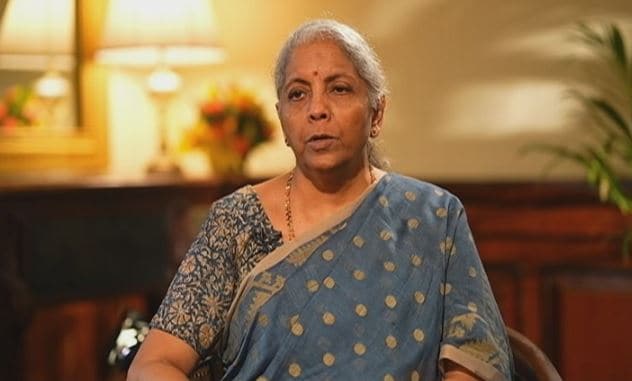
For a growing economy to meet its needs and aspirations, borrowing is a must, but the focus of the finance ministry under her is to ensure that debt is reduced without affecting growth, Nirmala Sitharaman has told NDTV.
In an exclusive interview with NDTV’s Editor-In-Chief Sanjay Pugalia on Friday, Ms Sitharaman said fixing a number for the eventual fiscal deficit and working towards it with temporary solutions every year can be one way of going about things, but it is not the right way from a macroeconomic perspective.
Ms Sitharaman, who became the first finance minister in India’s history to present seven Union Budgets in a row this year, said, “We have chosen a healthy option for getting the fiscal deficit closer to the number. Instead of looking at the number alone, it is also about the way you decide to get there. An obvious method for every country is to reduce debt, but borrowing is a must for a growing economy. The question is how much are you borrowing and where it is being used.”
“Are you using it for asset creation or to service or reduce the existing debt? If the growth in the debt is to be reduced, borrowing more to do this is not the right thing. So you borrow and create assets. We have studied the NK Singh Committee report (on fiscal responsibility), held discussions and decided that we won’t look at the number alone but choose the right path to reduce debt without affecting your growth, desires and aspirations,” she explained.
Addressing other aspects of the Budget, the finance minister also said that its communication has become much simpler and the document now speaks for itself without needing an intermediary or expert to explain it.
“Each budget is a challenge for its contents but equally it is a challenge to craft the language of the budget. It has been a desire of the Prime Minister that the budget should be simple, you convey it simply and the language should be simple so that anyone can understand what you are saying. The other feature he has been clear about from the beginning is that the budget should say everything, without hiding anything,” Ms Sitharaman said.
“We try to fine-tune it each time so that ultimately it should be a simple document. In my childhood, I remember the budget document was so complex, people would study and analyse it and simplify it… From those days to, I think, today the budget speaks for itself,” she added.
To a question on one of the key criticisms of the Budget, with the opposition claiming that many states have been ignored while Andra Pradesh and Bihar – ruled by BJP allies crucial in getting the NDA to a majority – have been in focus, Ms Sitharaman said that has not been the case.
“States are receiving allocations as they have in the past… no state has been denied anything. The Act (Andhra Pradesh Reorganisation Act) requires the centre to support (the state) in building its capital city and developing backward regions,” she said.