Live · Global · Independent
Live Feeds
PinkVilla
Forbes
NDTV
Hindustan Times
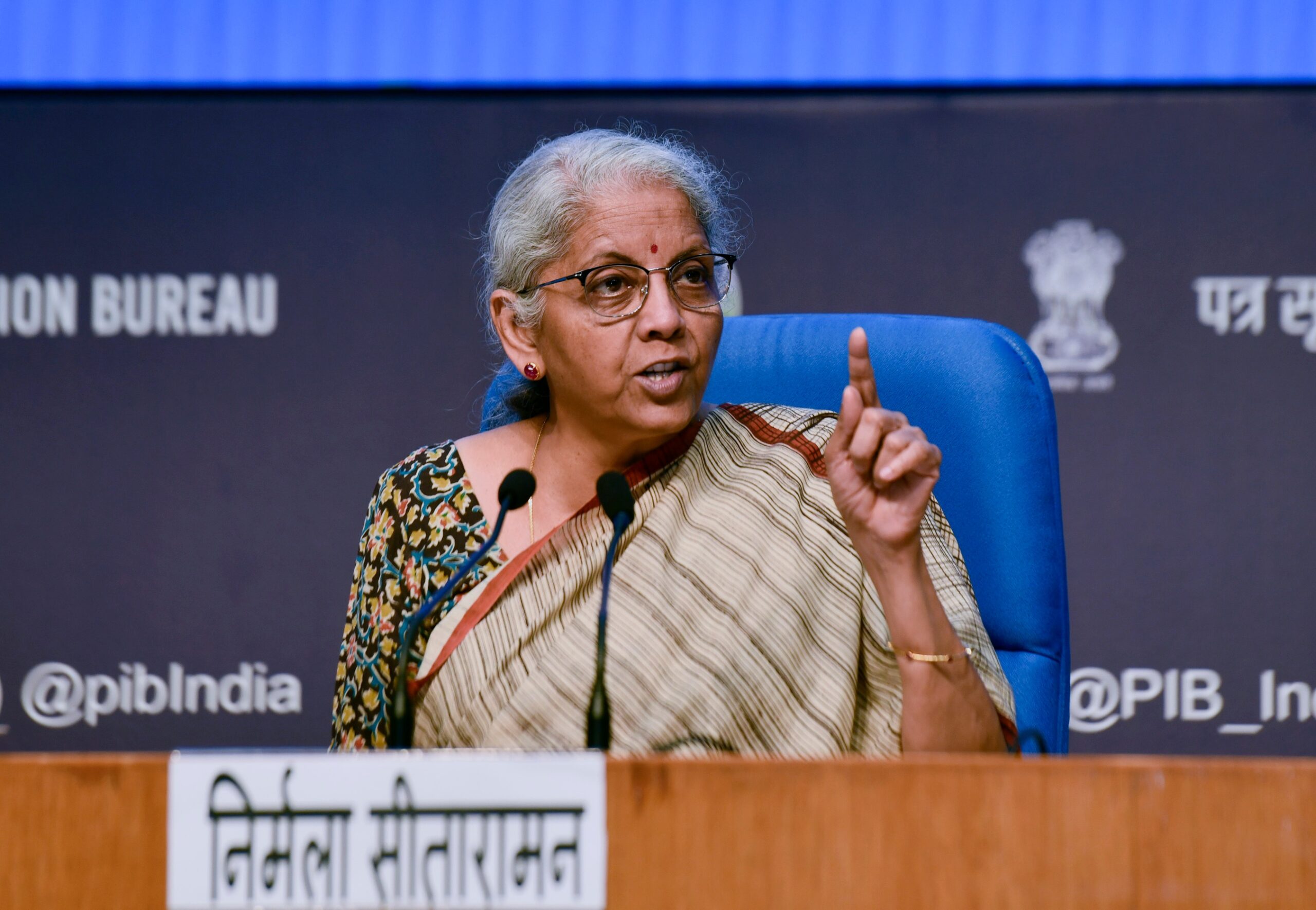
Modi 3.0’s First Budget: Will Nirmala Sitharaman Announce Tax Changes?
onmynews.com

Modi 3.0’s First Budget: Will Nirmala Sitharaman Announce Tax Changes?

Ms Sitharaman, in her seventh Union Budget presentation, is likely to give tax incentives for new manufacturing facilities and encourage local procurement across sectors to create jobs.
Discontent over job opportunities was seen as a key reason for Prime Minister Narendra Modi’s party, the BJP, failing to win a majority on its own in the general elections, and returning to power only with the support of allies.
Whether Ms Sitharaman will announce tax relief for the middle class will be the most anticipated part in her Budget speech. The middle class got nothing in the pre-election interim Budget, and so their expectations are high.
The budgeted fiscal deficit is 4.5 per cent, against 5.8 per cent in the last fiscal. The full Budget is expected to provide better-than-earlier fiscal deficit projections. Fiscal deficit is the difference between the government’s expenditure and income.
The Modi government has put a lot of focus on developing infrastructure. The government’s planned capital expenditure (capex) is at Rs 11.1 lakh crore, higher than Rs 9.5 lakh crore in the last fiscal . The government has been pushing infrastructure creation and also incentivising states to step up capex.
Ms Sitharaman has indicated she would announce steps to boost micro, small and medium enterprises (MSMEs) which form a chunk of the country’s growth engine. MSMEs have room for growth in defence, electronics, and electric vehicle (EV) manufacturing.
The Union Budget 2024 is likely to be passed on July 30. Opposition leaders, in their discussions on what issues to raise, have decided to corner the government on price rise, unemployment, lack of growth in key sectors, and agrarian distress, sources said.
Congress party chief Mallikarjun Kharge has called the Economic Survey an exercise in cherry-picking. “…Your government has crushed the aspirations of 140 crore Indians in 10 years. The Economic Survey is like a shiny hollow envelope to gloss over the failures of the Modi government,” he posted on X.
PM Modi had said the Economic Survey highlighted the strengths of the Indian economy and showcased the outcomes of his government’s reforms. “It also identifies areas for further growth and progress as we move towards building a Viksit Bharat,” PM Modi said.
India is slated to have one of the strongest-growing economies in the Asia-Pacific region in 2024 and 2025. This is primarily due to government spending, rather than domestic consumption or exports.
Read full article
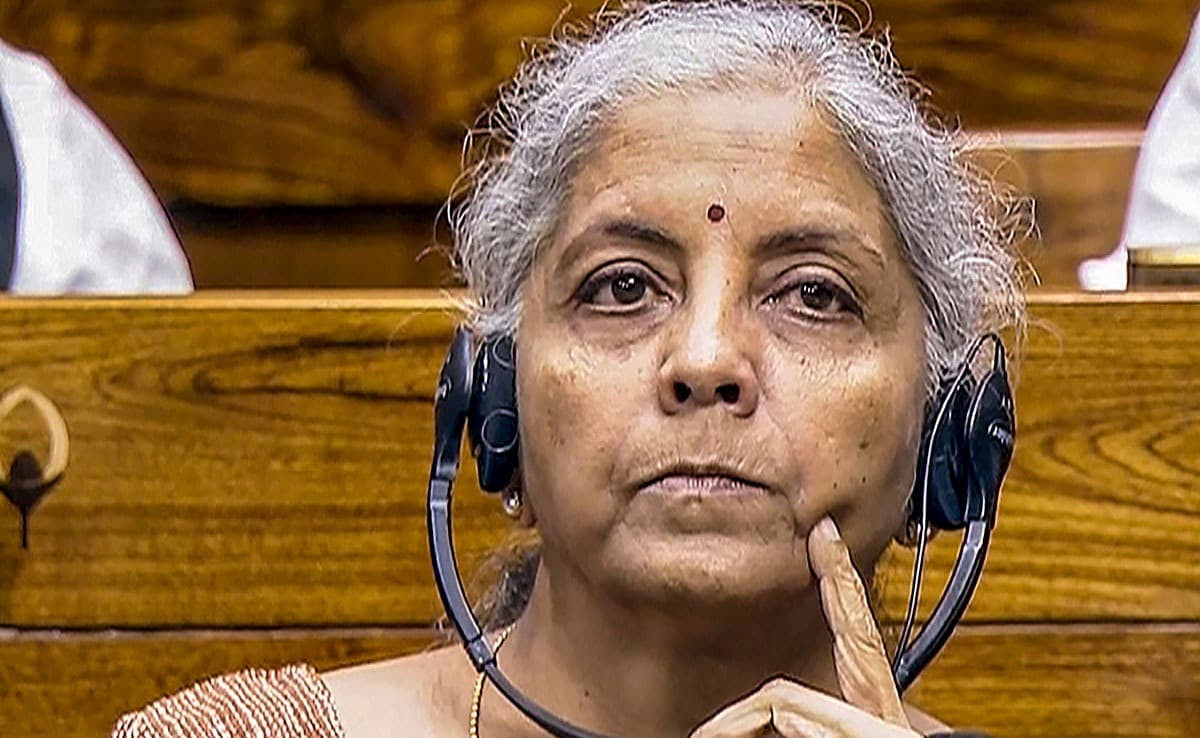
Key Numbers To Watch Out For In Nirmala Sitharaman’s 7th Straight Budget
onmynews.com

Key Numbers To Watch Out For In Nirmala Sitharaman’s 7th Straight Budget

Finance Minister Nirmala Sitharaman will on Tuesday present her 7th straight Budget that would lay a roadmap for Viksit Bharat (developed India) by 2047 while giving a glimpse of 10 years’ performance.

All eyes will be on whether Sitharaman provides the much-expected tax relief for the middle class, leaving more money in their hands, as there is tax buoyancy. Besides, the market also expects staying on the fiscal glide path to lower the fiscal deficit to 4.5 per cent of GDP by 2025-26.

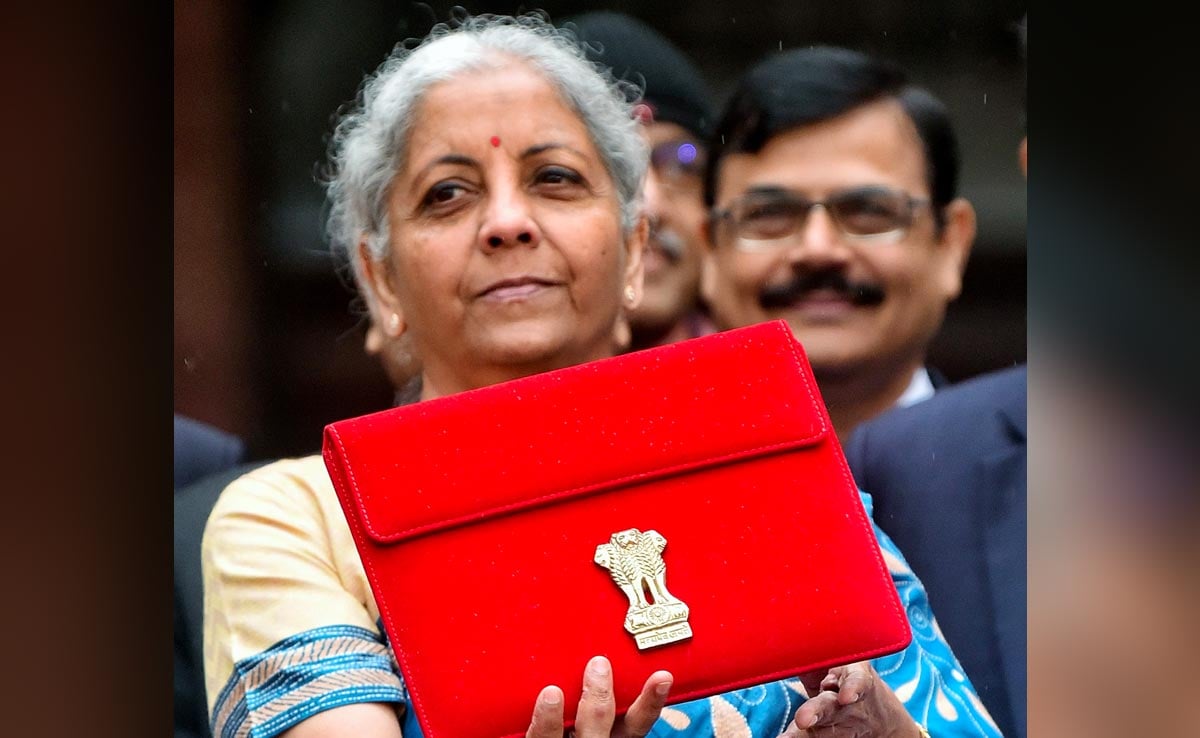
Ms Sitharaman, who would be presenting her seventh straight budget, had in her first Budget in 2019 replaced the leather briefcase — which had been in use for decades for carrying Budget documents — with a traditional ‘bahi-khata’ wrapped in red cloth. This year’s Budget would be in paperless form, as done in the last three years.

Here are the key numbers to watch out for the first full Budget of Modi 3.0:

* Fiscal Deficit: The budgeted fiscal deficit, which is the difference between the government expenditure and income, for the current fiscal is 5.1 per cent as projected in the Interim Budget in February, against 5.8 per cent in the last fiscal year. The full Budget is expected to provide better-than-earlier projections as there has been tax buoyancy.

The government has projected a fiscal deficit of 4.5 per cent of the GDP in FY26.

* Capital Expenditure: The government’s planned capital expenditure for this fiscal year is budgeted at Rs 11.1 lakh crore, higher than Rs 9.5 lakh crore in the last fiscal year. The government has been pushing infrastructure creation and also incentivising states to step up capex.

* Tax Revenue: The Interim Budget had pegged gross tax revenue at Rs 38.31 lakh crore for 2024-25, an 11.46 per cent growth over the last fiscal. This includes Rs 21.99 lakh crore estimated to come from direct taxes (personal income tax + corporate tax), and Rs 16.22 lakh crore from indirect taxes (customs + excise duty + GST).

* GST: Goods and Services Tax (GST) collection in 2024-25 is estimated to rise to Rs 10.68 lakh crore, an increase of 11.6 per cent. The tax revenue figures will have to be watched out for in the final Budget for the 2024-25 fiscal year.

* Borrowing: The government’s gross borrowing Budget was Rs 14.13 lakh crore in the current financial year as per the Interim Budget. The government borrows from the market to fund its fiscal deficit. The borrowing number will be watched by the market, especially on the back of more-than-expected dividends from the RBI and financial institutions.

* Nominal GDP: India’s nominal GDP growth (real GDP plus inflation) in the current fiscal year is estimated to be 10.5 per cent to Rs 327.7 trillion as per the Interim Budget. Given the expected normal monsoon, improvement in revenue collections and pick up in rural consumption, is expected that there could be an upward revision in the growth estimate. Real GDP growth in the current fiscal is projected at 7.2 per cent, as per the RBI.

* Dividend: The interim Budget had projected Rs 1.02 lakh crore from RBI and financial institutions. This will be revised upwards as the RBI has already made a surplus transfer of Rs 2.11 lakh crore earlier in May.

At the same time, Rs 43,000 crore is expected to be garnered from CPSEs.

* Spotlight would also be on spending on key schemes, like NREGA, as well as key sectors like health and education.

(Except for the headline, this story has not been edited by NDTV staff and is published from a syndicated feed.)

Read full article
5 Landmark Budgets That Shaped India’s Economy: A History
onmynews.com

5 Landmark Budgets That Shaped India’s Economy: A History

Finance Minister Nirmala Sitharaman will present the Union Budget 2024 on July 23 at 11 am in the Lok Sabha. The budget session will commence on July 22 and continue until August 12, 2024.

The Union Budget has a rich history, dating back to 1947 when RK Shanmukham Chetty presented the first budget of independent India. Since then, the country has seen several landmark budgets that have transformed the country’s economy.

5 Landmark Budgets of India

1957-58

TT Krishnamachari’s Budget for 1957-58 introduced groundbreaking tax reforms, including wealth tax. This tax was levied on the total value of personal assets, marking a significant shift in India’s tax policy. The wealth tax remained a part of the Indian tax system in various forms until it was abolished in 2015.

1991-92

The Union Budget of 1991 presented by Manmohan Singh aimed to address the severe economic crisis facing the country. Mr Singh, an economist, leveraged his expertise to reform India’s economy. He drew upon his experience as Chairman of the Planning Commission and Chief Economic Advisor to revamp the import-export policy.

Mr Singh’s budget slashed customs duty from 220 per cent to 150 per cent, making Indian trade more globally competitive. He, under Prime Minister PV Narasimha Rao’s government, also introduced groundbreaking liberal policies, reducing government control and promoting economic freedom.

This landmark budget had a profound impact, improved India’s reputation worldwide and ended the “Licence Raj”. This budget also attracted foreign investment, boosted economic confidence, and paved the way for India to become a major economic power.

1997-98

P Chidambaram, who worked under Manmohan Singh in the Narasimha Rao cabinet, showcased his economic and financial expertise in his Budget presentation of 1997 when he was the Finance Minister.

The Budget, labelled the “Dream Budget” by experts, was significant for reducing personal income tax and corporate tax. P Chidambaram introduced significant cuts in both personal and corporate taxes, reducing the highest personal income tax rate from 40 per cent to 30 per cent. This move, grouped with the elimination of surcharges and reduced royalty rates, provided significant relief to taxpayers and is considered as one of India’s finest Budgets.

2000-01

Yashwant Sinha delivered a landmark Budget under Atal Bihari Vajpayee’s regime. Sinha’s Budget revolutionised the IT sector by lowering customs duty on 21 items, including computers. This led to a boom in the industry, making India a hub for IT growth.

2016-17

Arun Jaitley’s Budget in 2017-18 marked a historic shift by merging the Union Budget and Railway Budget presentations, ending a longstanding tradition of 92 years. As Finance Minister, Arun Jaitley streamlined the process, presenting a unified budget, which has since become the standard practice.

Read full article
…
Link copied!