Emergency Flashpoint: ‘Samvidhaan Hatya Diwas’ On June 25, Says Amit Shah
Keeping up its attack on the Congress over the Emergency, the government announced on Friday that June 25 will be observed every year as ‘Samvidhaan Hatya Diwas’, which loosely translates to ‘Constitution killing day’.
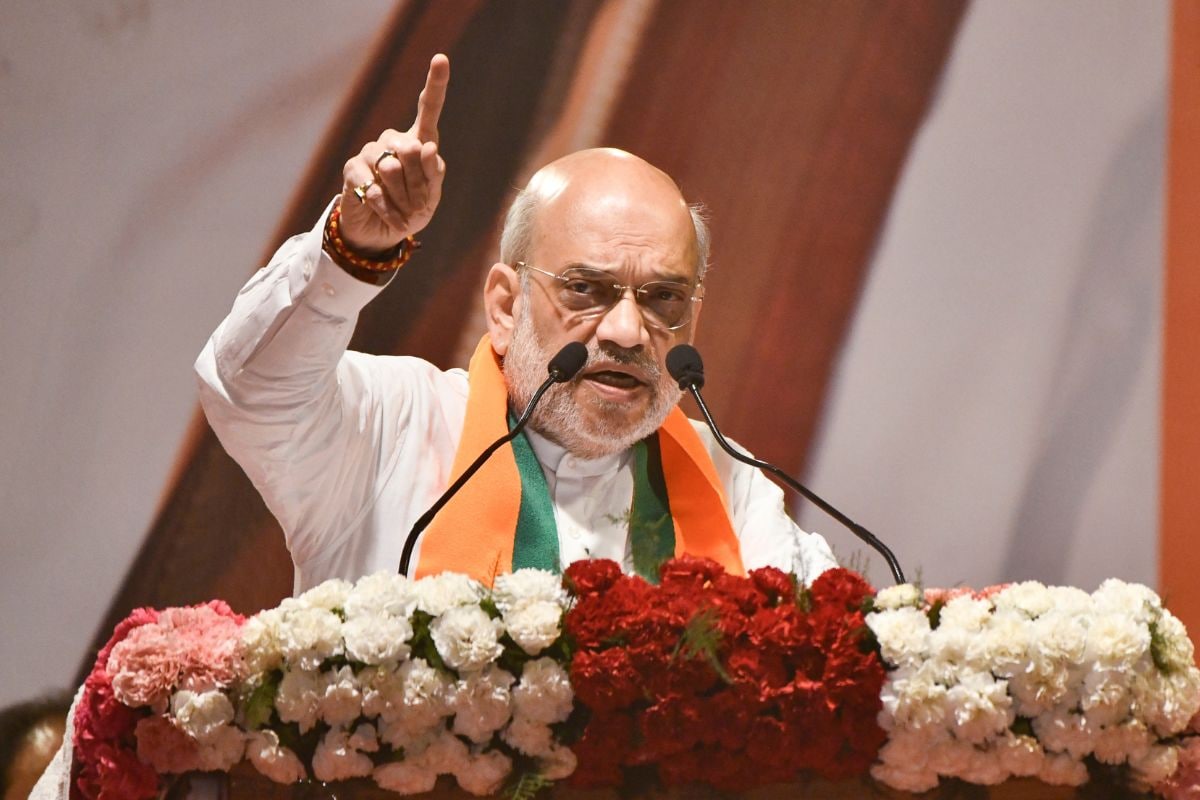
Making the announcement on X, Home Minister Amit Shah posted a gazette notification and wrote, “On June 25, 1975, the then PM Indira Gandhi, in a brazen display of a dictatorial mindset, strangled the soul of our democracy by imposing the Emergency on the nation. Lakhs of people were thrown behind bars for no fault of their own, and the voice of the media was silenced.”
“The Government of India has decided to observe the 25th of June every year as ‘Samvidhaan Hatya Diwas.’ This day will commemorate the massive contributions of all those who endured the inhuman pains of the 1975 Emergency,” he added.
PM Narendra Modi also posted on X and said the day will serve as a reminder of the Constitution being trampled over.
“To observe 25th June as #SamvidhaanHatyaDiwas will serve as a reminder of what happens when the Constitution of India was trampled over. It is also a day to pay homage to each and every person who suffered due to the excesses of the Emergency, a Congress unleashed dark phase of Indian history,” the PM wrote.
The Congress has hit back and accused the BJP of indulging in “yet another headline grabbing exercise in hypocrisy”.
‘400 Paar’ And Congress Claims
Throughout Narendra Modi’s tenure as Prime Minister, the Congress and other opposition parties have accused the BJP and the Central government of violating the Constitution as well as weakening constitutional institutions, including the election commission and the judiciary.
They got more ammunition when, in the months leading up to the 2024 Lok Sabha elections, Karnataka BJP MP Anantkumar Hegde and the party’s Meerut candidate Arun Govil, among others, said that the NDA had set itself a target of winning 400 seats because it wanted to amend the Constitution.
The opposition, which had come together under the INDIA umbrella, seized on the opportunity to claim that the BJP wanted to end reservation and “dismantle” the Constitution. Congress leader Rahul Gandhi and others also began carrying a copy of the foundational document and stated repeatedly that the INDIA alliance was fighting to protect the Constitution.
As the INDIA narrative began to gain traction, the BJP and the government went into damage control mode, claiming that the opposition was spreading lies. The issue did, however, work to the INDIA alliance’s favour in several states and played a role in limiting the BJP to 240 Lok Sabha seats and the NDA to 293.
Counter Attack
Going on the offensive, the BJP repeatedly brought up the Emergency to claim that it was the Congress that had violated the Constitution, and not the other way around.
On June 25 this year, PM Modi led the attack, posting on X, “Today is a day to pay homage to all those great men and women who resisted the Emergency. The #DarkDaysOfEmergency remind us of how the Congress Party subverted basic freedoms and trampled over the Constitution of India which every Indian respects greatly.”
“Those who imposed the Emergency have no right to profess their love for our Constitution. These are the same people who have imposed Article 356 on innumerable occasions, got a Bill to destroy press freedom, destroyed federalism and violated every aspect of the Constitution,” he wrote, adding that mindset which led to the imposition of the Emergency was “very much alive among the same Party which imposed it”.
Amit Shah also tweeted that the Congress has a history of murdering democracy.
The Constitution issue and the Emergency also dominated the special session of Parliament, which began on June 24. Rahul Gandhi carried a copy of the Constitution with him while taking oath as an MP and his Congress colleague, Shashi Tharoor, said ‘jai samvidhan’ after he was sworn in.
The Emergency was a part of President Droupadi Murmu’s address to a joint sitting of Parliament as well.
“Today is 27th June. The imposition of Emergency on 25th June, 1975, was the biggest and darkest chapter of direct attack on the Constitution. The entire country felt outraged. But the country emerged victorious over such unconstitutional forces as the traditions of the republic lie at the core of India,” she had said, amid cheers from NDA members and protests by the Opposition.