Live · Global · Independent
Live Feeds
PinkVilla
Forbes
NDTV
Hindustan Times
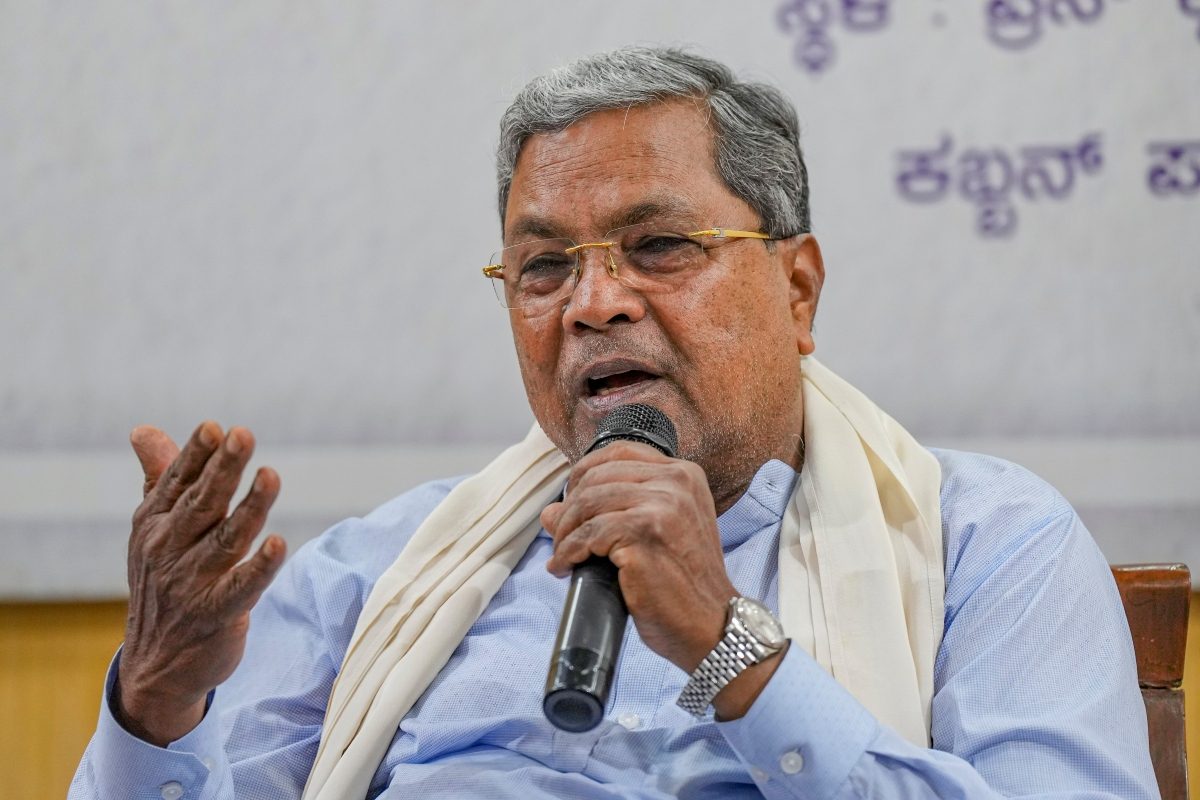
Row Over MUDA Scam Intensifies In Karnataka As BJP Leaders Detained On ‘Way to Protest’, CM Siddaramaiah Claims Conspiracy
onmynews.com

Row Over MUDA Scam Intensifies In Karnataka As BJP Leaders Detained On ‘Way to Protest’, CM Siddaramaiah Claims Conspiracy

The MUDA scam case pertains to the government’s fraudulent allotment of sites to land losers. It also involves plots given to Chief Minister Siddaramaiah’s wife

Read full article
Exclusive: 1st Videos Of IAF Night-Time Laser Bomb Attacks During Kargil
onmynews.com

Exclusive: 1st Videos Of IAF Night-Time Laser Bomb Attacks During Kargil

Three days after the Indian Air Force launched its initial strike on a Pakistani post atop Tiger Hill during the Kargil War, a series of subsequent air assaults were carried out on the feature. These included three night-attack missions using laser-guided bombs, as well as a direct daytime attack using conventional, unguided bombs.

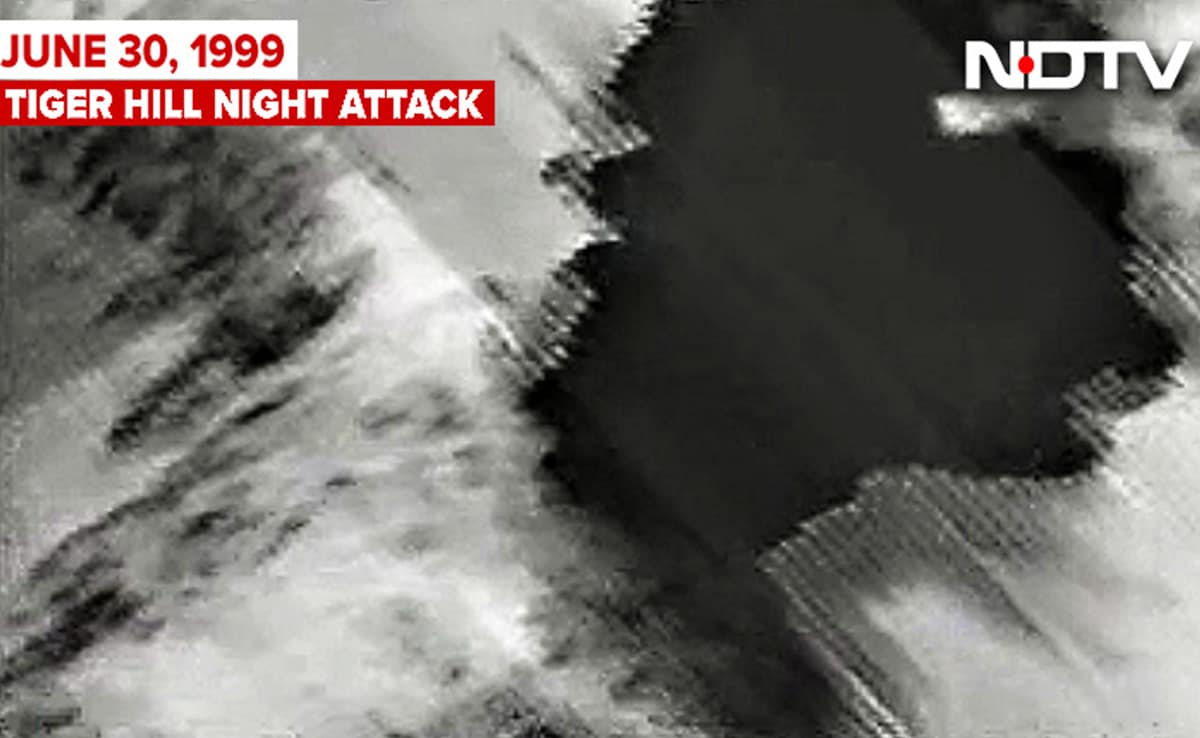
Video footage of the night-time attacks, now accessible for the first time via NDTV, provides detailed insights into the precise impact points and targets struck on Tiger Hill. This footage offers unprecedented clarity about the aerial assault conducted by the fighter pilots involved in the June 1999 attacks.

The IAF’s strategic strikes on Tiger Hill and other vital locations played a pivotal role in altering the course of the war. By neutralising Pakistani posts and severing their supply lines, these operations facilitated crucial advances by Indian Army troops, including the capture of Tiger Hill itself.

India’s first night-time laser-guided bomb attack underperformed, necessitating further attacks over the next week

The first night-time attack, conducted at 2 am on May 27, 1999, was executed by a Mirage 2000 aircraft piloted by two officers who would later rise to command the Eastern and Western Air Commands of the Indian Air Force: Air Marshal Raghunath Nambiar (retired) and Air Marshal DK Patnaik (retired). At the time of the operation, Nambiar held the rank of Wing Commander, while Patnaik served as a Squadron Leader.

Footage from this attack shows the targeting of a sangar – a rock fortification built by Pakistani troops. The deployment of a single laser-guided bomb resulted in a precise strike just a few feet from the fortification, though the explosion appeared somewhat subdued. This mission marked the Indian Air Force’s inaugural use of laser-guided bombs in a nocturnal combat scenario.

Reflecting on the operation, Air Marshal DK Patnaik (retired) remarked, “Air Marshal Nambiar and I realised that capturing Tiger Hill hinged on softening both approaches to the summit, enabling our ground forces to advance. We had attempted a strike the previous night, but weather conditions thwarted our plans. The following morning, around 2 am, we executed the successful attack. It disrupted the resting place of the enemy occupants, catching them off guard.”

Post-attack assessments revealed the necessity for further actions to clear the approaches to Tiger Hill. Patnaik highlighted the challenging ratio of 1:200, where as many as 200 soldiers were needed to engage one fortified adversary positioned above.

To minimise casualties among Indian Army personnel ascending the hill, the Indian Air Force launched a subsequent night-time attack on June 30, once again under the command of Nambiar and Patnaik. Footage from this mission depicts a substantial explosion at the targeted site. This was followed by a final nocturnal operation on July 2, alongside additional daytime sorties.

On July 3, 1999, ground forces initiated their successful mission to recapture Tiger Hill, reclaiming it the following day.

The deployment of laser-guided bombs in these operations marked a significant technological advancement for the Indian Air Force. This capability was made possible through the rapid integration of an Israeli-made Litening laser designator pod with 1000-pound laser-guided bombs, accomplished in a remarkably short span of 12 days. The Litening Pod enabled pilots to accurately locate and target sites by emitting a laser beam that guided the bomb precisely to its mark.

Describing the initial Tiger Hill attack, Air Marshal Raghunath Nambiar (retired) recounted to NDTV, “From 28 kilometres, I initiated the laser designation for the first time. The Litening Pod quickly gauged the distance to the target. As we closed in, I repeatedly re-designated the target, making it clearer. At the release point, upon pressing the trigger, our aircraft reacted sharply as it shed a 600 kg load.”

He further added, “Those 30 seconds felt like an eternity. We waited anxiously, and when the explosion occurred exactly where we had aimed, we were overjoyed.” Celebrating their success, Nambiar transmitted a radio call of “Bundolo,” echoing Tarzan’s iconic victory cry, signifying mission accomplishment to fellow aviators.

Following Nambiar’s breakthrough, Flight Lieutenant Shreepad Tokekar undertook a daring mission using conventional bombs, which required manual sighting without laser guidance assistance. At considerable altitude, Tokekar ensured precision to prevent collateral damage near advancing Indian troops, marking an unprecedented feat of accuracy.

Tiger Hill seen from the Kargil War Memorial

The assault on Tiger Hill, a quarter-century ago, proved pivotal in the Kargil conflict, preceding earlier significant air operations. On June 16, Mirage 2000 squadrons conducted dive attacks on a Pakistani logistics camp at Muntho Dhalo, followed by strikes on Pakistani posts in the Mashkoh Valley. These efforts disrupted critical logistics routes, gradually diminishing Pakistani artillery fire in the Batalik Subsector, while operations in the Drass sector continued until the taming of Pakistani posts on Tiger Hill and its approaches.
Read full article
Emergency Flashpoint: ‘Samvidhaan Hatya Diwas’ On June 25, Says Amit Shah
onmynews.com

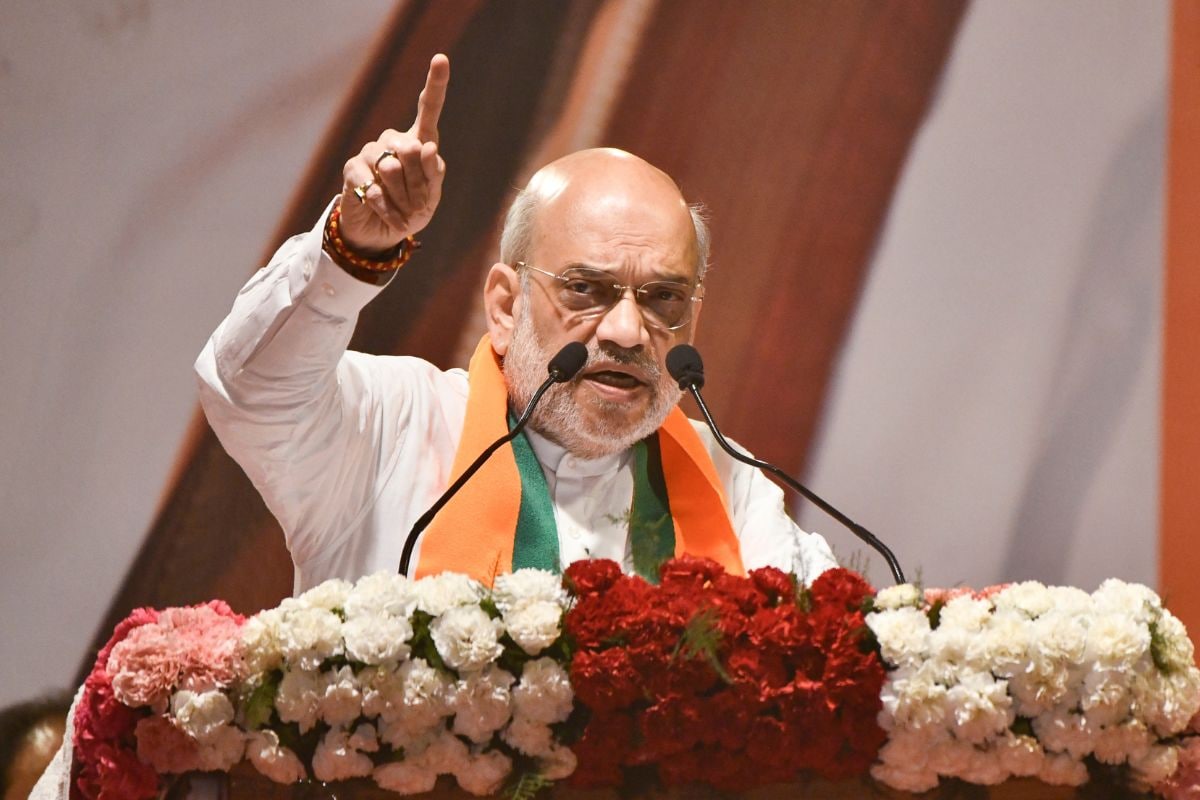
Emergency Flashpoint: ‘Samvidhaan Hatya Diwas’ On June 25, Says Amit Shah

Keeping up its attack on the Congress over the Emergency, the government announced on Friday that June 25 will be observed every year as ‘Samvidhaan Hatya Diwas’, which loosely translates to ‘Constitution killing day’. 

Making the announcement on X, Home Minister Amit Shah posted a gazette notification and wrote, “On June 25, 1975, the then PM Indira Gandhi, in a brazen display of a dictatorial mindset, strangled the soul of our democracy by imposing the Emergency on the nation. Lakhs of people were thrown behind bars for no fault of their own, and the voice of the media was silenced.”

“The Government of India has decided to observe the 25th of June every year as ‘Samvidhaan Hatya Diwas.’ This day will commemorate the massive contributions of all those who endured the inhuman pains of the 1975 Emergency,” he added.

PM Narendra Modi also posted on X and said the day will serve as a reminder of the Constitution being trampled over. 

“To observe 25th June as #SamvidhaanHatyaDiwas will serve as a reminder of what happens when the Constitution of India was trampled over. It is also a day to pay homage to each and every person who suffered due to the excesses of the Emergency, a Congress unleashed dark phase of Indian history,” the PM wrote. 

The Congress has hit back and accused the BJP of indulging in “yet another headline grabbing exercise in hypocrisy”.

‘400 Paar’ And Congress Claims

Throughout Narendra Modi’s tenure as Prime Minister, the Congress and other opposition parties have accused the BJP and the Central government of violating the Constitution as well as weakening constitutional institutions, including the election commission and the judiciary.

They got more ammunition when, in the months leading up to the 2024 Lok Sabha elections, Karnataka BJP MP Anantkumar Hegde and the party’s Meerut candidate Arun Govil, among others, said that the NDA had set itself a target of winning 400 seats because it wanted to amend the Constitution. 

The opposition, which had come together under the INDIA umbrella, seized on the opportunity to claim that the BJP wanted to end reservation and “dismantle” the Constitution. Congress leader Rahul Gandhi and others also began carrying a copy of the foundational document and stated repeatedly that the INDIA alliance was fighting to protect the Constitution. 

As the INDIA narrative began to gain traction, the BJP and the government went into damage control mode, claiming that the opposition was spreading lies. The issue did, however, work to the INDIA alliance’s favour in several states and played a role in limiting the BJP to 240 Lok Sabha seats and the NDA to 293. 

Counter Attack

Going on the offensive, the BJP repeatedly brought up the Emergency to claim that it was the Congress that had violated the Constitution, and not the other way around. 

On June 25 this year, PM Modi led the attack, posting on X, “Today is a day to pay homage to all those great men and women who resisted the Emergency. The #DarkDaysOfEmergency remind us of how the Congress Party subverted basic freedoms and trampled over the Constitution of India which every Indian respects greatly.”

“Those who imposed the Emergency have no right to profess their love for our Constitution. These are the same people who have imposed Article 356 on innumerable occasions, got a Bill to destroy press freedom, destroyed federalism and violated every aspect of the Constitution,” he wrote, adding that mindset which led to the imposition of the Emergency was “very much alive among the same Party which imposed it”.

Amit Shah also tweeted that the Congress has a history of murdering democracy.

The Constitution issue and the Emergency also dominated the special session of Parliament, which began on June 24. Rahul Gandhi carried a copy of the Constitution with him while taking oath as an MP and his Congress colleague, Shashi Tharoor, said ‘jai samvidhan’ after he was sworn in. 

The Emergency was a part of President Droupadi Murmu’s address to a joint sitting of Parliament as well. 

“Today is 27th June. The imposition of Emergency on 25th June, 1975, was the biggest and darkest chapter of direct attack on the Constitution. The entire country felt outraged. But the country emerged victorious over such unconstitutional forces as the traditions of the republic lie at the core of India,” she had said, amid cheers from NDA members and protests by the Opposition.

Read full article
Link copied!