onmynews.com
Politics Continue Over Delhi Water Crisis: Who Is To Be Blamed?
Delhi water crisis continues to deepen amid scorching heat. The political blame game continues between AAP and BJP. Who is to be blamed?
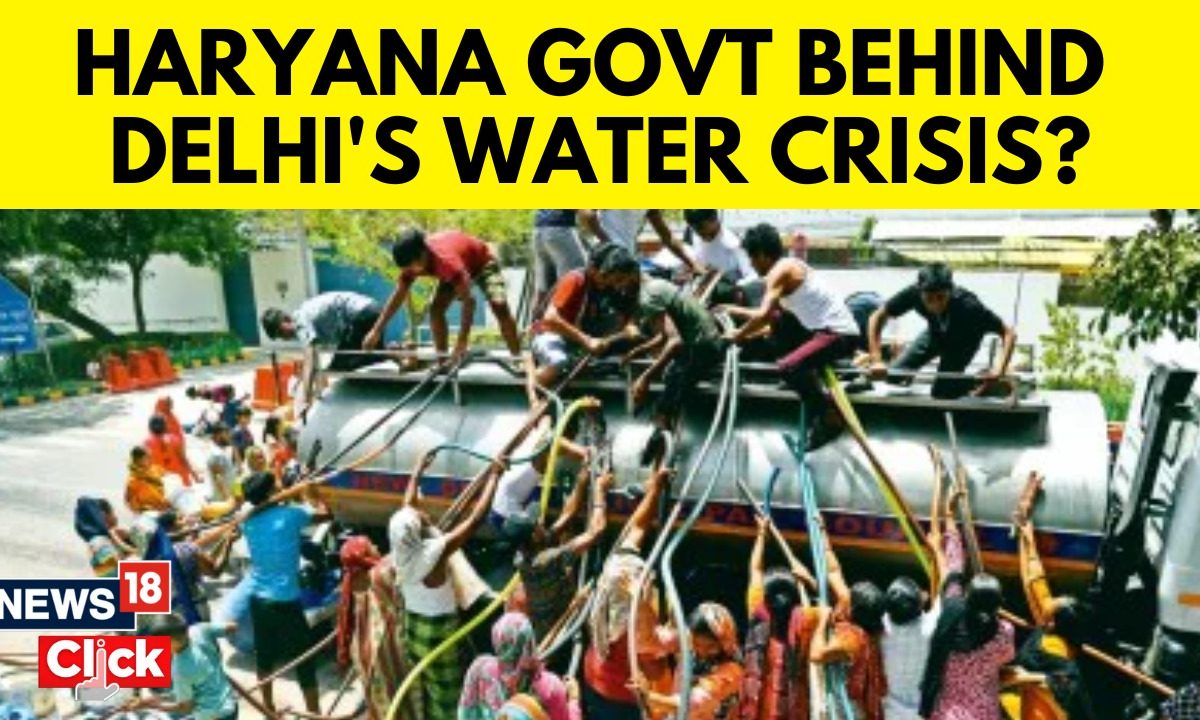
Delhi water crisis continues to deepen amid scorching heat. The political blame game continues between AAP and BJP. Who is to be blamed?
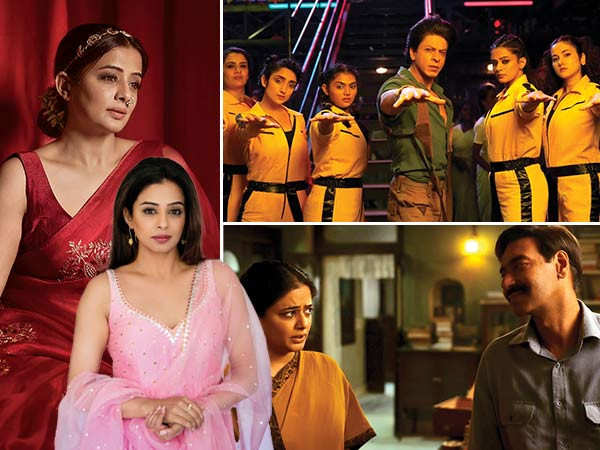
Priyamani is an acclaimed Indian actress known for her versatile performances across multiple film industries, including Hindi, Tamil, Telugu and Kannada cinema. She gained widespread recognition for her roles in blockbuster films such as Chennai Express and Jawan, as well as the critically acclaimed series The Family Man. With a career spanning over a decade, Priyamani has consistently demonstrated her commitment to quality and authenticity in her acting, earning her a dedicated fanbase and numerous accolades. Despite the challenges of working in a male-dominated industry, she continues to make her mark with powerful, female-centric roles. Excerpts from an interview with the fiery actress:
You were seen in 2013 in Chennai Express and now in Jawan and Maidaan. Why such a long gap?
I was waiting for something right, something correct to come my way. Just because this is the Hindi industry or Bollywood, I didn’t want to jump and say, “Okay, I will do this.” I wanted to do something right, something nice. I didn’t mind if it took time; I didn’t mind waiting. Maybe that’s why it took such a long time.
Your performance was very much appreciated in Article 370. Was your character Rajeshwari Swaminathan based on an actual individual?
I was representing the PMO. I don’t know whether my character Rajeshwari was one person or ten people. Obviously, for security reasons, they will not reveal that. The makers have done so much research. A lot of people loved the fact that something like this really happened, which not many people knew about. What India went through and our Honourable PM and HM did to see to it that the Article was abrogated. And this was a secretive mission which was successfully carried out. And the best part was generally, if such missions are carried out, there are a lot of chances for casualties. Not even a single life was lost. It’s the actual fact. So, when you hear such a thing, you feel so happy and proud that you were part of such a film which created history and is doing really well now.
Yami and you carried the film on your shoulders. It is rare to come by such roles. Whom would you give the credit for this – writers or filmmakers?
Definitely, the credit goes to them. If they wanted, they could have done it with male actors. But I think somewhere they felt they wanted to do it with ladies. The character played by Yami was an actual female agent. So, for a female agent, they wanted a female actor.
You are a very natural actor.
I try to make it as convincing and as real as possible, as much as I can. I don’t like overdramatisation. From the time I started, I was fortunate enough that whatever movies I did, whichever directors I worked with, their approach has always been very natural and very organic, not very dramatised and not very put-on kind of acting.
Coming from the South, working in Bollywood would be very different for you in terms of working styles?
One thing I can say is the Hindi industry is a little quieter than the South. If you go in the South, you will have 15,000 people screaming on a set. There is noise for sure. Here, each department has its own walkies. Most of the movies I have done here are all sync sound. Bahut kam dubbing hain yahan pe. Whereas the South is predominantly all dubbing.
You have done Chennai Express with Shah Rukh, then you did Jawan. Has he changed over the years or is he the same person?
I think he has become sweeter than what he was. What I love about him is the respect that he gives. And he never forgets you. Even if he saw you 10-15 years ago, he’ll say, “Aap kaise ho beta.” Whatever. The way he eases you into the atmosphere, aapko aisa lagega hi nahi ki, you met him 10 years back. He will just casually get you into the conversation and then you’ll just go with the flow. He is very humble, down-to-earth and very sweet. Unka jo woh natural charisma and charm hain, just blows you over, and I don’t think there is anybody who can hate that man.
How was it working with Ajay Devgn in Maidaan?
Ajay sir is a brilliant co-star. He is a very effortless actor. He is quite jovial. I like how he gets into the character and the way he delivers his dialogues. In Maidaan, in many scenes, he doesn’t have to say much and I am the one who’s talking. He is only giving expressions and just smiling. But his expressions, the light in his eyes speak volumes, so that itself was more than enough. Basically, he is also a director’s actor.
Shah Rukh and Ajay both are superstars in the industry. Do you feel the superstar vibe when you work with them?
Not at all. They made me feel so comfortable on the set, so I didn’t feel that I was working with such big superstars, especially Shah Rukh, because Jawan was my second film with him. So with sir, it was like a picnic. We were talking, laughing, joking; we had get-togethers, we had dinners together, we used to have jam sessions, we used to sing. In Maidaan, the mahol was a little more serious because we had to finish the shoot on time and there were very emotional scenes with Ajay sir.
Tell us about your experience working with Manoj Bajpayee in The Family Man.
I can’t wait to get back to work with Manoj sir. Yes, he is a brilliant actor and co-star. I could have never asked for a better Srikant Tiwari. Whatever he brings to Srikant, what I’ve seen, it’s so organic, so natural, and half the lines you’ve seen are improvised; they’re not scripted. So when he improvises, we also have to improvise; we always have to be on our toes when we are working with an actor like Manoj Bajpayee. Because he does one thing in rehearsal and another in a take, so you always have to be very alert. He’s too good.
Any other actors you want to work with?
I’d love to work with Ayushmann Khurrana. He is a brilliant actor. He chooses the right scripts, and the right scripts come to him. Like in Andhadhun, he underplayed that character. He did Article 15. It was really good, and he is also one actor who can mould himself for a movie like Bala or Vicky Donor. He just moulds himself so brilliantly. That’s why I would like to work with him.
You have seen ups and downs in your career…
I am still struggling now to get the right scripts and to choose the right ones because I have always believed in quality. Earlier, it was that jo bhi movie karti thi usko release hone main time lagta tha. But after 2006, there was no looking back, so I kept on doing movies back to back. I have done so many movies. Some worked, some didn’t. There was a lull period where I was just sitting at home for a bit and not getting movies, or I didn’t take them up because I wasn’t convinced enough about the project. Then after Chennai Express, I got a lot of offers. I was working a lot in the South. Then again, after The Family Man, I think it took a rise. If you ask me, I am quite happy where I am, and I am just taking my time. I know they say, make hay while the sun shines. Jo bhi aata hai karo, but I don’t want to do that. I’m in no sort of rush.
How tough or easy is it to survive in a male-dominated industry?
It has always been male-dominated. Now we cannot change that. Pahle male-centric films zyada banti thi. Then Seeta Aur Geeta came, Chaalbaaz came, where it was run by females. Then, yes, very few female-centric films came, but now a lot more female-centric films are coming out in the Hindi film industry as well as in the South. The females are also getting an equal opportunity to showcase their talent in female-centric films. So I think that should continue. It should open up doors also. Because I guess long gone are the days when heroines are cast only to romance the heroes. Other than the romance and the songs, they also have something to contribute.
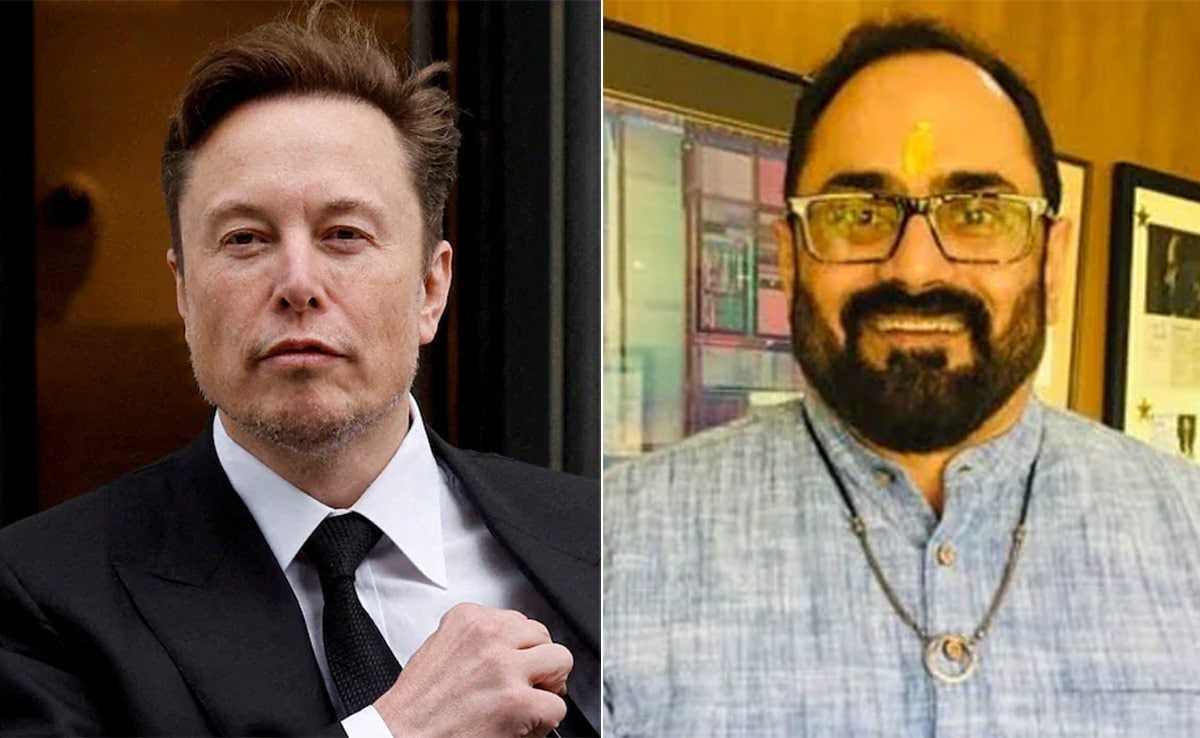
Tesla and SpaceX chief Elon Musk has advised against the use of electronic voting machines (EVMs), citing concerns about their potential vulnerabilities to hacking. His remarks come amidst growing debates over the security of EVMs worldwide, especially following allegations of irregularities in Puerto Rico’s recent primary elections.
“We should eliminate electronic voting machines. The risk of being hacked by humans or AI, while small, is still too high,” Mr Musk posted on X.
We should eliminate electronic voting machines. The risk of being hacked by humans or AI, while small, is still too high. https://t.co/PHzJsoXpLh
— Elon Musk (@elonmusk) June 15, 2024
The spotlight on EVM security has intensified due to recent controversies in Puerto Rico. The primary elections there were plagued by numerous irregularities linked to EVMs. However, a paper trail allowed election officials to identify and correct vote tallies.
Mr Musk’s remark was in response to, Robert F Kennedy Jr, nephew of former US President John F Kennedy and an independent hopeful for the 2024 US Elections, who wrote, “Puerto Rico’s primary elections just experienced hundreds of voting irregularities related to electronic voting machines, according to the Associated Press. Luckily, there was a paper trail so the problem was identified and vote tallies corrected. What happens in jurisdictions where there is no paper trail?”
Kennedy Jr advocated for a return to paper ballots to prevent electronic interference in elections, ensuring that every vote is counted and elections remain secure.
While concerns over EVMs are gaining traction in the United States, the scenario in India presents a contrasting picture. India uses the third generation of EVMs, known as M3 EVMs, which are designed to be tamper-proof. These machines enter a ‘Safety Mode’ and become inoperable if any tampering attempts are detected.
Former Union Minister Rajeev Chandrasekhar countered Mr Musk’s statement terming it as a “huge sweeping generalisation” which holds no truth.
“This is a huge sweeping generalisation statement that implies no one can build secure digital hardware. Wrong,” replied the former minister. “No connectivity, no bluetooth, wifi, Internet; there is no way in. Factory-programmed controllers that cannot be reprogrammed. Electronic voting machines can be architected and built right as India has done. We would be happy to run a tutorial, Elon.”
This is a huge sweeping generalization statement that implies no one can build secure digital hardware. Wrong. @elonmusk ‘s view may apply to US n other places – where they use regular compute platforms to build Internet connected Voting machines.
But Indian EVMs are custom… https://t.co/GiaCqU1n7O
— Rajeev Chandrasekhar 🇮🇳 (@RajeevRC_X) June 16, 2024
A dedicated team of professors from three prestigious Indian Institutes of Technology (IITs) has been instrumental in the latest upgrades of Indian EVMs. The Election Commission of India (ECI) is supported by an eminent Technical Expert Committee (TEC) on EVMs, ensuring that the devices are robust and secure.
READ | Top Experts From IIT Who Helped Design India’s Most Tamper-Proof EVMs
Professor Dinesh K Sharma, a specialist in microelectronics and solid-state electronics from IIT Bombay, told NDTV, “Indian EVMs are different from other EVMs in the world. The M3 EVMs have no connection to any other device, not even mains power supply.”
The Supreme Court this year addressed the issue of cross-verification of votes cast on EVMs through paper slips generated by Voter-Verified Paper Audit Trail (VVPAT) machines. A bench of Justices Sanjiv Khanna and Dipankar Datta rejected petitions seeking 100 per cent cross-verification, maintaining the current practice of verifying five randomly selected EVMs per Assembly constituency.
READ | “Blindly Doubting System…”: Big Supreme Court Order On VVPAT Verification
However, the court issued two directives to the Election Commission. Firstly, after symbols are loaded into an EVM, the symbol loading unit must be sealed and secured in containers signed by the candidates and their representatives. Secondly, these sealed containers, along with the EVMs, should be kept in storerooms for at least 45 days after the declaration of results.