Live · Global · Independent
Live Feeds
PinkVilla
Forbes
NDTV
Hindustan Times
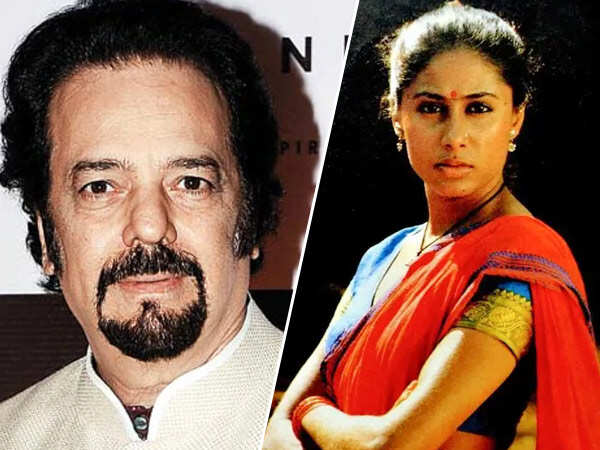
Akbar Khan: âœSmita Patil seemed to possess an instinctive understanding of the human soulâ
onmynews.com

Akbar Khan: âœSmita Patil seemed to possess an instinctive understanding of the human soulâ

Smita was an extraordinary actress, an artiste who seemed to possess an instinctive understanding of the human soul behind every character she portrayed. With films like Manthan, Bhoomika, Aakrosh, Chakra, perhaps confined either to that of an oppressed lady or a village rebel. And she was always mostly dressed in sarees or, you know, village attire.

I would like to believe that Haadsaa was the first film which tried to unshackle her from the stereotype. It’s unfortunate the film took five years to make. But during the making itself preview circles had seen her glamorous avatar and I’d like to believe that she signed up for films like Namak Halal and Shakti because of the buzz about Haadsaa. It was her eyes and her movie face which struck me
Akbar Khan Smita Patil
I vaguely recall, I think it was Vinod Khanna who had mentioned her name to me. It’s possible that he may have shared her phone number with me. I have a feeling, I’m not too sure. I had considered Shabana Azmi too for the role but something about Smita made me plumb for her. I had brought out for her to be a modern, seductress. I had to break her image. To play the high society, schizophrenic woman with an impotent husband. She would have to swing from absolutely normal to raving crazy all in one shot. And that only a trained actor would have been able to do. She took to the character like fish to water and my gut instinct proved right about her.
Akbar Khan Smita Patil
Me and her designer sister Manya worked on her look, we used seriously glamorous make up. Her make over was intense. In addition the fact that she was intense and intelligent kept me on my toes as a debutant director. She would imbibe the character, the narration of the character she’s portraying. She would internalise it, vulnerability, the sensuality that the character demanded, its fears and its darkness. She delivered every nuance of my character and maybe added tons to it.
Akbar Khan Smita Patil
I recall her dad Shivaji Rao Patil at the trial of the film saying it’s one of my daughter’s best Performances. I remember Mahesh Bhatt used to come and sit on my sets to meet her. In those days, he was making Arth. And my film was launched much earlier, but Arth released earlier.

A little digression. NN Sippy was keen to produce my film, and it was sort of my debut with me acting ( I had done Anjaan Rahen before that ) and directing, but that came unstuck. Mr Sippy was busy with Fakira and another film with Subhash Ghai, so my film went on the back burner.
So as a beginner I could shoot only when the money came in from financiers, and that’s why it took five years to release. Don’t forget, until then I was just an assistant director to director Mohan Bijlani and then to my older brother Feroz Khan, barely making a few thousand.
smita patil

So I started my career with 35,000 rupees in financing from a friend’s father, Manubhai Desai. I made the first reel of my film, and I had to show one reel after another to get more and more financing. But nobody could tell that this film took five years to finish. It was a very highly, what should I say, technically advanced film with a story ahead of its time. It had some great music also.

I remember a scene where we shot at Marine Drive with Smita chasing me all over Bombay, coming out of the car and yelling her head off. It was all in real time. There was such a traffic jam; she gave her shot and then had to be bundled back into the car. There was a bottleneck because of the traffic jam. It was a close shave for us. I remember being so emotionally moved by her in that shot, and I stood transfixed.
We had also shot a film called Mr Aashiq with Parveen Babi and Smita. I was shooting with Parveen for a song sequence and I remember looking into her eyes and it looked like a graveyard. She was so lost in that schedule. Alas, Parveen had a nervous breakdown and she went away, and the film came unstuck. Then Smita too passed away. So Tanvir Ahmed, the director of Mr Aashiq, took sequences of Smita and Parveen from there and added them to Aakarshan, which he was making with Sonu Walia and me. So if you see Aakarshan, you will see both the actors in that as well. It was a nice story of an actor and actress set against the backdrop of showbiz. Tanvir was a sensitive and talented man, but luck wasn’t on his side. Perhaps he was also pressured deeply by the producers to release a hastily put-together film.
It was all so tragic because in my personal life too, there was a tragedy. Just two days before Smita passed away, my sister Dilshad lost her husband. It was a bitter winter in Kashmir when all this happened. My brother-in-law passed away on the 10th of December, and Smita passed away three days later.

Also Read: Exclusive: Priya Banerjee on Mother-in-law Smita Patil: “She Was a Lot Like Me”

Read full article
Krithi Shetty to Make Bollywood Debut With Hum Tere Pyaar Mein: What We Know
onmynews.com

Krithi Shetty to Make Bollywood Debut With Hum Tere Pyaar Mein: What We Know

Krithi Shetty is finally heading to Bollywood, more than five years after making her Telugu debut. The actress has reportedly been cast in a romantic comedy tentatively titled Hum Tere Pyaar Mein, to be directed by debutant Vidhi Ghodgaonkar. Vidhi previously assisted Rohit Shetty on films such as Chennai Express, Singham and the Golmaal series.

The move marks something of a full circle for Krithi. Before her breakthrough in South Indian cinema, she had a minor, uncredited role as a student in Hrithik Roshan’s Super 30 (2019).

krithi shetty bollywood

A dream start, a dull patch

Krithi began her Telugu film career on a high with the blockbuster Uppena, which made her an overnight sensation. She followed it with Shyam Singha Roy, opposite Nani, and Bangarraju, completing a hat-trick of successful films. However, her subsequent releases struggled to recreate that early success. Custody, opposite Naga Chaitanya; Manamey, alongside Sharwanand; Macherla Niyojakavargam, starring Nithiin; and The Warriorr, opposite Ram Pothineni, failed to match the impact of her initial outings.

In Tamil cinema, she has projects such as Vaa Vaathiyaar, opposite Karthi, and Love Insurance Kompany, alongside Pradeep Ranganathan. In Telugu, she is also associated with January 12 Vidudala, reportedly featuring Nandamuri Kalyan Ram. The project could offer another opportunity to regain momentum, particularly with director Anil Ravipudi, known for delivering commercial successes, at the helm.

With a Bollywood debut on the horizon and several projects in the pipeline, Krithi appears poised to enter a new phase of her career.

krithi shetty

No formal training

Krithi did not attend a formal drama school before making her breakthrough with Uppena. Since then, she has worked on her craft through acting workshops, dance classes, horse-riding lessons and action training. She also reads widely to broaden her perspective and understanding of the world.

The actress has often cited Aamir Khan as an inspiration, admiring his ability to inhabit diverse characters without repeating the same screen persona. It is a quality she hopes to emulate as she explores different roles and expands her repertoire.

Her mother also plays an important role in her career decisions. During script discussions, the two assess whether a story offers Krithi a meaningful role and brings something fresh to audiences. As she prepares to enter Hindi cinema, that approach could help her navigate a new industry while continuing to build on her experience in the South.

Also Read: January 12 Vidudala Makers Celebrate Krithi Shetty’s Birthday

Read full article
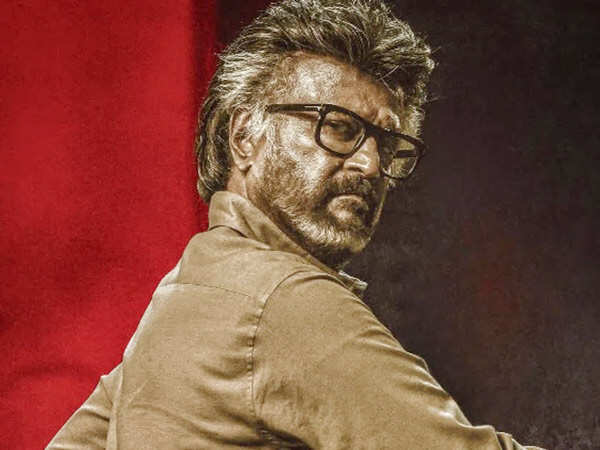
Jailer 2 Review: Rajinikanth Is In His Element In Nelsons Entertaining Sequel
onmynews.com

Jailer 2 Review: Rajinikanth Is In His Element In Nelsons Entertaining Sequel

Jailer 2 faces the familiar challenge of a sequel to a star vehicle: how do you recreate the appeal of a successful formula without making the return feel like an exercise in repetition? With Rajinikanth reprising Tiger Muthuvel Pandian, Nelson Dilipkumar builds on the character’s dual identity, balancing the unassuming family man with the formidable figure lurking beneath the surface. There is enough entertainment here to make the return worthwhile, particularly in the first half, but the film’s ambitions eventually get the better of its storytelling.

Set three months after the events of the first film, the first half of this sequel takes its time setting up Tiger’s plan, but Nelson’s dark humour keeps the narrative moving. Namo Narayana, as Moorthi, is a particular highlight, with his equation with Yogi Babu and Bjorn Surrao providing some of the film’s funniest moments. Their exchanges bring an easy comic rhythm to the proceedings, giving the first half a distinct personality even as the larger conflict takes time to unfold. Nelson is at his best when he lets these interactions breathe, finding humour in the characters’ responses rather than forcing punchlines into every scene.

Rajinikanth remains the film’s principal attraction, bringing effortless authority to Tiger without having to dominate every scene through sheer force. His comic timing complements Nelson’s irreverent sensibility, while the transition to action gives the superstar ample opportunity to command the screen. The film understands the appeal of watching Tiger operate on his own terms, even if the screenplay occasionally relies too heavily on the familiarity of the character.

The second half gathers momentum with the introduction of the primary villains, pushing Tiger’s plan into more dangerous territory. The action choreography is among the film’s strongest assets. The confrontations have a physicality and clarity that make them engaging, and the staging generally gives the action room to breathe. However, the screenplay becomes increasingly crowded as new characters arrive, often without contributing substantially to the central conflict. Rather than narrowing its focus as the stakes rise, the film keeps expanding its roster, leaving several characters feeling like additions in search of a purpose.

S. J. Suryah brings his trademark flamboyance to the antagonist’s role, although his increasingly familiar mannerisms threaten to turn the performance into a caricature. Suraj Venjaramoodu adds another dimension to the opposition, but his character bears a conspicuous resemblance to Varman from the first film. The crowded narrative leaves limited room to develop either antagonist beyond their immediate function in Tiger’s plan. Vidya Balan brings a composed presence to her role, but her character could have benefited from greater depth. Ramya Krishnan and Mirnaa provide continuity with the first film, although the screenplay does not always give the returning characters enough to do.

The cameos are another matter. Mohanlal, Shivarajkumar, Jackie Shroff and Mithun Chakraborty, along with two additional surprise appearances, are deployed largely for their star appeal, with each entry designed to create its own moment. Nelson makes some effort to give these appearances a narrative purpose rather than treating them as entirely separate attractions. Nevertheless, their sheer number contributes to the second-half congestion. Although Nelson attempts to integrate the cameos into the plot, their star appeal often takes precedence over their contribution to the story.

The technical execution is similarly uneven. Vijay Karthik Kannan’s cinematography supports the film’s heightened action aesthetic, while DRK Kiran’s production design sustains Nelson’s larger-than-life world. R. Nirmal’s editing keeps the first half moving comfortably, but the accumulation of characters and set pieces makes the second half feel less disciplined. The CGI is particularly disappointing in places. Gunfire and explosions lack the impact required to sell the scale of certain confrontations, occasionally undermining the otherwise effective action choreography by making the spectacle feel artificial.

Anirudh Ravichander’s music is another weak link. The songs do little to strengthen the narrative, and the two item numbers are especially disruptive, interrupting the dramatic momentum rather than emerging naturally from the story. The background score often feels like a reworking of what made the first film effective, doing little to elevate the action or emotional beats. The song One Sun One Moon stands out as a notable exception, leaving a stronger impression than much of the surrounding soundtrack.

Jailer 2 works best when Nelson trusts the combination of Rajinikanth’s screen presence, irreverent humour and well-staged action. Its problems emerge when every character introduction becomes an event and every confrontation an opportunity for spectacle. The film remains entertaining, but struggles to maintain a consistent sense of purpose once its second half gets underway.

Ultimately, Jailer 2 delivers enough star power, darkly comic storytelling and effective action to make for an enjoyable return, but its overcrowded screenplay and inconsistent technical execution keep it from becoming a more satisfying sequel. Rajinikanth remains a compelling anchor, and Nelson retains his instinct for absurdist humour. A more disciplined narrative and stronger technical choices could have made this a considerably more effective film. As it stands, Jailer 2 remains an entertaining ride, offering plenty of familiar pleasures even if it never quite lives up to its ambitions.

Also Read: Jailer 2 and Ranabaali Set for Dasara Face-off As Telugu Box Office Rides a Hot Streak

Read full article
…
Link copied!