Live · Global · Independent
Live Feeds
PinkVilla
Forbes
NDTV
Hindustan Times
Dulquer Salmaan On Iâm Gameâs Box Office Failure: âœIf You Want to Blame Someone You Can Blame Meâ
onmynews.com

Dulquer Salmaan On Iâm Gameâs Box Office Failure: âœIf You Want to Blame Someone You Can Blame Meâ

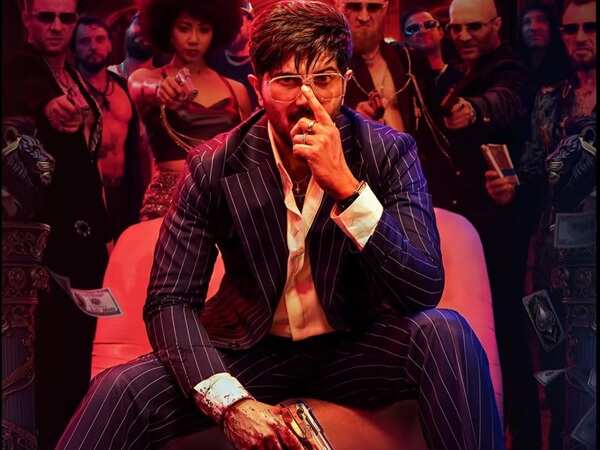
It has been a little over a month since I’m Game, starring Dulquer Salmaan and directed by Nahas Hidhayath, arrived in theatres. The film had considerable expectations riding on it, particularly with Dulquer also backing the project through his production house Wayfarer Films. However, its theatrical run did not unfold as hoped, with the film reportedly earning around Rs 48 crore worldwide, according to box office tracker Sacnilk.

While the film’s performance has prompted considerable discussion among audiences, Dulquer has now addressed some of the criticism directed at I’m Game and its production. Interacting with users on X on Wednesday, the actor-producer offered a candid perspective on what can happen behind the scenes of a large-scale film production.

Dulquer Salmaan Responds To Criticism Of I’m Game

Several users used the interaction to share their disappointment with the film. One user described I’m Game as “valare shokam (extremely disappointing)” while urging Dulquer to come up with a much better film next time.

Responding to the criticism, Dulquer acknowledged the sentiment while pointing out that audiences are often unaware of the circumstances surrounding a production. “It’s sweet that you care. But there are many things that happen that you are not aware of. That sometimes can be out of the control of the best intended production house also. Anyway we will only keep striving to do our best.”

Another user referred to a previous discussion about the film and argued that Wayfarer Films had “messed up the project”. Dulquer did not dismiss the criticism, instead acknowledging that there was merit to the assessment.

“I’m not saying you were wrong in your analysis. You were mostly right. And trust me we are aware of all of it. But there are just times when from our end we can do everything right. But outside factors or other circumstances can turn those upside down.”

The actor’s comments offer an interesting insight into the challenges of mounting a film, particularly one involving a sizeable production team. While audiences primarily experience a finished film, the process of arriving at that final product involves numerous creative and logistical decisions.

Dulquer Says He Will Stand By His Team

Dulquer went on to question the tendency to assess the entire filmmaking process purely through the outcome. “It’s easy to analyse an end product or result. But it takes 2-300 people to make a film. It’s never easy. Never simple. And never something you can apply formulae or academics to.”

The actor-producer also stressed that making a film is not a process in which anyone deliberately sets out to fail. “No production house or actor in world cinema intends to make mistakes or a bad film,” he said, while acknowledging that decisions can sometimes go wrong. For Dulquer, the experience appears to have reinforced the unpredictable nature of filmmaking. A production can involve multiple departments, external collaborators and creative decisions, all of which ultimately have to come together on screen. Even when a team believes it has made the right choices, circumstances beyond its control can alter the outcome.

He further explained that Wayfarer Films operates through a combination of its internal team and several external teams, making the filmmaking process even more complex. Rather than distancing himself from the criticism, Dulquer chose to take responsibility for the production.

“Imagine an entity that operates with an internal team and multiple external teams. I’ll always stand by my team and if you want to blame someone you can blame me,” he said.

For a film that failed to meet expectations at the box office, Dulquer’s response is notable for neither dismissing the criticism nor placing the blame solely on individual members of the team. Instead, the actor-producer has acknowledged the shortcomings while making it clear that Wayfarer Films intends to learn from the experience and continue striving to get its films right.

Also Read: Prabhas Recalibrates His Date Diary After Fauzi Postponement
Read full article
Cover Story: Sagar Bhatia on Reinventing Qawwali The Madness Behind His Live Performances and More
onmynews.com

Cover Story: Sagar Bhatia on Reinventing Qawwali The Madness Behind His Live Performances and More

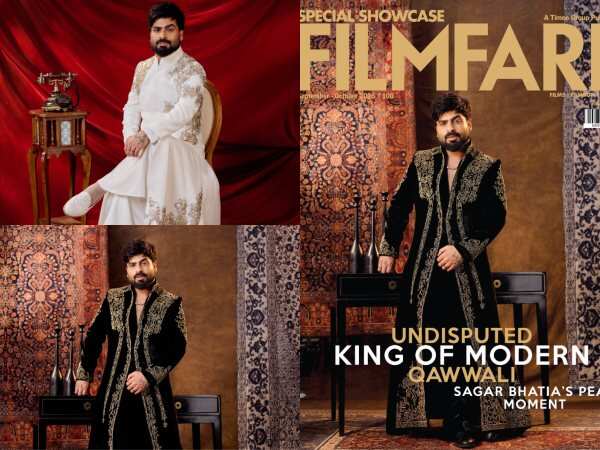
Sagar Bhatia is bringing a fresh, contemporary energy to the timeless world of qawwali. A musician who understands both tradition and evolution, he has carved a distinct space for himself with his soulful voice, emotive performances and modern interpretation of the genre. From his early days as a guitarist and musician to becoming one of the most recognisable contemporary voices in qawwali, Sagar’s journey reflects an instinct to experiment without losing the soul of the music. Here are excerpts for a candid conversation with the qawwali star…
sagar bhatia

From guitarist to becoming a recognisable voice in contemporary qawwali, when did you realise you had made your mark?

My journey has had many ups and downs. I’m still learning every day. Once, I met a four-year-old who knew my shayari and stage mannerisms. His parents said he even ate while listening to me. Children are God’s shadow. If my music could reach a child, I felt I had achieved something.
What does Sagar Wali Qawwali mean to you?
sagar bhatia

It means qawwali performed in Sagar’s style. Traditionally, qawwali is performed sitting down, but I believe music has no rules. I grew up listening to Nusrat Fateh Ali Khan and idolising Gurdas Maan. Sagar Wali Qawwali combines Nusrat saab’s music with Maan saab’s performance style.

How do you modernise qawwali without compromising its tradition?

You cannot tamper with qawwali’s essence, but you can experiment with its music. I retained the traditional harmonium, tabla, clapping and backing vocals while introducing electronic beats. I wanted younger audiences to understand and connect with qawwali.
What have you learnt from Nusrat Fateh Ali Khan and Gurdas Maan?

Gurdas Maan saab’s energy and aura are extraordinary. Someone once said I resembled him, so I began observing him closely. I learnt that your entire body must connect with the music. Nusrat saab’s poetry is incomparable. He took qawwali beyond Sufi audiences and made it popular worldwide. Both are like Gods to me.
Are you a musician who found his identity through qawwali?
sagar bhatia

Absolutely. I began as a musician, singing devotional songs. Someone suggested that my heavy voice suited Sufi qawwali. I tried singing a couple of songs in 2010, and it stayed with me.

Has the success of Sagar Wali Qawwali made you cautious about experimenting?

Not really. I experimented for years, suppressing my essence because I feared people wouldn’t accept it. Eventually, what I loved most connected with audiences. I create all kinds of music, but on stage, people expect my madness. I believe I’m a complete package.
Have you worried about diluting qawwali while making it accessible?

Young audiences need something they can understand. Some of Nusrat saab’s qawwalis have complex meanings, so I chose relatable compositions and introduced simple shayari between them. I made qawwali more commercial without disturbing its purity. Who am I to tamper with something so sacred?
Who is Sagar when the stage lights go off?
sagar bhatia

Before performing, I’m nervous. Once on stage, I become Sagar Wali Qawwali rather than Sagar Bhatia. I feel God has blessed me with this ability. Sometimes, watching my performances afterwards, I cannot believe that’s me. People think such energy is humanly impossible. But when you’re made for something, it comes naturally. The stage reciprocates, and magic happens.

What would you tell the Sagar who struggled before achieving recognition?
I still speak to that struggling boy because I never want success to overpower me. Remembering where I came from keeps me grounded. From performing before two people to entertaining 20,000, even internationally, God has given me more than I imagined. I feel like His chosen child. I want to carry that struggling Sagar with me forever.
What did your Bollywood debut with Khudaya from Sarfira teach you?
Singing for a character differs from singing for yourself. Someone else has composed the song and imagined its emotions. You must understand their vision, just as an actor adapts to a director’s interpretation.
Do you see playback becoming a bigger part of your career?

I’ve never restricted myself musically. Whether it’s playback singing, independent music, composing or live performances, I want to continue making music throughout my life. I’m not chasing any particular opportunity.
How do you connect with international audiences who may not understand every word?

I don’t approach international audiences differently. Simple shayari helps listeners understand complex qawwalis. If the poetry is difficult, I simplify the antara. If both are complicated, my performance helps audiences connect emotionally. I want their love for qawwali to last beyond a passing trend.
Does meeting growing audience expectations put pressure on you?

I’ve never consciously tried to win audiences over. I performed what I enjoyed, and people connected with it. I haven’t changed myself. They have every right to like or dislike my music. I believe that if I enjoy creating something, audiences will enjoy listening to it.
What legacy would you like to leave behind?

I want my identity to survive me. My music and performances are my most honest expressions. Audiences often tell me they’ve never seen anyone perform like me. Being remembered as a performer would be my greatest gift.
Read full article
Hero Nahi…tu Actor Hai – Shah Rukh Khan Recalls Nana Patekars Advice
onmynews.com

Hero Nahi…tu Actor Hai – Shah Rukh Khan Recalls Nana Patekars Advice

Veteran actor Nana Patekar passed away on Thursday at the age of 75. According to reports, the actor was found unconscious at his residence in Goa and was rushed to a nearby hospital, where he was declared dead.


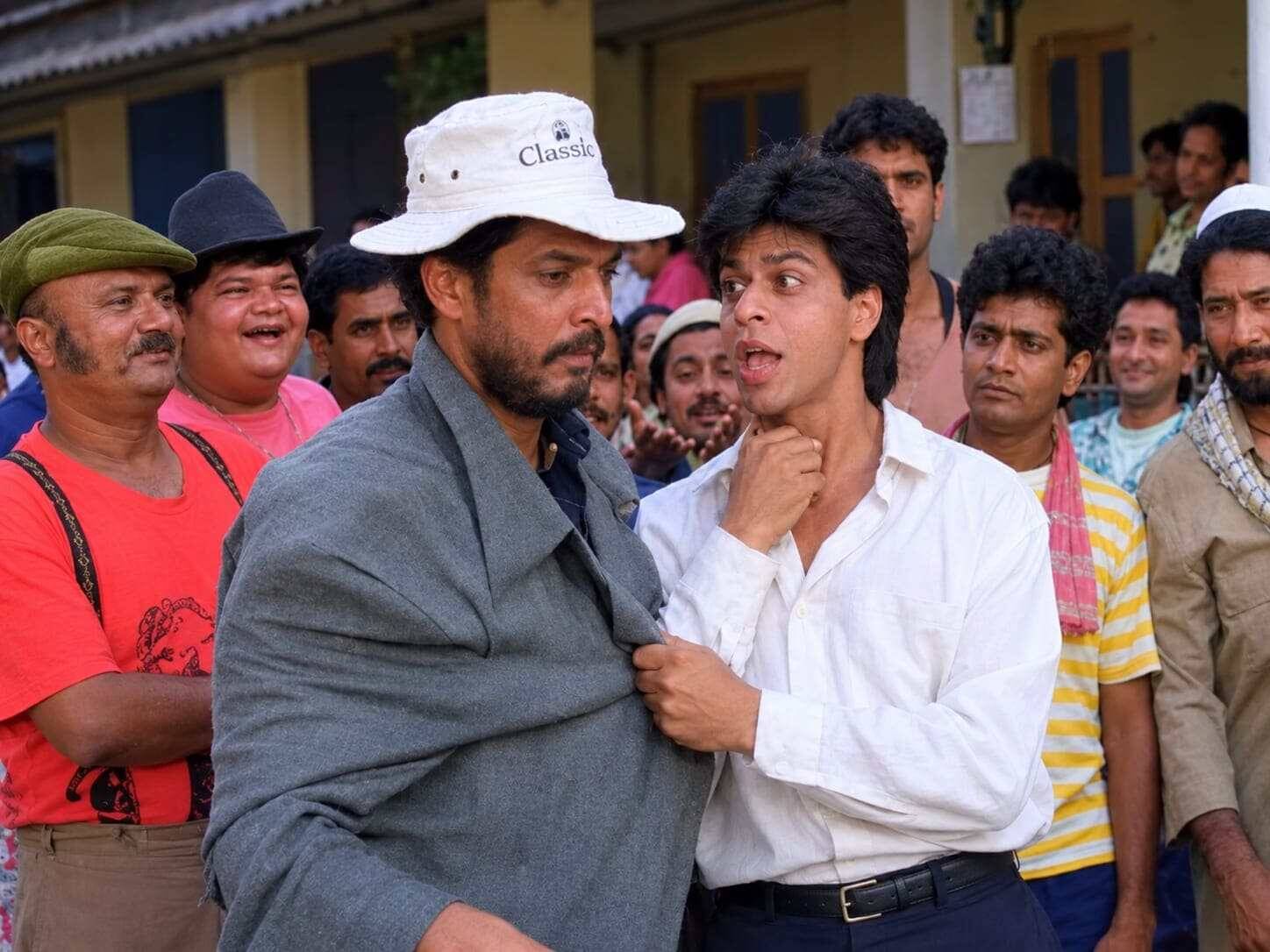
Nana’s demise has left the film fraternity mourning the loss of one of Indian cinema’s most respected performers. Among those remembering the veteran actor is Shah Rukh Khan, who shared a heartfelt note with a throwback picture with the late actor on social media, recalling his first interaction with Nana and the lessons he carried with him over the years.


Shah Rukh remembered Nana for his candid personality and his ability to say exactly what he felt, without worrying about how his words would be received. Recalling their first meeting, the actor revealed that Nana immediately corrected him when he tried to style his hair like a Bollywood hero.

View this post on Instagram

A post shared by Filmfare (@filmfare)

Taking to Instagram, Shah Rukh wrote, “When I first met him, out of awe and awkwardness I fiddled with my hair. He slapped my hand away and said ‘hero ki tarah Baal mat bana…tu actor hai’!”


Reflecting on Nana’s straightforward nature, Shah Rukh added that the veteran actor was never one to offer unnecessary praise or say things simply to please someone. “He didn’t flatter you. He didn’t tell you what you wanted to hear. He told you what you needed to hear,” he wrote.

Patekar

Remembering his personality, he wrote, “That was Nana. Straightforward. Rough, honest and had the most beautiful smile.”


In his tribute, Shah Rukh also recalled Nana’s memorable advice to him, “Hero banne ke chakar mein actor mat khona.”


For Shah Rukh, Nana was more than a celebrated actor. He remembered him as a mentor, critic and friend, while also fondly recalling their carrom games, where Nana was an unbeatable champion.


Also Read: Nana Patekar’s Filmfare Award-Winning Performances

Read full article
…
Link copied!