Live · Global · Independent
Live Feeds
PinkVilla
Forbes
NDTV
Hindustan Times
25 Years of Lagaan: Aamir Khan Made More Than One Impossible Dream Come True
onmynews.com

25 Years of Lagaan: Aamir Khan Made More Than One Impossible Dream Come True

Some films entertain you. A rare few recalibrate you. Twenty-five years after it walked onto Indian screens, Lagaan still belongs to that second, smaller category, a film that didn’t just tell us a story about a cricket match no one could win, but quietly rewired how an entire generation understood hope, dignity, and the cost of both.

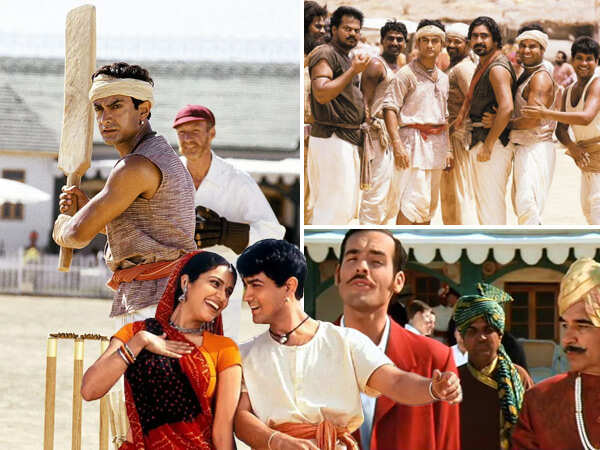
The premise is deceptively simple. It’s 1893, colonial India, and a drought-stricken village called Champaner is staring down a doubled tax it has no way of paying. Bhuvan (Aamir Khan) makes an impossible wager on their behalf: beat the British at their own game, cricket, a sport the villagers have never even seen and the tax vanishes for three years. Lose, and it triples.

Around this wager, Ashutosh Gowariker builds not an underdog sports movie, but something closer to a national origin myth. And perhaps its rooted Indianness and the British Raj backdrop is what made it an international success as well. Whether I look back at Lagaan in 2026 or my memories of looking back at it in 2002, the fact that it came so close to winning an Oscar and kickstarting India cinema’s international ambition before any other motion picture, really set the context for how important this film’s achievements truly are. 

Lagaan 25 years

The Ache Beneath the Romance

What has stayed with me since childhood isn’t the match itself, it’s what surrounds it. Bhuvan’s love for Gauri (Gracy Singh) is never spoken aloud in the way modern romances demand it be. It lives in his glances, his restraint, the way duty keeps interrupting desire. And then Gowariker does something genuinely audacious. He introduces Elizabeth (Rachel Shelley), the captain’s sister, as a third point in this triangle, not to manufacture melodrama, but to hold up a mirror. It’s through Elizabeth’s quiet, unreciprocated affection that Bhuvan seems to understand, almost for the first time, exactly what Gauri means to him. Watching someone else’s love for you clarify your own, that’s a very adult kind of storytelling to tuck inside a film ostensibly about cricket.

Pushing forward to what builds the basis of the plot, the village suffers a year of drought, stuffing aside any hopes of cultivation. This directly leads to them not being able to gather enough money to pay off their yearly taxes (Lagaan). A series of egos being hurt between both the villagers and the Britishers, a cricket match is decided.

Lagaan 25 years

The camerawork earns real credit here. Lagaan has been shot in a very traditional manner. No fancy trickery behind its meaningful shots, yet loaded with all the impact. A lot of emphasis has been placed on the characters themselves, ensuring that we have the opportunity to read their true emotions, their reactions, and the feelings they express. The cinematographer, Anil Mehta, himself backed this up by mentioning how each ball had a story of its own. During an interview in the past with another publication, he spoke more about how he strategized his shots for utmost impact. He said, “There were times when I was distant on a long lens shooting the batsman, or times when I was up close or laid a track just to make some points a little more emphatic. If one of the batsmen is really angry, then there was a more push-in kind of track with a wider lens, and if there was a nervous Kachra (Aditya Lakhia), I gave a jagged use of the camera.”

It’s a reminder that Lagaan’s three-and-a-half-hour runtime never once feels like an endurance test, because every frame is doing emotional work, not just filling time. AR Rahman’s score operates on the same principle, never wallpapering the film, only stepping forward exactly when a moment needs lifting, then receding again.

Lagaan 25 years


Rewatching the Maharaja

The scene that has aged the most, at least in my own head, is the one that used to make me the angriest. Captain Andrew Russell offers to waive the tax if the vegetarian Maharaja eats meat in front of him. The Maharaja refuses. Russell doubles the tax out of spite. As a seven-year-old, I was extremely naive back then. Calm on the outside, ego-struck within, he urged the Maharaja to eat the meat in exchange for forgiving the tax for that year. The Maharaja politely declined once again. However, this was not taken in good light, as the captain ensured that their tax was not forgiven and instead doubled for that year.

As a kid, I was instantly angered by the way the Maharaja handled the situation. Should he not have considered the position of his villagers and set aside his morals just this once? Was his ego just that big to not stand down for once? It was an infuriating feeling to think about how he could have avoided the plot for the entire movie by just giving in. After growing older, I watched Lagaan once again, this time feeling more empathetic towards the king. In this day and age, self-respect is an essential part of us as human beings. There is a fine line between being seen as an egoistic person and someone with considerable self-respect. The Maharaja in no way was portraying himself as having an ego. He generally had empathy towards his villagers. When the captain tried to mock the Maharaja’s belief, it wasn’t his ego being tested but his own morals. And by all means, the Captain may have never agreed to uphold his side of the bargain, resulting in the humiliation of the Maharaja. Sure, the villagers would have respected him more, but he himself would have forgone his identity. The man of integrity has, at a subconscious level, shaped the way I make certain decisions.

Lagaan 25 years


Why the Match Still Matters

By the time the cricket match arrives, Lagaan has already done the hard work, convincing a room full of people (us, included) who’ve never held a bat in a do-or-die situation, that this is a fight worth having. Bhuvan doesn’t recruit teammates so much as excavate them, finding purpose in a mute drummer, a limping outcast, a frightened archer. Aamir Khan plays him less like a hero and more like a conductor, someone whose confidence is infectious enough to affect everyone standing next to him.

A quarter-century on, what makes Lagaan durable isn’t nostalgia, it’s structure and form. The film understood, long before “prestige runtime” became a compliment, that earned length isn’t the same as bloat. It understood that a sports climax is only as powerful as the humanity stacked underneath it. And it understood that the biggest political statements often land hardest when they’re disguised as something as unthreatening as a game. That’s the kind of craftsmanship film schools still dissect and audiences still feel in their chest. It is proof that some victories, however fictional, never really stop being won. And the final argument in favour of Lagaan’s legacy is the fact that, in a nation obsessed with cricket and cinema, Lagaan has been our best cricket-based movie in 100 years of these cultures crossing over, not one, not twice but over and over. That’s the reason this Aamir Khan-Ashutosh Gowariker match-up has been the best of the best in the last 25 years. 

Also Read: Aamir Khan And Rachel Shelley Reunite To Celebrate 25 Years Of Lagaan

Read full article
Exclusive: I love the chemistry we have: Preity G Zinta on Shah Rukh Khan Vibe and modern romance
onmynews.com

Exclusive: I love the chemistry we have: Preity G Zinta on Shah Rukh Khan Vibe and modern romance

Preity G Zinta was one of the defining faces of early-2000s Hindi cinema, particularly when it came to romantic films and rom-coms. From Dil Chahta Hai and Kal Ho Naa Ho to Veer-Zaara and Salaam Namaste, she became synonymous with characters that were warm, spirited and independent. Years later, after choosing to focus on her family and life in the US, the actress is back on the Indian screen. She was seen earlier this year in Batwara 1947 alongside Sunny Deol and is now gearing up for Kunal Kemmu’s Vibe.

But Vibe is a very different world for the actress. Written and directed by Kemmu, the film is a high-stakes action comedy with a spy-comedy setup, following two ordinary friends, played by Kemmu and Sparsh Shrivastava, who find themselves caught up in a dangerous mission to save the country. At the centre of that chaos is Preity’s Madam H, a commanding, patriotic character who stays in control while everyone around her scrambles to keep up.
For Preity, the film offered more than just a change of genre. Madam H allowed her to explore a side of herself as an actor that she hadn’t really had the opportunity to tap into before. One of the biggest discoveries was getting to do something she had wanted to try for years: action.
“I’ve always wanted to do action, so that was exciting. And what’s new about Madam H is she’s one of the very few characters I’ve played where she will go to any lengths. She loves her country, and she’ll do anything by hook or by crook,” she tells us in an exclusive conversation.
Preity Zinta

 The actress continues, “I’ve always played characters which are more straight-laced. This one has an edge. There are so many different shades, and that was a new discovery for me as an actor. I’ve done a lot of commercial movies but even then my characters had a different tone. Sometimes I found it a little difficult to grasp things, but Kunal was very particular and he knew what he wanted, which made it easier.”

The atmosphere on the Vibe set brought its own challenge for the actress. Kemmu and Shrivastava could be funny, but Zinta had to remain serious. She jokes, “It was a tough vibe for me because they were laughing and being funny, and I had to be serious. There’s this one scene where Sparsh is on a chair, and he comes hopping on it. I had to be serious because Kunal wanted me to be in a particular way. I had to remember all my lines and had to be serious. I couldn’t laugh, but they were being so funny.”

It wasn’t the first time she had found herself surrounded by people making her laugh while she was required to remain serious. She faced the same problem on Dil Chahta Hai. The actress continues, “I had that in Dil Chahta Hai as well. Everybody was funny, but I had to be serious. And I fought with Farhan (Akhtar). I told him that’s not fair.”
Preity Zinta

Preity G Zinta on the return of rom-coms

Beyond Vibe, the conversation naturally turns to romance, a genre that has been closely associated with her career. Having starred in some of the most remembered romantic films and rom-coms of the 2000s, she feels there is still an appetite for that kind of cinema, although the way people approach love has changed.
“I hope people make better romantic films now. Today’s romance is very much like going on an app and swiping. If not you then someone else. Digitally you can feel whatever, but you’ve got to live life in the real world. But there are, maybe not rom-coms, but other beautiful films that have come. I’m not going to say films today are not great. Not all, but a lot of films are good and different. But I would like to see a really nice rom-com, yes. I hope somebody makes it. Because people are going to love it,” she shares.

The recent romance that worked for her was Mohit Suri’s Saiyaara, starring Ahaan Panday and Aneet Padaa. “The last film that I liked was a romance, Saiyaara. It was beautiful. So, there’s a huge market for it.”
Does Preity G Zinta revisit her films?

There is also a renewed nostalgia for the films of Preity’s era. Dil Chahta Hai has completed 25 years, while Veer-Zaara is approaching its 22nd anniversary, and audiences continue to revisit films from the early 2000s. But Preity herself isn’t someone who goes back and watches her own work.
“Unless I’ve dubbed for a film, I don’t see my own films. I haven’t seen any of my own films. I’ve never seen any of my films. Having said that, if there’s a nice film coming, irrespective of whatever time it is, and I have the time to watch it, I will watch it.”
Yet she isn’t opposed to revisiting some familiar on-screen chemistry. If the right script comes along, there are several actors she would like to work with again.
“I had different chemistries with a lot of people. I would love to work with Bobby (Deol). I started my career with him, and never really got to do more than one film with him. Saif Ali Khan is one of my all-time favourites. Also Shah Rukh, because I love the chemistry we have, especially in comedy. So, it really depends on the script.”
preity zinta

Meanwhile, Vibe, written and directed by Kunal Kemmu, stars him alongside Preity Zinta, Sparsh Shrivastava and Vanshika Dhir in pivotal roles. It is set to release in theatres on September 18.


Also Read: Vibe Trailer: Kunal Kemmu, Sparsh Shrivastava and Preity Zinta Gear Up for a High-stakes Mission

Read full article
Filmfare Throwback: When Asha Bhosle Won Filmfare Award for a Song That Never Made It to The Film
onmynews.com

Filmfare Throwback: When Asha Bhosle Won Filmfare Award for a Song That Never Made It to The Film

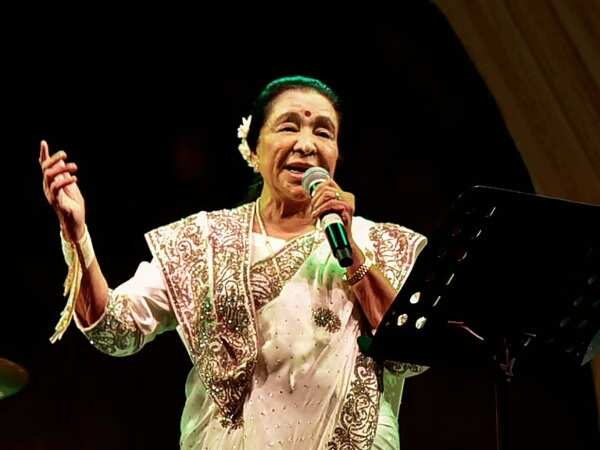
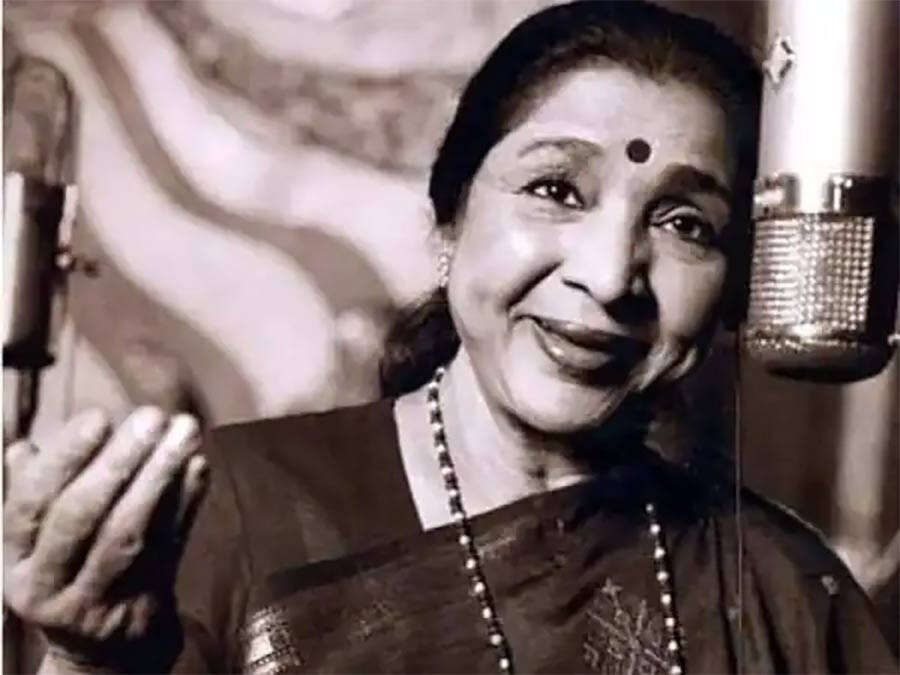
Today, September 8, marks the 93rd birth anniversary of legendary playback singer Asha Bhosle. She passed away at the age of 92 on April 12, 2026. Bhosle was admitted to Mumbai’s Breach Candy Hospital for age-related health complications.

She left behind a legacy spanning more than eight decades and over 12,000 songs. As we remember the beloved singer on her birth anniversary, we look back at a special Filmfare moment when Bhosle won the Best Playback Singer (Female) award in 1975 for a song that did not even make it to the concerned movie’s final cut.

Asha Bhosle

The late singer had won the award for the song Chain se hum ko kabhi aap ne jeene na diyaa, which was supposed to be in the movie Pran Jaye Par Vachan Na Jaye. While it is unknown why the song was eventually removed from the film, many reports have stated that the same happened due to creative differences. Nonetheless, Bhosle won the award due to the song’s popularity through Radio Ceylon.

According to music historian Raju Bharatan in Asha Bhosle: A Musical Biography, the song marked the last time Asha Bhosle worked with composer O.P. Nayyar. The recording, which took place in August 1972, was reportedly charged with a sense of sorrow, as both seemed aware that their creative and personal association for 15 years was coming to an end. Bharatan characterises it as a deeply emotional torch song, brought to life in just an hour, brimming with an almost tangible sense of regret.

Asha Bhosle’s career spanned more than eight decades, during which she became known for a remarkable versatility that took her from Hindi film songs and pop to ghazals, bhajans, folk, qawwalis and classical music. She recorded in more than 20 languages and is credited with over 12,000 songs, collaborating with composers including O.P. Nayyar, S.D. Burman and R.D. Burman, with whom she created some of Hindi cinema’s most enduring musical hits. Her work earned her two National Film Awards, multiple Filmfare Awards, the Dadasaheb Phalke Award and the Padma Vibhushan.


Also Read: Anuradha Paudwal Recalls Singing With Legendary Asha Bhosle, Fulfilling Her Father-in-law’s Wish

Read full article
…
Link copied!