Live · Global · Independent
Live Feeds
PinkVilla
Forbes
NDTV
Hindustan Times
Rajinikanthâs Dharman Begins Second Schedule With âThe Deadly Doctorâ Back In Action
onmynews.com

Rajinikanthâs Dharman Begins Second Schedule With âThe Deadly Doctorâ Back In Action

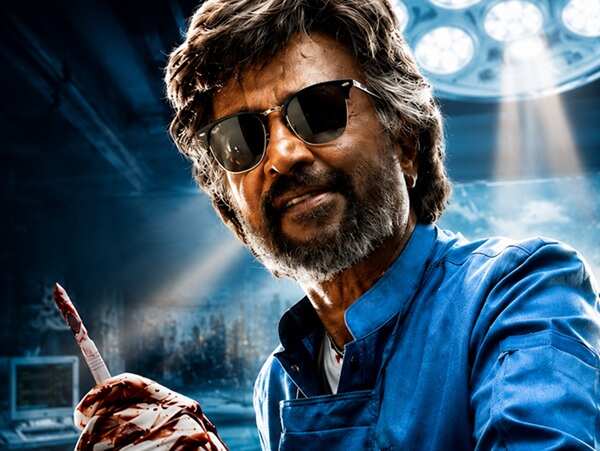
Rajinikanth’s much-awaited Dharman, also known as Thalaivar 173, has entered its second schedule of filming. The makers announced the development on Thursday with a new video that offers another glimpse of Rajinikanth in his doctor avatar, while also showcasing director Ashwath Marimuthu working with the superstar on set.

The film, which went on floors on June 25, is being directed by Ashwath Marimuthu, who takes charge of his third feature after Oh My Kadavule and Dragon. Produced by Kamal Haasan under the Raaj Kamal Films International banner, Dharman has generated considerable curiosity not only because of the pairing of Rajinikanth and Kamal Haasan, but also because of the unusual premise suggested by its first look.

The latest glimpse refers to Rajinikanth’s character as “The Deadly Doctor”, while the footage focuses on the actor bringing his trademark screen presence and swagger to the role. The makers have described the second schedule as “legendary”, adding another layer of anticipation around the project.

Rajinikanth as ‘The Deadly Doctor’

Details about the story remain tightly under wraps, although Ashwath has previously indicated that Dharman will combine the mass appeal of Rajinikanth with elements of a thriller. At the film’s launch, the filmmaker described it as a blend of Padayappa and Vettaiyaadu Vilaiyaadu, suggesting a combination of Rajinikanth’s larger-than-life persona and a more grounded investigative flavour.

The medical setting has inevitably led to speculation about the nature of Rajinikanth’s character. The first look showed him in a blood-stained medical outfit, holding a scalpel, while the film’s “Deadly Doctor” tagline added to the mystery. There were also reports suggesting that the film could be an adaptation of the popular series The Good Doctor. Ashwath, however, dismissed the speculation and clarified that the reports were untrue.

The cast includes Simran as the female lead, marking her reunion with Rajinikanth after Petta. She also reunites with Kamal Haasan following their collaborations in Panchathanthiram and Pammal K Sambandam. Raashii Khanna is also part of the film, while reports have linked Mysskin and Rukmini Vasanth to the project. Their involvement, however, has not been officially confirmed.

With the story being kept under wraps, the latest schedule update is primarily designed to keep the focus on Rajinikanth’s character and the film’s visual identity.

From director changes to Ashwath Marimuthu

Dharman has had a notably eventful journey even before cameras began rolling. The project was initially announced with Sundar C as director in November last year, before he exited the film. Don filmmaker Cibi Chakravarthi was subsequently chosen to helm the project, and a first look was announced in January. However, the production did not begin as initially planned, with the proposed April schedule being pushed back.

The delay subsequently fuelled speculation that another directorial change could be on the cards. Ashwath Marimuthu’s name eventually emerged amid the reports before the makers officially confirmed him as the director.

The latest development suggests that the production is now moving ahead under Ashwath’s direction. The first schedule reportedly included Rajinikanth’s introductory song and major action portions, with filming taking place in Chennai.

On the technical front, Anirudh is composing the music, with Niketh Bommi handling cinematography and Pradeep E Ragav serving as editor. Popular action choreography duo Anbariv are also part of the team.

For Ashwath, Dharman represents a significant jump in scale after the success of Dragon. For Rajinikanth, meanwhile, the film offers another opportunity to explore a new character while retaining the mass elements that have defined his recent theatrical outings.

With the second schedule now underway, the makers appear intent on revealing Dharman in measured doses. For a film whose premise remains largely a mystery, the latest glimpse does little to answer questions about the story, but it certainly reinforces one fact: Rajinikanth’s “Deadly Doctor” is being designed to arrive with plenty of swagger.

Also Read: Prabhas’ Fauzi First Look Becomes Most-shared Indian Film Poster, Fans Praise Rugged New Avatar
Read full article
Exclusive: Mayukh Ghosh on Brown Karisma Kapoorâs Transformation and The Kolkata He Wanted to Show
onmynews.com

Exclusive: Mayukh Ghosh on Brown Karisma Kapoorâs Transformation and The Kolkata He Wanted to Show

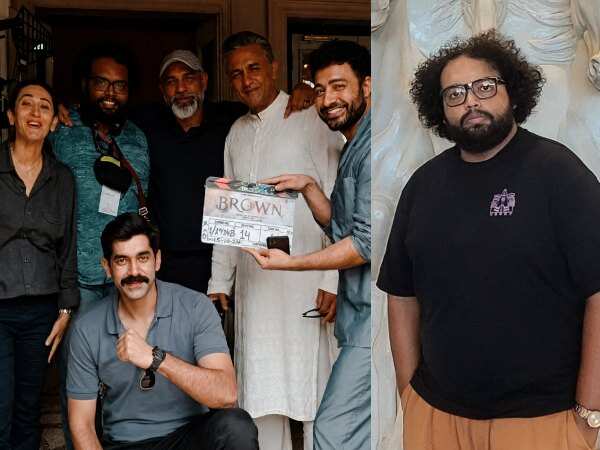
For writer Mayukh Ghosh, Karisma Kapoor’s Brown is the latest chapter in a career that has moved across crime, drama and character-driven stories for film and streaming. Ghosh, whose credits include Hostages and Kitto Ka Kissa, has also worked with filmmaker Sudhir Mishra before taking on Brown as its writer. The series, directed by Abhinay Deo and based on Abheek Barua’s novel City of Death, brings together several ideas that have increasingly shaped Ghosh’s storytelling: flawed characters, complicated emotional worlds and stories that look beyond the surface of a crime.
Brown

At the centre of Brown is Rita Brown, an alcoholic former police officer battling her own demons while investigating a murder in Kolkata. But for Ghosh, the attraction was never simply the mystery surrounding the crime. It was the person at its centre. Rita is damaged, self-destructive and far removed from the conventional image of a female protagonist. That contradiction is something Ghosh finds compelling.

“The archetype of the ideal has ruled cinema for quite long. The ideal is slightly more than a statue or sculpture, which has some human-like movements, but emotions are a part of human nature. Whenever we show someone as damaged, we are also telling the audience that they are closer to you. They are not further away, outside of the window waving with a happy ending. They are people who are like you, and they have some things which affect them, but they are still living their lives and trying to show up for what they are meant to do.”

brown

That was particularly important when adapting Rita for the screen. While the adaptation changed her ethnicity from Bengali to Anglo-Indian, Ghosh says there was never any question of changing the essence of the character. “We don’t see this character day in and day out in Indian cinema. We don’t see a star like Karisma Kapoor portraying such a character coming from a mainstream background. It’s not the characteristics of her being damaged or alcoholic that are taking her away from the audience; it is also what is taking her to the audience, making them feel empathetic and one with her. They also understand the tough journey she is on, and the road ahead is filled with thorns one can’t see but feel within.”

Ghosh also knew very early that Karisma Kapoor had understood exactly who Rita was. At a table read, he happened to see Kapoor before she entered the room. It wasn’t a performance, but something as simple as the way she walked that convinced him. “I saw her walk past me, and right before entering the room, she tied up her hair. From a distance, I understood that was Rita Brown. Because she was not walking as Karisma Kapoor, a film star. She was walking as this trained police woman. And as soon as we started the table read, she started reading her scene with her mother, played by Soni Razdan, and it became apparent that not only had she worked on the physicality of the character but also the tone, the nuance of being an Anglo-Indian.”
For Ghosh, that willingness to move beyond familiar templates also extends to the crime genre itself. With OTT audiences having consumed an enormous amount of crime content, he believes that simply hiding the identity of a killer is no longer enough to sustain a story. “The world of OTT creates a certain format where thriller is a given hypothesis. Any genre, be it sports drama, family, romance or crime, has to be a thriller as well because of the format itself. Any film would engage the audience for two hours, whereas OTT gives us 300 to 400 minutes to engage. This gives rise to the idea of suspense, and in suspense, it is never about the who or what. It is always about why and how. And that’s where the real game is.”
That became a guiding principle for Brown. For Ghosh, the murder was only the starting point, not the destination. “This genre nowadays is not about that incident or event. It is a much deeper character study; it is a sociological study. It is much beyond this. This was also my viewpoint while doing Brown, that this should never be about who did the killing. It should more be about the why and the how. That is the exploration you see in the writing of Brown.”
Brown

The same thinking extended to Kolkata, a city Ghosh knows intimately. The series is based on City of Death, whose story is set in Kolkata, but retaining the city also allowed Ghosh to move away from the familiar cinematic representation of it. “It’s the city I come from. But Kolkata is not only a city of Bengalis. While adapting the book, we never really wanted to change the city because it provided me with a unique combination of an opportunity and a challenge. It’s the city I come from, so there was the opportunity to take a fresh look at the city. Kolkata is not only a city of Bengalis. Many communities live in the city, and that’s what I wanted to explore. I wanted to look at the city through a new lens, which is why I changed the protagonist from a Bengali to an Anglo-Indian. Then we brought in the other communities and places, such as the Biharis, the business community of Marwaris, Jains and Chinatown. I could bring in an eclectic, cosmopolitan portrayal for the story.”

That also meant stripping away what Ghosh sees as the romanticised version of Kolkata that cinema repeatedly returns to. “There is romanticisation of Kolkata, from the Howrah Bridge, Maidan and trams to the red-and-white sarees, Durga Puja and the idea that Nari Shakti is the centrepiece of the culture. All these are romanticised and, in reality, are false. Kolkata has a high crime rate. It has lost its past glory. The city is suffering from heavy migration and extreme economic conditions. Many businesses have left the city; there is unemployment, and the youth have nothing to look forward to. All these conditions have also created a situation for crime to thrive.”
“All these things also came up in my research when I was talking to people who are still living there and trying to understand their qualms about the place. This portrayal is the fresh look we wanted to bring in. That is why you see dark, gritty, rain-soaked, dingy alleys, dirty homes, huge houses but broken families. The idea of this Kolkata comes from this sort of research and perspective.”
But Brown itself had a long and uncertain journey before it reached audiences. Ghosh began working on the project while still in his late twenties, at a time when he hoped it would transform his career. Instead, the series spent years in limbo before finally reaching viewers. “When I started working on it, I was still in my late 20s and hoping that the project would turn my life around. My life did turn around, but the project was still where it was. There was uncertainty and a lack of trust. The world only believes in you when they see the work. So there is only so much I can talk about a project where no one knows about it.”
View this post on Instagram

A post shared by Shiuli Thukral (@shulz_t)

The delay, however, ended up pushing Ghosh to look beyond crime writing. He began exploring a coming-of-age series, moved towards direction and started developing other projects, including his first feature. “What the delay did for me was that not only did I believe in myself more, but I also started pivoting to other things. I came out of the crime genre. I wrote a coming-of-age series and pivoted to direction. I am slated to make my first film, which is an inspirational start-up tale. I also got attached to another OTT project, which is a sports drama. All these wouldn’t have happened if Brown wasn’t delayed. I wouldn’t have pivoted and looked around for work everywhere else had this delay not happened. I truly wouldn’t have understood what other things I am capable of and would have been comfortable in the space I am in.”

His favourite compliment from the entire experience of working on Brown came from Kapoor, and it was considerably less serious. During one scene, Ghosh was standing in for another actor while Kapoor was performing. His acting made her laugh, forcing them to stop and reset. “She said, ‘You are a superlative writer and going to be a good director, but spare us your acting.’ I don’t think I have got a better compliment and lesson than that.”
For Ghosh, Brown ultimately became more than a crime series. It became a project through which he explored flawed people, a less familiar side of a city he grew up in and the possibilities beyond the genre he had become associated with.

Also Read: Exclusive: Soni Razdan on Motherhood, Movies and Finding Janice Brown

Read full article
Exclusive: When Sridevi Spoke About Being Fiercely Loyal to Boney Kapoor
onmynews.com

Exclusive: When Sridevi Spoke About Being Fiercely Loyal to Boney Kapoor

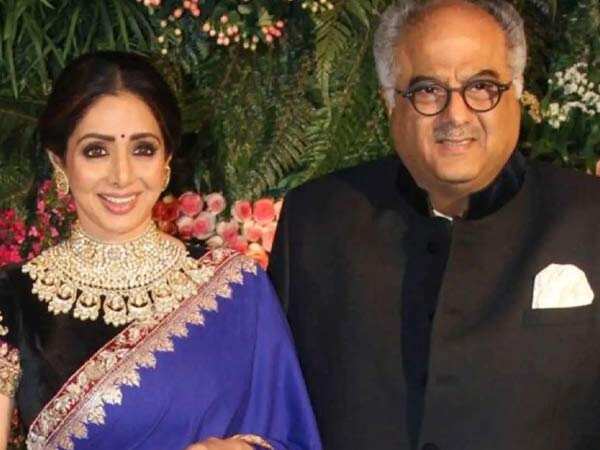
The demise of legendary actress Sridevi has left a void in the Indian film industry that cannot be filled anytime soon. She worked across several industries, including Hindi, Malayalam, Telugu, Tamil and Kannada over a career spanning five decades. She was the recipient of several Filmfare Awards, including a Filmfare Lifetime Achievement Award. She got married to producer Boney Kapoor in 1996.
In her last interview with Filmfare, the actress spoke about her bond with Boney and stated that she is fiercely loyal to her husband. She said, “Yes, I’m fiercely loyal to Boney ji. But I don’t think of any of this is a big deal. If I don’t do things for my family, who else will?”Sridevi Boney Kapoor

Sridevi continued, “With every passing day, my love for him grows. In fact, calling it ‘love’ isn’t enough anymore.” Asked what has remained unchanged about Boney Kapoor, she answered, “His love for me. And of course, he’s an honest person, he’s emotional, he can always make me laugh. He’s always there for me. We’re always there for each other.”

Sridevi married Boney Kapoor on June 2, 1996. However, they had kept their wedding a secret till January 1997. She also fondly spoke about her bond with her two daughters, Janhvi Kapoor and Khushi Kapoor. Sridevi revealed, “I’m closer to Janu, and Khushi is closer to Boney ji. But we’re honest with each other and extremely close. Till today, every morning when Janhvi wakes up, the first thing she says is ‘Mama chahiye!’ But Khushi will say ‘Koko chahiye!’ Koko is her pet.”
Sridevi Boney Kapoor

Speaking about Khushi, she also noted that she is far more independent than her sister, Janhvi. Sridevi’s last Hindi film before passing away was Mom in 2017.

Also Read: Sridevi’s Property Dispute: Madras High Court Rules in Favour of Boney, Janhvi and Khushi Kapoor

Read full article
…
Link copied!