Filmfare Awards Marathi 2026: Shriya Pilgaonkar Abhishek Banerjee Arrive in Style
Aug 7, 2026 · 1:23 AMBlogBy onmynews.com
The Filmfare Awards Marathi 2026 is being held at the Sahara Star in Mumbai, drawing some of Marathi cinema’s most recognisable faces for a grand evening. Ahead of the prestigious awards ceremony, actors, filmmakers and other prominent personalities turned heads on the red carpet with their fashionable appearances.
Traditional silhouettes met bold, modern cuts as the stars made their entrances, giving the red carpet its own spotlight moment.
Take a look at the celebrities who lit up the red carpet at the Filmfare Awards Marathi 2026:
onmynews.com
Korean Kanakaraju Review: Sharp Humour Rises Above an Uneven Mashup
Aug 7, 2026 · 12:25 PMBlogBy onmynews.com
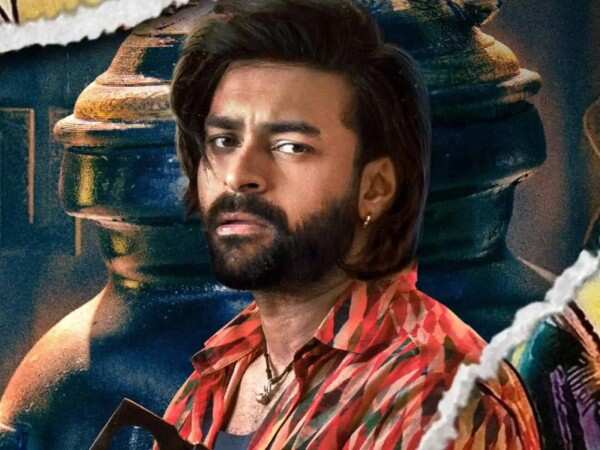
Quick Take: Korean Kanakaraju delivers decent comedy by using subverted ghost-comedy mechanics.
The story unfolds across two distinct worlds. In Penukonda, a town in Andhra Pradesh’s Rayalaseema region, Kanakaraju (Varun Tej) leads an easygoing life, earning a living by performing folk dances at local ceremonies. His routine takes a romantic turn when he falls for Chaitra (Ritika Nayak), an employee at a Korean multinational company. However, things take a surreal turn after he accidentally consumes something linked to the spirit of a slain Korean gangster. Possessed by the vengeful ghost, Kanakaraju is forced to travel to Korea to break the supernatural curse.
Writer-director Merlapaka Gandhi operates within the familiar horror-comedy template. What sets the film apart, however, is its distinct dose of stylised action and violence, particularly in the second half. By making the ghost male and an exceptionally ruthless one at that, the film avoids the standard “damsel in distress” trope. While this twist doesn’t automatically translate into a novel story, the blend of subverted conventions and traditional commercial elements gives Korean Kanakaraju an entertaining edge.
At its core, Korean Kanakaraju remains unapologetically rooted in Telugu cinema. While its visual aesthetic borrows heavily from Korean action films, the narrative leans on familiar Tollywood sensibilities. Sathya leads the comedy with his trademark exaggerated reactions. Effectively functioning as the film’s second lead, he is in his element once the story shifts to Korea. Watching his friend Kanakaraju gradually lose control of himself, Sathya brings infectious meme-worthy humour to the proceedings. His chemistry with Muralidhar Goud, who plays his ghost-hunting father, is another highlight. Their reactions, equal parts confusion, fear and disbelief, ground the absurdity and make the humour land even better.
Once possessed, Varun Tej adopts a noticeably different physical vocabulary. His posture stiffens, his head movements become more measured, and his gestures convincingly suggest a personality trapped inside an unfamiliar body. Much of the comedy stems from the amusing clash between the Korean gangster’s spirit and Kanakaraju’s deeply rooted Rayalaseema mannerisms that continue to seep through.
Had the romantic track with Ritika Nayak been more engaging, the emotional beats would have landed with greater impact. A handful of scenes genuinely strive for atmosphere. The lighting, sound design and a few restrained dramatic moments featuring Varun Tej carry surprising weight. Thankfully, not every scene is played purely for laughs.
Not everything works, though. The VTV Ganesh–Master Revanth track feels forced and contributes little to the narrative. The film also takes far too long to settle into its central conflict. The first 30 minutes feel dated despite the energetic “Rasa Gummaadi” song. Things improve considerably once the Korean ghost enters the picture. Sunil, fresh off his impressive reinvention after the Pushpa films, is unfortunately underutilised.
Thaman enjoys himself with the background score, but enthusiasm occasionally gives way to excess. Since the comedy is already broad and slapstick, the loud background music sometimes overwhelms the scenes rather than elevating them. Manojh Reddy’s cinematography, on the other hand, is a major strength. The Rayalaseema portions have a warm, sun-baked texture, while the Korean segments employ brighter lighting and slicker camerawork to complement the action. The film’s pacing remains uneven. While the first half meanders, the second half finds its rhythm and sustains the momentum almost until the pre-climax. Unfortunately, the climax itself fails to deliver the payoff the film builds towards.
Varun Tej delivers a confident performance with effortless ease, fully committing to the film’s unusual premise. Yet it is Sathya who walks away with the honours. Having already established himself as one of Telugu cinema’s most dependable comedians, Korean Kanakaraju once again proves just how effective he can be when backed by strong writing.
Overall, Korean Kanakaraju blends familiar Tollywood commercial tropes with stylised cross-border action and supernatural comedy. It thrives on its inventive ghost-comedy mechanics and delivers a reasonably entertaining theatrical experience. Go in with modest expectations, and you’ll likely have a good time.
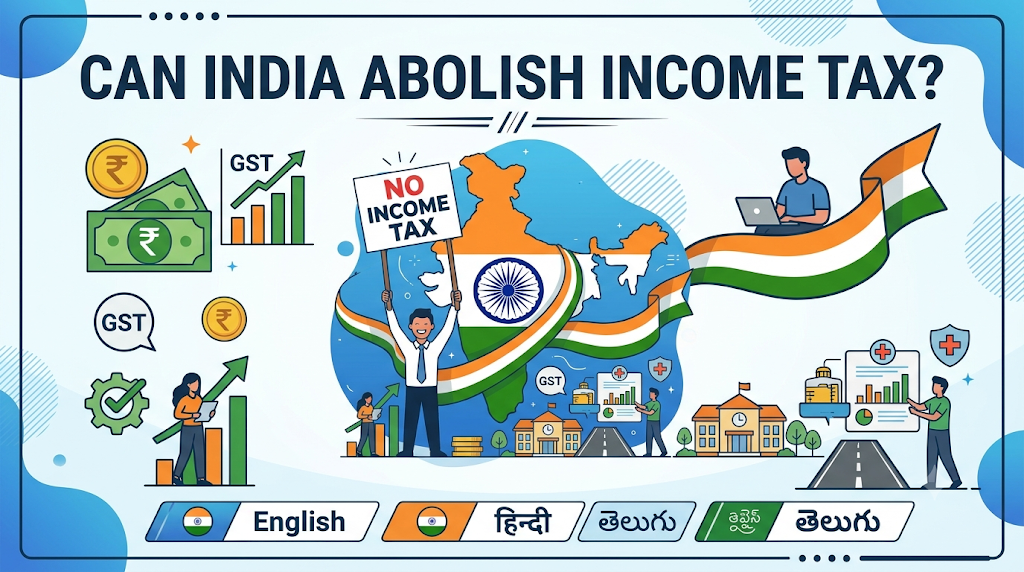
THE CASE FOR A FLAT TRANSACTION TAX · INDIA · FY26
Abolish income tax.Tax the flow instead.
India has built the only payment system on earth that makes this possible. The arithmetic has been ready for years.
To replace₹13.12 L Cr
Flow tax raises₹32.15 L Cr
Balance+₹19.03 L Cr
What one flat rate replacesCentral taxes, FY26
Flat rate on every credit0.41%
0%
of central tax
Levied on ₹3,215 lakh crore of annual payment flow. Central tax figures are FY26 estimates.
Entry I · The absurdity we defend
India employs an army to collect a tax that two people in a hundred pay, and then hands a sixth of it back.
In FY26 the department collected ₹28.12 lakh crore gross and refunded ₹4.71 lakh crore of it — money taken, processed, contested and returned, producing nothing.
Of the 8.09 crore returns filed in FY24, 4.90 crore reported no taxable income at all.
We run one of the world’s most elaborate tax machines to reach one of the world’s narrowest tax bases.
And because the base is so narrow, the rates on it must be brutal — thirty per cent plus surcharge plus cess, landing on the salaried professional who cannot hide a rupee.
Entry II · The base nobody is using
Indians moved ₹3,215 lakh crore through the banking system last year. Nine times GDP. Almost none of it is taxed.
The RBI’s Payment Systems Report counts 26,819 crore transactions in calendar 2025, compounding at 16.6% a year in value.
Rail
Value, CY2025
Share
RTGS
₹2,205 L Cr
68.6%
NEFT
₹479 L Cr
14.9%
UPI
₹305 L Cr
9.5%
IMPS, NACH, cards, others
₹152 L Cr
4.7%
Cheques (CTS)
₹70 L Cr
2.2%
Wallets & prepaid
₹3 L Cr
0.1%
Forty-one paise on every hundred rupees replaces the entire income tax of India.
Seventy-three paise replaces corporate tax as well. And one rupee — a flat 1% — raises ₹32.15 lakh crore.
One per cent funds the Republic. The rest is administration.
Entry III · The dial
What would it actually cost you?
Turn the dial. Every token on the belt is a real payment; every paisa skimmed off it drops into the treasury.
Equal-yield dialdrag to explore
Rate charged on every credit0.41%
₹0.41 per ₹100
Treasury filled: 12% of ₹13.12 L Cr
Chai and samosa ₹40
₹0.16
Auto ride ₹150
₹0.62
Salary credited ₹1,20,000
₹489
Sixteen paise on a chai. Four hundred and eighty-nine rupees on a salary that currently loses tens of thousands.
Nobody would notice paying it. Everybody notices paying income tax.
Entry IV · Why now, and not in 2005
India built the collection machine by accident
Every previous attempt failed on plumbing. The 2005 Banking Cash Transaction Tax raised almost nothing and was withdrawn in 2009.
Twenty years later, digital payments are 99.7% of transaction volume, UPI alone carries 85.5% of it.
The tax does not need to be enforced. It needs to be switched on.
No return, no assessment, no refund cycle. The bank deducts at the moment of credit and remits.
Entry V · It has been done
Brazil ran this tax for over a decade and it worked exactly as promised.
The CPMF charged 0.38% on bank account movements. In its final year it raised close to $20 billion.
It was not abolished because it failed. It fell four votes short of renewal in a December 2007 Senate vote.
The people who hate a transaction tax most are the people who have the most to hide from it.
India already runs its own working version: STT, on securities trades.
Entry VI · The stress test
Break it if you can
Switch off rails you would rather protect, assume a flight from the banking system, and see what rate you still need.
Stress testBase: 2025 · Target: FY26
Rate on every credit1.00%
Flow that stays banked
₹3,215 L Cr
Funded, with +₹19.03 L Cr to spare at 1.00%.
You have to switch off RTGS, switch off NEFT, and assume a flight from banking India has not seen since before UPI existed.
The headroom is the argument. There is room to exempt the poor and still fund the Union.
Exempt every credit below ₹5,000. Exempt DBT and pension credits.
Entry VII · The cascade objection
Compared to what, exactly?
Critics say the tax cascades: no input credit, so it bites at every handover. Now measure it against the cascade we tolerate today.
Cascade through a supply chainat the stress-test rate
Handovers before the shelf6
Flow tax
5.85%
GST today
18.00%
A tax that cascades to 3–6% replaces a tax that starts at 18% on a single sale. Prices fall. They do not rise.
We are comparing it to the most complicated indirect tax India has ever run.
Entry VIII · Who really pays
A flat rate on value is not a flat burden on people. Value is where the wealth is.
Income tax today · 2 in 100 carry it
Flow tax · 100 in 100 contribute a sliver
Two-thirds of India’s payment value moves through RTGS — corporates, institutions, treasuries.
The daily wage earner receiving ₹600 contributes ₹2.46. The promoter moving ₹50 crore contributes ₹20.5 lakh and cannot restructure his way out of it.
Income tax is progressive on paper. A flow tax is progressive in cash.
The salaried class currently carries this tax almost alone, because salary is the only income the state can see perfectly.
Entry IX · The dividend
What the country gets back
Take-home pay rises immediately for every taxpayer, and the increase is largest where it is spent fastest.
MSMEs stop financing the government. No TDS reclaimed a year later, no refunds pending.
Compliance costs collapse for eight crore filers.
A tax base growing at 16.6% a year needs no Budget speech to keep up with spending.
Entry X · The proposal
Do it in stages, not in a leap
Nobody serious argues for flipping the switch overnight. The sequence writes itself:
1.Levy 0.25% on all bank credits above ₹5,000 and use it to raise the income tax exemption to ₹25 lakh.
2.Watch the base for two years. If flow holds, step to 0.5% and retire personal income tax entirely.
3.Fold in corporate tax at 0.75%, with a carve-out for interbank settlement.
Every argument against this tax is an argument for testing it, not for refusing to look.
What would have to hold for this to work
Three genuinely contested claims: Elasticity — nobody knows how much flow leaves the banks at 1%. Incidence — NIPFP concluded a banking transaction tax gives up some equity the present system has. Wholesale — RTGS carries two-thirds of the value; the real rate may be closer to 1.3%.
None of these are fatal. All are reasons to pilot before legislating.
India spent twenty years building the rails. The tax that fits them is sitting there, unclaimed.


 Quick Take: Korean Kanakaraju delivers decent comedy by using subverted ghost-comedy mechanics.