Live · Global · Independent
Live Feeds
PinkVilla
Forbes
NDTV
Hindustan Times
Prabhas Fauzi First Look Becomes Most-shared Indian Film Poster Fans Praise Rugged New Avatar
onmynews.com

Prabhas Fauzi First Look Becomes Most-shared Indian Film Poster Fans Praise Rugged New Avatar

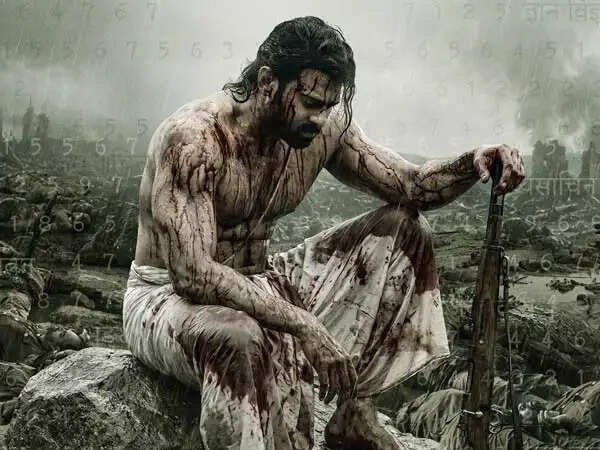
Prabhas has once again demonstrated his immense social media reach with the first look of his upcoming period action drama, Fauzi. Released alongside the film’s theatrical release date announcement, the poster has generated extraordinary online engagement, reportedly becoming the most-shared first-look poster for an Indian film.

According to the makers, the poster amassed over 533,000 shares within its first 24 hours on Instagram. At the time of writing, the post had also crossed 2.1 million likes on Prabhas’ official account, with engagement continuing to rise.

prabhas fauzi release

Fans praise Prabhas’ rugged transformation

The first-look poster has drawn widespread praise from fans, many of whom believe director Hanu Raghavapudi has presented Prabhas in one of his most rugged screen avatars since Baahubali. Sporting a battle-worn look, the actor appears to embody a hardened soldier, hinting at the film’s intense wartime setting.

Set against the backdrop of British India, Fauzi is expected to blend themes of patriotism, sacrifice and survival. The story reportedly follows a battle-scarred soldier navigating the horrors of war while confronting personal loss.

Prabhas Fauzi release date

A star-studded cast

Fauzi features an ensemble cast led by newcomer Imanvi Esmail, alongside veteran actors Mithun Chakraborty, Jaya Prada and Anupam Kher in pivotal roles. Directed by Hanu Raghavapudi, best known for Sita Ramam, the film is currently being shot in Hyderabad and is scheduled for a worldwide theatrical release on December 3,  2026. Estimated at more than Rs 600 crore, Fauzi is tipped to be one of the most expensive Telugu films ever made. The film is produced by Mythri Movie Makers (Naveen Yerneni, Y. Ravi Shankar) and presented by T-Series.

With the first look generating exceptional traction online, industry observers expect the film to enjoy strong awareness across multiple markets, including the Hindi belt. Fauzi also forms part of Prabhas’ packed upcoming slate, which includes Spirit and Kalki 2.

Also Read: Fauzi Release Date Announced: Prabhas’ Period War Drama to Hit Theatres on December 3
Read full article
Exclusive: Shashwat Sachdev on His Second National Award: The Young Boy Feels Reassured
onmynews.com

Exclusive: Shashwat Sachdev on His Second National Award: The Young Boy Feels Reassured

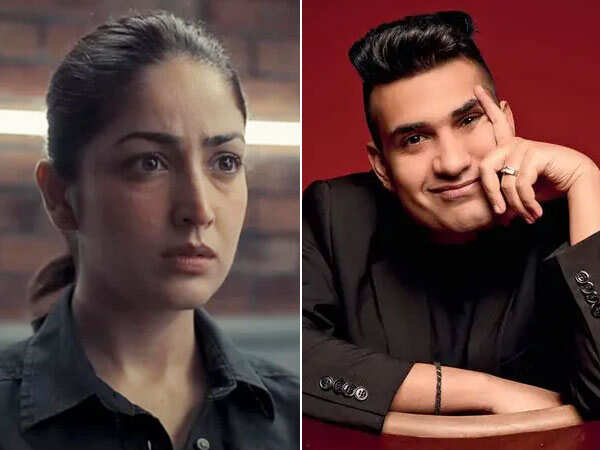
Music composer Shashwat Sachdev has won his second National Film Award. He has been declared the winner at the 72nd National Film Awards, announced on July 18, for Best Music Direction (Songs) for Article 370. The political thriller, starring Yami Gautam, also emerged as the biggest winner of the evening, winning the Best Feature Film award, while Yami won the Best Actress in a Leading Role award.
This marks Sachdev’s second National Award. He had previously won the Best Background Score Award for Uri: The Surgical Strike, the 2019 blockbuster directed by Aditya Dhar and headlined by Vicky Kaushal.
National Award
Speaking exclusively to Filmfare after the announcement, Shashwat reflected on the significance of the honour.
“It feels just as humbling as the first, and I feel the same sense of gratitude. In that way, it doesn’t feel very different. But what makes this one especially personal is the music I have received it for. These songs carry such a beautiful past for me. They take me back to the time when I was learning those Indian classical compositions from my guru, absorbing them slowly and making them a part of who I am. To be recognised for music that is so deeply connected to my beginnings means the world to me.”
National Award

He continued, “At this stage of my journey, an award is not simply a mark of achievement. It feels more like a quiet moment of reassurance. Somewhere inside, the young boy who chose this path feels that all the years of learning, discipline, hard work and faith in music have amounted to something meaningful. There is a beautiful sense of coming full circle, and I think that is what makes this recognition so precious.”

Sachdev made his Hindi film debut with Phillauri before going on to compose for films including Uri: The Surgical Strike, Veere Di Wedding, Attack, Tejas and Article 370.

Also Read: 72nd National Film Awards: Kartik Aaryan Shares Best Actor Honour With Mammootty; Full List Inside

Read full article
Exclusive: Papon on The Missing Soul in Music Modern Ghazals and Choosing Authenticity
onmynews.com

Exclusive: Papon on The Missing Soul in Music Modern Ghazals and Choosing Authenticity

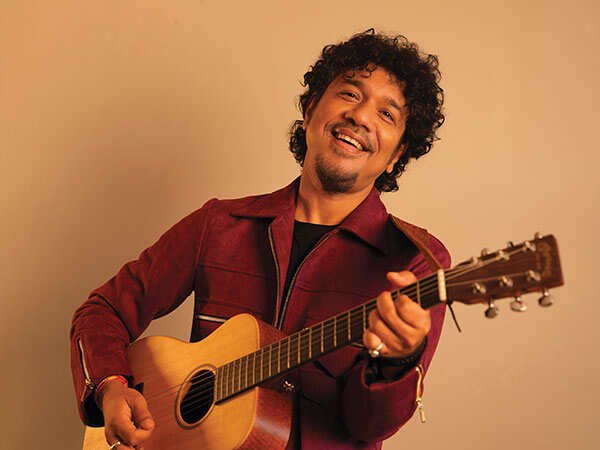
Few artists move as effortlessly between worlds as Papon. Born as Angaraag Mahanta in Assam, he grew up surrounded by the rich musical traditions of the Northeast, influences that continue to shape his sound today. From his early days with Papon and The East India Company to beloved songs such as Moh moh ke dhaage, Jiyein kyun and Bulleya, he has built a career defined by authenticity and exploration rather than labels. With his new album, Mehfilz with Papon, he revisits the timeless charm of ghazals, giving the classic form a contemporary flavour. Yet music, he says, is only a quarter of his life. Travel, mountains, village stays and quiet moments inspire him just as deeply. In this conversation, Papon reflects on creativity, change and the art of taking things slow.
Papon Papon Papon
You’ve released a contemporary ghazal album, Mehfilz with Papon…

There are actually two albums. Apne khilaaf is the first song to be released.
I had always wanted to shoot it like this. I’ve been doing ghazal covers for quite some time. Around 2012, I did a modern version of Ranjish hi sahi for MTV Unplugged. At that time, I don’t think many people from our generation were doing ghazals. Now you see baithaks happening everywhere. But when I did it, it was a very different step. To create a different sound for ghazals, I brought in drums, piano and electric guitar. I wasn’t sure how it would be received.But I had to convince MTV because of my love for ghazals. I remember it being appreciated across India and even in places like Sri Lanka and Pakistan. Then I did an entire episode featuring legendary and iconic ghazals in my own style. I wanted to change the sound. What I’m doing now is part of that journey. Jagjit Singh changed the sound of ghazals by bringing in the guitar and other contemporary elements. So the question for me became: where does that sound go now? How do we modernise it while keeping it relevant to the times we live in? The sound worked, so I stayed with it. But I knew I had to create my own original compositions. This project is the first step in that direction.
How did it come about?

Irshad Kamil and I met around 2017. He sent me some material and we started working together. By 2018 or 2019, the songs were ready. It wasn’t easy to put everything together and make people believe this could happen, especially in a format that hadn’t been attempted before. As the next ghazals are released, you’ll see musicians seated all around. It’s not just a performance. We have the sarod, harp, different guitarists and a changing set of musicians for every song. That’s exactly how real mehfils happen. Someone joins in, someone leaves and another musician comes in. I’ve lived with that culture all my life. My childhood was full of mehfils because of my parents. I felt no one had really captured that feeling on video before.
How did this album evolve?
The technicalities of ghazal writing are very different from songwriting. There is the qaafiya and the radeef. I’ve also asked the poets I’m working with on the next album to write for today’s times. I keep telling poets to write about how young people experience relationships today. There is heartbreak, there is pain but there is also acceptance. People move on differently now. We need to document that in our ghazals. We cannot keep writing exactly the way Mirza Ghalib did. We’re also living in a generation shaped by hip-hop and rap. People are more straightforward now. They want honesty. They don’t want excessive ornamentation. My entire reason for doing this is simple: ghazals are a beautiful form, and I want our children to enjoy them. I don’t want them to feel that ghazals belong only to their parents or grandparents.

There’s a growing conversation on social media about people missing the soul in today’s film music. What’s your take on that?
For years, many people, including me, have been trying to preserve a certain purity, soul and Indianness in music. Some things are special to us because of our culture, our environment, our history and the way we’ve evolved as communities. When young people go back to older music, it’s because those songs were created differently. There was more time, thought and emotional investment involved. People weren’t churning out music like machines. Today, music is far more commercialised than it used to be. Art has increasingly become like design, shaped more by demand than by artistic expression.
Do you feel the industry has also become overcrowded? 

Once an art form becomes a business, demand and supply start influencing everything. Instead of a few people sitting together to create something they genuinely feel, you have a system producing large volumes of content, whether it’s albums or film music. Commercialisation makes things more business-friendly but sometimes that’s where art gets lost. When I make a song, I look at it as a piece of art. I want to make sure the original feeling that sparked the idea remains intact from beginning to end. But if your primary goal is to create a hit, then the storytelling doesn’t matter as much. Many people today spend more energy on packaging than on developing their skills, talent or craft. When the content itself isn’t strong enough, packaging becomes the focus. Everything becomes about selling. Art shouldn’t work like that.
You’ve spent years singing folk music and representing the North-East through your work. Do you think enough representation exists today?
Wishing is one thing. Whether it should or shouldn’t happen is another. When we’re working in the Hindi film industry, or any larger mainstream space, we’re not consciously representing the North-East all the time. When I’m singing a Hindi song, I’m not necessarily representing the North-East through that song. Where I consciously represent my region is through my own productions. For example, in Coke Studio and many of my independent projects, I’ve brought in folk traditions from the Northeast.
Did you ever face racism while working in Mumbai?

I studied in Delhi, so I’ve experienced life outside Assam for a long time. When you’re from a corner of the country, it’s natural that many people don’t know much about where you’re from. But I’ve never felt that makes us any less. If some one is being discriminatory or racist towards me, I usually laugh at their ignorance rather than feel threatened by it. I’ve always believed India is a diverse country. Either you accept that diversity or you start imagining separate countries within the country. A lot of this comes down to language. People who don’t speak Hindi fluently are often treated as outsiders. That’s probably the most common form of discrimination many people experience. 
What are some of the changes in music that genuinely excite you?
As a producer, I love evolving sounds. I’m not just a singer. I compose and produce my own music. That’s why I’m always interested in how sound changes over time. The blending of acoustic and electronic worlds excites me. When I say something is well produced, I don’t mean heavily produced. Minimal music can be beautifully produced too.
Do you feel you’ve received your due?

I don’t really believe in the idea of receiving your due. How do you even measure that? For me, the exciting part is that I’ve spent my life doing what I love while continuing to create different things.  I don’t know whether I’ve received my due or not. I still have a long way to go.
Are there any young musicians working today who genuinely excite you?

Youth is always exciting. That’s why we look forward to it. When you’re young, you don’t even fully know what you’re capable of offering yet. The world is waiting to see what emerges. I feel young Indian musicians have far greater creative possibilities than what we’re currently hearing. I believe there will come a time when young Indian musicians will create music that the entire world wants to listen to. We haven’t fully reached that point yet. 
Papon Papon Papon
Was there ever a phase when you consciously stepped back from playback singing? 

Throughout my career, I’ve said no to anything I didn’t want to sing. In fact, I’ve probably said no more often than most artistees. I’ve always treated music as my identity, not as a business or simply a way to become famous. At every stage of my life, I’ve said no whenever something didn’t feel right.  Music probably occupies only twenty-five per cent of my life. I travel. I spend time in villages. I go to the mountains. I stay with local communities. All those experiences eventually find expression in my music. I’ve never felt like someone who has done too much. 

Looking back at your discography, is there one song you’re most emotionally connected to?

They’re all my creations. I’ve spent time nurturing each one of them. At different moments and in different moods, a different song becomes meaningful to me. But I don’t listen to my own music often. I’m usually thinking about the next thing I want to create. Honestly, I don’t listen to music that much. I prefer silence. When I’m travelling, especially in the mountains, I don’t feel the need to put on music. I like listening to the trees, the roads and the natural sounds around me. If you’re surrounded by music all the time, it can all become a blur. My listening habits are eclectic. One day it could be Mark Knopfler. Another day, Billie Holiday. Then Nusrat Fateh Ali Khan, Jagjit Singh, Mehdi Hassan or Kishore Kumar.
What’s next for you after these albums?

A lot. There are two or three more albums planned in this space. Right now, I’m focused on developing and expanding these songs and this format. At the same time, I’m working on an album of six duets with six contemporary female singers. They’re all my compositions. I also have twelve original non-film songs lined up. Apart from that, I’m composing and scoring music for a couple of international films
as well. 

Also Read: Papon: Music Is My Identity, Not Business – Exclusive

Read full article
…
Link copied!