Live · Global · Independent
Live Feeds
PinkVilla
Forbes
NDTV
Hindustan Times
Exclusive: Bombay Stories Actress Sushmita Siingh On Her Cannes Debut Working With Mouni Roy and More
onmynews.com

Exclusive: Bombay Stories Actress Sushmita Siingh On Her Cannes Debut Working With Mouni Roy and More

For 25-year-old actress Sushmita Siingh, 2026 has been a significant year. Her film Bombay Stories, directed by Rahhat Shah Kazmi, premiered at the Cannes Film Festival last month, marking her debut at the prestigious platform. The film, inspired by the works of Saadat Hasan Manto and rooted in real-life experiences of women, has already garnered international recognition. It was selected in the Asian Panorama section at the Da Nang Asian Film Festival and went on to win Best Feature Film at the Paris Film Awards.
In the film, Sushmita plays one of the lead protagonists, a 20-year-old college student whose life takes a dramatic turn after a traumatic incident. Sharing screen space with actors like Mouni Roy and Anupriya Goenka, the young actress found herself at the centre of a story that explores resilience, survival and womanhood.
susmita singh

Speaking to Filmfare, Sushmita looks back at the moment she learned that Bombay Stories was heading to Cannes. She says, “When I first heard that Bombay Stories was going to the Cannes Film Festival, it felt surreal. You dream of moments like these, but you never imagine your debut film itself will take you to the world’s biggest film festival. I remember thinking about every audition, every rejection, every train ride, every sacrifice and suddenly all of it felt worth it.”

Inspired by Manto’s writings and the lived realities of women, Bombay Stories forced her to confront difficult emotions while preparing for her role.

“Working on a story inspired by Saadat Hasan Manto and the realities women face was emotionally overwhelming. The biggest realisation for me was understanding how deeply women carry pain silently. While preparing for the role, so many emotions resurfaced, moments of fear, judgment and helplessness. I realised this is not just one woman’s story, it is almost every woman’s story in some form.”
Portraying a young woman whose life changes after a traumatic incident came with its own set of challenges. 
She continues, “Since the film touches upon prostitution and trauma, I had to enter a very dark and vulnerable emotional space. As one of the leads, there was a huge responsibility on my shoulders to portray her pain honestly and sensitively. Performing alongside some of the finest actors in the industry pushed me beyond my limits. I had to discover emotions within myself that I didn’t even know existed. There were days when I would carry the character home with me because the emotions felt so real. It transformed me as an actor.”
Working alongside Mouni Roy and Anupriya Goenka also left a lasting impression on the young actress.
“Working with Mouni Roy and Anupriya Goenka was beautiful because beyond their success and fame, what stood out to me most was their humility. They were warm, grounded and incredibly kind to everyone around them. It reminded me that no matter how big you become, your humanity and kindness are what truly define you,” she shares.
Sushmita also addressed the growing perception that Cannes has become overcrowded with Indian attendees, a narrative that often surfaces online every year. “I think somewhere the essence of the festival is getting misunderstood online. Cannes is, first and foremost, a film festival. It is a celebration of cinema, storytelling and artists from around the world.”
While acknowledging the presence of brands, creators and fashion, she continues, “There is nothing wrong with brands, fashion or creators being present, but I think people should remember the soul of Cannes has always been cinema. The focus should always come back to films and the artists who dedicate their lives to storytelling.”
The Cannes debut has also opened new doors internationally. Sushmita reveals that she has already signed an international project, something she once only dreamed about.
“In fact, I recently signed an international project, and it honestly feels unreal. Ever since I started working at the age of 14, all I have wanted is to be part of stories that move people and challenge me as an actor. I’ve worked across different mediums in India for years, and now finally seeing my work reach international spaces feels incredibly rewarding. It gives me hope that cinema truly has no boundaries.”
One of those opportunities emerged unexpectedly during Cannes itself. Sushmita confirms that conversations with renowned French filmmaker Eric Atlan and producer Rex Christy eventually led to her landing her first international film.
“It still feels like a dream when I talk about it. I had gone to Cannes because of Bombay Stories, and somewhere amidst all the screenings, red carpets and conversations, I ended up meeting the team of Eric Atlan and producer Rex Christy. There were already conversations happening with other actors, but after the audition process, I somehow found myself being chosen for the role. It feels incredibly special because this project marks my first international film. Firsts are always unforgettable.”
She also looks back at how growing up in Kalyan, she never imagined she would one day represent a film at Cannes. She shares, “I started modelling at an age when people would tell me I could never become a model because I was a complete tomboy growing up.
Then at 17, I became the first Indian and Asian to win Miss Teen World 2019, and that completely changed my life. It was my mother who saw something in me before I saw it in myself. My parents pushed me toward acting, and slowly I realized this is what I truly wanted to do for the rest of my life. I think what keeps me grounded even today are the memories of travelling from Kalyan to Andheri every single day for auditions and work. Those train rides, those struggles, those moments of uncertainty, they shaped me.”

Read full article
Exclusive: Ahilya On Working in Sing Geetham Her Learnings From I Want To Talk and More
onmynews.com

Exclusive: Ahilya On Working in Sing Geetham Her Learnings From I Want To Talk and More

After her impactful debut in I Want To Talk, which earned her a well-deserved Filmfare nomination, Ahilya is already making waves with her latest project, the musical fantasy Sing Geetham. Transitioning into the Telugu film industry was a significant move for the artist, and she credits her initial excitement to the genius and legendary director Singeetam Srinivasa Rao and producer Nag Ashwin. For Ahilya, the opportunity to sing for herself in a film was a rare and thrilling prospect, and the chance to work under such visionary filmmakers proved to be a natural and welcoming experience that encouraged her to take bold creative risks. She explained, “You just have to do it because you have to do it for the art.” 


Immersing herself in a new linguistic and cultural landscape proved to be a transformative experience for the actor. While she admits it came with challenges, the process taught her invaluable lessons about empathy and communication. Ahilya dedicated herself to learning Telugu from scratch, spending months in intensive training, which she notes was aided by her natural affinity for music. She said, “Telugu is an extremely musical language.” She emphasizes that her diverse background as a musician and content creator allows her to approach acting from unique perspectives. Talking about her growth since her debut, she mentioned that the most significant change has been developing resilience and the ability to fully inhabit a role by shedding her own inhibitions. “I’ve learned about letting Ahilya go a little bit,” she admitted, adding that she now feels much more able to escape from herself when stepping into a character.

Ahilya

Looking forward, Ahilya shared how she is eager to explore diverse storytelling formats across industries, including an upcoming live-action project in a video game. She also remains deeply committed to using her platform for causes beyond the screen. Drawing from her upbringing in Auroville and her father’s work in ecological afforestation, she is passionate about contributing to environmental conservation. When asked what it means to be an artist for Ahilya, she mentioned, “Being an artist is about more than just a performance; it is about maintaining a whole life outside of the film industry and continuing to inspire others through my work for the good of the planet.”

Also Read: I Want To Talk Movie Review: Abhishek Bachchan’s Performance Stands Out

Read full article
Balan: The Boy Review: Chidambaram Finds Beauty In Uncertainty
onmynews.com

Balan: The Boy Review: Chidambaram Finds Beauty In Uncertainty

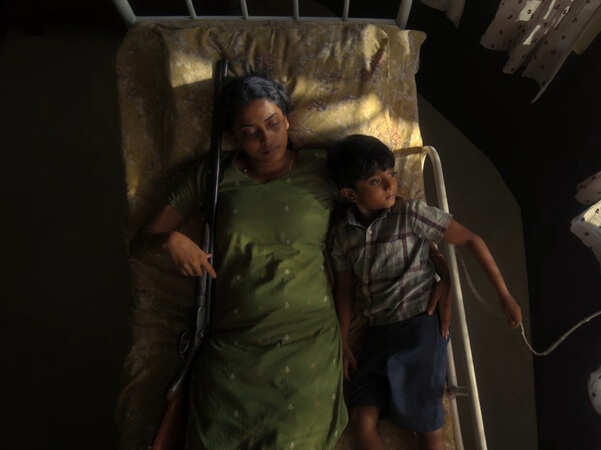
The most surprising thing about Balan: The Boy isn’t that it comes after Manjummel Boys. It’s that director Chidambaram appears almost uninterested in repeating any of the qualities that made that film a phenomenon. Where Manjummel Boys thrived on urgency, collective emotion, and a clear objective, Balan: The Boy turns inward. Written by Jithu Madhavan, the film follows a young boy searching for his missing mother, but beneath the mystery lies a more elusive story about memory, identity, and the scars we inherit from those we love.

Chidambaram approaches Balan’s story with the patience of someone less interested in solving a mystery than understanding the emotional wreckage it leaves behind. Information arrives in fragments, often out of sequence, forcing viewers to assemble meaning from memories that may not be entirely reliable. The effect is disorienting at first, but increasingly immersive as the film progresses. It’s an ambitious shift for a filmmaker coming off one of Malayalam cinema’s biggest successes, and while not every gamble pays off, the conviction behind the attempt is difficult to ignore.

At the centre is Balan, a boy navigating a world shaped by absence. His relationship with his mother forms the narrative spine of the film, but the journey gradually becomes an excavation of buried trauma and half-forgotten truths. The further he moves forward, the deeper he is forced to look back.

The film’s most interesting decision is that it refuses to treat information as objective. Every revelation arrives filtered through memory, trauma, or perception, making the mystery less about discovering what happened than understanding how people remember what happened. In that sense, Balan: The Boy isn’t structured like a conventional thriller at all. It functions more like an excavation, where emotional truth matters more than factual certainty. Even major revelations rarely arrive with the sense of finality associated with thrillers. Instead, they often raise new questions about perspective and recollection. The film repeatedly suggests that remembering and understanding are not the same thing.

Chidambaram and Jithu Madhavan repeatedly place audiences inside the protagonist’s uncertainty, withholding information, and allowing revelations to emerge organically rather than through exposition-heavy shortcuts. Balan: The Boy is less interested in uncovering the truth than examining the damage caused by not knowing it. Chidambaram understands that absence can sometimes be more psychologically overwhelming than loss itself.

For much of its running time, this approach works beautifully. The film creates an atmosphere of quiet unease where every conversation feels loaded with history and every recollection carries the possibility of revelation. Chidambaram trusts viewers to connect the dots, and there’s something refreshing about a filmmaker resisting the temptation to explain every emotional beat.

Yet the same quality that distinguishes the film also limits it. The film becomes less emotionally involving whenever it grows more interested in protecting its secrets. Some of its strongest moments emerge not from revelation but from recognition, when viewers are allowed to understand what characters are feeling rather than simply wonder what happened to them. There are stretches where ambiguity begins to feel less like a storytelling choice and more like an end in itself. One recurring issue is that the screenplay occasionally withholds information from viewers long after it has ceased to be dramatically useful. The result isn’t confusion so much as distance. We understand that something important has happened, but not always why we should feel its impact in that particular moment. The film remains intriguing throughout, but its emotional rhythms aren’t always as effective as its narrative ones.

The screenplay is at its strongest when dealing with people rather than puzzles. One of Jithu Madhavan’s most impressive achievements is how efficiently he establishes character motivations. The film spends remarkably little time explaining who these people are, yet when they make difficult decisions later, those choices feel entirely consistent with the emotional foundations laid earlier. Even supporting characters are afforded enough detail to feel like individuals rather than functions of the plot.

For all its tonal differences from Romancham and Aavesham, Balan: The Boy feels surprisingly consistent with Jithu Madhavan’s writing preoccupations. His characters are often trapped inside incomplete versions of reality, constructing narratives that help them make sense of a world they don’t fully understand. In Romancham and Aavesham, or even Painkili, that uncertainty became a source of comedy, with characters repeatedly mistaking perception for truth. Here, the writer strips away the humour and exposes the emotional cost of living with unanswered questions. The misunderstandings remain, but the consequences are no longer amusing. They shape identities, relationships, and entire lives.

That strength extends to the performances. Young Adhisheshan KR delivers the kind of performance that anchors an entire film. Present in almost every major scene, he carries the narrative with remarkable confidence and emotional intelligence. It would have been easy to turn Balan into a symbol of suffering, but Adhisheshan finds something more nuanced. He captures the confusion, resilience, and stubborn hopefulness of a child forced to process experiences beyond his years. The performance never reaches for sympathy and is all the more moving because of it. This has been effectively carried forward later in the film by Zinaan as the older Balan.

Farzana Palathingal is equally impressive as Balan’s mother. The role requires her to embody both strength and vulnerability, often within the same scene, and she handles those contradictions with striking ease. What makes the performance memorable is its refusal to idealise motherhood. This is not a saintly figure defined solely by sacrifice. Farzana creates a character who feels human first, making the emotional bond at the centre of the film resonate with greater force.

Jean Paul Lal brings a quiet authority to his character, finding subtle shades within limited screen time. His dialogue delivery and understated screen presence leave a lasting impression without ever feeling performative. Girish A D also contributes effectively, adding warmth and texture to the film’s emotional landscape. Across the board, the casting feels exceptionally considered. Every face appears chosen for what it brings to the world of the film rather than for familiarity or recognisability. Another performance to note as such would be Dolly June as the elderly lady that the mother and child encounter during their journey across multiple identities. 

Tovino Thomas deserves special mention for a performance that could easily have become a distraction. Instead, he disappears into this Dickensian character with admirable restraint. In an era where even extended cameos are often designed to preserve star aura, Tovino’s contribution feels refreshingly unselfconscious. The performance works because it is rooted entirely in character, to the point where one occasionally forgets the significance of the casting itself, which may be the highest compliment one can pay the actor.

If the screenplay occasionally struggles to balance mystery with momentum, the technical departments rarely miss a step. Shyju Khalid’s cinematography is among the film’s greatest assets. His camera frequently observes from a distance, allowing characters to appear isolated within their surroundings. Wayanad itself becomes an extension of the film’s psychology. Rather than reducing the landscape to postcard imagery, the film uses its dense forests, winding paths, and secluded homes to create a sense of emotional dislocation. The geography feels lived-in and meaningful rather than decorative.

Ajayan Chalissery’s production design contributes significantly to this immersion. The spaces feel inhabited, carrying traces of the lives that have unfolded within them. Every location appears carefully considered without calling attention to itself. Together with the cinematography, sound design and editing, the production design creates a world that feels tangible even when the narrative itself becomes elusive. Vivek Harshan’s editing and the film’s sound design deserve equal credit for maintaining immersion. Even when the narrative occasionally threatens to drift, the technical craft ensures that viewers remain emotionally invested in the world Chidambaram has created.

Then there is Sushin Shyam. Few composers working today understand the relationship between music and atmosphere as intuitively as he does. The score doesn’t announce itself through grand gestures. Instead, it quietly amplifies the emotions already present within a scene. Some of the film’s most powerful moments derive their impact from the way image and sound work together. By the time the story reaches its emotional peaks, Sushin’s music has become inseparable from the film’s emotional texture.

At the same time, one occasionally wishes the film trusted its emotional core more than its structural complexity. Some revelations land with less force than expected because the film seems more invested in preserving mystery than fully unpacking its implications. There are moments when clarity might have served the material better than ambiguity.

Still, even when it falters, Balan: The Boy remains deeply engaging because it never feels calculated. If Manjummel Boys demonstrated Chidambaram’s ability to orchestrate collective emotion, Balan: The Boy showcases his interest in emotional isolation. The films may appear radically different on the surface, but both are ultimately about people navigating situations they struggle to fully comprehend.

Balan: The Boy may not completely connect with audiences seeking a conventional thriller or an emotionally straightforward drama. It is slower, more demanding, and occasionally frustrating. Its imperfections stem from ambition rather than compromise. Chidambaram’s previous film was about someone trying desperately to escape a cave. Balan: The Boy is about someone trying just as desperately to escape the shadows cast by memory. The journey is less immediately exhilarating, occasionally more uneven, but no less ambitious. The film occasionally mistakes obscurity for complexity, but its willingness to embrace uncertainty ultimately feels more rewarding than frustrating. Even when Balan: The Boy loses its footing, it never loses its curiosity… and that makes some impactful cinematic storytelling.

Also Read:  Allu Arjun’s AA23 Theme Reaches PM Modi’s Instagram

Read full article
Link copied!