Live · Global · Independent
Live Feeds
PinkVilla
Forbes
NDTV
Hindustan Times
Editorâs Take: The Devil Wears Prada 2 And The Battle of Editorial Vs Algorithms
onmynews.com

Editorâs Take: The Devil Wears Prada 2 And The Battle of Editorial Vs Algorithms

The Devil Wears Prada 2 has everyone in a chokehold, especially journalists of the digital age caught between content and quality. In this constant tug of war between editorial instinct and algorithmic demand, legacy media is still trying to find its footing.
As Meryl Streep steps back into the formidable role of Miranda Priestly, inspired by Anna Wintour, the film moves beyond fashion spectacle into a commentary on survival, relevance and the slow erosion of editorial authority.
Filmfare’s Editor in Chief Jitesh Pillaai reflects on a story that mirrors the realities of modern media more closely than we might like to admit.
In his words:
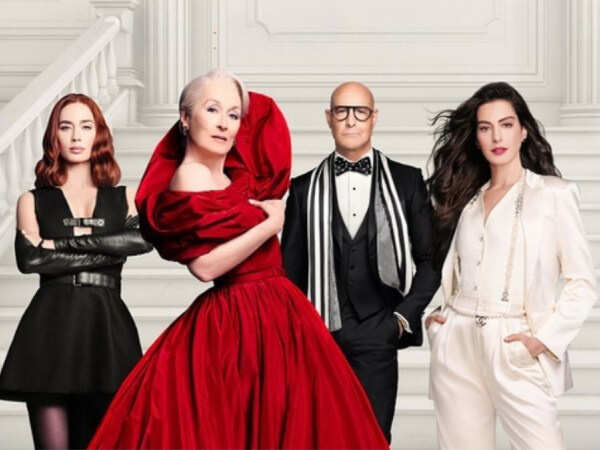
For anyone who has tried to stay relevant and straddle the world of AI and digital challenges while working with a legacy brand, The Devil Wears Prada 2 will strike a chord. The formidable Meryl Streep returns in fabulous form in the eponymous role as Anna Wintour. Her magazine, Runway, is in hot soup as they goof on a story and are faced with social media trolling; her publisher rings the alarm bell. Anne Hathaway, who’s been downsized at her previous job, rejoins Runaway to give it an image and perception lift.
For those of us who have grappled with marketeers and salespeople showing us how it’s done, we plod on like soldiers. In a landscape of dwindling magazine sales, digital algorithms and crazy barters, it’s time to shred your souls and march to the rhythms of your beat.
The art of reinvention does not mean shredded magazine copies you can use as toothpicks and advertisers telling you- if there’s no us, there’s no you. Through it all, there’s Madonna’s Vogue playing in the background, a wonderful cameo by Lady Gaga, lots of blink-and-miss appearances by celebs, including Donatella Versace.
The fervid landscape of fashion from the original Devil Wears Prada has changed to a more grave meditation on corporate chicanery, advertisers calling the shots and old warhorses desperately trying to tell the world not to lose their art because journalism still matters.
the devil wears prada

Yes, there are beautiful clothes on display, there’s the best of couture that the characters wear, and above it all, there’s a bleeding heart and womb trembler of a story.

The return of The Devil Wears Prada marks a return to frills, fustians and a load of smart repartees and one-liners. Like good old Nigel, who toils and labours away at a thankless job, he too finds redemption in one of the most moving scenes of the film. And according to me, despite not having an author-backed role, Emily Blunt, with her savage one-liners, steals the show.
devil wears prada 2
As for the wonder Meryl Streep, she shows us yet again, beneath all that jazz and couture, why she’s the best actor of her generation. The Devil Wears Prada 2 does full justice to the world of fashion while shining a light on whether journalism as we know it has reached its cul-de-sac. Miss this jewel at your own risk. 

Read Filmfare’s Review Here: The Devil Wears Prada 2 Review: Twice the fun
Read full article
Viral: Salman Khans Cameo As Jiva Mahala in Raja Shivaji Takes The Internet By Storm
onmynews.com

Viral: Salman Khans Cameo As Jiva Mahala in Raja Shivaji Takes The Internet By Storm

Riteish Deshmukh’s film Raja Shivaji released today in theatres on the occasion of Maharashtra Day. The historical drama stars an ensemble cast, including a striking cameo by none other than Salman Khan.
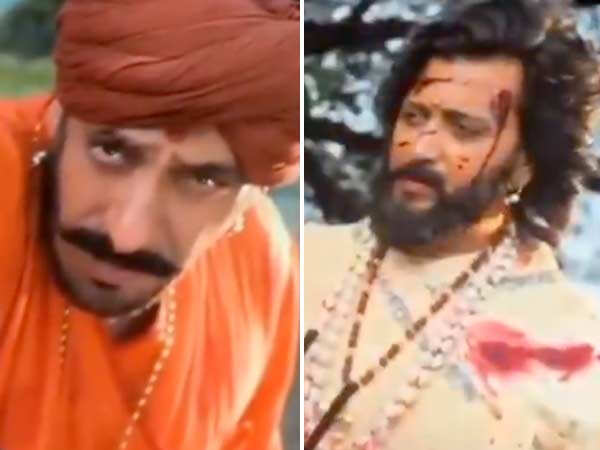
Several videos and photos have gone viral on social media showing the audience’s reaction to Khan’s cameo. The actor appeared in a saffron attire with a red turban on his head. He sported a broad moustache and had a tilak on his forehead.
Sharing screengrabs of the actor, one person wrote on Twitter, “Never in my wildest dreams did I imagine Salman Khan playing a bodyguard to Chhatrapati Shivaji Maharaj, and that too with a tilak on his forehead.”
Another user shared a video of the superstar’s entry scene during a battle scene. Khan plays Jiva Mahale in the film. He was a loyal bodyguard of Chhatrapati Shivaji Maharaj, who fought by his side and protected him from Afzal Khan’s attack.
Take a look:


Genelia Deshmukh and Jyoti Deshpande produced Raja Shivaji, which features a massive ensemble cast. Alongside Riteish, who plays the titular role, the film stars Sanjay Dutt, Abhishek Bachchan, Mahesh Manjrekar, Sachin Khedekar, Bhagyashree, Fardeen Khan, Jitendra Joshi, Amole Gupte and Genelia Deshmukh.
Interestingly, the film also marks the acting debut of Riteish and Genelia’s sons, Riaan and Rahyl, who play the younger versions of Shivaji Maharaj. As per the production house, the film aims to honour “The Founder of Hindavi Swarajya” through a performance that truly does the story justice.
Raja Shivaji


Meanwhile, talking of Salman Khan, the actor is gearing up for his film Maatrubhumi: May War Rest In Peace. It was earlier titled The Battle of Galwan. He will also be seen with Nayanthara in Vamshi Paidipally’s next.

Also Read: Riteish Deshmukh Faces Flak After The Release of Raja Shivaji’s Trailer

Read full article
Ek Din Review: Love In Japan
onmynews.com

Ek Din Review: Love In Japan

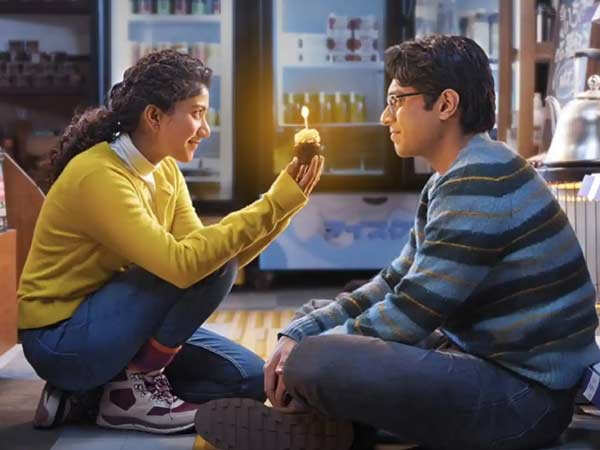
Ek Din, an official remake of the Thai film One Day (2016), offers a gentle, almost old-fashioned love story between a wallflower and a woman who seems to belong effortlessly to the world. Dinesh (Junaid Khan) works in the IT department of a thriving tech start-up—an invisible cog, socially awkward and far more comfortable with data than with people. Meera (Sai Pallavi), by contrast, is one of the company’s brightest stars: warm, capable, and quietly charismatic. She is in love with her boss Nakul (Kunal Kapoor), a man whose emotional availability is as uncertain as his marital status.

When the company posts record profits, Nakul announces a five-day trip to Japan, an indulgence that, one suspects, is designed less for employee morale and more to please Meera, an unabashed admirer of all things Japanese. It is here that the film leans into its central conceit. Dinesh stumbles upon a lover’s bell said to grant wishes to those in love. In a moment of quiet desperation, he wishes for just one day with Meera. Miraculously, the wish is granted but with a cruel caveat: Meera is suffering from short-term memory loss and will not remember any of it.

It is a premise that is inherently tender, tinged with melancholy, and the film treats it with a certain restraint. There are no grand declarations, no sweeping melodrama, only the fragile unfolding of connection within a fleeting window of time. If anything, the narrative occasionally feels too gentle for its own good, hesitant to push its emotional beats to their fullest potential.

Junaid Khan, in what feels like a more fitting debut vehicle than his earlier outing, is perfectly cast. He embodies Dinesh’s awkwardness with an endearing sincerity, the kind that never tips into caricature. His silences often speak louder than his words, and his wide-eyed reactions to the surreal turn of events ground the film. There is an unpolished honesty to his performance that works in the film’s favour, even if it sometimes lacks the magnetism needed to fully anchor the romance.

Sai Pallavi, making her Hindi debut, is the film’s emotional centre. As Meera, a South Indian woman whose Tamil-accented Hindi feels organic rather than performed, she relies less on dialogue and more on expression. Her eyes do much of the heavy lifting, whether conveying heartbreak, rediscovery, or the tentative stirrings of love. There is an unaffected quality to her performance that elevates even the quieter moments, making them feel lived-in rather than staged. Kunal Kapoor, meanwhile, brings a dependable ease to Nakul, sketching a man who is charming on the surface but ultimately less than the ideal he projects.

Visually, the film is something of a love letter to Japan, particularly the Sapporo region. The snow-laden vistas, the famed Sapporo Snow Festival, and the serene beauty of Hokkaido are captured with an almost postcard-like affection. These visuals lend the film an atmospheric richness, even when the narrative itself feels slight.

And perhaps that is where Ek Din finds both its charm and its limitation. Much like its source material, it thrives on plausibility and emotional simplicity, culminating in a hopeful note, that genuine love, however improbable, can still find its way. Yet, for a romantic film, it remains curiously under-scored. The music, especially, feels like a missed opportunity. Considering Aamir Khan’s legacy of musically rich romances, one still instinctively hums tracks from Qayamat Se Qayamat Tak, the soundtrack here lacks the lingering quality one expects.

All in all, Ek Din is a soft, well-meaning romantic drama, pleasant in the moment, occasionally affecting but just a shade short of truly memorable.

Also Read: Sai Pallavi Opens Up About Her Bollywood Debut With Ek Din : “I Feel Very Humbled”

Read full article
Link copied!