Live · Global · Independent
Live Feeds
PinkVilla
Forbes
NDTV
Hindustan Times
Gursewak Singh Recalls On-Set Accident Says Ranveer Singh Stood By Him
onmynews.com

Gursewak Singh Recalls On-Set Accident Says Ranveer Singh Stood By Him

As Dhurandhar: The Revenge continues its strong run at the box office, stories from behind the scenes are adding a more personal layer to the film’s success. Actor Gursewak Singh recently opened up about an intense on-set accident and how co-star Ranveer Singh stood by him through the moment, leaving a lasting impression.
The incident reportedly took place during the filming of a high-octane action sequence. Like many scenes in the film, it involved carefully choreographed stunts and prop elements designed to heighten realism.

However, despite rehearsals and precautions, things didn’t go exactly as planned. Both actors ended up getting injured during the shoot, turning what was meant to be a controlled sequence into a moment of concern.

Recalling the experience, Gursewak shared that he immediately apologised after the mishap, worried that he may have caused a problem during such a crucial scene.

What followed, however, stayed with him. Instead of reacting with frustration, Ranveer Singh responded with warmth and reassurance. According to Gursewak, the actor hugged him and said “never mind,” making sure he didn’t feel at fault.

Gaurav Gera Reflects On 28 Year Mumbai Journey Revisits Emotional Letter To Parents


It was this gesture, simple yet deeply human, that stood out to Gursewak.

In an industry often associated with high pressure and demanding schedules, Ranveer’s reaction reflected a sense of empathy and professionalism that goes beyond performance. He didn’t let the accident create tension on set and instead ensured that his co-actor felt supported in a vulnerable moment.

The anecdote also highlights the physically demanding nature of Dhurandhar: The Revenge, a film packed with large-scale action sequences and intense performances.

While the spectacle on screen is what audiences ultimately see, moments like these offer a glimpse into the effort, risk and camaraderie that go into making such films.

As appreciation for Ranveer Singh’s performance continues to pour in, stories like Gursewak’s add another dimension to his presence, one that isn’t just about star power, but about the way he shows up for people around him.
Gaurav Gera Reflects On 28 Year Mumbai Journey Revisits Emotional Letter To Parents

Also Read: Gaurav Gera Reflects On 28-Year Mumbai Journey, Revisits Emotional Letter To Parents

Read full article
Norwegian-Nigerian Singer Tolou on India Debut Finding Her Voice in America and More | Exclusive
onmynews.com

Norwegian-Nigerian Singer Tolou on India Debut Finding Her Voice in America and More | Exclusive

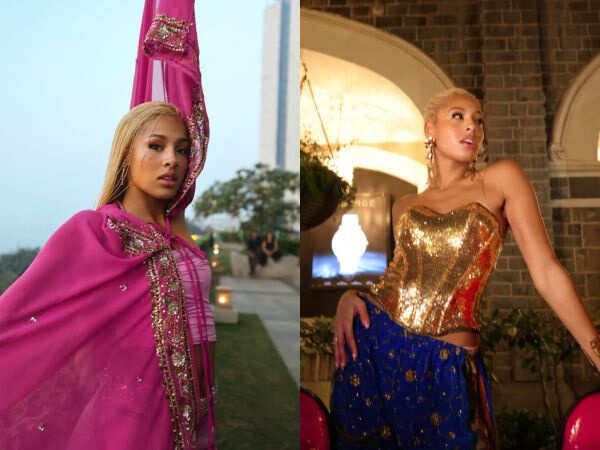
For Norwegian-Nigerian singer Tolou, music has always been about bringing different worlds together. That cross-cultural blend extends seamlessly into her sound, where Scandinavian pop meets the rhythm and fluidity of Afrobeats. It also found a new expression when she performed in India for the first time at Lollapalooza this year, a long-held dream that left her inspired by the energy of Mumbai’s audience and the country’s cultural vibrancy.
In this conversation, Tolou opens up about how her mixed cultural upbringing in Northern Norway and her connection to her Nigerian roots have shaped her identity and music, the challenges of finding her voice in the American music industry, and her desire to create songs that feel freeing and healing. She also speaks about discovering Indian music more deeply, her growing interest in Bollywood, and why artistes like AP Dhillon and Ankur Tewari are currently on her radar.
Excerpts:
You performed in India for the first time during Lollapalooza 2026. Talk to us about that experience?

View this post on Instagram

A post shared by Tolou (@tolouofficial)

I wanted to go to India my whole life. It was such a dream to be able to come here and perform. I had a good experience and got a good impression of the culture and people. The energy of the crowd in Mumbai was very alive, and the audience was engaged, welcoming and present. It was my favourite live performance. I brought my dancers from Paris. Seeing all of the people dancing and moving with the music was truly special. I’m looking forward to my next performance.
Do you listen to Indian music?

Yes. I had listened to a bit of Indian music earlier, but I’ve been exploring it much more recently. I find it inspiring, especially the way different cultures come together, blending traditional sounds with more worldly sounds. That’s how I make my music, by mixing Scandinavian pop influence with Afrobeats.
Some of my current favourites are AP Dhillon and Ankur Tewari. I also discovered Bollywood after performing at Lollapalooza. It is fascinating how Indian sounds can be brought into different genres across the world. In a way, it’s similar to what we do with Afrobeats, branching into styles like Afro-country, Afro-pop, and Afro-house.
How has growing up in a mixed culture shaped your music and journey?

I grew up mainly in Northern Norway and around Norwegian culture. I went to Nigeria for the first time in 2023, but it was always important for me to identify with my Nigerian culture as well. That’s why I have my micro braids on my head, my mother did them. It’s a representation of who I am, a part of my identity. I see the world from a slightly different perspective, because my surroundings weren’t very typical. I’m almost from the North Pole, it’s very cold and dark for months of the year. But then we also have the midnight sun, where it’s bright at 2 am. That makes people from the North quite authentic and straightforward. That gives me a different perspective at times. And that’s also why I appreciate coming to a place like India. People here seem very humble, very down-to-earth and honest. That’s something I really connect with.
View this post on Instagram

A post shared by Tolou (@tolouofficial)

At what point in your life did you realise that music is your true calling?

It’s almost like I was born with that kind of instinct or intuition in me. I always wanted to create music and was looking up to the big pop stars like Rihanna and Beyonce. I wanted to be like them when I was older. I had to go through some challenges to get where I am today. But I wanted to be myself and share with the world the way I see and feel things. I’m a happy and optimistic person. I’m very hopeful and want to bring that out through my music.
What are some of the artists you got inspired by?

One of my earliest and biggest inspirations is Beyoncé. She has an insane work ethic and is a great performer. I love Frank Ocean for how creative and artistic he is. Lana Del Rey is also a cool artist. I want to do what makes sense for me and makes me feel good. Afrobeats makes me feel like I want to dance. Scandinavian pop makes me feel seen emotionally. So I wanted to combine these two. Hopefully, one day, someone is going to say that I inspired them.
What do you want people to take away from your music?

I want people to feel good and be seen through my music. And hopefully, some of the songs can be a little bit healing. I hope they think that I am a nice and fun person. I try to make people not take themselves too seriously. I want to tell them to speak their minds, be a little bit unserious, and not be perfect all the time. I hope people remember that freedom, energy and confidence when they see me.
What has been the most challenging moment so far in your musical career?

It was after I came to America for the first time. I was really tested in terms of how much of my own voice and opinions I was going to listen to. I was a young girl who was not used to the American culture. I was hearing a lot of inputs on how to do things, how to sing and dress. There were some challenging months where I had to figure out who I was. I knew who I was in Norway, but I didn’t know who I was here in America, being a part of this big music industry with all these expectations placed on women. There’s a lot of pressure on young female artists to look a certain way or to present themselves in specific ways to succeed. It was a battle at times, but I had to keep my integrity very strong.
View this post on Instagram

A post shared by Tolou (@tolouofficial)

But when I was taking care of myself, and following my heart, it naturally strengthened my connection with my audience. The audience could feel it, they could tell that I was happy. Today, I’m thankful that I’ve landed where I have, and I have a very supportive team around me.

Who are some artistes on your collaboration wishlist?
I would love to collaborate with AP Dillon and Ankur Tewari and come back to India to dive a little bit more into the culture and the film industry. I want to see some Bollywood films. I’m going to keep watching and learning about the culture. It’s very beautiful and colourful.
What’s next for you?

I just released my album and it’s doing great. I’m about to set up some more performances. Right now it is about building my audience and building my artistry.

Also Read: Exclusive: “He Was Sure About Me Even Before…”-Shashwat Sachdev on Aditya Dhar’s Belief in Him

Read full article
Sharda Sinha: A Voice That Became The Prayer of The Soil
onmynews.com

Sharda Sinha: A Voice That Became The Prayer of The Soil

In the days leading into Chaitra Chhath, Bihar gathers itself with a quiet, almost meditative grace. The rhythm of life alters gently . There is a softness in the mornings, a certain stillness that settles before the day begins. Courtyards are washed, utensils polished, and the first preparations begin in kitchens that awaken before sunrise. The soop and the daura emerge from their careful resting places, fruits are arranged with a devotion that feels instinctive, and thekua is shaped with a precision that carries memory in every curve. Nothing feels hurried. Everything feels emotional.


At the ghats, there is a stillness that carries its own language. Water holds the reflection of a sky that seems closer during these days, and as dusk gathers, women step into the river with a quiet strength that has travelled through generations. Their silhouettes, framed against the setting sun, carry within them a history of devotion that has never required articulation. Chaitra Chhath lives in these moments, in the discipline of the body, in the surrender of the spirit, in the continuity of a ritual that moves from mother to daughter with a natural ease. Within this continuity, there is a voice that has come to inhabit the very essence of the festival. It does not arrive as an addition. It feels present from the beginning, woven into the fabric of the ritual itself. The voice of Sharda Sinhaji.

Her songs move alongside the devotee, through preparation, through fasting, through prayer. They fill the spaces that remain unspoken, offering a quiet companionship. In countless homes, her voice begins before the first light and continues through the long hours of the vrat, carrying both the love and the beauty of devotion. Over time, this presence has grown so deeply rooted that it feels inseparable from Chhath itself.


Bihar, in its cultural expression, holds a relationship with music that feels organic and instinctive. It is a land where emotion seeks melody as its natural form. The everyday carries song within it. A lullaby, a wedding refrain, a harvest tune, and much more…..each one emerges from lived experience, shaped by voices that carry forward what they have received. There is a continuity in this expression that resists interruption. It does not depend on preservation. It survives through participation.


Within this landscape, Sharda Sinha’s contribution unfolds as something both profound and deeply grounded. Her work carries the sensitivity of someone who understood that folk music holds more than sound. It carries memory, identity, and belonging. Each song becomes a vessel through which a community recognises itself.


Her training in classical music brought with it a discipline that shaped her approach. Years of practice, of refining sur and understanding the intricacies of raga and taal, found their way into her singing. Yet what distinguishes her journey is the manner in which she chose to bring that discipline into the realm of folk music. She allowed the structure of classical training to strengthen her voice, while her expression remained firmly rooted in the soil from which it emerged.


She sang in Bhojpuri, Maithili, Magahi, Angika, and Bajjika with a depth that reflected both understanding and respect. Each dialect carried its own cadence, its own emotional register, and she entered each one with attentiveness. Her singing carried the texture of lived experience, allowing listeners to feel a sense of familiarity, a recognition that transcended geography.


Her work received recognition at the highest levels. The Padma Shri, followed by the Padma Bhushan, and later the Padma Vibhushan, marked her contribution within the national framework. The Sangeet Natak Akademi honoured her artistry. Yet her most enduring presence continues to reside in spaces untouched by formal recognition, in the everyday rituals of life.


To step closer to the woman behind this voice, I turned to her children, Vandana and Anshuman. What unfolded was a conversation shaped by affection, memory, and a quiet reverence that carried the intimacy of lived experience.

Rhythm

⸻


When you think of your mother today, what is the first image that comes to you?


Anshuman: It always begins with sound. Even before an image, there is her voice. It feels as though the house itself held that sound. Mornings would begin with it, and the day would unfold around it. When I think of her now, I still hear that continuity. It does not feel like something from the past. It feels present.


Vandana: For me, it is her sitting with the tanpura, completely immersed. There was a stillness around her when she practised. It felt as though time paused in those moments. And then, almost seamlessly, she would look up and ask if we had eaten, if we needed something. That movement between immersion and care stays with me.


⸻


Did her discipline feel demanding as children, or did it shape itself naturally around your lives?


Vandana: It shaped itself around us in a way that felt very organic. Her practice had a rhythm, and we became a part of that rhythm. There was never a sense of being separate from it. If anything, it created a sense of grounding. It gave structure to our days.


Anshuman: There was an understanding that her work required commitment. That understanding came naturally because we saw it every day. It did not need to be explained.

Rhythm

⸻


There is often a perception that artists carry their work and their personal lives separately. How did that feel in her case?


Anshuman: In her case, there was a seamlessness. Music was a part of her being. It did not feel like something she stepped into. It flowed through everything she did.


Vandana: Even in conversation, there was a certain musicality in the way she spoke. A pause, a tone, a rhythm. It felt connected.


⸻


Her early experiences in Lucknow hold a significant place in her journey. How do you remember that phase through what she shared?


Anshuman: She spoke of it as a moment that shaped her clarity. She had gone with preparation, with hope, and she sang what she knew best. That experience stayed with her, not as something that defined her, but as something that helped her understand her own direction more deeply.

Rhythm

⸻


And the encounter that followed?


Anshuman: When she sang again, Begum Akhtar listened to her. There was a warmth in that moment, a recognition that carried encouragement. It became something she held very close.


⸻


Your mother’s association with Chhath carries a depth that feels almost spiritual. How did she view this relationship?


Anshuman: She saw Chhath as something deeply personal. It was not just a festival for her. It was a way of connecting with something larger. The songs carried that connection. She sang them with an understanding that came from observing the women in her family, from witnessing their devotion.

Rhythm

⸻


There is a sense of motherhood that people associate with her voice. Did you feel that within the home as well?


Vandana: Very much. She carried a presence that felt protective and nurturing. At the same time, she encouraged strength. There was a quiet resilience in the way she lived.


Anshuman: Her care extended beyond us. It was part of how she related to people in general.


⸻


What remains most vivid to you about her as a person?


Vandana: Her attentiveness. She noticed small things. The way someone spoke, the way a moment unfolded. That awareness found its way into everything she did.


Anshuman: Her clarity. There was a sense of balance in her actions that remained steady.

Rhythm

⸻


In her later years, how did she relate to her music?


Anshuman: It remained close to her. There was a continuity that never felt interrupted. Even in quieter moments, that connection stayed present.


⸻


What does her legacy mean to you now?


Vandana: It feels like a responsibility that carries warmth. People see her in me, in my voice, in my expressions. That connection feels deeply personal.


Anshuman: It feels like something to be honoured through sincerity. The way she approached her work continues to guide us.


⸻


As Chaitra Chhath reaches its culmination, the river holds the first light of dawn. Women stand in stillness, their hands folded, their faces illuminated by a quiet faith that has travelled through generations. The air carries the soft echo of songs, familiar and enduring.


In that moment, her voice rises again, carried through speakers, through memory, through voices that continue to sing what she once sang. It moves gently across the water, settling into the space between devotion and silence.


There is a certain tenderness in the way her presence continues. It feels like a hand placed softly over a moment, steadying it, giving it shape. It feels like something deeply maternal, a presence that accompanies without seeking attention, that understands without being called.


Her life finds its truest expression here, in these continuities, in the quiet ways her music continues to live within people’s lives. In the daughter who hums her songs while preparing offerings. In the unseen listener who finds comfort in a familiar refrain. In the countless moments where her voice becomes a bridge between memory and experience.


As the sun rises fully and the ritual reaches its completion, there is a sense of fulfilment that settles gently across the ghats. The water returns to its calm, the offerings find their place, and life begins to move again.


And yet, something remains.


A voice that continues to travel through time, through devotion, through the intimate spaces of life. A voice that carries within it the warmth of a mother, the discipline of a Guru, and the depth of a culture that lives through its people.


In that quiet persistence, in that enduring presence, Sharda Sinha remains, not only as an artist remembered, but as a feeling that continues to be lived.

Also Read: Rhythm Wagholikar shares pictures of festive times

Read full article
Link copied!