Live · Global · Independent
Live Feeds
PinkVilla
Forbes
NDTV
Hindustan Times
Exclusive: Bhumi Pednekkar talks about Daldal and rising above the noise
onmynews.com

Exclusive: Bhumi Pednekkar talks about Daldal and rising above the noise

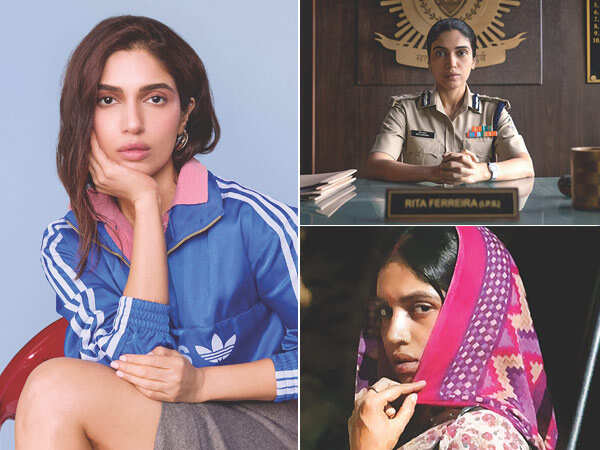
More than a decade after making her debut with Dum Laga Ke Haisha, Bhumi Pednekkar finds herself at an interesting junction in her career. Over the years, Bhumi has built a strong body of work with films like Sonchiriya, Saand Ki Aankh and Badhaai Do, to name a few. However, the past year brought in its share of online scrutiny following The Royals, with much of the chatter shifting from her performance to her appearance. She didn’t let that affect her and moved on, stepping into darker territory with Daldal, a gritty crime thriller in which she plays DCP Rita Ferreira, a police officer drawn into a case dealing with a serial killer.

For an actor accustomed to heightened drama, this role demanded something entirely different. When I meet her during Daldal’s promotions, she appears steady and focused, untouched by the noise around her. Her attention stays firmly on the show, and she speaks with clarity and conviction. She talks about inhabiting a character who speaks little but carries a great deal within and how Daldal explores the long shadow of childhood trauma. Bhumi also opens up about online bullying, admitting that developing thick skin is easier said than done. Spirituality, she says, helps her stay grounded. She also shares her desire to play an out-and-out ‘baddie’ someday, just like Ranveer Singh’s Khilji in Padmaavat. Excerpts:

You’ve been credited as Bhumi Satish Pednekkar in Daldal.
Yes. Including my father’s name felt right. It had been on my mind for a long time. It was definitely a step in my healing. I never really had the space to process what happened with him before. Over the past few months, when I wasn’t working on a film set, I finally had that time. It means a great deal to me.
After completing more than a decade in the industry, how would you define success?
Success today is more about purpose. What is my purpose? Why am I doing films? Why do I love cinema? Earlier, it was about creating a space for myself, making sure I survived. Back then, success meant survival. Today, I don’t have those insecurities. Now it’s about purpose. When I look back at my work two or three decades from now, I need to be proud of it.
Bhumi Pednekkar


Which role of yours changed you in the best possible way?
I won’t include my first film, Dum Laga Ke Haisha,  because it will always be too special. But apart from that, it would be Sonchiriya. That film unlocked something in me, both as a performer and as a human being. It had an everlasting impact on me, something I’m still dealing with. Other pieces of work I’m proud of are Saand Ki Aankh, Pati Patni Aur Woh, Badhaai Do, Badhaai Ho and Bhakshak.
If you could say one thing to the young Bhumi who had just started out, what would it be?
Don’t succumb to the noise.
Was there ever a point where you felt like succumbing?
No, I’ve never felt like giving up. I’m a resilient person. I’ve built this life and I will never give up
on it. I’m very positive. I have a lot of love in my life and I’m lucky to be part of a family that gives me so much of it. That makes me strong. But it’s life. You lose a loved one. You see someone you love in pain. Films work. Films don’t work. It happens to everyone.
The past year has been unkind to you, especially after The Royals. You were trolled over your appearance…
Just because we’re in the public eye doesn’t mean bullying doesn’t affect us. You can’t ignore it. I’d be lying if I said you could. Of course, it impacts you deeply because we’re all human. I keep returning to spirituality. I go back to God and meditation. That’s the only way to stop yourself from turning bitter. The moment you start walking that path, everything changes. You realise we are nothing in the universe, just a speck and that gives you perspective. It humbles you.
Bhumi Pednekkar


Can you further elaborate?
Spirituality allows you to surrender. You begin to understand that if something bad is happening, it’s happening for a reason, and the same goes for good things. Somewhere along the way, you stop being overly affected by either. I’m still working on it. I haven’t cracked it yet. It’s lifelong work. But today, at least, I have a medium. Therapy is important. Seeking help is important. Having people you can talk to is important. But spirituality is something I would urge people to explore, especially in the times we’re living in, when all of us are subjected to so much unkindness.
Have you always been spiritual?
I thought I was spiritual until I truly understood what spirituality means. For me, the practice earlier was about giving back and being good to people. That’s always been a big part of who I am. But true spirituality is about surrendering to a higher power. That’s what it means to me, and it has given me immense strength.
What attracted you to Daldal?
The freshness with which Daldal was written really excited me. It’s a very intelligent show. Yes, it’s a cop drama and a psychological crime drama but it doesn’t rely on familiar tropes. It’s deeply character-driven It’s supported by some phenomenal characters and was challenging for me because of how Rita Ferreira is written. She has a lot of duality. There’s one version of her in uniform and another when she’s not, and both exist on the same spectrum, yet feel worlds apart. On duty, she’s earnest and honest. Her job is the one thing she truly loves and deeply cares about. But there’s also a lot of violence within her. She’s volatile, lonely and broken.
Unresolved childhood trauma is a key theme of the series.
Yes. The core theme is how childhood trauma shapes you as an individual. Rita has many of the instincts associated with a serial killer, which is why you’re never sure what she’s capable of. She has immense unresolved trauma and a lot of darkness within her. What excited me was the restraint. I’ve played roles where the drama was very heightened, but here I barely have any dialogue across seven episodes. She’s stoic and tightly controlled because she’s hiding so much. I’ve always been told that less is more and that’s the philosophy the show is built on. You don’t know what Rita is thinking or what she might do, except when she’s angry. She doesn’t know how to control it because she isn’t someone who knows how to receive love.
When you play such an intense character, does it affect you after the cameras stop rolling?
Most of the time, I know how to draw a line. But with a character like Rita Ferreira, it was tough. The series was shot in Mumbai, and the role consumed me. When you have a lot of dialogue, you release so much through words. But with her, I was constantly alert to triggers.
Were there moments when you related to the character on a personal level?
One very strong theme in the show is how patriarchy exists everywhere. That’s something I connected with deeply. Rita is a woman in a man’s world. She’s constantly trying to break the stigma around her gender and is often made to feel that any success she achieves is because she’s a woman, not because she deserves it. That’s something women deal with all the time. The way she responds to it and navigates it is something I strongly connected with.
Bhumi Pednekkar

Do you think the film industry is more liberal towards women?

There is definitely more equality. I won’t paint it as entirely rosy but it’s far fairer than many other industries. And it’s not just about actors. Women are working behind the camera too, writing, producing, directing, performing their own stunts. Is it enough? Not at all. We’re still far from an ideal situation. But things have improved. Today, there are many departments where women can lead conversations, rather than being limited to stereotypical roles.
Bhumi Pednekkar
One assumption people make about you that’s completely wrong?

People have forgotten how hard I’ve worked after Dum Laga Ke Haisha and that I’ve had a long, honest fitness journey. Those assumptions need to stop.

Is there a genre or character you’d like to explore?
I’d love to play an antagonist, an out-and-out baddie. Something like what Sanjay Leela Bhansali did with Ranveer Singh’s Khilji in Padmaavat. It’s iconic.

Also Read: Daldal Trailer: Bhumi Pednekkar Hunts a Ruthless Serial Killer in This Gritty Crime Thriller
Read full article
Exclusive: Pulkit Samrat on Hustling and Refusing to Settle for Less
onmynews.com

Exclusive: Pulkit Samrat on Hustling and Refusing to Settle for Less

Pulkit Samrat brings an easy charm to the screen, warm, self-aware and instinctively playful. From his early television days to becoming the beating heart of the Fukrey franchise, he has carved a niche as an actor who doesn’t shy away from vulnerability beneath the humour. Known among colleagues for his discipline, fitness focus and quietly reflective nature, Pulkit balances boyish exuberance with growing emotional depth. Whether slipping into comedy, romance or darker, more physical roles, he approaches his craft with sincerity and curiosity. There’s an unmistakable affability to him, an actor who feels approachable, grounded and constantly evolving. Excerpts from an interesting chat.
There have been many ups and downs in your career. Are you satisfied with your journey?
I would not say that I am fully satisfied, because if you are, the fire within you subsides and you stop working hard. What I do have is a sense of contentment, that whatever is happening is going well. Even what went wrong has taught me something and that in itself is an interesting learning. I never got the opportunity to formally learn on a film set or work as someone’s assistant, but I picked up the ropes while working in television. When I did Kyunki Saas Bhi Kabhi Bahu Thi I learnt everything that happens behind the camera. So, apart from acting, I also learnt the technical aspects of filmmaking, such as cameras, lenses and lighting. Television gave me a strong understanding of the technical and behind-the-scenes side of the craft.
Pulkit Samrat


You were one of the top stars on TV…
The audience gave me a lot of love on television, and when I stepped into films, I was fortunate to work with some amazing people right from my debut. I worked with producer Kumar Mangat, who truly knows how to make good films. He is one of the nicest people I know. He guided and mentored me immensely, and that eventually led to Fukrey. There can be no bigger blessing than getting the opportunity to work with Kumar Mangat and Excel. I have no complaints about debacles either, because they too came with lessons. Overall, I am very happy with the way things are turning out for me.
Does Success come from hard work or networking, talent or luck?
When my film Fukrey released and became successful, people liked my work. I thought, ab toh nikal padi, badhiya hai. Fukrey was a super hit, Excel signed me for three more films, aur bhi badhiya ho gaya. I felt I had become a hero and that there was nothing more I needed to do. I genuinely believed that offers would come to me while I sat at home. But work does not fall into your lap; you have to work hard to earn it. You cannot just sit at home and assume that work will come your way. Whatever we do on set is our passion, but reaching the set is your responsibility. That is the business side of this industry. The day I understood the business aspect, I realised how important it was for me to meet people and talk to them. Some people may not like me, but it is still my job to remind them, again and again, that I am also a product in this industry. I can dance, do action, drama and comedy, and I can show off my body too, so please work with me. That is genuinely what it was about.
Pulkit Samrat

Have you ever sought guidance from an astrologer?

I can’t say for sure whether I believe in astrology or not but I have immense faith in my mother. I bowed my head, folded my hands in temples and did many things simply because she asked me to. My mother made me perform several pujas and visit many temples, but when she was in great pain, I felt that all those pujas were meaningless. Yet, she continued to smile through her suffering, even though we could see how much pain she was in. She smiled until her very last breath. From her, I learnt that if you face life with a smile, you find the strength to endure everything and keep moving forward. Life is like an ocean where you will be hit by storms and only by facing them can you reach the shore. This is what life is all about. That was the lesson I learnt from the greatest loss of my life. That is why I always tell people to respect and cherish those closest to them while they are still with you.
Did the loss of your mother turn you into an atheist?
No, I did not become an atheist. Rather, I took on some of her responsibilities. I come from Delhi and we live in a joint family. I have taken on my mother’s duties. For instance, she would wake up every morning and clean the mandir, and now I do that. Everything she used to do, I now try to carry forward. In this way, we are preserving her legacy. She loved celebrating festivals with dancing and noisy celebrations, and I truly enjoy doing the same. She also loved feeding people, and I seem to have picked up that trait naturally. I cannot bear to see anyone hungry. My mother taught me that everyone should always be well fed.
Pulkit Samrat
Are you superstitious? Any lucky charm?
My lucky charm is my wife, Kriti (Kharbanda). Every morning, I start my day with my lady luck. It is the most beautiful thing in the world.
Has she changed you as a person?
She has grounded me immensely. She is the mirror that shows me reality. Because we were best friends first and husband and wife later, there is no judgement between us. We pour our hearts out to each other, just as friends do. Even when we argue, it is about the problems we are facing, not against each other. She is also the one who got me into therapy. I was dealing with depression some years ago and wasn’t in the right therapeutic space at the time. This was around six or seven years ago, before the pandemic. She explained the importance of therapy to me and encouraged me to seek help. If anyone says I have become a better person, the entire credit for that goes to Kriti alone.
Does it help When your life partner is from the same profession?
It is a great comfort. If my partner doesn’t understand my work and I don’t understand hers, how would we discuss what happened during the day after coming home? Sharing work-related experiences, like the joy of having given a good shot, is something only an actor can truly understand. The excitement of delivering a good performance is unique to the craft. So it is a big blessing that we both belong to the same industry. And that’s not all, we are both outsiders, self-made, and have established our careers on our own. Kriti and I joke that our agenda is for our children to be “nepo kids”.

Pulkit Samrat

What are the things about yourself that you have worked on and transformed?

I am fond of playing the guitar. I bought several guitars with the intention of learning but it never quite happened. So, this year’s New Year resolution is to finally learn the guitar. Now, whenever I get some time, I practise. This is one resolution I have been consistent with. I have also not eaten sugar for the past eight years. This was a resolution I made eight years ago and to date I do not consume processed sugar. My third resolution is to think before speaking. I have decided that whenever I speak, it should be after I have thought things through thoroughly. I do not want to react to any situation impulsively. Reacting is a big trap that I want to avoid. If you react impulsively, you are likely to give your worst response, because it will not be weighed or well thought out. After undergoing therapy, I have understood the importance of holding on to your thoughts and recognising that the person standing in front of you is also carrying their own baggage. They can be given a few chances to handle things in a better manner. You can find a better solution only with a calm mind; there is no way to arrive at one when your mind is extremely enraged.
We don’t truly understand the importance of therapy.
Many believe that therapy is only for those who are depressed or dissatisfied with life or for people who are lonely and have no one to talk to or those who are mentally unstable. However, that isn’t the case at all. Therapy is a way of opening up and pouring out your heart and soul to someone who listens without judgement. Therapists are trained professionals who can help guide you, support you and point you towards helpful resources. Some people need support through medication, while others benefit more from practical tools that help them manage and regulate their emotions. For me, meditation works best. Even practising deep breathing twice a day can help keep your mind calm and composed throughout the day.
Pulkit Samrat
You’re doing another project with Karan Anushuman. Tell us about that.
Karan Anshuman directed me in Bangistan. I am now doing a show with him, which will be my OTT debut. It is called Glory. I had a lot of fun working with him. He is one of the biggest creators in the industry, and all his shows have been super hits. When I met him, I told him very openly and honestly that I wanted to do good work with good people and asked if we could work together. I clearly remember meeting him after almost seven or eight years, and within a split second of me saying this, he replied that he had written something keeping me in mind. He said, “If you like it, do it.” Within two days, I was on board. I got work because I asked for it. Before this, I had refused to work on one of his web series, so perhaps he would not have approached me on his own. But because I went up to him, I got the work. That is what we call manifestation. If you do not convey what you want to the universe, the universe is not going to give you anything. Simple.

Also Read: Upcoming Bollywood Movies Releasing In May 2025: Raid 2 & More
Read full article
“We Belong To God”: Iran Embassy In Pak Shares Post With Khamenei’s Robe
onmynews.com

“We Belong To God”: Iran Embassy In Pak Shares Post With Khamenei’s Robe

Iran’s Supreme Leader Ayatollah Ali Khamenei was killed in a joint Israeli-US attack. Iranian state media confirmed his death following US President Donald Trump’s announcement that Khamenei had been killed in an airstrike on February 28, 2026.

Read full article
…
Link copied!